
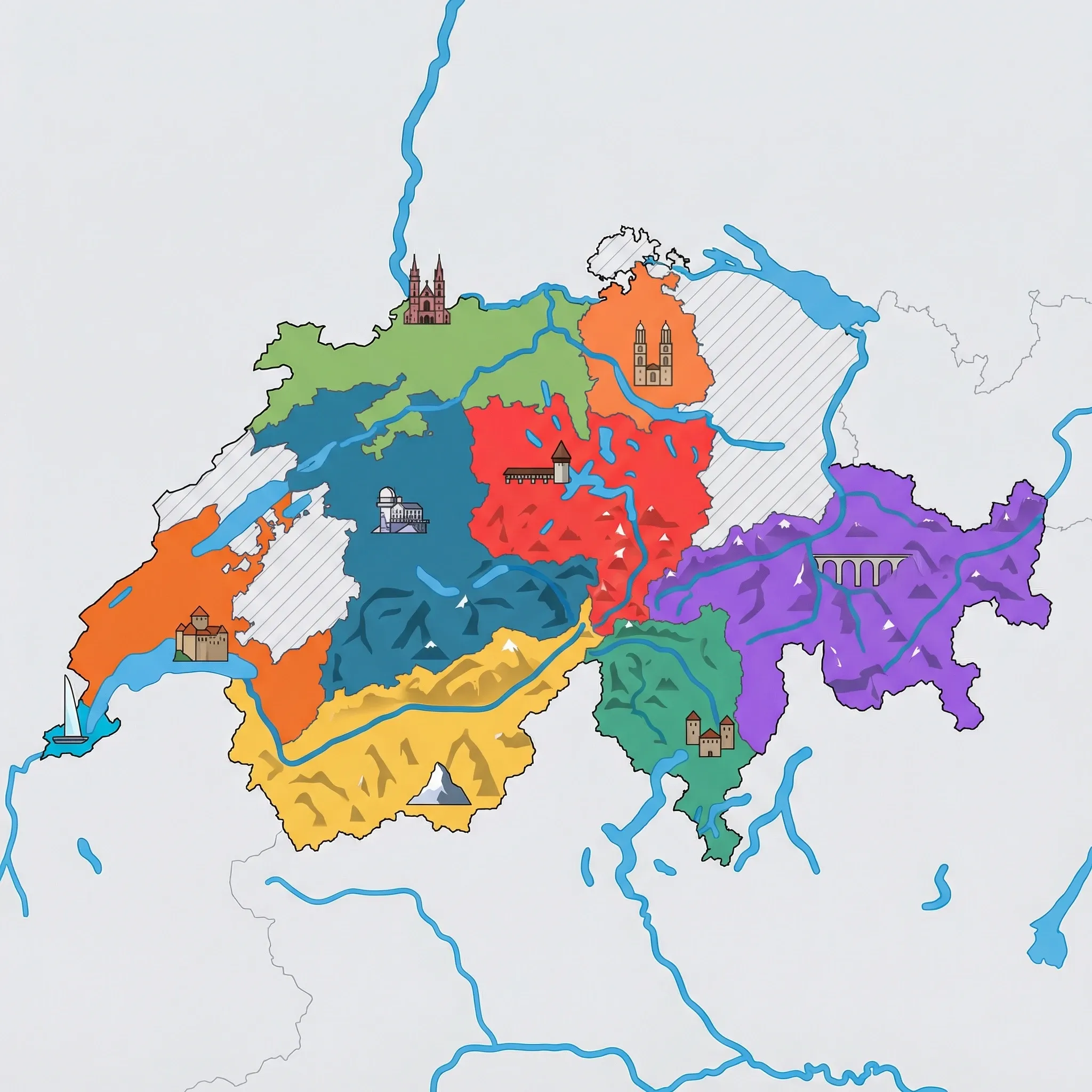
Click a region to explore
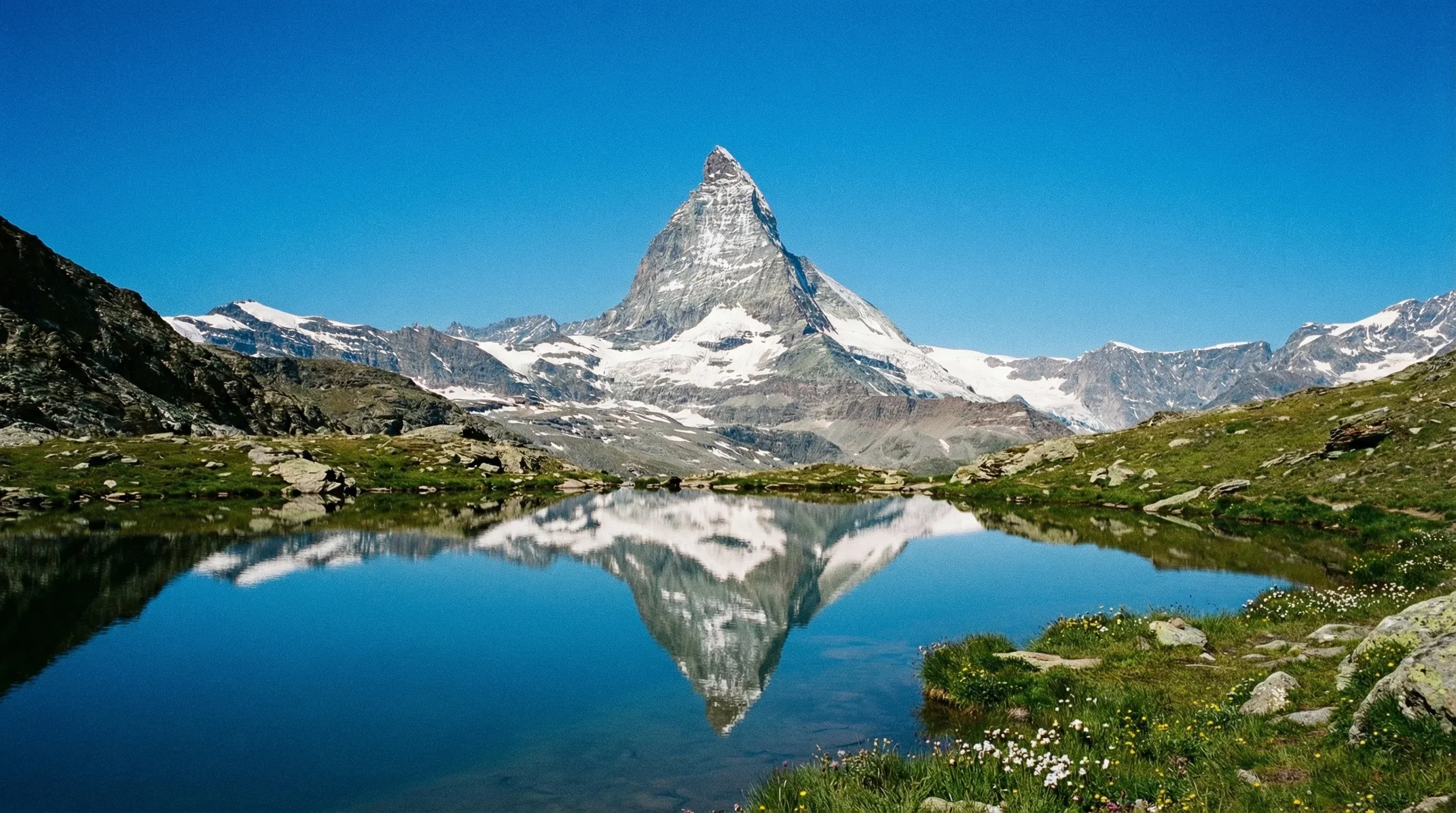
Valais is a valley of contrasts. On the valley floor, the Rhône river flows through apricot orchards and vineyards that bake in the intense sun. Rise up the steep valley walls, and you enter a world of glaciers, 4,000-metre peaks, and ancient wooden villages blackened by the sun. For families, Valais is about high-altitude adventure. It is home to The Matterhorn, the mountain every child recognises from the Toblerone bar. But beyond the famous peak, it is a region deeply connected to its agricultural roots. You will see black-nosed sheep, cow fighting festivals (the cows push, they don't hurt each other!), and the famous St. Bernard dogs.
This is the sunniest canton in Switzerland, making it a safe bet for weather. It is also an engineering marvel; families can visit the Grande Dixence Dam, the tallest gravity dam in the world, which looks like the Wall from Game of Thrones. In winter, it is the premier ski destination, but in summer, it transforms into a hiking paradise with 'Suonen' (historic irrigation channels) providing flat, flowing paths along the steep slopes that are perfect for families. The resorts here, like Zermatt and Saas-Fee, are car-free, adding a layer of safety and charm as electric taxis zip silently around.
Key Attractions
Zermatt is the jewel. A trip up the Gornergrat railway offers the classic view of the Matterhorn. For a snow experience in August, take the cable car to Matterhorn Glacier Paradise—the highest cable car station in Europe, featuring a cinema lounge and ice sculptures inside a glacier. Further down the valley, the Aletsch Glacier is the longest in the Alps; seeing this river of ice from the viewpoints at Eggishorn or Bettmeralp is a geography lesson on a massive scale.
Animal lovers must visit Barryland - Saint Bernard Museum in Martigny. Here, children can meet the famous rescue dogs and learn their history. For a fun, low-stress day out, the Swiss Vapeur Parc near Lake Geneva is a miniature railway park where you can ride steam trains through a tiny Switzerland—it is an absolute hit with toddlers and preschoolers.
Practical Advice
Best Time to Visit: July to September for high-alpine hiking. December to April for reliable snow. Zermatt is open year-round.
Family Logistics: Valais resorts are often high altitude (1,600m+). Take it easy on the first day to acclimatise. Drink plenty of water. Zermatt and Saas-Fee are car-free; you must park in the valley and take a train/bus up.
Food & Drink
Typical meal times: Lunch 12:00 pm to 2:00 pm. Dinner 6:30 pm to 9:30 pm. Raclette is traditionally a dinner dish.
Typical meal costs: Zermatt is expensive (mains CHF 30–50). Valley towns like Sion are cheaper. All-you-can-eat Raclette: CHF 35–45 (approx. $39–50 USD / €33–42 EUR).
Dietary requirements: Cheese and potatoes dominate. Lactose intolerance is tricky here. Ask for 'Viande Séchée' (dried meat) platters.
Signature dishes:
- Raclette – The most famous dish. Half a wheel of cheese is melted by a fire and scraped onto potatoes, pickles, and onions.
- Cholera – A savoury pie filled with potatoes, onions, apples, and cheese. It dates back to a cholera epidemic when people baked whatever they had into a pie—delicious despite the name!
- Apricot Tart – Valais produces fantastic apricots; in summer, the fresh fruit tarts are unbeatable.
Why this score?
The region contains the highest peaks in Switzerland and massive glaciers, offering a truly grand and rugged Alpine scale. While Zermatt itself is developed, the surrounding mountains and valleys like the Aletsch Glacier provide serious opportunities for high-altitude adventure. It is more physically demanding than the central plateaus, though still supported by world-class infrastructure.
Why this score?
Medical facilities in the Rhone Valley (Sion, Visp) are excellent and well-versed in treating mountain-related trauma and altitude issues. While extremely remote valleys are further from major hospitals, the local rescue organizations (like Air Zermatt) are legendary for their efficiency. The medical standard is high, though university-level care requires transport to Lausanne or Bern.
Why this score?
Valais is home to the Matterhorn, one of the most photographed and recognized mountains in the world, making Zermatt a global tourism powerhouse. The region's major ski resorts like Verbier and Saas-Fee ensure heavy international visitor flows in both winter and summer. It is a top-tier destination that is central to Switzerland's global tourism identity.

Zermatt and Verbier are among the most expensive resorts in the world. However, the side valleys (like Val d'Anniviers) offer better value. Accommodation prices drop significantly in summer compared to winter. Budget CHF 250–400 (approx. $280–450 USD / €240–380 EUR) per day for a family in Zermatt.
Family Travel Notice
Minors travelling alone or with only one legal guardian should carry a notarized letter of consent from the non-travelling parent to facilitate smooth border crossings.

Getting Here & Around
Getting Here
- Train – The railway line runs the length of the valley from Lake Geneva to Brig. Zermatt is reached by the narrow-gauge Matterhorn Gotthard Bahn.
- Driving – Access from the north is via the Lötschberg car train (put your car on a train to go through the tunnel). Access from the east is via the Furka or Grimsel passes (summer only).
- Airports – Geneva (GVA) or Zurich (ZRH). Geneva is closer (approx. 2 hours by train to Sion).
Getting Around
- Cable Cars – Essential. Valais has the highest density of cableways to get you from the hot valley floor to the cool peaks.
- Train – The regional train is the backbone of transport.
- PostBus – Famous for navigating the hair-raising turns up to the side valleys.
No airports in this region. See the country flight map for nearby connections.
Official Links

Packing List
The UV radiation at altitude combined with glacier reflection burns skin incredibly fast.
Dry mountain air and sun cause chapped lips quickly.
It can be 30°C in the valley and 0°C on the Klein Matterhorn on the same day.
Switzerland uses a unique hexagonal 3-pin socket. Standard European (Type F) plugs will not fit.
Ticks are common in Swiss forests and tall grass below 1500m; quick removal is important.
Families heavily use the immaculate public 'Feuerstelle' (BBQ pits) found on hiking trails.
There are thousands of public fountains with pristine mountain spring water; buying water is unnecessary.
Floating down the Aare (Bern) or Limmat (Zurich) rivers is a popular summer family activity.

Activities & Best Times

Hiking, wildlife, outdoor exploration, ecotourism
Home to the iconic Aletsch Glacier and diverse wildlife experiences like the St. Bernard dogs at Barryland, offering world-class immersion in alpine wilderness.

Urban tourism, museums, historical sites, architecture
Features internationally celebrated landmarks like the Gornergrat and historic Sion, providing sophisticated families with authentic alpine heritage and world-class views.

Amusement parks, family entertainment venues
Boasts major attractions including Aquaparc and the world-renowned Leukerbad thermal complexes, providing high-quality year-round entertainment for discerning families.

Sport tourism, fitness activities, active recreation
Home to unique facilities like the Alaïa Bay surfing basin and various high-standard adventure parks that cater to active families during the warmer months.

Attractions (22 total)



Public Holidays & Calendar Next 12 months
Public holidays, festivals, cultural celebrations, and seasonal natural phenomena coming up in Valais over the next 12 months.
Loading holidays and events...

Travel Advisory
All major international agencies agree that Switzerland requires only standard safety awareness. There are no significant security threats or travel restrictions currently in place for the country.
Safety Topics
Traveller Advice (4 groups)

Maintain standard personal security awareness in urban centers and crowded areas. Carry identification and ensure all travel documents meet Schengen area validity requirements.
Alpine activities carry significant risk. Travellers should check local weather and avalanche forecasts daily, stay on marked trails, and ensure insurance covers mountain rescue and medical evacuation.

Switzerland is generally very welcoming and safe for sexual and gender minorities, with strong legal protections and social acceptance.
Minors travelling alone or with only one legal guardian should carry a notarized letter of consent from the non-travelling parent to facilitate smooth border crossings.
Agency Summaries
Maintains a baseline risk level. Visitors are advised to be aware of the general threat of terrorism across Europe and to keep a close watch on personal belongings at major transport interchanges and popular tourist sites.
Switzerland is considered a low-risk destination. Primary recommendations include staying vigilant in busy transit hubs and being adequately prepared for the physical demands and inherent risks of mountain activities and high-altitude environments.
Travellers should maintain standard safety awareness as they would in their home country. While Switzerland is safe, urban protests in major cities like Zurich and Bern can occasionally disrupt transit, and petty theft remains a factor in crowded tourist locales.
A safe destination for visitors. Advice emphasizes winter driving safety, including the necessity of winter tires, and ensures that families travelling with minors have proper documentation to avoid border delays.
No major safety warnings are in place. Guidance focuses on common sense precautions against pickpocketing, particularly on public transport between major cities, and adhering to regional regulations such as face-covering prohibitions in specific cantons.
Overall security is high, though petty crime is slightly increasing in metropolitan areas. Travellers are reminded that medical costs are exceptionally high and lack reciprocal agreements with Australia, making comprehensive insurance essential.
Information is provided for general guidance only and does not constitute travel, safety, medical, or legal advice. Conditions may change. Users are responsible for independently verifying information before travel.