
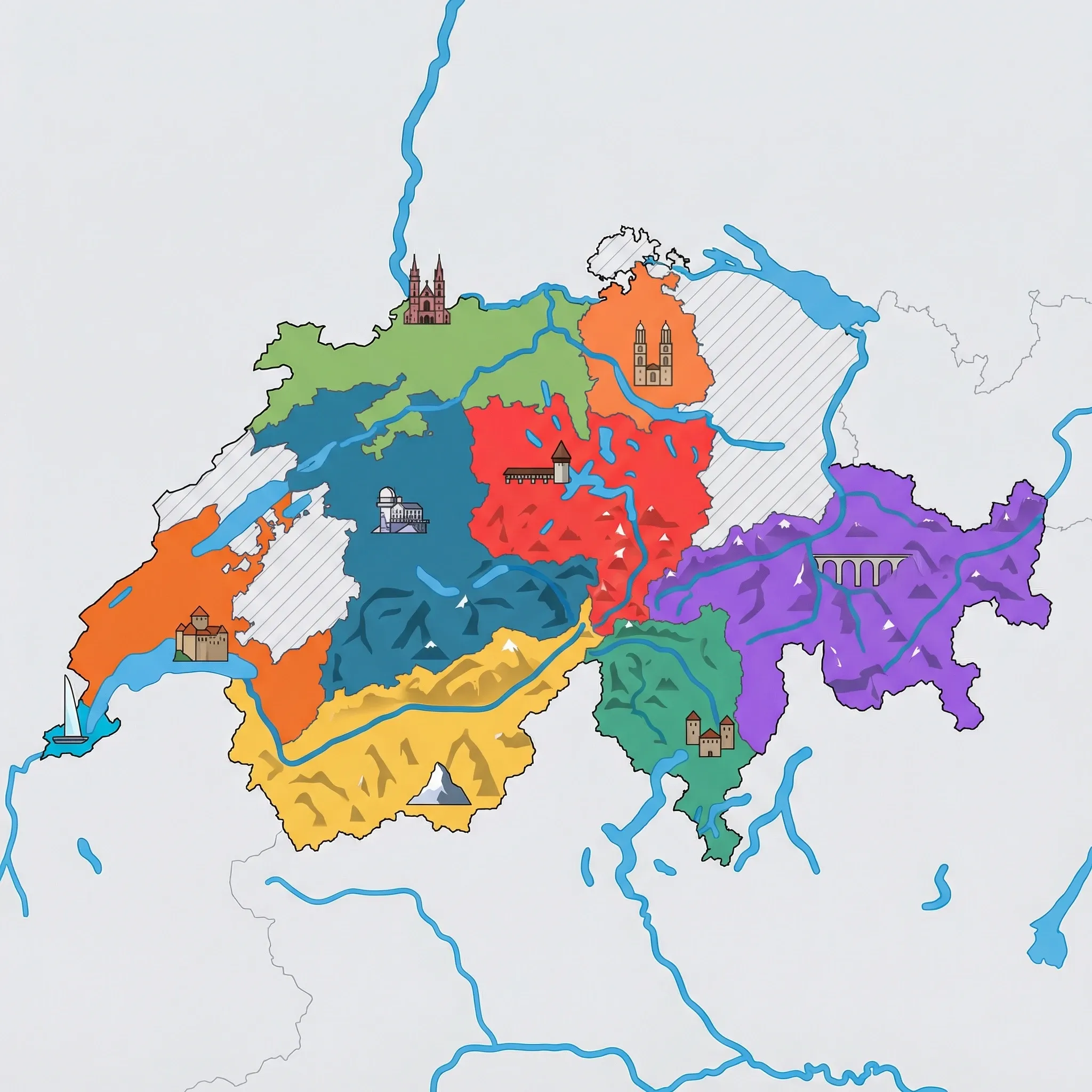
Click a region to explore
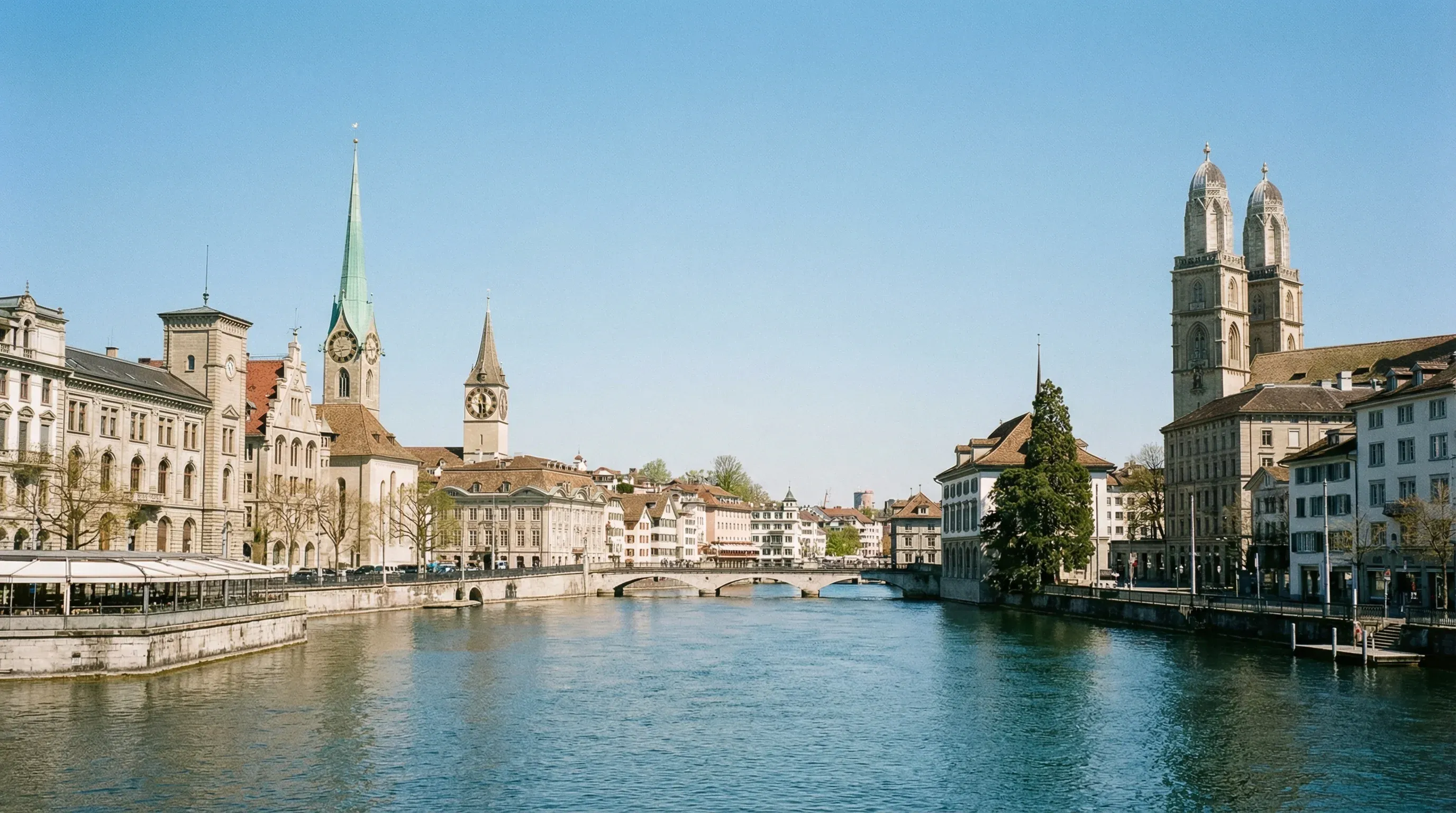
Zurich often tops the lists of the world's most liveable cities, and visiting families will quickly see why. It is immaculate, safe, and efficient, but also surprisingly fun. The city's rhythm is dictated by water: Lake Zurich and the Limmat River are swimmable, and in summer, the 'Badis' (river and lake baths) turn into social hubs for families. The water is so clean you can drink from the fountains. While it is a financial powerhouse, Zurich has a creative, playful side, especially in the Zurich-West district, where old factories have been turned into culture spaces and parks.
Beyond the city centre, the Canton of Zurich offers rolling green hills and medieval towns that feel a world away from the banks. It is an all-weather destination: if it rains, you have world-class museums like the Kunsthaus Zürich (which has great workshops for kids) or the Technorama in Winterthur (one of Europe's best science centres). If the sun shines, the Uetliberg mountain offers a panoramic playground overlooking the city and the Alps in the distance.
Key Attractions
For children, the highlight is often Knies Kinderzoo in Rapperswil. Unlike a standard zoo, this is focused on interaction; kids can ride camels, feed elephants, and get close to giraffes. It is run by the famous Knie circus family and is beautifully designed. Back in the city, the Botanical Garden of the University of Zurich is a futuristic dome-filled oasis that is free to enter and great for a picnic. Football fans might enjoy the FIFA Museum (not in list, but notable), while art lovers should see the Grossmünster towers for the view.
A short train ride north brings you to the Rhine Falls, the largest waterfall in Europe. Taking a boat ride to the rock in the middle of the thundering water is an exhilarating experience for all ages. Adjacent to this is Schloss Laufen am Rheinfall, a castle that offers dramatic views of the falls from glass elevators. For active teens, Atzmännig offers a rope park and toboggan run in the pre-Alpine hills.
Practical Advice
Best Time to Visit: June to August for lake swimming and open-air cinema. December for the magical Christmas markets and the 'Singing Christmas Tree'.
Family Logistics: The 'Zürich Card' offers free travel on trams, buses, trains, and boats in the city, plus free or discounted museum entry. It pays for itself quickly if you do a boat trip.
Food & Drink
Typical meal times: Lunch 11:30 am to 1:30 pm. Dinner 6:00 pm to 10:00 pm. Zurich is international, so finding food at odd hours is easier here than in the countryside.
Typical meal costs: Very high. Zurich is one of the world's most expensive cities. Burger & Fries: CHF 25–35 (approx. $28–39 USD / €24–33 EUR). Family dinner: CHF 150+ (approx. $165 USD / €140 EUR).
Dietary requirements: Exceptional. Hiltl is the oldest vegetarian restaurant in the world (Guinness Record) and offers a massive buffet that kids love. Vegan/GF is standard.
Signature dishes:
- Zürcher Geschnetzeltes – Sliced veal in a creamy white wine and mushroom sauce, traditionally served with Rösti.
- Luxemburgerli – Small, light macarons from Sprüngli (Paradeplatz). Expensive but legendary.
- Wiedikerli – A local pork sausage from the Wiedikon district, perfect for grilling.
Why this score?
Zurich is a highly developed urban and suburban region with very little rugged terrain. Adventure is limited to swimming in the lake, walking up the local Uetliberg hill, or visiting man-made adventure parks like Alpamare. It is a very safe, polished, and structured environment that prioritizes comfort and efficiency over ruggedness.
Why this score?
Zurich is a global leader in medical care, featuring the University Hospital Zurich and numerous world-renowned private clinics. The density of specialists, the cutting-edge technology, and the universal English proficiency make it a top destination for medical tourists. For a traveling family, it offers the highest possible level of medical security.
Why this score?
As the country's primary flight hub and largest city, Zurich is the entry point and main urban destination for millions of international visitors. Its mix of high-end shopping, the Lindt Home of Chocolate, and one of Europe's best zoos keeps it consistently crowded with tourists. It is a global city that serves as the commercial and cultural engine of Switzerland.

Zurich is a 'luxury' cost destination, even for basic items. A coffee can cost CHF 6. However, the quality of life is high. Public water fountains, clean lake swimming, and parks are free. To save, buy lunch at the 'Migros Take Away' or Coop supermarkets. Family hotel room: CHF 250–400 (approx. $280–450 USD / €240–380 EUR).
Family Travel Notice
Minors travelling alone or with only one legal guardian should carry a notarized letter of consent from the non-travelling parent to facilitate smooth border crossings.

Getting Here & Around
Getting Here
- Airports – Zurich Airport (ZRH) is a major global hub. It is consistently voted Europe's leading airport and is just 10 minutes by train from the city centre.
- Train – The Hauptbahnhof (HB) is the busiest station in Switzerland, with direct connections to everywhere in Europe.
- Driving – Driving in Zurich city is stressful and parking is astronomically expensive. Use the Park & Ride facilities.
Getting Around
- Tram – The blue trams are the symbol of the city. They are frequent, clean, and safe.
- Boat – The Limmat river boats are low-profile vessels that slide under the bridges. Lake steamers connect Zurich to Rapperswil Old Town.
- S-Bahn – The commuter trains (S-Bahn) are double-decker and offer great views, connecting the whole canton efficiently.
Nearby Airports (2 airports)
St Gallen Altenrhein
ACHAltenrhein
Zurich Airport
ZRHZurich
View full flight map for Switzerland →
Official Links

Packing List
The 'Badis' (river baths) are social scenes; locals treat them like beach clubs.
For swimming in the Limmat river while floating your belongings downstream.
You will walk a lot on pavement and cobblestones; hiking boots are overkill for the city.
Switzerland uses a unique hexagonal 3-pin socket. Standard European (Type F) plugs will not fit.
Ticks are common in Swiss forests and tall grass below 1500m; quick removal is important.
Families heavily use the immaculate public 'Feuerstelle' (BBQ pits) found on hiking trails.
There are thousands of public fountains with pristine mountain spring water; buying water is unnecessary.
Floating down the Aare (Bern) or Limmat (Zurich) rivers is a popular summer family activity.

Activities & Best Times

Urban tourism, museums, historical sites, architecture
Zurich is a global cultural hub with world-class museums like the Kunsthaus and a sophisticated, historic city center that appeals to discerning travelers. Peak months include the pleasant late spring/early autumn and December for the festive atmosphere, while January to March can be cold and grey.

Hiking, wildlife, outdoor exploration, ecotourism
The region excels in family-oriented nature experiences, notably the highly-regarded Jucker Farm and Uetliberg trails. Summer months provide the most reliable conditions for exploring the lake and surrounding hills, whereas winter often sees trail closures or unappealing conditions for non-skiing nature exploration.

Sport tourism, fitness activities, active recreation
Excellent infrastructure like Skillspark and the Alpamare center provide strong options for active families. Outdoor activity is at its peak during the warmer months when lake-based sports and cycling routes are fully accessible.

Learning experiences, scientific sites, historical education
Zoo Zürich's Exotarium is a world-class facility for biological education, though it serves as a singular major attraction in this category. Visitation is optimal during the warmer months when the zoo's extensive outdoor habitats are most active.

Amusement parks, family entertainment venues
Conny-Land and the regional thermal parks offer quality entertainment but do not reach the scale of major international theme parks. Operation and enjoyment are highly dependent on summer weather for outdoor rides and aquatic attractions.

Attractions (25 total)



Public Holidays & Calendar Next 12 months
Public holidays, festivals, cultural celebrations, and seasonal natural phenomena coming up in Zurich over the next 12 months.
Loading holidays and events...

Travel Advisory
All major international agencies agree that Switzerland requires only standard safety awareness. There are no significant security threats or travel restrictions currently in place for the country.
Safety Topics
Traveller Advice (4 groups)

Maintain standard personal security awareness in urban centers and crowded areas. Carry identification and ensure all travel documents meet Schengen area validity requirements.
Alpine activities carry significant risk. Travellers should check local weather and avalanche forecasts daily, stay on marked trails, and ensure insurance covers mountain rescue and medical evacuation.

Switzerland is generally very welcoming and safe for sexual and gender minorities, with strong legal protections and social acceptance.
Minors travelling alone or with only one legal guardian should carry a notarized letter of consent from the non-travelling parent to facilitate smooth border crossings.
Agency Summaries
Maintains a baseline risk level. Visitors are advised to be aware of the general threat of terrorism across Europe and to keep a close watch on personal belongings at major transport interchanges and popular tourist sites.
Switzerland is considered a low-risk destination. Primary recommendations include staying vigilant in busy transit hubs and being adequately prepared for the physical demands and inherent risks of mountain activities and high-altitude environments.
Travellers should maintain standard safety awareness as they would in their home country. While Switzerland is safe, urban protests in major cities like Zurich and Bern can occasionally disrupt transit, and petty theft remains a factor in crowded tourist locales.
A safe destination for visitors. Advice emphasizes winter driving safety, including the necessity of winter tires, and ensures that families travelling with minors have proper documentation to avoid border delays.
No major safety warnings are in place. Guidance focuses on common sense precautions against pickpocketing, particularly on public transport between major cities, and adhering to regional regulations such as face-covering prohibitions in specific cantons.
Overall security is high, though petty crime is slightly increasing in metropolitan areas. Travellers are reminded that medical costs are exceptionally high and lack reciprocal agreements with Australia, making comprehensive insurance essential.
Information is provided for general guidance only and does not constitute travel, safety, medical, or legal advice. Conditions may change. Users are responsible for independently verifying information before travel.