

⚠️ SAFETY WARNING: Due to the volatile security situation following the collapse of the government in late 2024, significant risks of kidnapping, and widespread terrorism, government agencies (including CA, USA, UK, AU, IE, NZ) advise travelers to avoid all travel to this country. The security environment is unpredictable and consular support is virtually non-existent. Families are strongly urged to consult their own government's official travel advisory before considering a trip, as circumstances and risk assessments vary.
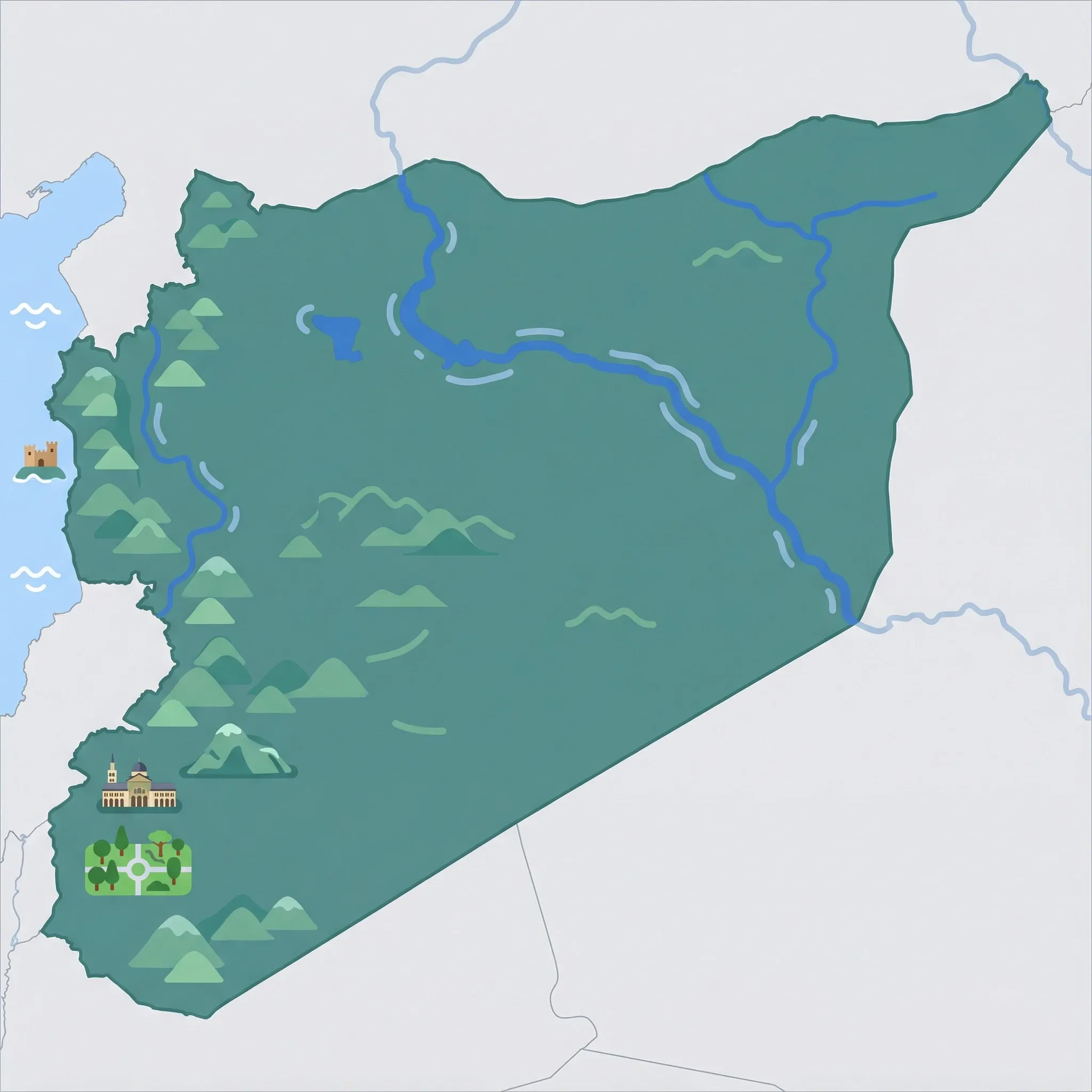
Located in the heart of the Middle East, Syria has long been a crossroads of civilizations. From the snow-capped peaks of the Anti-Lebanon Mountains to the vast expanse of the Syrian Desert, the landscape is as diverse as its history. For centuries, this land has welcomed traders, pilgrims, and empires, leaving behind a tapestry of archaeological wonders that are unrivaled in their density. The country offers a profound educational experience for older children interested in the origins of writing, agriculture, and urban living.
Culturally, Syria is defined by its mosaic of communities and its legendary hospitality. Despite recent hardships, the tradition of welcoming guests remains a cornerstone of local life. Families who visited in the past often recall the warmth of the people, the intricate storytelling in the hakawati (traditional cafes), and the sensory overload of spices and perfumes in the ancient markets. While the current climate makes tourism extremely difficult, the enduring spirit of the region remains a testament to human resilience.
Key Attractions
If stability returns, the country's historical sites are world-class. The Old City of Damascus is essential, where families can wander through the covered Souq Al-Hamidiyah to reach the magnificent Umayyad Mosque. This architectural masterpiece, with its glittering gold mosaics and massive courtyard, is a serene space where children can see history come alive. Just outside the capital, Mount Qasioun offers panoramic views over the city, particularly striking at sunset.
Further north, the Krak des Chevaliers is arguably the most perfectly preserved Crusader castle in the world. Its massive walls, dark tunnels, and high towers ignite the imagination of any child, offering a tangible connection to the era of knights and medieval battles. In the desert, the Palmyra Archaeological Site stands as a hauntingly beautiful reminder of the Roman Empire's reach, with its colonnaded streets and Temple of Bel. For a change of pace, Arwad Island, the only inhabited island in Syria, offers a glimpse into a traditional seafaring way of life.
In the north, the Citadel of Aleppo dominates the skyline of one of the world's oldest continuously inhabited cities. Exploring its ramparts and the surrounding Old City of Aleppo-famous for its soaps and textiles-provides a deep dive into Silk Road history. For a relaxing experience, the Hammam al-Nahhasin offers a traditional bathhouse experience that has been part of local culture for centuries.
Practical Advice
Best time to visit: Spring (March to May) and autumn (September to November) offer the most pleasant temperatures for exploring ruins and walking through cities. Summers are intensely hot, especially in the desert regions.
Visas & Entry: Obtaining a visa is currently extremely difficult and bureaucratic. Rules change frequently, and entry is often denied without explanation. Dual nationals must be particularly careful regarding military service obligations.
Health: The healthcare system has been severely degraded. Essential medicines are often unavailable, and hospitals may lack power. Comprehensive travel insurance with medical evacuation cover is mandatory but may be hard to validate due to sanctions.
Food & Drink
Typical meal times: Lunch is the main meal, typically eaten from 2:00 pm to 4:00 pm. Dinner is lighter and served late, often from 8:00 pm to 10:00 pm.
Typical meal costs: 150,000–300,000 SYP (approx. $10–20 USD / €9–18 EUR) for a mid-range restaurant meal. Street food is cheaper but prices fluctuate daily due to inflation.
Dietary requirements: Syrian cuisine is excellent for vegetarians, with dishes based on chickpeas, eggplant, and fresh vegetables readily available. Vegan options are also common (falafel, hummus), though gluten-free bread may be hard to find.
Family-friendly dining: Children are welcomed everywhere. Sharing is the norm, and meze (small plates) allow kids to try many different flavours without committing to a single large dish.
Signature dishes:
- Kibbeh – Minced meat and bulgur wheat croquettes, often stuffed with nuts and spices, served fried or grilled.
- Fatteh – A breakfast or lunch dish of toasted flatbread, chickpeas, warm yogurt, and pine nuts.
- Yabraq – Vine leaves stuffed with rice and minced meat, slow-cooked with lemon and garlic.
- Mahlai – A traditional dessert pudding spiced with anise, caraway, and cinnamon, often served to celebrate a birth.
Safety
Travel to Syria involves extreme risk. Kidnapping for ransom is a significant threat to foreigners. Unexploded ordnance contaminates many areas, including former battlefields and rural roads. Checkpoints are frequent, and soldiers or militia members may demand bribes or detain travelers arbitrarily. Photography of any government building, military personnel, or infrastructure is strictly prohibited and can lead to immediate arrest. Always travel with a trusted local guide who knows the current security landscape.

While local goods are inexpensive due to currency devaluation, the logistical cost of safe travel is high. A family might spend 2,000,000–4,000,000 SYP (approx. $130–260 USD / €120–240 EUR) per day, largely driven by the need for a private driver, security, and generator-powered accommodation. Basic street food is cheap, but imported goods are very expensive.
Age Suitability





Did you know? Syria welcomes approximately 5.1 million international visitors per year. Most visitors come from Middle East.
Why this score?
Visiting Syria currently represents a significant adventure due to the logistical challenges of navigating a post-conflict landscape and the rugged nature of its diverse geography, which includes the Syrian Desert and the Coastal Mountain Range. Families seeking off-the-beaten-path experiences can explore remote Crusader castles like Krak des Chevaliers or hike sections of the Abraham Path. The lack of traditional Western tourism infrastructure in many areas requires a high degree of self-sufficiency and a willingness to engage with a complex, evolving environment.
Why this score?
Medical services in Syria have been severely impacted by years of conflict and international sanctions, leading to shortages of specialized equipment and pharmaceuticals. While basic healthcare and some private hospitals remain functional in Damascus and Latakia, they often lack English-speaking staff and do not widely accept international travel insurance. For foreign families, emergency medical evacuation is often the only reliable option for serious conditions, as rural areas have very limited or non-existent facilities.
Why this score?
While Western leisure tourism is recovering from a low base, the region attracts over 5 million annual visitors, largely driven by religious pilgrimage to sites like Sayyida Zeinab and regional travelers from neighboring countries. The presence of world-renowned UNESCO World Heritage sites such as the Old City of Damascus, the Citadel of Aleppo, and the ruins of Palmyra maintains its status as a significant cultural destination. Despite travel advisories in some nations, the country's vast array of historical attractions ensures a steady flow of international interest.
While local goods are inexpensive by international standards, the cost of secure transport and specialized guides makes travel expensive. Inflation is rampant. A mid-range hotel might cost 400,000–900,000 SYP (approx. $30–70 USD / €28–65 EUR) per night. Bring all cash in USD or EUR as international cards do not work.

Getting There & Around
Getting There
- By Air – Damascus International Airport (DAM) operates limited flights, primarily to regional hubs. Flights are frequently cancelled due to security incidents.
- By Land – The Jaber-Nasib border crossing from Jordan is the primary land route, though it closes unpredictably. The border with Lebanon is currently hazardous.
- Entry Requirements – Visas are required for almost all nationalities and must often be arranged via a local sponsor months in advance. Check your government website for the latest visa requirements, or use the IATA Travel Centre entry-requirements checker.
Getting Around
- Private Driver – The only viable option for families. Self-driving is highly dangerous due to checkpoints and poor road conditions. Hiring a trusted local driver with security knowledge is essential.
- Taxis – Available in major cities like Damascus. Agree on a fare in advance as meters are rarely used or accurate due to inflation.
- Buses – Inter-city buses exist but are often crowded, unreliable, and subject to frequent security stops. Not recommended for tourists.
Official Links

Packing List
Electricity cuts are frequent and can last for many hours; reliable power is scarce.
International credit cards do not work due to sanctions; you must bring all cash needed.
Street lighting is non-existent in many areas and stairwells are often pitch black.
Tap water is generally unsafe and bottled water shortages can occur in remote areas.
Pharmacies often lack basic authentic medications; bring your own supply of everything.

Activities & Best Times

City & Cultural
ExcellentUrban tourism, museums, historical sites, architecture
Home to some of the world's oldest continuously inhabited cities and iconic UNESCO sites like Krak des Chevaliers and the Aleppo Citadel. Spring and autumn offer ideal temperatures for exploring dense historic souks and architectural marvels before the intense summer heat or winter rains.

Adventure & Nature
GoodHiking, wildlife, outdoor exploration, ecotourism
While the Abraham Path and desert trekking are significant, the current attraction database shows only 1 notable hiking route. 'Very good' implies nationally outstanding adventure infrastructure. Unless additional major hiking routes are documented, 'good' is more appropriate.

Educational & Exploratory
GoodLearning experiences, scientific sites, historical education
Internationally significant historical science sites like the Bimaristan al-Nuri provide unique insights into medieval Islamic medicine and discovery. These indoor facilities are best visited during the primary tourism windows when regional accessibility and local infrastructure are most active.

Relaxation & Wellness
GoodSpa retreats, wellness centers, peaceful getaways
Damascus and Aleppo house some of the most authentic and architecturally stunning historic hammams in the Middle East. The experience is best in milder months, as the intense heat of July and August makes the traditional steam baths less appealing for international travelers.

Road Trips & Scenic
GoodScenic drives, countryside tours, route-based travel
Routes such as the Desert Highway to Palmyra or the Coastal Mountain Drive offer dramatic shifts from Mediterranean greenery to arid landscapes. Clear visibility and mild temperatures in spring and autumn are essential for navigating these scenic corridors safely and comfortably.

Sports & Active
GoodSport tourism, fitness activities, active recreation
The region features recognized long-distance hiking routes that require specific logistical planning and physical engagement with the terrain. Optimal conditions occur during transitional seasons when the climate supports high-exertion activity without the risk of heat exhaustion.

Beach & Sea
MarginalBeach resorts, marine activities: diving, snorkelling, kite surfing, wind surfing, sailing
Limited coastline (~183km), no internationally recognized beach resorts. While Arwad Island and Wadi Qandil offer unique experiences, they don't meet Mediterranean beach quality standards (Greece, Turkey, Croatia). Rating should reflect actual beach tourism potential, not just coastal access.

Theme Park & Entertainment
MarginalAmusement parks, family entertainment venues
While facilities like Happy Land exist, they primarily cater to local audiences and lack the world-class innovation expected by sophisticated international families. Summer is the primary operating window for water-based entertainment parks.

Attractions (16 total)



Public Holidays & Calendar Next 12 months
Public holidays, festivals, cultural celebrations, and seasonal natural phenomena coming up in Syria over the next 12 months.
Loading holidays and events...

Travel Advisory
Extreme risk conditions persist across the country. All major international agencies maintain their highest warning level, advising against all travel due to active armed conflict, terrorism, and kidnapping risks.
Safety Topics
Traveller Advice (5 groups)

Do not attempt travel. If currently present, leave immediately while safe commercial options are available. Ensure personal security plans are robust and maintain stocks of food, water, and medicine.

Same-sex relations may be illegal and carry social and legal penalties. Public displays of affection should be avoided entirely due to cultural and legal risks.

Severe security threats and the lack of legal protection or consular support create an exceptionally dangerous environment for female visitors.

Media professionals face severe risks including targeted violence, disappearance, and detention. Accreditation must be strictly coordinated with local authorities, though this does not guarantee safety.

Humanitarian staff are frequently targeted for kidnapping and hostage-taking. Operations should only be conducted with high-level security protocols and professional protection.
Agency Summaries
Travel is strongly discouraged because of extreme risks involving armed conflict, terrorism, civil unrest, and the danger of being taken hostage or kidnapped. Diplomatic operations are suspended, and the ability to assist citizens is extremely limited.
Foreign nationals are advised to completely avoid the country due to severe regional tensions, ongoing armed conflict, significant criminal activity, and the frequent occurrence of kidnappings and terrorist attacks.
Citizens are urged not to visit under any circumstances because of high-risk factors including terrorism, war, and political instability. Travel to this destination may void insurance coverage.
The security environment is exceptionally dangerous following the collapse of the previous regime. There are extreme risks from terrorism, violent crime, and abduction, with no domestic diplomatic presence to provide assistance.
All travel is discouraged due to highly unpredictable security environments and a pervasive threat of terrorism. Consular help is not available within the territory.
The safety situation is extremely dangerous due to active warfare, frequent airstrikes, and the constant threat of kidnapping and arbitrary detention. Visitors should be prepared for significant regional escalation and infrastructure disruption.
Information is provided for general guidance only and does not constitute travel, safety, medical, or legal advice. Conditions may change. Users are responsible for independently verifying information before travel.