
Kaohsiung & South
Ancient temples, art warehouses, and harbour adventures 🐲🎨
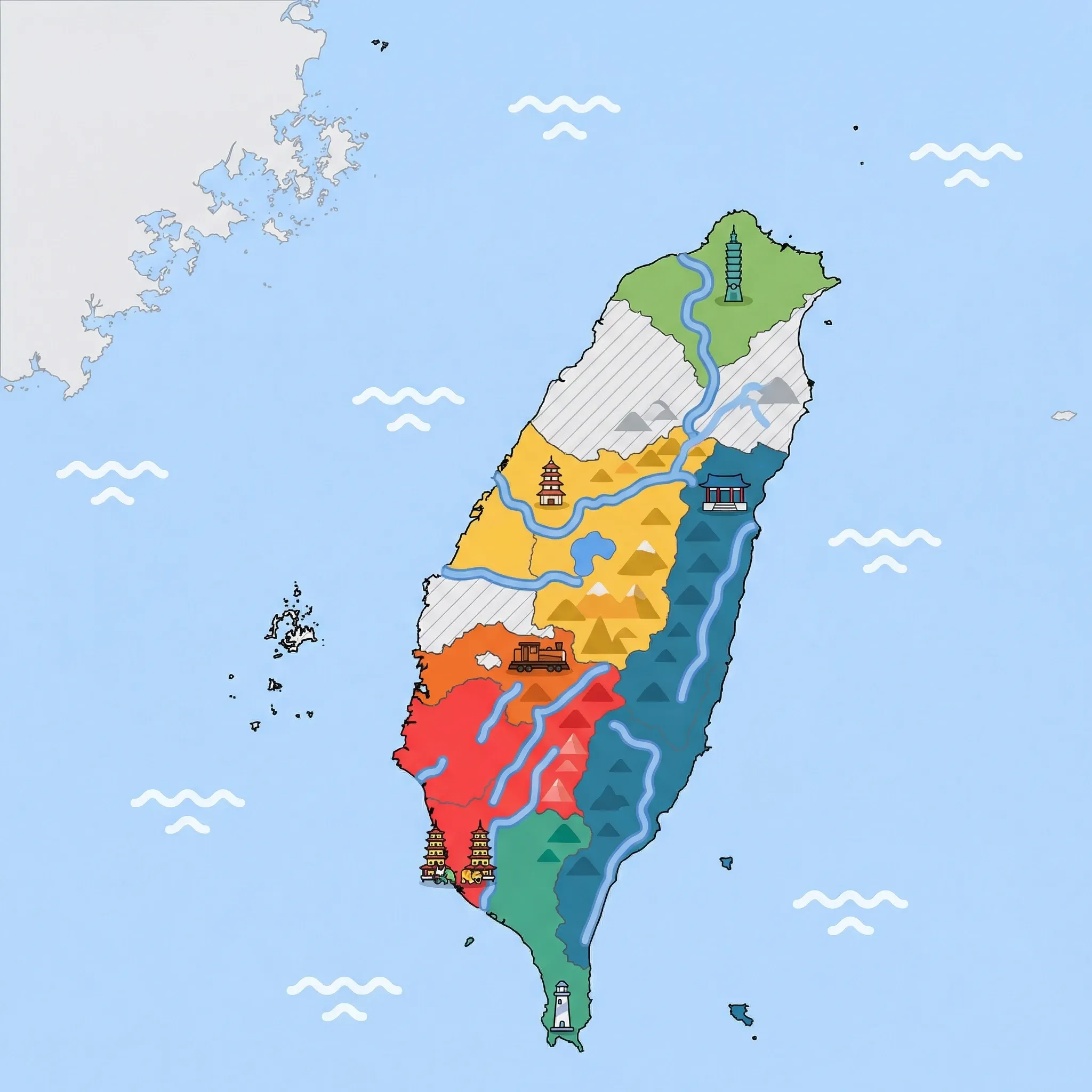
Click a region to explore
Overview
The south of Taiwan, anchored by Kaohsiung and Tainan, offers a warmer, more laid-back alternative to the bustle of Taipei. This region is the cultural heartland of the island, where Dutch colonial history meets modern urban renewal. For families, Kaohsiung is exceptionally stroller-friendly with wide boulevards, a modern light rail system, and vast pedestrian zones. The weather here is tropical and sunny year-round, making it a reliable destination for outdoor activities. The vibe is distinctively friendly; locals are known for their hospitality ("ren qing wei"), and the pace of life feels less hurried.
Children will love the diversity of experiences available within a short distance. You can start the day wandering through 17th-century fortifications in Tainan, the oldest city in Taiwan, and end it watching ships dock in Kaohsiung's futuristic harbor. The region excels at creative placemaking—old sugar factories and warehouses have been converted into vibrant art parks where kids can run free. Tainan offers a deep dive into traditional culture with its maze of temples and snack-filled alleyways, while Kaohsiung provides big-city entertainment like theme parks and shopping malls without the crushing density of the north.
Key Attractions
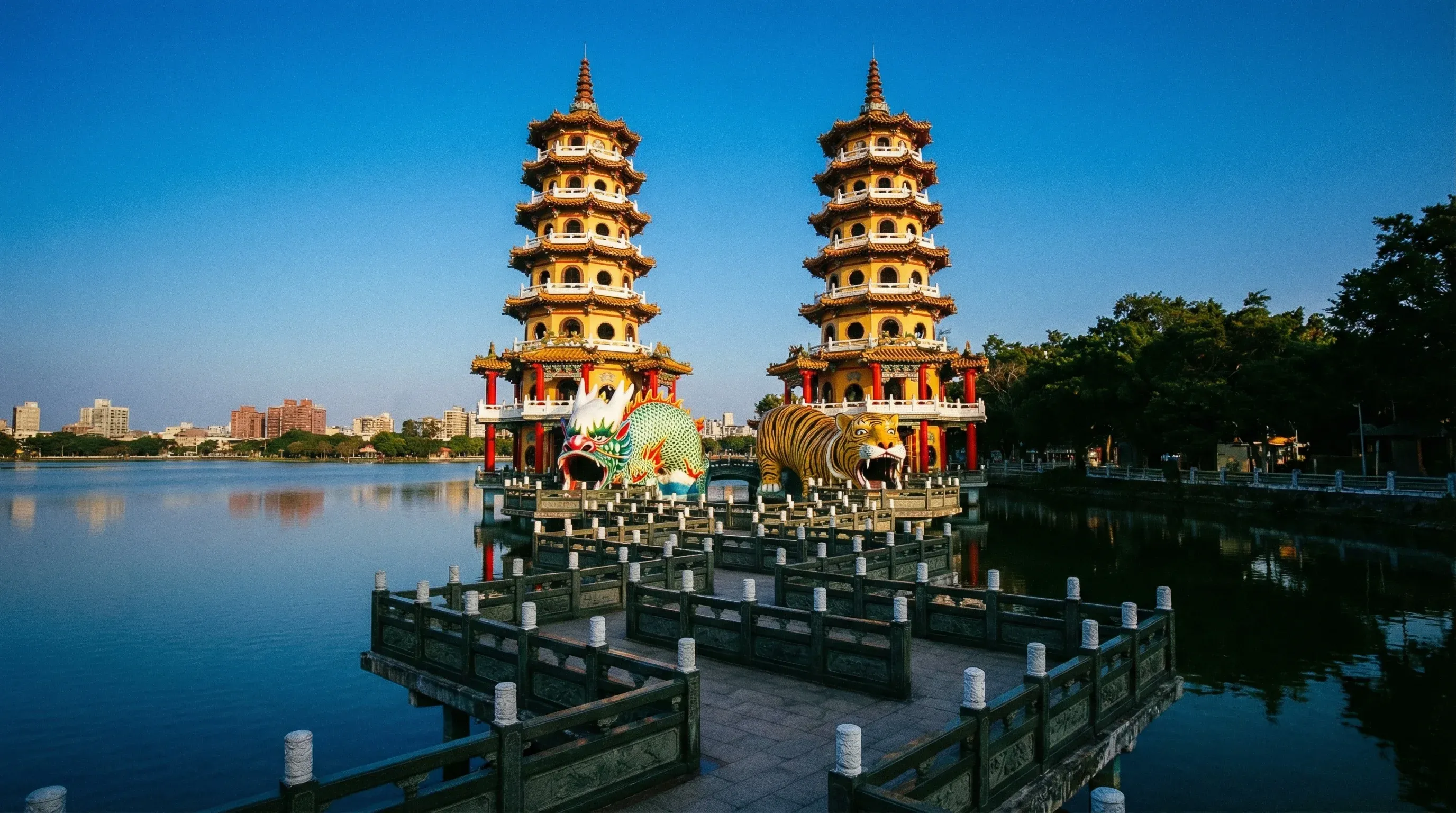
In Kaohsiung, the Pier-2 Art Center is an absolute must; this repurposed warehouse district is filled with whimsical giant sculptures, murals, and open spaces perfect for kids to burn off energy. Nearby, you can take a ferry to Cijin Beach to play in the black sand and eat fresh calamari. For a cultural spectacle, Lotus Pond features the Dragon and Tiger Pagodas—entering the dragon's throat and exiting the tiger's mouth is said to bring good luck, a concept kids find fascinating. Just outside the city, the E-DA Theme Park offers Greek-themed rides and a massive outlet mall.
In neighboring Tainan, history comes alive at Anping Old Fort and the nearby tree-house (a former warehouse consumed by banyan roots). The Chimei Museum is another highlight, looking like a European palace and housing an eclectic collection of arms, armor, and violins that captivates older children.
Practical Advice
The south is hot. Mid-day (11 am – 3 pm) can be scorching, so plan indoor activities or naps during these hours. Winters (December–February) are mild and dry, arguably the best time to visit. Mosquito repellent is essential here year-round.
Food & Drink
Typical meal times: Lunch 11:30 am to 2:00 pm. Dinner 5:30 pm to 8:00 pm. Night markets stay open late (until midnight).
Typical meal costs: Street food is very affordable; a filling meal costs NT$100–200 (approx. $3–6 USD / €2.80–5.80 EUR). Restaurants run NT$300–600 (approx. $9–19 USD / €8.50–17 EUR).
Dietary requirements: Tainan is famous for sweet and savory dishes. Vegetarian food is easy to find, but check for shrimp paste in sauces. Nut allergies should be communicated clearly.
Signature dishes:
- Danzai Noodles – A small bowl of noodles served with minced pork and a single shrimp, a Tainan staple.
- Coffin Bread – Thick toast hollowed out and filled with creamy chowder; kids love the name and the taste.
- Milkfish Soup – A local specialty fish, often served in a clear ginger broth or as porridge.
Why this score?
The region is heavily urbanized and developed, with tourism centered on art parks, temples, and museums. While Cijin Island offers coastal views, the infrastructure is designed for ease of movement via ferries and light rail. There is very little rugged or off-the-beaten-path terrain for adventure seekers in this metropolitan corridor.
Why this score?
Kaohsiung hosts top-tier medical institutions such as Kaohsiung Medical University Hospital and Chang Gung Memorial Hospital. These facilities offer high-quality care with many English-speaking specialists and experience treating international patients. The urban density ensures that emergency services are rapid and reliable for traveling families.
Why this score?
As Taiwan's second-largest metro area and a cultural hub in Tainan, this region sees significant international flow. Attractions like the Pier-2 Art Center and Fo Guang Shan attract a steady stream of global visitors, though it remains secondary to Taipei. It functions as a recognized destination with moderate but consistent international visibility.

Southern Taiwan is significantly cheaper than Taipei. A family hotel room often costs NT$2,000–3,500 (approx. $60–110 USD / €58–100 EUR). Street food is incredibly good value, with snacks often under NT$50 (approx. $1.50 USD / €1.45 EUR). Public transport is cheap, with rides costing around NT$20–30.

Getting Here & Around
Getting Here
- Train – The High-Speed Rail (HSR) connects Taipei to Zuoying (Kaohsiung) in just 90 minutes. Tainan HSR station is slightly outside the city center but connected by shuttle train.
- Airports – Kaohsiung International Airport (KHH) has flights across Asia.
- Driving – Highway 1 runs down the west coast; Tainan is about 4 hours from Taipei, Kaohsiung is 4.5 hours.
Getting Around
- Public Transport – Kaohsiung has an excellent MRT and Light Rail system connecting Pier-2 Art Center and other hubs. Tainan relies more on buses.
- Ferry – The ferry from Gushan to Cijin Beach accepts scooters and pedestrians and is a fun ride for kids.
- Walking – Kaohsiung is very walkable; Tainan's old streets are great for walking but watch for scooters in alleys.
Nearby Airports (2 airports)
Kaohsiung International
KHHKaohsiung
Tainan
TNNTainan
View full flight map for Taiwan →
Official Links

Packing List
The humidity in southern Taiwan is intense; these are a lifesaver mid-day.
Dengue fever can occur in the south; patches are easier for kids than spray.
Standard equipment for locals to cope with the heat while walking.
Frequent temple visits require taking shoes off constantly.
Public bins are very rare in Taiwan (a policy to encourage taking trash home), so you will need to carry your rubbish with you.
Many public restrooms in parks or older stations do not provide paper towels or hand dryers.
Plastic bags are banned for takeout drinks; a fabric cup holder is very useful for carrying your daily bubble tea.
Cash is still king for street food and night markets, and you will accumulate a lot of heavy coins (NT$1, 5, 10, 50).
You will use your IC card for everything (transport, stores); a lanyard keeps it accessible and safe for kids.
Essential for parks and southern regions, especially to protect against biting midges (xiao hei wen) and Dengue fever.

Activities & Best Times

Hiking, wildlife, outdoor exploration, ecotourism
The region features diverse ecosystems from Kenting's tropical forests to Maolin's butterfly valleys. The dry winter and spring months offer ideal temperatures for exploration, whereas the summer rainy season poses safety risks in mountainous natural areas.

Beach resorts, marine activities: diving, snorkelling, kite surfing, wind surfing, sailing
Kenting National Park is located within this region and provides the same tropical beach experiences. Rating should match the Kenting region's beach quality. This is Taiwan's only tropical coastline.

Urban tourism, museums, historical sites, architecture
Tainan serves as Taiwan's historical heart with significant heritage sites, while Kaohsiung offers world-class contemporary culture at the Pier-2 Art Center. Exploring these urban districts is best enjoyed in the cooler, drier months from November to March.

Sport tourism, fitness activities, active recreation
The region boasts excellent infrastructure for cycling and hiking, including the Cijin coastal bike path and Shoushan's mountain trails. The mild, dry winter climate provides the most comfortable conditions for high-intensity physical activity.

Learning experiences, scientific sites, historical education
The National Museum of Marine Biology and Aquarium is a world-class facility that serves as a primary travel motivator for families. These indoor venues are popular year-round but see peak demand during the regional school holiday periods.

Spa retreats, wellness centers, peaceful getaways
Sizhongxi Hot Spring is one of Taiwan's historic top-tier thermal bath destinations, offering a sophisticated wellness experience. The activity is highly seasonal, with peak demand during the cooler winter months.

Scenic drives, countryside tours, route-based travel
Scenic routes like Highway 26 offer iconic coastal vistas while Highway 20 provides dramatic mountain scenery. Driving conditions are most reliable in the stable weather of autumn and spring, as summer typhoons frequently lead to mountain road closures.

Amusement parks, family entertainment venues
E-DA Theme Park and Suzuka Circuit Park provide high-quality family entertainment that meets international standards. Visitation peaks during major school holidays in summer and winter, though extreme summer rain can impact outdoor operations.

Events, celebrations, seasonal attractions
The region hosts unique events like the Yanshui Beehive Fireworks and the Purple Crow Butterfly migration. These are strictly seasonal events occurring primarily in the winter and early spring months.

Attractions (28 total)



Public Holidays & Calendar Next 12 months
Public holidays, festivals, cultural celebrations, and seasonal natural phenomena coming up in Kaohsiung & South over the next 12 months.
Loading holidays and events...

Travel Advisory
Taiwan is consistently recognized as one of the safest travel destinations globally, with minimal crime and high public order. All major agencies concur that standard safety awareness is sufficient. The primary concerns for visitors are natural hazards, including frequent seismic activity and seasonal typhoons, alongside strict regulations for entry documentation and medication imports.
Safety Topics
Traveller Advice (5 groups)

Ensure you complete the mandatory online arrival card (TWAC) within three days of landing. Carry a copy of your passport and be prepared for sudden weather changes during typhoon season.

Hikers should monitor weather alerts for landslides and altitude sickness risks. Avoid contact with wild animals due to reported cases of rabies in certain wildlife populations.

The social environment is generally inclusive; however, health authorities recommend specific vaccinations for men who have sex with men due to local health considerations.

Taiwan is safe for solo female travelers. Standard precautions against petty theft in night markets and crowded public transport are sufficient.

Be mindful of extreme heat and humidity during summer months. While city medical facilities are of high quality, be prepared for potential wait times at public hospitals.
Agency Summaries
Irish citizens are advised to take standard safety measures. Consular assistance is limited due to the absence of formal diplomatic relations, and 90-day visa-free entry is available for tourists.
The U.S. government recommends standard safety awareness. Potential risks are primarily environmental, including earthquakes, flooding, and typhoons. Crime levels remain very low throughout the territory.
Taiwan is considered a safe destination with a low crime rate, though visitors should remain alert for petty crimes like pickpocketing in crowded areas. The most significant risks involve natural hazards such as earthquakes and seasonal typhoons.
Travelers face very low crime risks but should be aware of natural disaster potential. Driving requires specific international permits, and there are strict regulations regarding the importation of certain medicines.
Safety levels are generally high, but visitors should be mindful of pedestrian safety due to limited sidewalks. Preparedness for earthquakes and typhoons is essential for all travelers.
Authorities advise a standard level of caution. Key requirements include the digital arrival card and awareness of typhoon season. Certain prescription medications are restricted and may carry legal penalties.
Information is provided for general guidance only and does not constitute travel, safety, medical, or legal advice. Conditions may change. Users are responsible for independently verifying information before travel.