
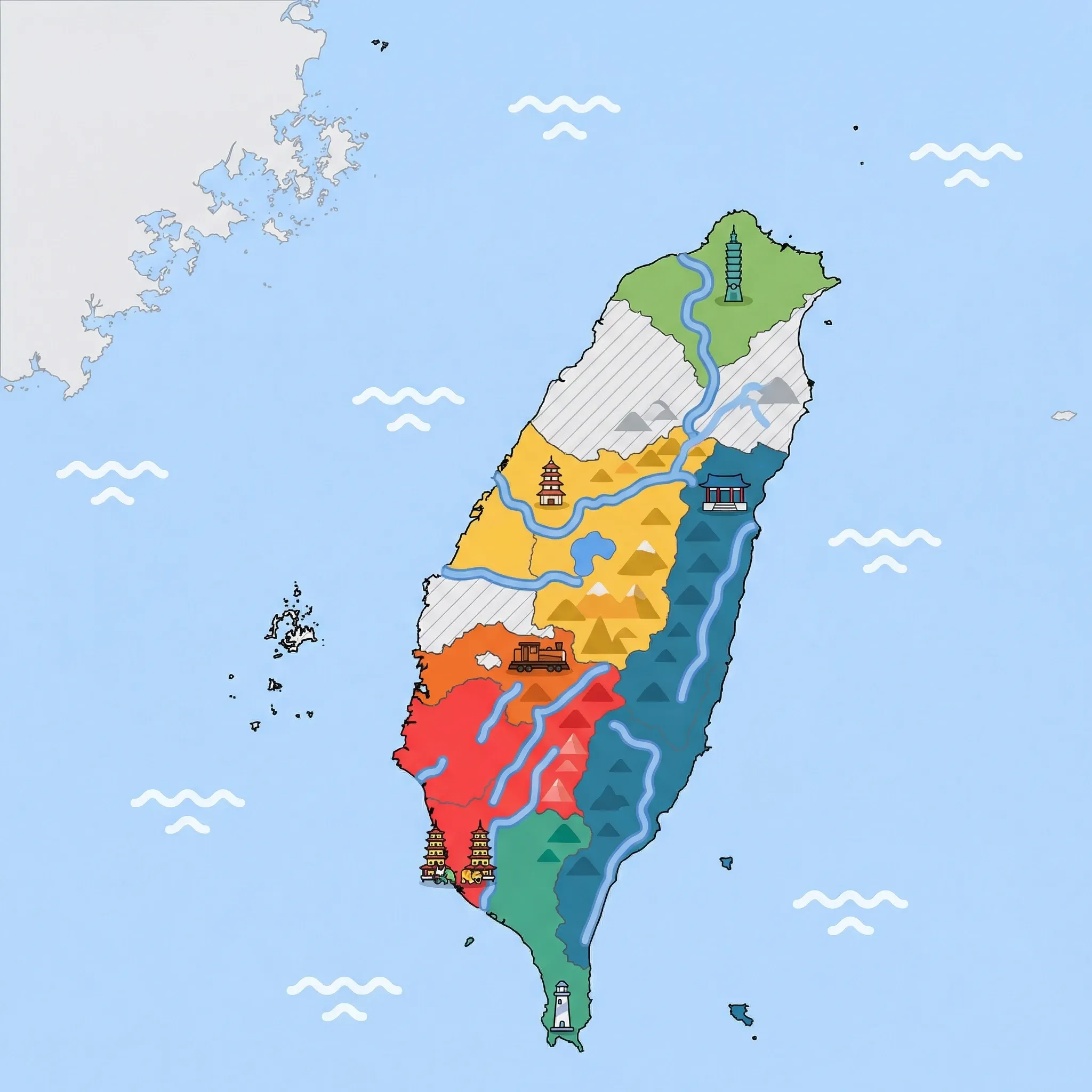
Click a region to explore
Overview
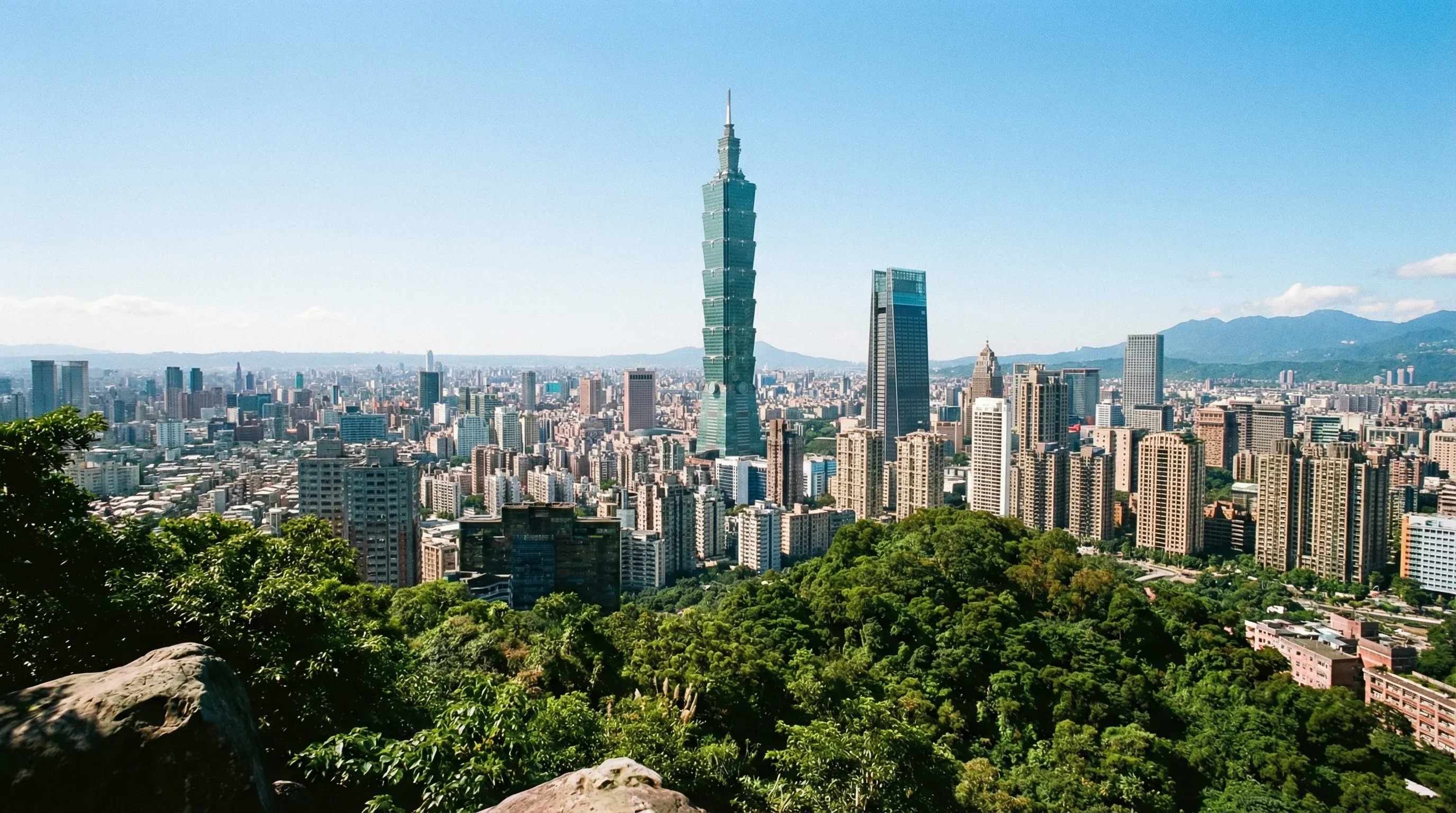
Taipei and Northern Taiwan represent one of the most family-friendly urban destinations in Asia. The capital city is safe, clean, and incredibly convenient, with a public transport system (MRT) that is spacious and stroller-accessible. Geographically, the region is a basin surrounded by mountains, meaning nature is never more than 30 minutes away. You can be shopping in a high-end district in the morning and hiking a volcanic trail in the afternoon. The culture is a dynamic mix of traditional Chinese heritage, Japanese colonial influence, and modern global trends.
For children, the sensory experience is rich but manageable. The city is famous for its Night Markets, which are colorful, noisy, and delicious playgrounds where kids can play carnival games and try new foods. Beyond the food, the north offers diverse landscapes: the golden beaches of Fulong, the wind-sculpted rocks of the north coast, and the sulfur-steaming vents of Yangmingshan. It is a region where history is accessible—from the solemnity of the National Chiang Kai-shek Memorial Hall to the incense-filled air of Longshan Temple. Rainy days (which are common) are easily handled with a vast array of indoor museums, aquariums, and play centers.
Key Attractions
In the city center, the National Chiang Kai-shek Memorial Hall offers vast open plazas perfect for kids to run, plus the spectacle of the hourly guard change. Cultural immersion is best at Longshan Temple, where the intricate dragon sculptures and chanting fascinate young visitors. For a day trip, Yehliu Geopark is essential; its alien-like mushroom rocks and "Queen's Head" formation feel like another planet. Nature lovers should head to Qingtiangang Grassland on Yangmingshan to see water buffalo grazing on a volcanic plateau. For aquatic fun, the modern Xpark aquarium in Taoyuan is a high-tech hit with families.
Practical Advice
Taipei rains often, especially in winter and spring. Always carry umbrellas. The MRT prohibits eating or drinking (even water), strictly enforced. Summers are hot and humid; plan indoor activities for the afternoon.
Food & Drink
Typical meal times: Lunch 12:00 pm to 2:00 pm. Dinner 6:00 pm to 8:30 pm. Night markets peak around 7:00 pm to 9:00 pm.
Typical meal costs: Varies wildly. A bowl of noodles costs NT$150 (approx. $4.50 USD / €4.30 EUR). High-end dining is NT$1,000+ (approx. $31 USD / €29 EUR). Din Tai Fung for a family of 4 is approx NT$1,500–2,000 (approx. $45–60 USD / €43–58 EUR).
Dietary requirements: Excellent for all diets. Labeling is good. Vegetarian buffets are common and high quality.
Signature dishes:
- Xiao Long Bao – Steamed soup dumplings; watching chefs fold them is entertainment in itself.
- Beef Noodle Soup – Braised beef in a rich broth, a national obsession available everywhere.
- Mango Shaved Ice – A mountain of fluffy ice topped with fresh mango and condensed milk.
Why this score?
Despite being surrounded by mountains, the tourism experience is almost entirely urban and developed. Yangmingshan National Park offers well-maintained trails and paved paths that are more suited for leisure walks than rugged adventure. The presence of world-class transit and dense infrastructure minimizes any sense of true wilderness.
Why this score?
Taipei offers world-class medical services with several hospitals, such as NTU Hospital and Adventist, specifically catering to international patients. English-speaking staff are common, and the quality of care is on par with major Western capitals or Tokyo. Emergency response times and access to specialists are among the best in Asia.
Why this score?
Taipei is a major international draw, serving as the primary gateway for millions of visitors to Taiwan. With world-famous landmarks like Taipei 101, the National Palace Museum, and the nearby Jiufen Old Street, it rivals major European capitals in cultural significance. It maintains a strong, consistent flow of international tourists year-round.

Taipei is the most expensive part of Taiwan, but still affordable compared to Tokyo or Singapore. Mid-range hotels cost NT$3,000–5,000 (approx. $90–155 USD / €85–145 EUR). Public transport is very cheap (NT$20–50 per ride). Museum entry fees are generally low (under NT$350).

Getting Here & Around
Getting Here
- Airports – Taoyuan International Airport (TPE) is the main gateway, 40 mins from the city. Songshan Airport (TSA) handles regional flights.
- Train – Taipei Main Station is the hub for High-Speed Rail (HSR) and regular trains (TRA) from all parts of the island.
Getting Around
- MRT (Metro) – The backbone of travel. Clean, safe, and goes to nearly all major sights including National Chiang Kai-shek Memorial Hall and Longshan Temple.
- Bus – Essential for reaching Yehliu Geopark or Qingtiangang Grassland. Google Maps works well for routes.
- YouBike – Public bike rental system, great for riverside paths.
Nearby Airports (2 airports)
Taoyuan International Airport
TPETaipei
Sungshan
TSATaipei
View full flight map for Taiwan →
Official Links

Packing List
Essential for all transport and convenience stores; kids get their own cards.
Taipei weather is unpredictable; sudden showers are common year-round.
AC in the MRT and malls is often freezing cold compared to outside.
Soap is sometimes missing in public park restrooms.
Public bins are very rare in Taiwan (a policy to encourage taking trash home), so you will need to carry your rubbish with you.
Many public restrooms in parks or older stations do not provide paper towels or hand dryers.
Plastic bags are banned for takeout drinks; a fabric cup holder is very useful for carrying your daily bubble tea.
Cash is still king for street food and night markets, and you will accumulate a lot of heavy coins (NT$1, 5, 10, 50).
You will use your IC card for everything (transport, stores); a lanyard keeps it accessible and safe for kids.
Essential for parks and southern regions, especially to protect against biting midges (xiao hei wen) and Dengue fever.

Activities & Best Times

Hiking, wildlife, outdoor exploration, ecotourism
Yangmingshan National Park and the Maokong tea plantations offer accessible, authentic nature experiences like hiking and volcanic exploration. Spring flower blooms (March-April) and the dry, clear weather of late autumn (October-November) are peak periods for trail access, while summer is often too hot and prone to dangerous monsoon rainfall.

Urban tourism, museums, historical sites, architecture
Home to the world-class National Palace Museum and a sophisticated culinary scene, the city offers authentic heritage experiences. Peak visits are best during the cooler, drier months of autumn and spring, avoiding the intense heat and typhoon risks of the summer months (June-August). quality infrastructure and ease of transport make it ideal for discerning families visiting from abroad, though summer humidity can be a deterrent to exploration of local markets and monuments.

Beach resorts, marine activities: diving, snorkelling, kite surfing, wind surfing, sailing
While the northern coast features unique geological formations at Yehliu and sandy beaches like Fulong, the region lacks the world-class resort infrastructure and water clarity of top international sea destinations. Visitation is strictly seasonal, limited to the hot summer months, as the North Taiwan coast faces harsh winds and grey, cool conditions for the rest of the year.

Learning experiences, scientific sites, historical education
High-quality facilities like Xpark and the National Museum of Marine Science & Technology provide engaging, purpose-built learning environments for families. Peak demand occurs during regional school holiday windows (January/February and July/August), while the wettest months of June and September represent the off-season due to potential transportation disruptions from heavy rainfall.

Attractions (11 total)



Public Holidays & Calendar Next 12 months
Public holidays, festivals, cultural celebrations, and seasonal natural phenomena coming up in Taipei & North over the next 12 months.
Loading holidays and events...

Travel Advisory
Taiwan is consistently recognized as one of the safest travel destinations globally, with minimal crime and high public order. All major agencies concur that standard safety awareness is sufficient. The primary concerns for visitors are natural hazards, including frequent seismic activity and seasonal typhoons, alongside strict regulations for entry documentation and medication imports.
Safety Topics
Traveller Advice (5 groups)

Ensure you complete the mandatory online arrival card (TWAC) within three days of landing. Carry a copy of your passport and be prepared for sudden weather changes during typhoon season.

Hikers should monitor weather alerts for landslides and altitude sickness risks. Avoid contact with wild animals due to reported cases of rabies in certain wildlife populations.

The social environment is generally inclusive; however, health authorities recommend specific vaccinations for men who have sex with men due to local health considerations.

Taiwan is safe for solo female travelers. Standard precautions against petty theft in night markets and crowded public transport are sufficient.

Be mindful of extreme heat and humidity during summer months. While city medical facilities are of high quality, be prepared for potential wait times at public hospitals.
Agency Summaries
Irish citizens are advised to take standard safety measures. Consular assistance is limited due to the absence of formal diplomatic relations, and 90-day visa-free entry is available for tourists.
The U.S. government recommends standard safety awareness. Potential risks are primarily environmental, including earthquakes, flooding, and typhoons. Crime levels remain very low throughout the territory.
Taiwan is considered a safe destination with a low crime rate, though visitors should remain alert for petty crimes like pickpocketing in crowded areas. The most significant risks involve natural hazards such as earthquakes and seasonal typhoons.
Travelers face very low crime risks but should be aware of natural disaster potential. Driving requires specific international permits, and there are strict regulations regarding the importation of certain medicines.
Safety levels are generally high, but visitors should be mindful of pedestrian safety due to limited sidewalks. Preparedness for earthquakes and typhoons is essential for all travelers.
Authorities advise a standard level of caution. Key requirements include the digital arrival card and awareness of typhoon season. Certain prescription medications are restricted and may carry legal penalties.
Information is provided for general guidance only and does not constitute travel, safety, medical, or legal advice. Conditions may change. Users are responsible for independently verifying information before travel.