
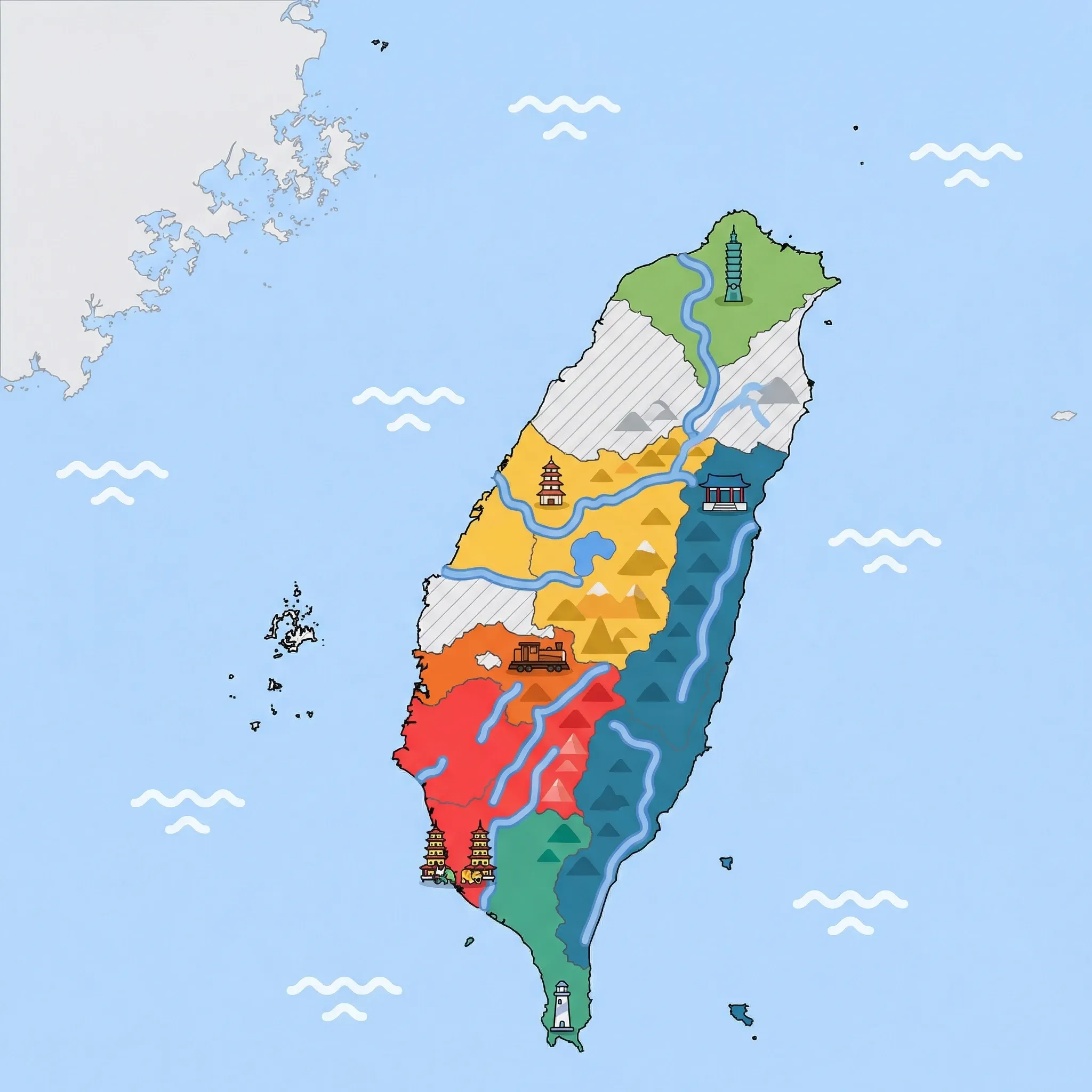
Click a region to explore
Overview
⚠️ TRAVEL ADVISORY: Due to the major earthquake on April 3, 2024, significant portions of Taroko National Park are closed for repairs and safety assessments. Visitors must check official government websites for the latest open trails before planning a trip. The city of Hualien and coastal attractions remain open and welcoming.
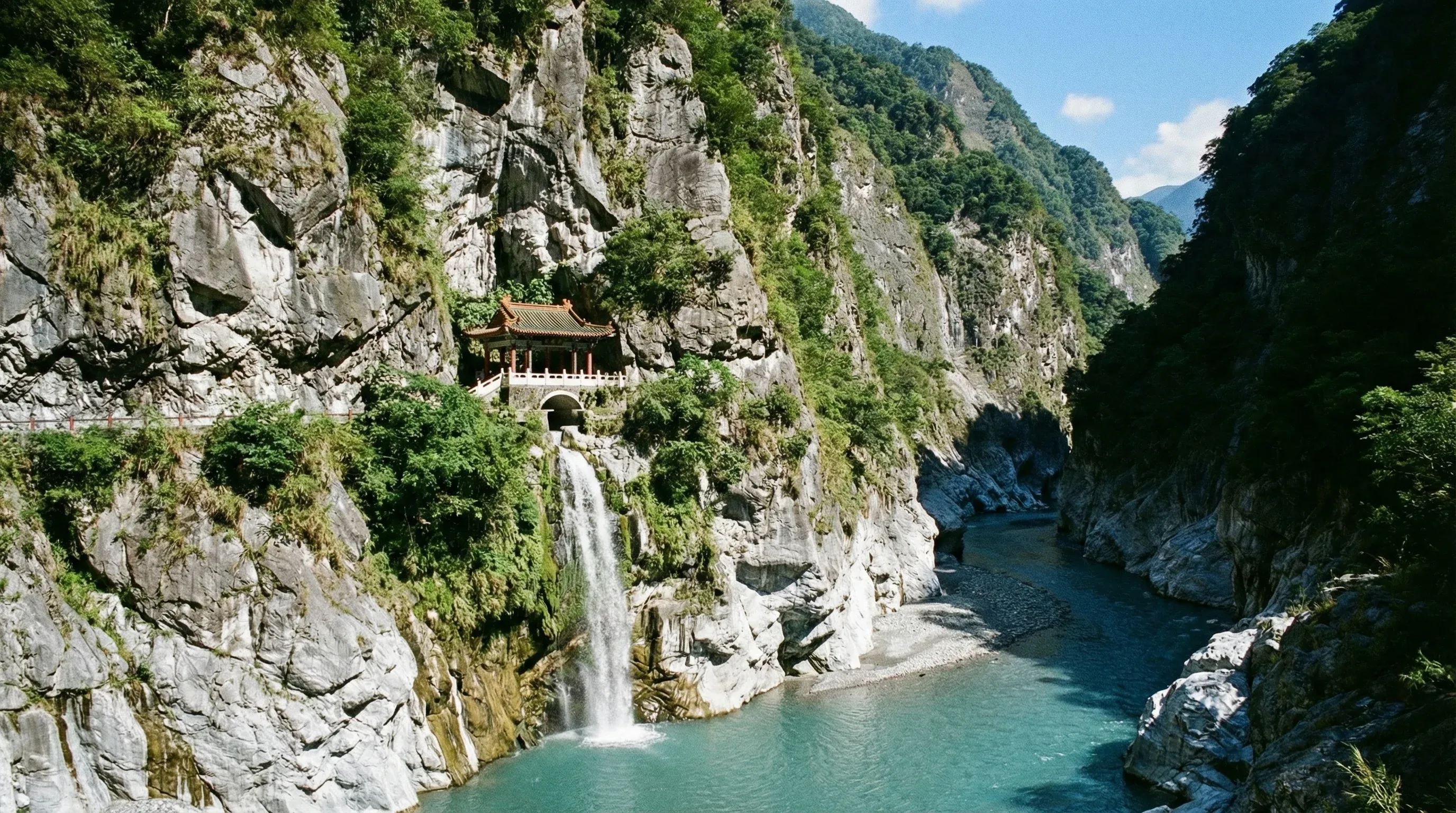
The East Coast of Taiwan is defined by its dramatic geology—where the Eurasian and Philippine Sea plates collide to create towering cliffs that drop straight into the Pacific Ocean. Hualien is the gateway to this rugged beauty. For families, the East Coast is less about museums and shopping, and more about raw nature and indigenous culture. The pace here is slower than the west coast. The air is fresh, the ocean is vast, and the feeling is one of being on the edge of the world. It is the best region in Taiwan for road trips, with the coastal highway offering stunning vistas at every turn.
While the famous Gorge is currently healing, the region offers plenty for families. The coastline is dotted with pebble beaches where kids can stack stones and watch the powerful surf (swimming is often dangerous due to currents). The area has a strong presence of the Amis and Truku indigenous tribes, providing rich opportunities to experience local music, weaving, and food. The East Rift Valley, running parallel to the coast, is a green corridor of rice paddies and hot springs perfect for cycling.
Key Attractions
For a day of pure entertainment, Farglory Ocean Park is the region's biggest draw for kids, featuring dolphin shows, an aquarium, and amusement rides perched on a cliff overlooking the ocean. Qixingtan Beach is a must-visit for its unique crescent shape and smooth pebbles; it's a perfect spot for a family picnic, though swimming is discouraged. Driving south along the coast, families can explore the Shihtiping rock formations, where volcanic rock has been carved into steps by the sea, creating tide pools teeming with small crabs and fish.
Practical Advice
Earthquake safety: This region is seismically active. Download the Taiwan government emergency alert app. Transport: Train tickets to Hualien sell out weeks in advance; book immediately when they open (28 days prior). Insects: The "Black Forager Bee" and biting midges are common in nature areas; long pants are recommended.
Food & Drink
Typical meal times: Lunch 11:30 am to 2:00 pm. Dinner 5:30 pm to 8:00 pm.
Typical meal costs: Generally cheaper than Taipei. A family meal of dumplings and soup costs NT$400–600 (approx. $12.50–19 USD / €11.50–17 EUR). Indigenous specialty meals cost slightly more.
Dietary requirements: Vegetarian options are available but less varied than in Taipei. Indigenous cuisine relies heavily on wild greens and pork.
Signature dishes:
- Wonton Soup – Hualien is famous for its thin-skinned, savory pork wontons.
- Mochi – Sticky rice cakes, often handmade and filled with peanut or sesame; a famous local souvenir.
- Flying Fish – Served grilled or smoked, a specialty of the coastal indigenous tribes.
Why this score?
The region offers notable adventure, from the vertigo-inducing Zhuilu Old Trail to river rafting on the Xiuguluan. The vertical terrain and potential for natural hazards like rockfalls give it a rugged edge compared to other regions. It is a premier outdoor destination where visitors can engage in physically demanding treks through significant wilderness.
Why this score?
Hualien City contains excellent facilities like the Tzu Chi Medical Center, which provides high-level care. However, inside the Gorge or along the remote East Rift Valley, medical access is much more limited and transport times to Hualien can be significant. It is reliable for those near the city, but the rugged geography complicates emergency logistics in the park.
Why this score?
Taroko Gorge is Taiwan's premier natural wonder, well-known globally for its spectacular marble cliffs and turquoise rivers. It receives a high volume of international tour groups and independent hikers, making it a well-established stop on the Asian travel circuit. Its popularity is bolstered by Hualien's role as a regional tourism hub for the east coast.

Hualien offers good value. A nice B&B (Minsu) costs NT$2,500–4,000 (approx. $75–125 USD / €70–115 EUR). Car rental is around NT$2,000 (approx. $60 USD / €58 EUR) per day. Food is affordable, with local noodle shops offering meals for under NT$100.

Getting Here & Around
Getting Here
- Train – The express train (Puyuma or Taroko Express) from Taipei takes 2–2.5 hours. It is the safest and most comfortable way to reach Hualien.
- Airports – Hualien Airport (HUN) has limited domestic flights.
- Driving – The Suhua Highway from Taipei is incredibly scenic but precipitous and prone to landslides; not recommended for nervous drivers.
Getting Around
- Car Rental – Highly recommended for exploring the coast south of Hualien City.
- Bus – The Taiwan Tourist Shuttle connects Hualien Station to Qixingtan Beach and Farglory Ocean Park.
- Taxi/Charter – Many families hire a taxi for the day (approx. NT$3,000) to tour sights without the stress of driving.
Nearby Airports (2 airports)
Hualien
HUNHualien
Taitung
TTTTaitung City
View full flight map for Taiwan →
Official Links

Packing List
The 'Xiao Hei Wen' (biting midges) are fierce on the East Coast; DEET helps.
Beaches like Qixingtan are made of stones, not sand; difficult to walk in flip-flops.
The East Coast weather changes rapidly from sun to torrential rain.
Public bins are very rare in Taiwan (a policy to encourage taking trash home), so you will need to carry your rubbish with you.
Many public restrooms in parks or older stations do not provide paper towels or hand dryers.
Plastic bags are banned for takeout drinks; a fabric cup holder is very useful for carrying your daily bubble tea.
Cash is still king for street food and night markets, and you will accumulate a lot of heavy coins (NT$1, 5, 10, 50).
You will use your IC card for everything (transport, stores); a lanyard keeps it accessible and safe for kids.
Essential for parks and southern regions, especially to protect against biting midges (xiao hei wen) and Dengue fever.

Activities & Best Times

Hiking, wildlife, outdoor exploration, ecotourism
Features the spectacular marble canyons of Taroko Gorge and the scenic East Rift Valley, providing unique geological and wilderness immersion. Best experienced in spring and autumn when trails are most likely to be open and weather is stable for hiking.

Sport tourism, fitness activities, active recreation
Boasts internationally recognized cycling routes and white-water rafting, supported by dedicated infrastructure like the Xiuguluan River center. Peak timing avoids the damp winter and the peak typhoon window which frequently shuts down outdoor adventure facilities.

Learning experiences, scientific sites, historical education
Centered on Farglory Ocean Park, offering marine education and aquarium experiences for younger children. Peak visitation aligns with the summer break, though the site is considered a secondary destination for sophisticated families compared to global scientific hubs.

Amusement parks, family entertainment venues
Features regional aquatic and forest parks that provide local-standard entertainment for families. Most active during summer school holidays, though they lack the world-class uniqueness sought by highly experienced international travelers.




Public Holidays & Calendar Next 12 months
Public holidays, festivals, cultural celebrations, and seasonal natural phenomena coming up in Taroko Gorge & East Coast over the next 12 months.
Loading holidays and events...

Travel Advisory
Taiwan is consistently recognized as one of the safest travel destinations globally, with minimal crime and high public order. All major agencies concur that standard safety awareness is sufficient. The primary concerns for visitors are natural hazards, including frequent seismic activity and seasonal typhoons, alongside strict regulations for entry documentation and medication imports.
Safety Topics
Traveller Advice (5 groups)

Ensure you complete the mandatory online arrival card (TWAC) within three days of landing. Carry a copy of your passport and be prepared for sudden weather changes during typhoon season.

Hikers should monitor weather alerts for landslides and altitude sickness risks. Avoid contact with wild animals due to reported cases of rabies in certain wildlife populations.

The social environment is generally inclusive; however, health authorities recommend specific vaccinations for men who have sex with men due to local health considerations.

Taiwan is safe for solo female travelers. Standard precautions against petty theft in night markets and crowded public transport are sufficient.

Be mindful of extreme heat and humidity during summer months. While city medical facilities are of high quality, be prepared for potential wait times at public hospitals.
Agency Summaries
Irish citizens are advised to take standard safety measures. Consular assistance is limited due to the absence of formal diplomatic relations, and 90-day visa-free entry is available for tourists.
The U.S. government recommends standard safety awareness. Potential risks are primarily environmental, including earthquakes, flooding, and typhoons. Crime levels remain very low throughout the territory.
Taiwan is considered a safe destination with a low crime rate, though visitors should remain alert for petty crimes like pickpocketing in crowded areas. The most significant risks involve natural hazards such as earthquakes and seasonal typhoons.
Travelers face very low crime risks but should be aware of natural disaster potential. Driving requires specific international permits, and there are strict regulations regarding the importation of certain medicines.
Safety levels are generally high, but visitors should be mindful of pedestrian safety due to limited sidewalks. Preparedness for earthquakes and typhoons is essential for all travelers.
Authorities advise a standard level of caution. Key requirements include the digital arrival card and awareness of typhoon season. Certain prescription medications are restricted and may carry legal penalties.
Information is provided for general guidance only and does not constitute travel, safety, medical, or legal advice. Conditions may change. Users are responsible for independently verifying information before travel.