
Overview
Tajikistan is a destination for families seeking true adventure rather than poolside relaxation. Dominated by the soaring peaks of the Pamir and Fann mountains, this is a land of raw, unfiltered beauty where the journey itself is the main event. For children, the country offers a living geography lesson-glaciers, high-altitude deserts, and rushing rivers are the backdrop to every drive. The culture is deeply welcoming; Tajiks adore children, and traveling with kids often opens doors to local homes and genuine interactions that solo travelers might miss.
While the capital, Dushanbe, offers modern comforts, the real magic lies in the remote valleys of the Fann Mountains and the legendary Pamir Highway & GBAO. Families should be prepared for long car journeys on rough roads and basic facilities (often squat toilets), but the tradeoff is the chance to show children a way of life that has remained largely unchanged for centuries. It is a place to unplug, watch the Milky Way explode across the night sky, and learn resilience and curiosity.
Key Attractions
For a family-friendly introduction to the mountains, Iskanderkul in the Fann Mountains is unmissable. Known as the "Lake of Alexander the Great," its turquoise waters are perfect for skipping stones, and the nearby "Niagara" waterfall provides an easy, rewarding hike for little legs. Nearby, history comes alive at Ancient Panjakent and the UNESCO-listed Sarazm Archaeological Site, where kids can walk among ruins dating back thousands of years without the crowds found in more touristy countries.
In the north, the Khujand & North region offers a milder climate and history. The Khujand Fortress houses an interesting museum that isn't too overwhelming for children, while the Kayrakkum Reservoir (Tajik Sea) offers a rare chance for swimming and beach time in this landlocked nation. For older children and teenagers, the ultimate adventure is the M41 Pamir Highway (Gunt Valley & High Plateau). This road trip climbs to dizzying heights, passing the lunar-like Karakul Lake, created by a meteor impact, and crossing the vast Tajik National Park (Mountains of the Pamirs), where yaks graze and Marco Polo sheep roam.
Practical Advice
The best time to visit is late spring (May–June) or early autumn (September–October) when temperatures are pleasant. Summer can be scorching in the lowlands and Dushanbe, though the high mountains remain cool. Visas are now visa-free for 30 days for many nationalities, but you must register with OVIR if staying longer than 10 days-a crucial administrative step. Cash is king; bring pristine US dollars to exchange, as ATMs are unreliable outside Dushanbe. Medical facilities are limited, so carry a comprehensive first-aid kit and travel insurance that covers high-altitude evacuation.
Safety
Tajikistan is generally safe for tourists regarding crime, but environmental and logistical safety is paramount. The roads are often in poor condition; hire a reputable driver with a 4WD rather than self-driving. Altitude sickness is a real risk on the Pamir Highway, so ascend slowly. Avoid the immediate border areas with Afghanistan unless on a specific secure route. Drink only bottled or purified water to avoid "Tajik Tummy."
Food & Drink
Typical meal times: Lunch is typically 12:00 pm to 2:00 pm, and dinner is served from 6:30 pm to 8:30 pm. Teahouses (chaikhanas) serve food all day.
Typical meal costs: 40–100 TJS (approx. $4–9 USD / €3.50–8.50 EUR) for a hearty meal in a local eatery. High-end dining in Dushanbe can cost 150–250 TJS (approx. $14–23 USD / €13–22 EUR).
Dietary requirements: Challenging for vegetarians. The diet is heavy on meat (mutton/beef) and dairy. Qurutob is a delicious meat-free option, but ensure no meat stock was used. Gluten-free travelers will struggle as bread (Non) is central to every meal.
Family-friendly dining: Tajik dining is communal and often floor-seated on comfortable tapchans (raised platforms), which kids love. It feels like an indoor picnic. Dishes are shared, making it easy to feed children portions they can handle.
Signature dishes:
- Oshi Palov (Plov) – The national obsession. Rice cooked with carrots, onions, and mutton in incredible quantities. It is oily, filling, and generally safe for picky eaters.
- Qurutob – A fan favorite involving fatir bread layered with fresh vegetables, onions, and a sour yogurt sauce (qurut). It is eaten with hands, which children find delightful.
- Sambusa – Flaky, triangular pastries baked in a tandoor oven, usually filled with spiced meat and onions. The perfect portable snack for road trips.
- Mantu – Large steamed dumplings filled with chopped meat and onions, often served with sour cream.
- Non – The beautiful, disc-shaped bread stamped with decorative patterns. It is sacred here-never put it upside down or throw it away.

Tajikistan is affordable, though transport inflates the budget. A family of four can travel comfortably for 1,200–1,800 TJS (approx. $110–165 USD / €100–150 EUR) per day. This covers a private 4WD driver (the biggest expense), homestays with meals, and museum fees. Street food is extremely cheap, often under 30 TJS ($3 USD) per person.
Age Suitability





Did you know? Tajikistan welcomes approximately 4,000 international visitors per year. Most visitors come from Europe.
Explore Regions
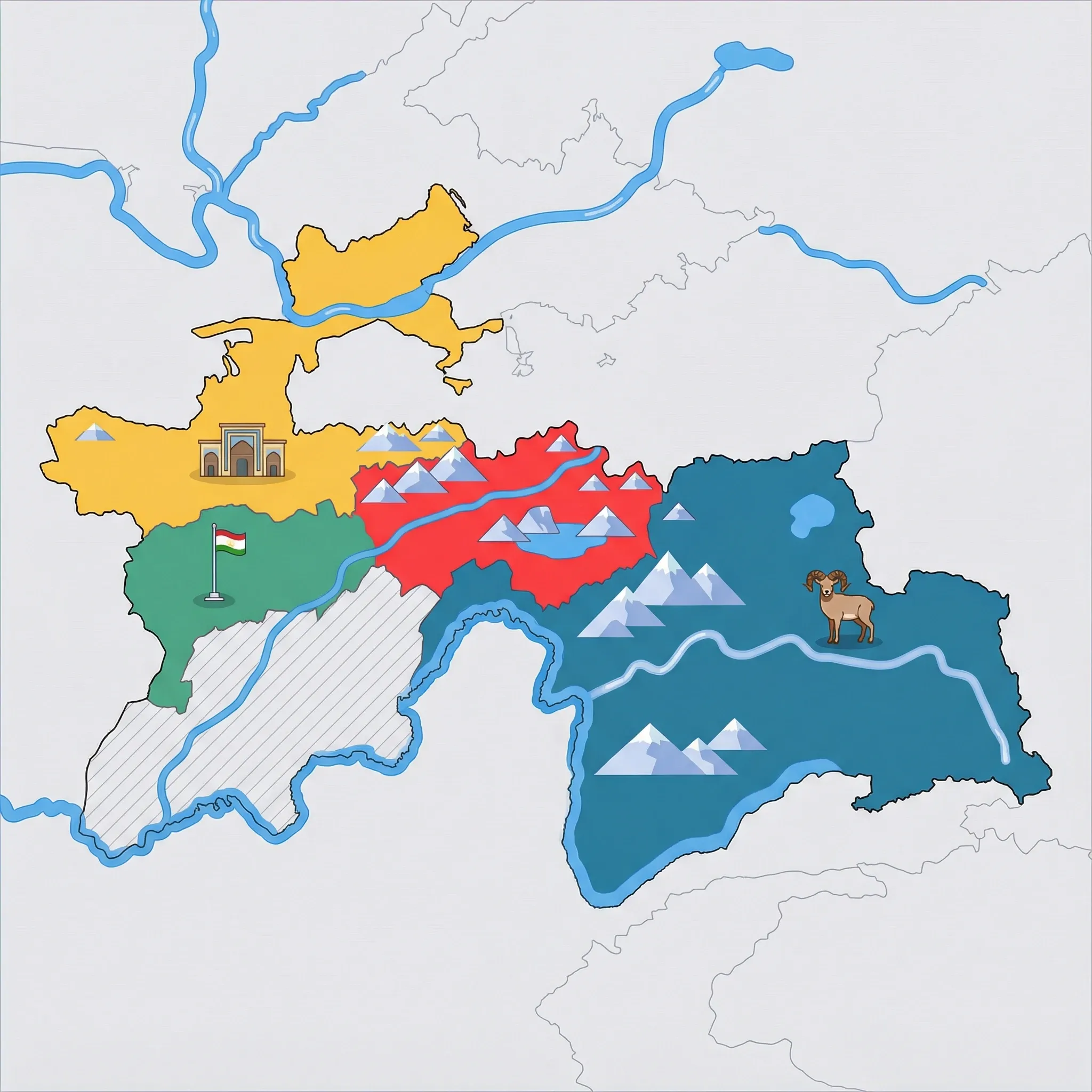
4 Regions
Dushanbe
A city of fountains, parks, and ancient Persian history 🌳
Fann Mountains
Turquoise lakes and ancient ruins in the high peaks 🏔️
Khujand & North
The ancient northern heart of the Silk Road 🏰
Pamir Highway & GBAO
A high-altitude adventure on the Roof of the World 🚙
Click on a region marker to explore details. Use the dropdown to color regions by activity suitability.

Getting There & Around
Getting There
- By Air – Dushanbe International Airport (DYU) is the main hub, with connections via Istanbul, Dubai, or Tashkent. It serves the capital and the south. Khujand (LBD) in the north has flights from Russia.
- By Land (Uzbekistan) – The Penjikent border crossing is popular for families combining Samarkand with the Fann Mountains. The Oybek crossing connects Tashkent to Khujand & North. Borders generally open 8:00 am – 6:00 pm.
- By Land (Kyrgyzstan) – ⚠️ Note: Some borders may be closed or restricted due to political tensions. Always check the latest status before planning a route via the Kyzyl-Art pass.
- Entry Requirements – Many nationalities (including US, EU, UK) can enter visa-free for up to 30 days. For longer stays or the GBAO permit, use the official e-visa portal. Registration with OVIR is mandatory for stays over 10 days. Check your government website for the latest visa requirements, or use the IATA Travel Centre entry-requirements checker.
Getting Around
- Private Driver (4WD) – The only practical option for families exploring the Pamir Highway & GBAO. Public shared taxis are cramped, irregular, and unsafe for children. Hiring a driver allows you to stop for bathroom breaks and photos.
- Shared Taxis – The standard local transport connecting cities like Dushanbe and Khujand. Very cheap but chaotic; you pay for a seat and wait until the car is full.
- Domestic Flights – Somon Air flies between Dushanbe and Khujand (45 mins), saving a grueling 5-hour drive over high passes. Flights to Khorog are notoriously unreliable and weather-dependent.
- City Transport – In Dushanbe, cheap trolleybuses and marshrutkas (minibuses) cover the city. Taxis are affordable, but agree on a price or use an app like Yandex Go.
Official Links

Packing List
Tap water is generally unsafe. A Steripen or filter bottle saves money and reduces plastic waste in remote areas where recycling doesn't exist.
Power outages are frequent, even in cities. Street lighting is minimal, and navigating homestay toilets at night requires light.
ATMs are rare outside Dushanbe. You must bring cash in pristine condition (no tears/marks) to exchange; old notes are often refused.
Public bathrooms are often simple pit latrines with no running water or paper. Essential for hygiene on the road with kids.
"Tajik Tummy" is common. Electrolytes are vital for recovery, especially given the altitude and long travel days.
Roads in the Pamirs and Fanns are incredibly winding and rough. Essential for children prone to car sickness.

Activities & Best Times

Adventure & Nature
ExcellentHiking, wildlife, outdoor exploration, ecotourism
Home to the UNESCO-listed Tajik National Park, this region offers some of the world's most dramatic high-altitude wilderness and trekking experiences. Visitation is strictly limited to the short summer window when the high-altitude passes are clear of snow and the Pamir Trail is navigable for families.
Offers world-class high-altitude trekking and stunning turquoise alpine lakes like Iskanderkul and Haft Kul. Peak conditions are strictly limited to the summer window when high passes are clear of snow; shoulder months allow for lower-elevation exploration.
The region offers significant natural diversity centered on the Syr Darya river and the massive Kayrakkum Reservoir, providing unique desert-edge and riparian exploration. Peak visiting months avoid the intense Fergana Valley summer heat while offering lush spring landscapes and clear autumn skies.

City & Cultural
Very GoodUrban tourism, museums, historical sites, architecture
Rich in Silk Road history with the UNESCO-listed Sarazm and Ancient Panjakent offering authentic archaeological exploration. Spring and autumn provide ideal temperatures for site visits, while mid-summer can be uncomfortably hot in the valley floors.
Features an exceptional concentration of Silk Road heritage, including the Yamchun and Khaakha fortresses, alongside the distinct Ismaili culture of the Wakhan Valley. The cultural experience is most accessible from late spring to early autumn when local mountain communities are active and Khorog is at its most vibrant.
Home to ancient Silk Road heritage sites like the Khujand Fortress and the spectacular Arbob Cultural Palace, the region provides an authentic, high-quality cultural experience. Spring and autumn offer the most comfortable temperatures for exploring the historical quarters of Khujand and Istaravshan on foot.

Sports & Active
Very GoodSport tourism, fitness activities, active recreation
The infrastructure at Safed-Dara and the established cycling and hiking routes in the Varzob valley support high-level active tourism. Best experienced when the mountain weather is stable and valley temperatures are not excessively hot.
Features internationally recognized trekking circuits like the Kulikalon Lakes and Chimtarga Pass, though infrastructure remains rugged. Activity is highly seasonal, requiring the dry, snow-free conditions of late summer for safe passage.
The region is an international magnet for high-altitude cycling and remote trekking, supported by major routes like the Pamir Trail and the Jizeu Valley. Due to extreme elevations and thin air, peak physical activity is only advisable during the warmest months of July and August.

Relaxation & Wellness
GoodSpa retreats, wellness centers, peaceful getaways
The region is home to historic Soviet-era sanatoriums like Khoja Obi Garm, famous for unique natural steam treatments. These facilities offer an authentic, albeit rustic, wellness experience that is quite rare globally.
Local thermal springs and traditional hammams provide an authentic but modest wellness experience rooted in Tajik culture. These facilities are regional in character and lack the luxury or comprehensive retreat infrastructure found in global wellness hubs.
Authentic natural hot springs such as Jelondy and Issyk Bulak provide unique restorative stops for travelers, though facilities are rugged and lack international luxury spa standards. These sites are best visited during the primary tourism season when accessibility across the GBAO plateau is reliable.

Road Trips & Scenic
GoodScenic drives, countryside tours, route-based travel
The M34 and Zarafshan Valley routes provide spectacular mountain scenery and remote village access for experienced drivers. Summer months are essential to ensure high-altitude passes like Anzob are safe and accessible for family travel.
The M41 Pamir Highway is globally renowned as one of the most scenic and challenging driving routes, traversing high plateaus and the dramatic Ak-Baital Pass. Severe winter weather and road conditions make the route dangerous or impassable outside of the peak summer and shoulder months.
The legendary M34 highway and the scenic routes through the Fergana Valley offer dramatic landscapes and authentic rural stops. Winter travel is discouraged due to snow-related hazards on high-altitude passes, with late spring and autumn providing the best driving visibility and road safety.
Theme Park & Entertainment
GoodAmusement parks, family entertainment venues

Educational & Exploratory
MarginalLearning experiences, scientific sites, historical education
The Rudaki Museum and Sarazm excavations offer significant historical value for families interested in Central Asian heritage. While culturally important, they lack the interactive, large-scale infrastructure of global destination-level educational centers.
The Geological Museum offers a niche look into the unique tectonic history of the Pamirs. It provides some educational value for families but is a secondary attraction rather than a primary motivator for international travel.

Ski & Snow
MarginalWinter sports, ski resorts, snow activities

Public Holidays & Calendar Next 12 months
Public holidays, festivals, cultural celebrations, and seasonal natural phenomena coming up in Tajikistan over the next 12 months.
Loading holidays and events...

Climate & Weather
Dushanbe
Show Details
| Month | Temp °C | Rain | Humidity |
|---|
Fann Mountains
Show Details
| Month | Temp °C | Rain | Humidity |
|---|
Khujand & North
Show Details
| Month | Temp °C | Rain | Humidity |
|---|
Pamir Highway & GBAO
Show Details
| Month | Temp °C | Rain | Humidity |
|---|

Travel Advisory
All major agencies maintain an elevated risk level for Tajikistan. The primary nationwide concerns are terrorism and crime, while severe regional warnings are in place for the Afghan and Kyrgyz borders and the Gorno-Badakhshan region due to conflict and landmines.
Safety Topics
Traveller Advice (4 groups)

While not illegal, same-sex relationships are not widely accepted in this socially conservative society, and there are no specific legal protections against discrimination.
Be aware that mountain rescue services are extremely limited. Avoid trekking in remote border areas due to the high risk of unexploded landmines, which are often poorly marked.

Exercise high vigilance, particularly at night, due to reports of sexual assault and drink-spiking targeting foreigners. Modest dress is recommended to respect local cultural and religious norms.

Ensure you carry a photocopy of your identification at all times as local police frequently conduct identity checks. Stays exceeding 10 days require mandatory registration with local authorities (OVIR).
Agency Summaries
Irish citizens are advised to be highly cautious. Tensions along disputed border areas often lead to clashes involving firearms, and travel to the Gorno-Badakhshan Autonomous Region is discouraged.
Increased safety precautions are recommended due to the threat of terrorism and common street crimes such as muggings and drink-spiking. Regional instability justifies higher risk ratings in border zones.
Visitors should maintain elevated vigilance due to the persistent threat of terrorism and organized crime. Travel near the Afghan border is strongly discouraged due to extreme security risks, and visits to the Gorno-Badakhshan region should be limited to essential purposes only.
While general travel is permitted, significant regional risks exist. Specific areas, including those near the Afghan and Kyrgyz borders, are subject to heightened security warnings due to the potential for localized violence and terrorism.
A high level of caution is advised countrywide because of the risk of civil unrest and terrorist activity. Security conditions near the border with Afghanistan are particularly volatile and should be avoided.
Heightened awareness is necessary throughout the country due to terrorism risks and the presence of unexploded landmines. Conflict potential is notably higher in Gorno-Badakhshan and along the borders with Afghanistan and Kyrgyzstan.
Information is provided for general guidance only and does not constitute travel, safety, medical, or legal advice. Conditions may change. Users are responsible for independently verifying information before travel.