
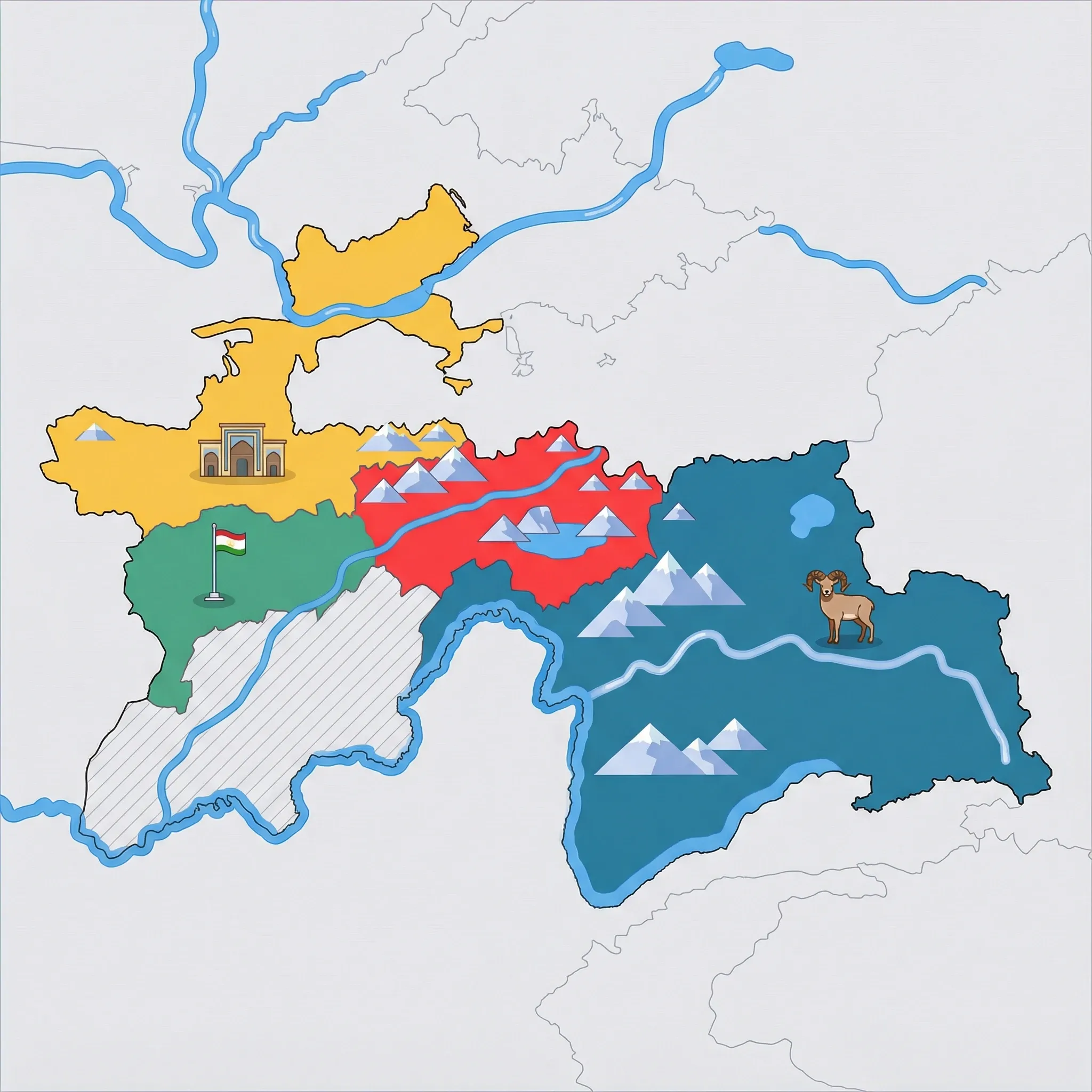
Click a region to explore
Separated from the south by high mountain passes, Northern Tajikistan (Sughd region) feels distinct—more traditional, historically deeper, and climatically warmer. Khujand, the region's capital, is one of the oldest cities in Central Asia, dating back to Alexander the Great. For families, this region offers a mix of city comforts and beach-like leisure. The city is dominated by the broad Syr Darya River, where locals swim and boat in the evenings. The vibe here is mercantile and bustling, centered around the massive Panjshanbe Bazaar, one of the most photogenic and authentic markets in the country. It’s a sensory overload of spices, breads, and fruits that children will find fascinating.
Just outside the city lies the Kayrakkum Reservoir, known locally as the "Tajik Sea." This massive body of water provides a rare opportunity for a beach holiday in a landlocked country. Resorts here range from Soviet-style sanatoriums to modern hotels, offering swimming and water sports that provide a welcome break from the dust of the road. The north is also known for its artisans; in nearby Istaravshan, families can visit workshops to see blacksmiths and woodcarvers at work, a great educational experience for older children.
Key Attractions
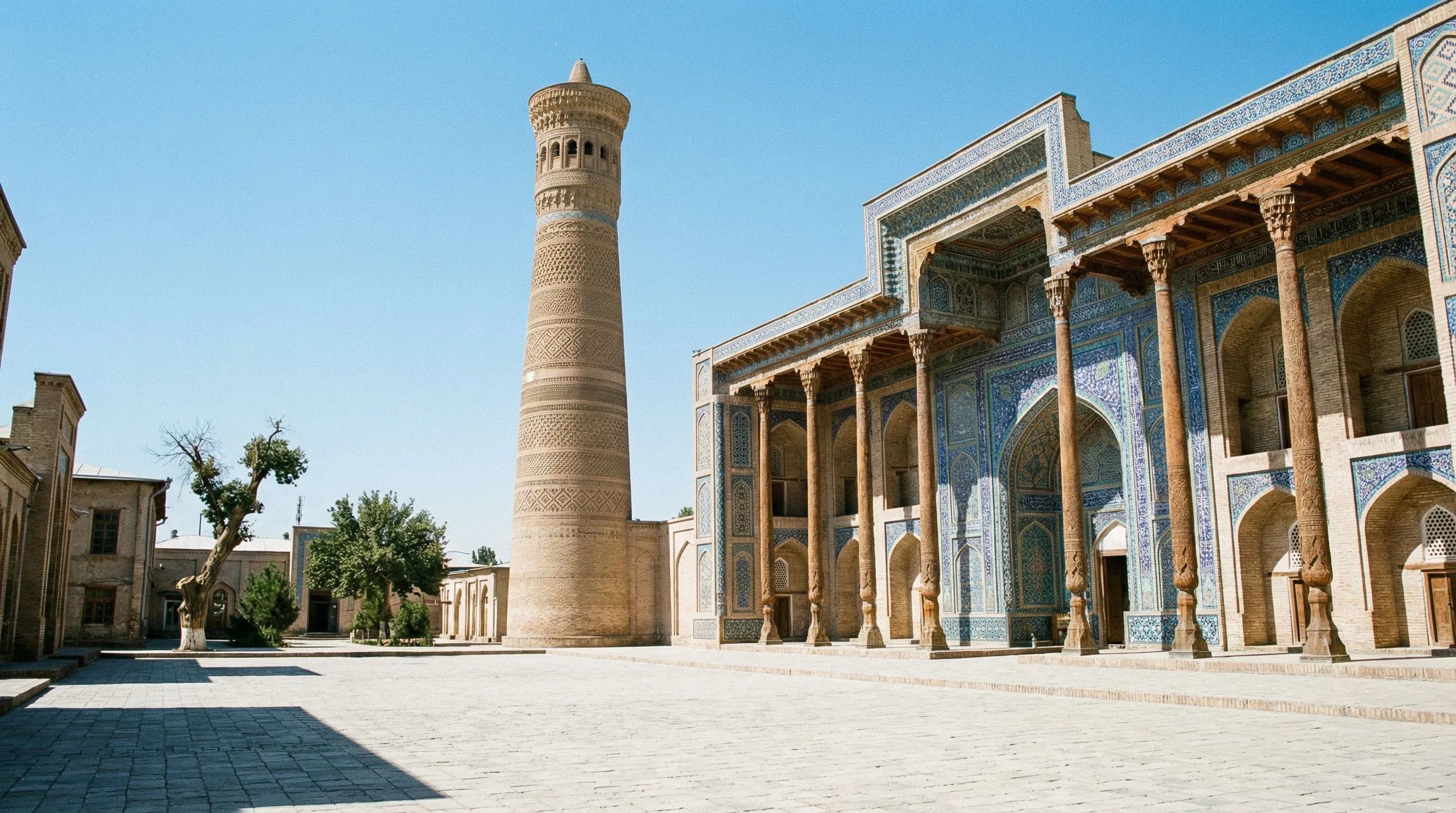
History comes alive at the Khujand Fortress. Partially reconstructed, it houses a museum that walks visitors through the layers of history from Alexander the Great to the Mongol invasions. It is visually engaging and includes diaramas that capture kids' attention. A short drive away is the Arbob Cultural Palace, a stunning example of Soviet architecture with magnificent fountains and rose gardens. It looks like a miniature version of St. Petersburg's Peterhof and is a great place for kids to run around while parents admire the intricate painted ceilings.
Practical Advice
Best Time to Visit: Spring (April) and late Autumn (October) are best. Summer in Khujand is extremely hot, often exceeding 40°C. If visiting in summer, plan sightseeing for early morning and spend afternoons at the Kayrakkum Reservoir.
Logistics: The train ride from Dushanbe to Khujand is spectacular and safe, avoiding the sometimes treacherous drive over the passes. In the city, "marshrutkas" (minibuses) are the main way to get around.
Food & Drink
Typical meal times: Lunch is usually 1:00 pm to 2:00 pm. Dinner is late, often 8:00 pm, as families wait for the heat of the day to dissipate.
Typical meal costs: Very affordable. A hearty meal costs 50–90 TJS (approx. $4.50–8 USD / €4–7.50 EUR). Fruit prices in the markets are incredibly low.
Dietary requirements: The Fergana Valley is the fruit basket of Central Asia. Vegetarians will find excellent fruits, nuts, and fresh salads, but main courses are still meat-heavy.
Signature dishes:
- Khujand Plov – Distinct from the Dushanbe style, this plov often includes quince or garlic cloves cooked whole, and is generally lighter on oil.
- Melon & Watermelon – Not a cooked dish, but legendary. The melons here are considered some of the best in the world.
- Mantu – Large steamed dumplings filled with spiced meat and onions, served with sour cream.
Why this score?
The Fergana Valley landscape is more agricultural and developed than the rest of the country, featuring paved roads and the large Kayrakkum Reservoir. While the surrounding mountains offer some hiking, the primary tourist experience is centered around historical sites and urban markets, making it less rugged than the southern regions. It is the most 'conventional' part of the country for visitors.
Why this score?
As the second-largest city, Khujand has several hospitals and clinics that provide a baseline level of care for the local population. However, resources are often outdated, and tourists will find very few English-speaking staff or facilities capable of handling complex emergencies. For anything more than minor ailments, the quality of care and equipment is significantly lower than in Dushanbe.
Why this score?
Khujand serves as a secondary hub for those traveling from the Uzbekistan border, drawing visitors to its ancient fortress and the Syr Darya River. Despite its deep Silk Road history and the vibrant Panjshanbe Bazaar, it sees very few Western tourists compared to the more famous Silk Road cities like Samarkand or Bukhara. The tourism here is largely domestic or regional trade-based.

The north is generally cheaper than Dushanbe. A decent hotel room is 350–550 TJS (approx. $32–50 USD / €29–46 EUR). Transport is cheap, with cross-city taxi rides costing as little as 15–20 TJS (approx. $1.35–1.80 USD / €1.25–1.70 EUR).

Getting Here & Around
Getting Here
- Airports – Khujand International Airport (LBD) has connections to Russia and sometimes Dushanbe.
- Train – The scenic train from Dushanbe winds through the mountains and is a safe, comfortable option for families compared to the road.
- Driving – The drive from Dushanbe takes 4-6 hours over high mountain passes. The road is paved but steep. From Tashkent (Uzbekistan), it is a straightforward 2-3 hour drive/border crossing.
Getting Around
- Shared Taxi – The standard inter-city transport. You buy a seat or hire the whole car.
- Cable Car – A cable car runs across the Syr Darya River connecting the park to the fortress, which is a fun, short ride for kids.
- Marshrutka – Numbered minibuses are the cheapest way to navigate Khujand city.
Nearby Airports (1 airport)
Khudzhand Airport
LBDKhujand
View full flight map for Tajikistan →

Packing List
The extreme heat in Khujand leads to rapid dehydration, especially for active kids.
The sun is intense in the Fergana Valley; baseball caps aren't enough coverage.
For swimming in the Syr Darya or reservoir; local customs are conservative (shorts/t-shirt).
Tap water is generally unsafe. A Steripen or filter bottle saves money and reduces plastic waste in remote areas where recycling doesn't exist.
Power outages are frequent, even in cities. Street lighting is minimal, and navigating homestay toilets at night requires light.
ATMs are rare outside Dushanbe. You must bring cash in pristine condition (no tears/marks) to exchange; old notes are often refused.
Public bathrooms are often simple pit latrines with no running water or paper. Essential for hygiene on the road with kids.
"Tajik Tummy" is common. Electrolytes are vital for recovery, especially given the altitude and long travel days.
Roads in the Pamirs and Fanns are incredibly winding and rough. Essential for children prone to car sickness.

Activities & Best Times

Hiking, wildlife, outdoor exploration, ecotourism
The region offers significant natural diversity centered on the Syr Darya river and the massive Kayrakkum Reservoir, providing unique desert-edge and riparian exploration. Peak visiting months avoid the intense Fergana Valley summer heat while offering lush spring landscapes and clear autumn skies.

Urban tourism, museums, historical sites, architecture
Home to ancient Silk Road heritage sites like the Khujand Fortress and the spectacular Arbob Cultural Palace, the region provides an authentic, high-quality cultural experience. Spring and autumn offer the most comfortable temperatures for exploring the historical quarters of Khujand and Istaravshan on foot.

Scenic drives, countryside tours, route-based travel
The legendary M34 highway and the scenic routes through the Fergana Valley offer dramatic landscapes and authentic rural stops. Winter travel is discouraged due to snow-related hazards on high-altitude passes, with late spring and autumn providing the best driving visibility and road safety.

Sport tourism, fitness activities, active recreation
Kayrakkum Reservoir serves as a major hub for aquatic sports, complemented by challenging cycling routes over the Shahristan Pass. Optimal conditions for these intensive activities occur when temperatures are moderate and the reservoir facilities are fully operational in late spring and early autumn.

Spa retreats, wellness centers, peaceful getaways
Features authentic, historic hammams that offer a traditional wellness experience deeply rooted in Central Asian culture. These facilities are most restorative during the cooler months, while the extreme heat of mid-summer makes thermal treatments less appealing for international travelers.

Attractions (7 total)



Public Holidays & Calendar Next 12 months
Public holidays, festivals, cultural celebrations, and seasonal natural phenomena coming up in Khujand & North over the next 12 months.
Loading holidays and events...

Travel Advisory
All major agencies maintain an elevated risk level for Tajikistan. The primary nationwide concerns are terrorism and crime, while severe regional warnings are in place for the Afghan and Kyrgyz borders and the Gorno-Badakhshan region due to conflict and landmines.
Safety Topics
Traveller Advice (4 groups)

While not illegal, same-sex relationships are not widely accepted in this socially conservative society, and there are no specific legal protections against discrimination.

Be aware that mountain rescue services are extremely limited. Avoid trekking in remote border areas due to the high risk of unexploded landmines, which are often poorly marked.

Exercise high vigilance, particularly at night, due to reports of sexual assault and drink-spiking targeting foreigners. Modest dress is recommended to respect local cultural and religious norms.

Ensure you carry a photocopy of your identification at all times as local police frequently conduct identity checks. Stays exceeding 10 days require mandatory registration with local authorities (OVIR).
Agency Summaries
Irish citizens are advised to be highly cautious. Tensions along disputed border areas often lead to clashes involving firearms, and travel to the Gorno-Badakhshan Autonomous Region is discouraged.
Increased safety precautions are recommended due to the threat of terrorism and common street crimes such as muggings and drink-spiking. Regional instability justifies higher risk ratings in border zones.
Visitors should maintain elevated vigilance due to the persistent threat of terrorism and organized crime. Travel near the Afghan border is strongly discouraged due to extreme security risks, and visits to the Gorno-Badakhshan region should be limited to essential purposes only.
While general travel is permitted, significant regional risks exist. Specific areas, including those near the Afghan and Kyrgyz borders, are subject to heightened security warnings due to the potential for localized violence and terrorism.
A high level of caution is advised countrywide because of the risk of civil unrest and terrorist activity. Security conditions near the border with Afghanistan are particularly volatile and should be avoided.
Heightened awareness is necessary throughout the country due to terrorism risks and the presence of unexploded landmines. Conflict potential is notably higher in Gorno-Badakhshan and along the borders with Afghanistan and Kyrgyzstan.
Information is provided for general guidance only and does not constitute travel, safety, medical, or legal advice. Conditions may change. Users are responsible for independently verifying information before travel.