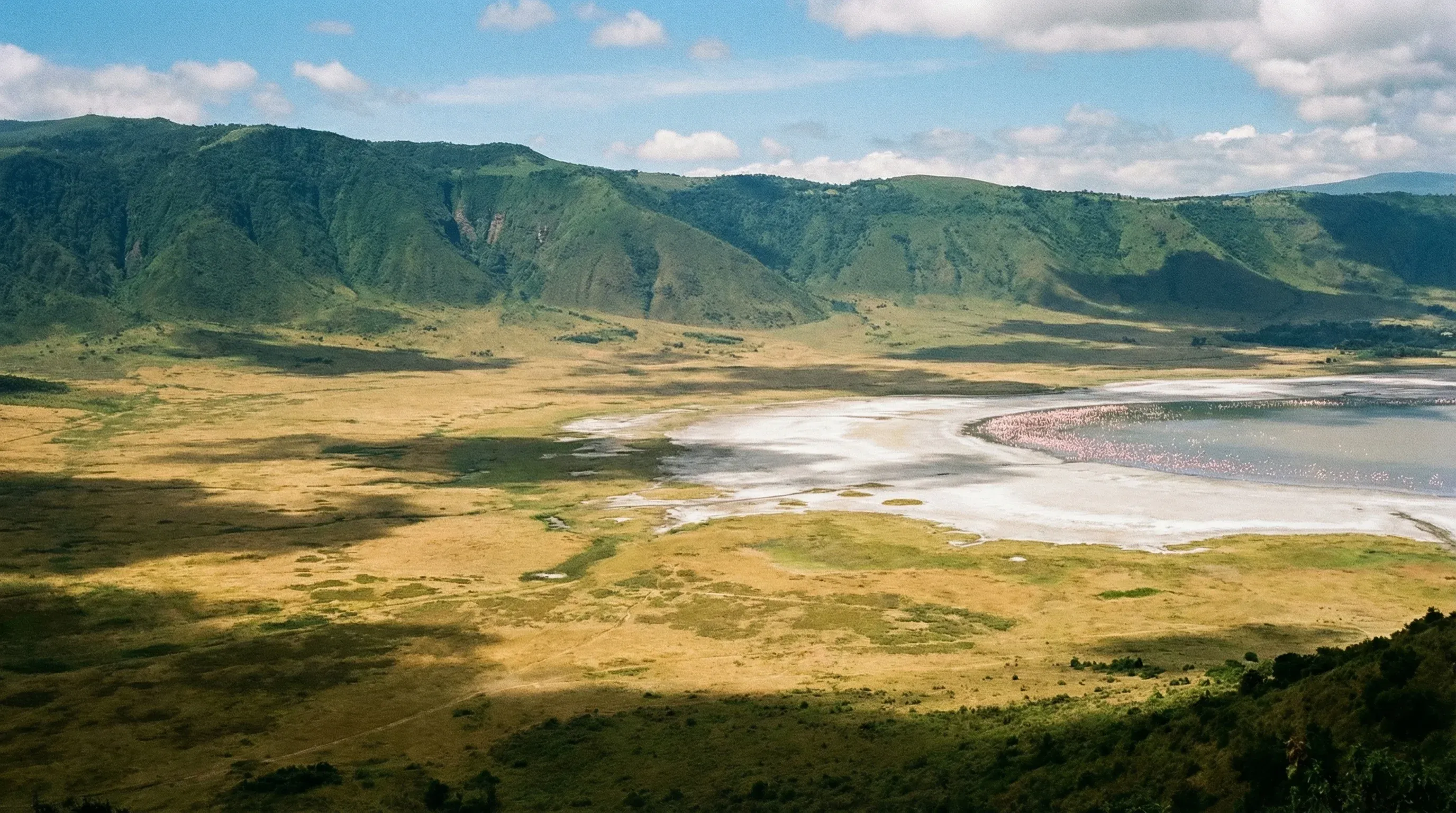

Serengeti & Northern Circuit (Serengeti, Ngorongoro, Lake Manyara)
The world's most famous wildlife stage, where the Great Migration roars to life 🦁🦓
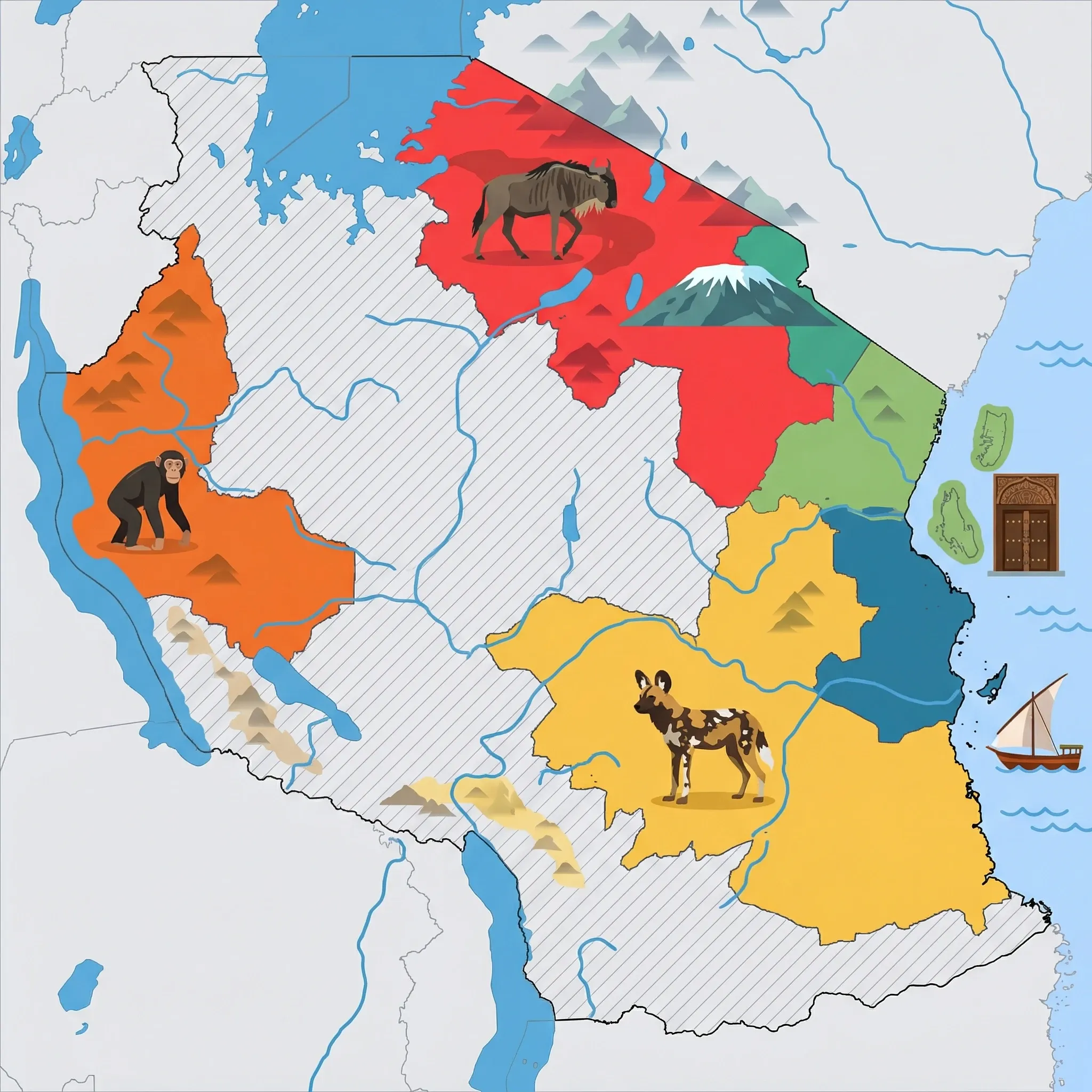
Click a region to explore
The Northern Circuit is arguably the most famous wildlife destination on the planet, and for good reason. It delivers the "classic" safari experience that families dream of: endless golden savannahs, flat-topped acacia trees, and herds of animals stretching to the horizon. This region is not just a park; it is a massive, complex ecosystem where nature plays out on a grand scale. From the pink-hued shores of soda lakes to the mist-covered highlands, the geography is as diverse as the wildlife. For children, this is the ultimate classroom, offering lessons in biology, conservation, and geography that no textbook can match.
The journey usually begins in Arusha, moving west towards the Great Rift Valley. As you ascend the crater highlands, the air cools and the vegetation becomes lush rainforest, a stark contrast to the dry plains ahead. The sheer density of animals here means that children don't have to wait long to see something exciting—zebras, wildebeest, and gazelles are often visible from the main roads. While the distances can be long and the roads bumpy (the "African massage"), the reward is access to the most pristine wildlife theatres on earth, where the Big Five (lion, leopard, elephant, buffalo, rhino) are not just a checklist, but a likely reality.
Key Attractions
The crown jewel is the Serengeti National Park. Its name means "endless plains" in Maasai, and it hosts the Great Migration, where millions of wildebeest move in a cyclical search for water. Seeing this living river of animals is a life-changing experience for any family. Nearby, the Ngorongoro Crater offers a completely different dynamic. This collapsed volcano acts as a natural enclosure for wildlife, meaning game drives here are incredibly productive—you can often see lions, hyenas, and rhinos all before lunch. It is intense, compact, and visually stunning.
For a change of pace, the Momella Route (Mount Meru) in Arusha National Park offers walking safaris where you can see giraffes and buffaloes on foot (with a ranger), providing a thrilling sense of scale that you don't get from inside a jeep. This park is also home to black-and-white colobus monkeys, which are a delight to watch swinging through the forest canopy.
Practical Advice
The dry season (June to October) is best for game viewing as animals congregate around water sources. However, the "Green Season" (November to March) sees the calving of wildebeest and fewer tourists. Safari vehicles can be confined spaces; bring entertainment for kids during the long transfers between parks. Malarial prophylaxis is essential.
Food & Drink
Typical meal times: Lodges operate on strict schedules. Breakfast 6:00 am to 8:00 am (before game drives), Lunch 12:30 pm to 2:00 pm (often a packed picnic in the park), Dinner 7:30 pm to 9:00 pm.
Typical meal costs: Most safaris are full-board. If eating independently in Arusha, a main meal costs 30,000–55,000 TZS (approx. $11–21 USD / €10–19 EUR). Lodge drinks are pricey, with beer costing around $5–7 USD.
Dietary requirements: Safari lodges are excellent at catering to dietary needs (GF, vegan, allergies) if notified in advance. They are used to international guests. Packed lunches can be repetitive (sandwich, fruit, juice box).
Signature dishes:
- Ugali na Nyama – Stiff maize porridge served with a meat stew; the national staple. Eating it with your hands is the local custom.
- Kachumbari – A fresh tomato and onion salad with chili and lime, often served as a side to cut through rich meats.
- Chipsi Mayai – A French fry omelette found at local stalls—a greasy, comforting favorite that children usually love.
Why this score?
Traveling through the bush involves long drives on dusty, unpaved roads and staying in proximity to wild animals in unfenced camps. The sense of isolation and the raw nature of the Serengeti provide a significant adventure profile for families.
Why this score?
While Arusha serves as a gateway with some decent private clinics, the parks themselves are remote with only basic first aid available. Emergency medical evacuation by air (Flying Doctors) is the standard protocol for any serious condition occurring within the safari circuit.
Why this score?
This is one of the premier safari destinations globally, attracting hundreds of thousands of international tourists seeking the Big Five. The established circuit of lodges and well-mapped routes makes it a highly recognizable and popular choice for foreign travelers.

This is one of Africa's most expensive regions. Park fees alone are high (approx. $70–80 USD per adult per day). A mid-range family safari costs $400–700 USD (approx. 1,000,000–1,800,000 TZS) per person per day including transport and lodging. Budget camping options exist but are basic.

Getting Here & Around
Getting Here
- Airports – Kilimanjaro International Airport (JRO) is the international gateway. Arusha Airport (ARK) handles domestic flights directly into the national park airstrips.
- Driving – The circuit is connected by road, but distances are vast. Arusha to Ngorongoro Gate is about 3 hours; Ngorongoro to Central Serengeti is another 3-4 hours on dirt roads.
Getting Around
- Safari Vehicle – The primary mode of transport. 4x4 Land Cruisers with pop-up roofs are essential for the rough terrain and game viewing.
- Fly-in Safaris – Small bush planes (Cessna Caravans) connect airstrips like Seronera and Manyara, saving hours of driving time—highly recommended for families.
Nearby Airports (4 airports)
Arusha
ARKArusha
Kirawira B Aerodrome
GTZGrumeti Game Reserve
Lake Manyara Airport
LKYLake Manyara
Seronera Airstrip
SEUSeronera
View full flight map for Tanzania →

Packing List
Dirt roads are incredibly dusty; a face covering is essential to prevent inhaling dust.
Sharing one pair leads to frustration when the action happens quickly.
Roads are extremely corrugated and bumpy; the 'African massage' is real.
Bright blue/black attracts painful tsetse flies; khakis and greens are functional, not just fashion.
Bush planes to Zanzibar/Serengeti often refuse hard-shell suitcases; soft bags are mandatory.
Tsetse flies are attracted to dark blue and black; khaki or tan colors keep you hidden and bite-free.
Safari vehicles are open-sided; dust is intense in the dry season and will cover your face.
Lodges have few outlets and limited generator hours; charge all family devices at once.
Roads in national parks are extremely bumpy; essential for kids prone to car sickness.
Keeps children engaged during game drives so they don't have to wait for the adult pair.

Activities & Best Times

Hiking, wildlife, outdoor exploration, ecotourism
The Serengeti-Ngorongoro ecosystem is one of the top 3-5 safari destinations globally. The Great Migration, Ngorongoro Crater (UNESCO World Heritage Site), and exceptional wildlife density make this a primary international destination for wildlife experiences. This region competes with Botswana's Okavango Delta and South Africa's Kruger - it deserves 'excellent' calibration.

Sport tourism, fitness activities, active recreation
Features significant high-altitude trekking on Mount Meru and the challenging Oldoinyo Lengai volcanic ascent. These routes are best tackled during the dry winter months when volcanic ash tracks are stable and visibility is high; seasonal rains make these steep, unpaved routes dangerous.




Public Holidays & Calendar Next 12 months
Public holidays, festivals, cultural celebrations, and seasonal natural phenomena coming up in Serengeti & Northern Circuit (Serengeti, Ngorongoro, Lake Manyara) over the next 12 months.
Loading holidays and events...

Travel Advisory
The majority of international agencies recommend exercising a high degree of caution or increased vigilance. This assessment reflects significant concerns regarding street crime, the potential for political unrest after recent elections, and localized terrorism threats, particularly near the southern border.
Safety Topics
Traveller Advice (3 groups)

Female travellers may experience verbal harassment and unwanted attention. Dressing conservatively and avoiding solo travel at night can help mitigate these risks.
When visiting national parks like the Serengeti or climbing Mount Kilimanjaro, be aware of reports of armed banditry. Using reputable tour operators and travelling in groups is strongly recommended.

Same-sex relationships are illegal and highly stigmatized. Public displays of affection can lead to harassment, arrest, or imprisonment. High levels of discretion are required as authorities have been known to target individuals based on sexual orientation.
Agency Summaries
Heightened safety awareness is necessary because of the frequency of violent crime and the potential for civil disturbances. Specific regions in the southeast carry a much higher risk due to militant activity.
Travellers should maintain a high level of vigilance due to prevalent crime and the risk of terrorism. Stricter warnings apply to the southern border areas near Mozambique where armed groups are active.
The risk level was recently elevated due to political instability and civil unrest following national elections. Violent crime, terrorism, and the specific targeting of marginalized groups also contribute to the higher warning level.
The political environment is currently stable but can shift quickly. Visitors are encouraged to avoid large gatherings and monitor local news carefully while adhering to strict entry requirements.
Safety concerns exceed those of typical Western countries, primarily due to violent street crime and the threat of extremist attacks. Road safety and ferry travel also present significant hazards.
While general travel is permitted, the authorities advise against visiting areas within 20km of the Mozambique border. Visitors should stay informed about the political climate following the late 2025 elections.
Information is provided for general guidance only and does not constitute travel, safety, medical, or legal advice. Conditions may change. Users are responsible for independently verifying information before travel.