
Southern Parks (Selous/Nyerere, Ruaha)
Wild, remote, and crowd-free: the frontier of African safaris 🐘🚤
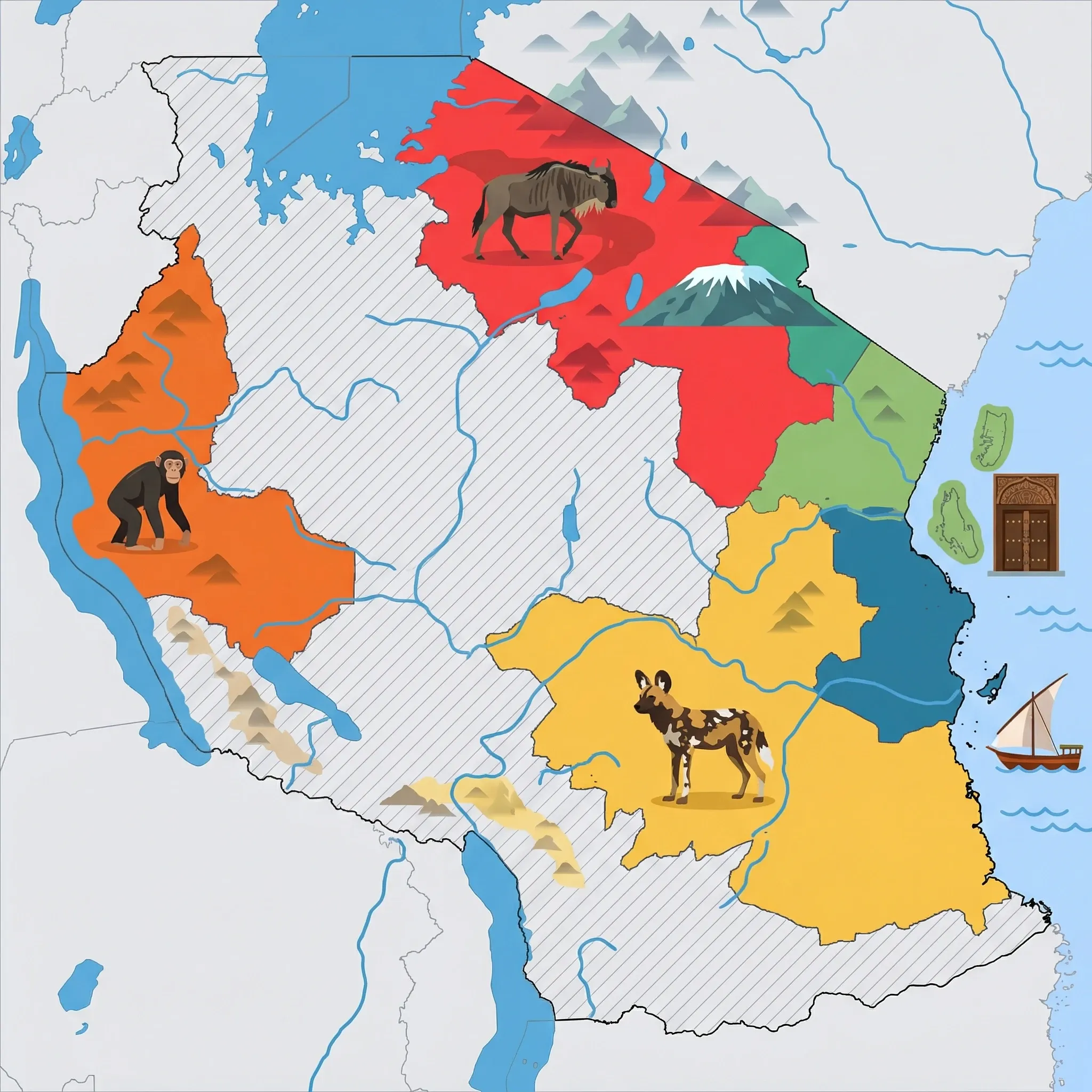
Click a region to explore
⚠️ SAFETY WARNING: Due to regional instability and security concerns near the Mozambique border, government agencies (including the USA, UK, and Australia) advise travelers to reconsider travel to the southern border regions of Mtwara and Lindi. While the core safari areas of Nyerere and Ruaha are generally considered safe when visiting with established operators, independent travel in the far south is discouraged. Families are strongly urged to consult their own government's official travel advisory before considering a trip, as circumstances and risk assessments vary.
The Southern Circuit is the untamed heart of Tanzania. Unlike the well-trodden paths of the north, parks like Nyerere (formerly Selous Game Reserve) and Ruaha offer a sense of isolation and discovery that is becoming rare in modern Africa. Here, you might go a whole day without seeing another vehicle. The landscape is vast and varied, from the riverine forests and lakes of Nyerere to the dry, baobab-studded hills of Ruaha. This region is suited for families who want a deeper immersion in nature and are comfortable with a more rustic, adventurous experience.
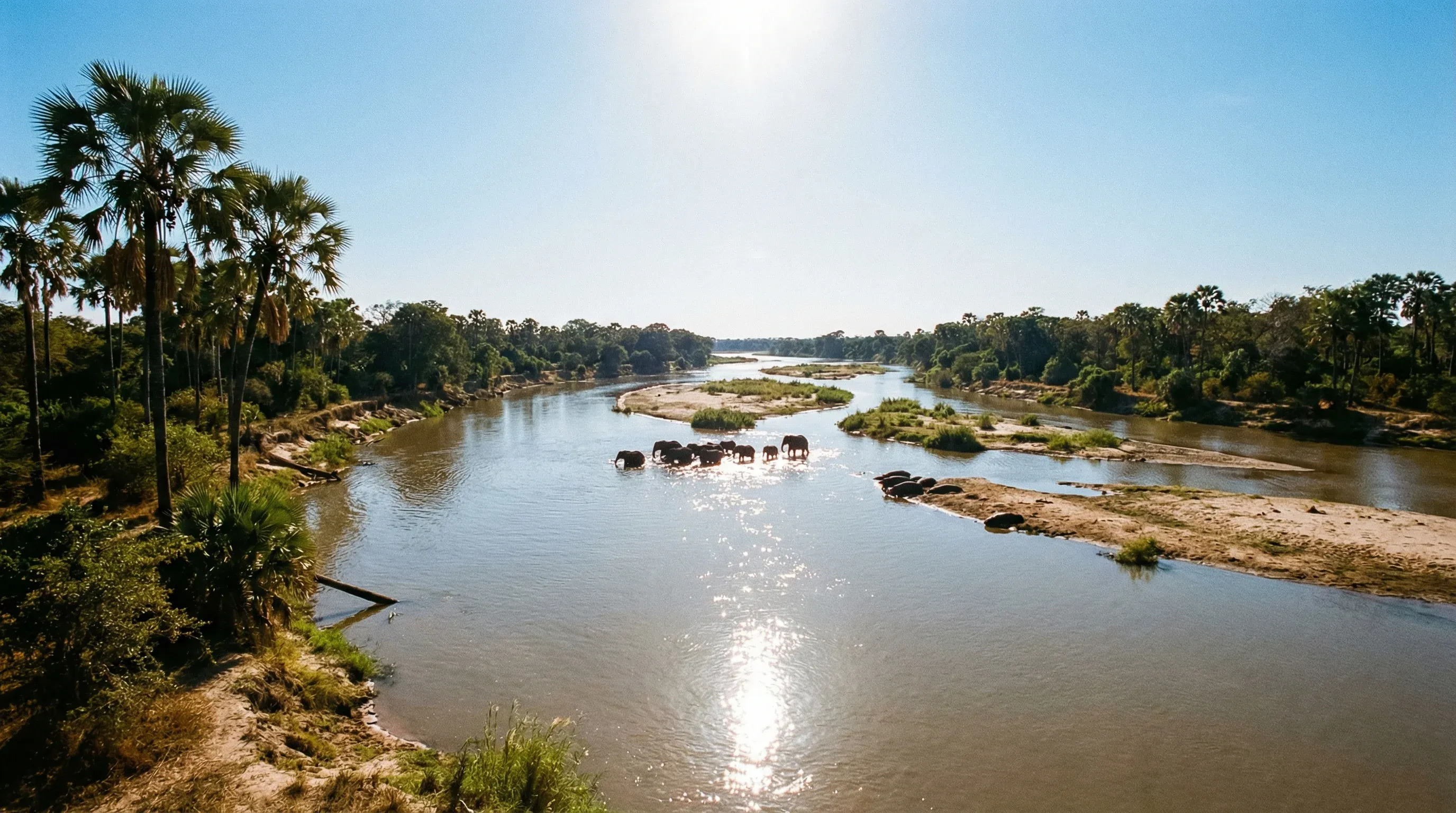
The defining feature of the south is the water. In Nyerere National Park, the Rufiji River creates a wetland environment that allows for boat safaris—a fantastic activity for kids who might get bored sitting in a car. Drifting quietly past crocodiles sunning themselves on the banks or watching elephants cross the river is a serene and thrilling experience. Ruaha, by contrast, is rugged and dry, famous for its massive herds of elephants and prides of lions that have learned to hunt giraffe. The camps here often have a more open feel, bringing you closer to the sounds of the African night.
Key Attractions
Nyerere National Park is the star of the south. Its boat safaris distinguish it from almost anywhere else in Tanzania. Families can enjoy a sunset cruise watching weaver birds build nests and hippos yawning in the water. The park is also one of the few places where walking safaris are widely permitted (for children over 12 or 16 depending on the lodge), offering a chance to learn about tracks, insects, and plants.
Ruaha National Park offers a wilder aesthetic. It is famous for its predator population, particularly lions and the elusive African wild dog. The landscape, dotted with ancient baobab trees, looks like a prehistoric painting. It is further away and harder to reach, which keeps the crowds low and the wildlife sightings private. Mikumi National Park, closer to Dar es Salaam, is more accessible and acts as a "mini-Serengeti" with open plains, making it a good entry point for younger children.
Practical Advice
These parks are best accessed by air; the drive from Dar es Salaam is long and arduous. The best time to visit is June to October (dry season). Many camps here are unfenced, meaning wildlife wanders through; strict supervision of children is required at all times. Some lodges have age restrictions (often 6+ or 12+), so check before booking.
Food & Drink
Typical meal times: Similar to the north, meals are dictated by safari schedules. Breakfast 6:30 am, Lunch 1:00 pm, Dinner 8:00 pm.
Typical meal costs: Almost exclusively full-board within lodges. Costs are included in the package. "Flying doctors" insurance is often mandatory or highly recommended.
Dietary requirements: Remote lodges are adept at managing dietary needs but require advance notice as all supplies are flown or trucked in. Fresh produce is generally excellent.
Signature dishes:
- Fresh River Fish – Lodges near the Rufiji often serve locally caught freshwater fish, grilled simply with lemon.
- Wali na Maharage – Rice and beans cooked with coconut milk, a staple comfort food often served at staff or cultural meals.
- Bush Breakfast – Not a specific dish, but an experience: eggs, bacon, and coffee cooked over a fire out in the wilderness, a signature of the southern luxury safari.
Why this score?
This region is characterized by immense, wild landscapes and activities like walking safaris and boat trips on the Rufiji River. The remoteness and lack of crowds make it significantly more rugged and unpredictable than the Northern Circuit.
Why this score?
Medical facilities are almost non-existent within the park boundaries, with only rudimentary first aid kits at luxury lodges. The vast distances and limited airstrips make emergency response times extremely slow, posing a risk for travelers with chronic health concerns.
Why this score?
The Southern Circuit receives a fraction of the visitors seen in the north, catering to safari purists seeking a quieter experience. Infrastructure is less developed, and the lack of a major international airport nearby keeps arrival numbers low.

The South is generally pricier than the North due to logistics and the exclusivity of the camps. Expect to pay $500–900 USD (approx. 1,300,000–2,300,000 TZS) per person per night for high-end fly-in packages. Budget options are scarce, though some exist outside park gates.

Getting Here & Around
Getting Here
- Airports – Small airstrips (Mtemere, Siwandu, Msembe) service the parks. Flights depart daily from Dar es Salaam (approx. 45 mins to Nyerere, 2 hours to Ruaha) and Zanzibar.
- Train – The TAZARA railway passes near the edge of Nyerere, offering a rugged, adventurous, and slow access route, but it is unreliable for tight schedules.
- Driving – Mikumi is a 4-5 hour drive from Dar es Salaam. Reaching Ruaha by road requires a grueling 10+ hour drive, generally not recommended for families.
Getting Around
- Boat – Unique to Nyerere, flat-bottomed boats with outboard motors are a primary way to view game on the river.
- 4x4 Safari Vehicle – Open-sided vehicles are common here (unlike the pop-top enclosed cars of the north), offering better visibility but more exposure to the elements.
- Walking – Guided walking safaris are a specialty of the southern parks, usually accompanied by an armed ranger.
Nearby Airports (1 airport)
Iringa
IRIIringa
View full flight map for Tanzania →
Official Links

Packing List
Camps are often remote with limited generator hours; essential for navigating paths at night.
Crucial for boat safaris to protect cameras and phones from river spray or rain.
Tsetse flies are more prevalent in the bushy southern parks than in the Serengeti plains.
Protection against sun and tsetse flies during open-vehicle game drives.
Bush planes to Zanzibar/Serengeti often refuse hard-shell suitcases; soft bags are mandatory.
Tsetse flies are attracted to dark blue and black; khaki or tan colors keep you hidden and bite-free.
Safari vehicles are open-sided; dust is intense in the dry season and will cover your face.
Lodges have few outlets and limited generator hours; charge all family devices at once.
Roads in national parks are extremely bumpy; essential for kids prone to car sickness.
Keeps children engaged during game drives so they don't have to wait for the adult pair.

Activities & Best Times

Hiking, wildlife, outdoor exploration, ecotourism
Nyerere National Park (formerly Selous Game Reserve) is a UNESCO World Heritage Site and Africa's largest game reserve. Ruaha National Park is Tanzania's largest national park with exceptional elephant populations. This deserves 'very_good' given the international significance and wilderness quality.

Urban tourism, museums, historical sites, architecture
Features internationally recognized heritage sites like the Isimila Stone Age site and the cultural museums of Iringa, offering sophisticated historical depth. The dry months are best for navigating the unpaved access roads to these archaeological landmarks, whereas the peak wet season limits accessibility.

Sport tourism, fitness activities, active recreation
The challenging elevation gains of the Mwanihana Peak and Sanje Waterfall trails provide world-class trekking infrastructure for physically active families. Conditions are most favorable during the cooler dry season, with the intense humidity and rain of March-April making steep technical trails hazardous.



Public Holidays & Calendar Next 12 months
Public holidays, festivals, cultural celebrations, and seasonal natural phenomena coming up in Southern Parks (Selous/Nyerere, Ruaha) over the next 12 months.
Loading holidays and events...

Travel Advisory
The majority of international agencies recommend exercising a high degree of caution or increased vigilance. This assessment reflects significant concerns regarding street crime, the potential for political unrest after recent elections, and localized terrorism threats, particularly near the southern border.
Safety Topics
Traveller Advice (3 groups)

Female travellers may experience verbal harassment and unwanted attention. Dressing conservatively and avoiding solo travel at night can help mitigate these risks.
When visiting national parks like the Serengeti or climbing Mount Kilimanjaro, be aware of reports of armed banditry. Using reputable tour operators and travelling in groups is strongly recommended.

Same-sex relationships are illegal and highly stigmatized. Public displays of affection can lead to harassment, arrest, or imprisonment. High levels of discretion are required as authorities have been known to target individuals based on sexual orientation.
Agency Summaries
Heightened safety awareness is necessary because of the frequency of violent crime and the potential for civil disturbances. Specific regions in the southeast carry a much higher risk due to militant activity.
Travellers should maintain a high level of vigilance due to prevalent crime and the risk of terrorism. Stricter warnings apply to the southern border areas near Mozambique where armed groups are active.
The risk level was recently elevated due to political instability and civil unrest following national elections. Violent crime, terrorism, and the specific targeting of marginalized groups also contribute to the higher warning level.
The political environment is currently stable but can shift quickly. Visitors are encouraged to avoid large gatherings and monitor local news carefully while adhering to strict entry requirements.
Safety concerns exceed those of typical Western countries, primarily due to violent street crime and the threat of extremist attacks. Road safety and ferry travel also present significant hazards.
While general travel is permitted, the authorities advise against visiting areas within 20km of the Mozambique border. Visitors should stay informed about the political climate following the late 2025 elections.
Information is provided for general guidance only and does not constitute travel, safety, medical, or legal advice. Conditions may change. Users are responsible for independently verifying information before travel.