
Northern Thailand (Chiang Mai, Chiang Rai)
Misty mountains, ethical elephants, and Lanna culture 🐘⛰️
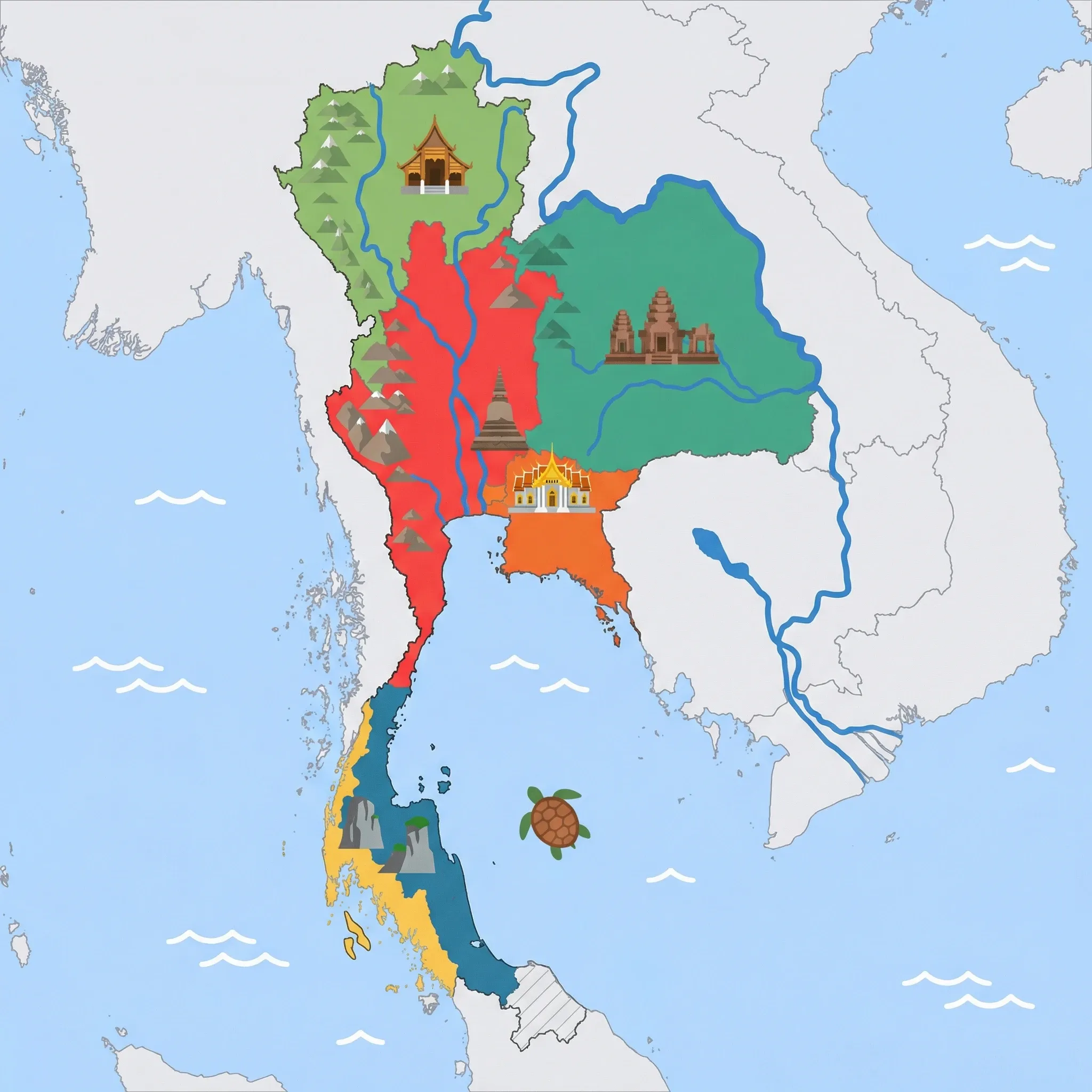
Click a region to explore
Northern Thailand feels like a different country compared to the beaches of the south. The pace is slower, the air (usually) cooler, and the culture is rooted in the ancient Lanna Kingdom. For families, this is the center of ethical animal encounters and outdoor adventure. The geography is defined by rolling mountains and lush valleys, making it the perfect destination for active children who enjoy light trekking, waterfalls, and nature. Chiang Mai, the capital of the north, is an incredibly family-friendly city with a walkable moat-encircled Old City full of safe, interesting corners.
The region is famous for its elephants. While elephant tourism has a complex history, Northern Thailand leads the way in ethical sanctuaries where riding is banned, and the focus is on observation and care—a profound educational experience for kids. Culturally, the north is colorful and accessible; the Night Bazaars are full of handicrafts that appeal to children, from handmade umbrellas to wood carvings. The cooler winter months (November-February) make exploring temples and climbing stairs much more pleasant than in the humid south.
Key Attractions
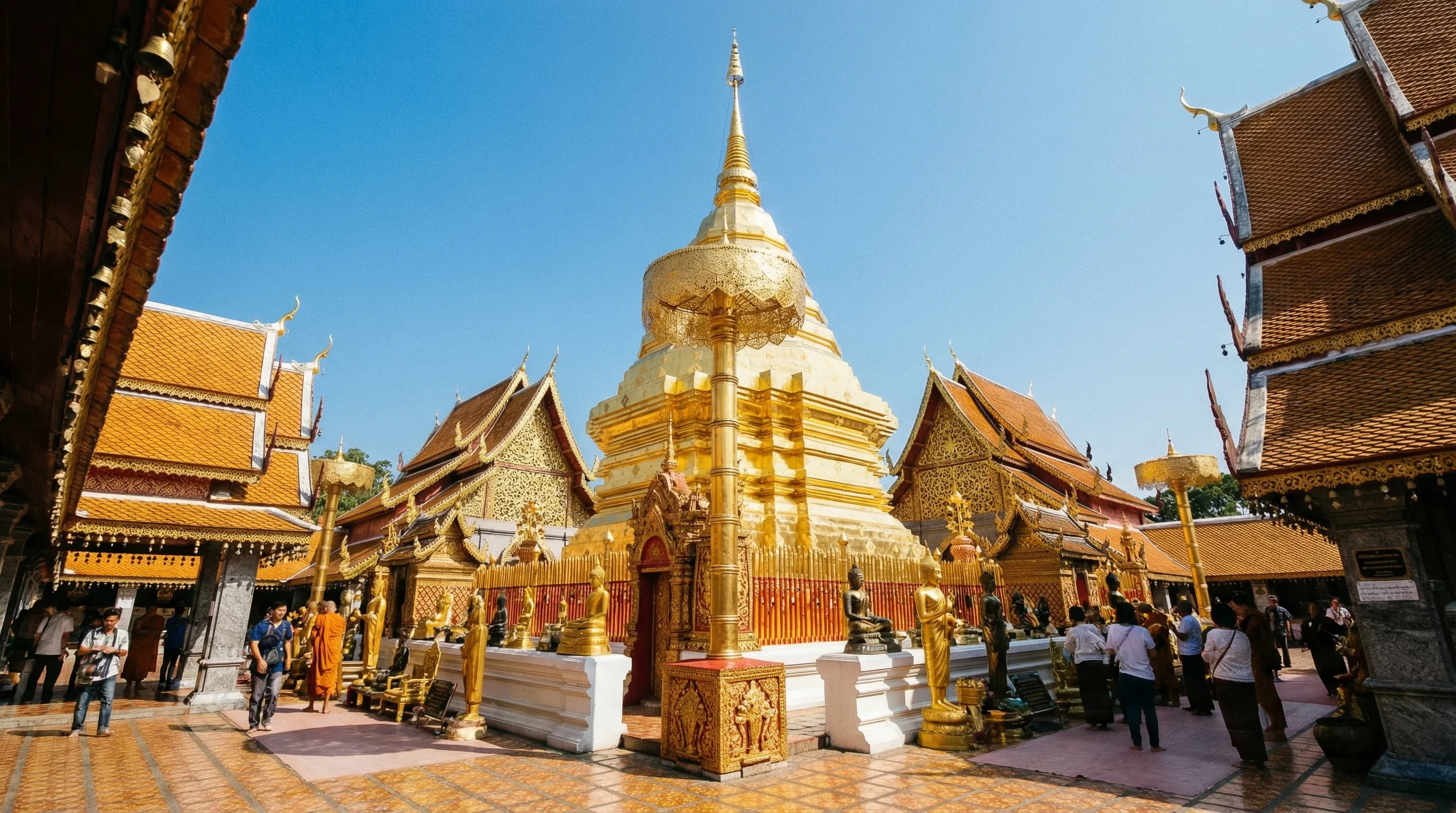
The number one bucket-list item for families is the Elephant Nature Park. It is widely considered the gold standard for ethical elephant tourism; booking in advance is essential. Children can watch herds bathe in the river and learn about conservation without the cruelty of riding. High above the city sits Wat Phra That Doi Suthep. Accessing it involves a fun funicular ride or a walk up 306 Naga-lined steps, and the golden chedi at the top is dazzling.
In Chiang Rai, the Wat Rong Khun (The White Temple) looks like an ice palace from a fairy tale. Its quirky murals (featuring Batman and spaceships) fascinate older kids. Back in Chiang Mai, the Chiang Mai Zoo & Aquarium at the foot of the mountain is spacious and houses pandas. For a break from the heat, the Queen Sirikit Botanical Garden has a fantastic 'Canopy Walkway'—a metal bridge suspended high above the jungle floor that feels adventurous but is perfectly safe.
Practical Advice
Important Warning: Avoid this region from mid-February to April during the "burning season" when agricultural smoke causes hazardous air quality. The best time to visit is November to January.
Food & Drink
Typical meal times: Lunch 12:00 pm to 2:00 pm. Dinner is a big social affair, often eaten at night markets from 6:00 pm onwards.
Typical meal costs: Very reasonable. A bowl of noodles costs THB 40–60 (approx. $1.10–1.70 USD / €1–1.50 EUR). A nice sit-down dinner costs THB 300–500 (approx. $8.50–14 USD / €8–13 EUR) for a family.
Dietary requirements: Northern food uses less coconut milk and more herbs. Sticky rice is the standard. Vegetarian options are abundant in Chiang Mai due to the expat/yogi community.
Signature dishes:
- Khao Soi – The undisputed king of northern food. Egg noodles in a curry broth (like a soup), topped with crispy noodles. Mild and creamy.
- Sai Oua – A herbal pork sausage, grilled and sliced. Can be spicy, so taste a small piece first.
- Sticky Rice with Mango – While found everywhere, the quality of mangoes in the north is exceptional.
Why this score?
The region offers good outdoor recreation including mountain trekking, zip-lining, and river rafting, yet most of these are highly organized for tourists. Chiang Mai serves as a comfortable base with easy access to nature, balancing rugged landscapes with soft-adventure infrastructure. It is less wild than the deep interior but more physically engaging than the central plains.
Why this score?
Chiang Mai boasts excellent private hospitals such as Chiang Mai Ram, which are well-versed in treating the expatriate and tourist communities. Outside of the main city hubs like Chiang Mai and Chiang Rai, medical services become much more basic and language barriers increase. For a major tourist region, it provides reliable care but lacks the sheer density of world-class facilities found in Bangkok.
Why this score?
Northern Thailand is a recognized destination with a moderate to high flow of international visitors, centered largely on Chiang Mai's cultural appeal. It is famous for its misty mountains and Lanna heritage, attracting digital nomads and families interested in ethical animal encounters. While popular, it lacks the massive coastal volume seen in the Andaman region.

Northern Thailand is noticeably cheaper than the southern beaches. Accommodation offers high value; a boutique family hotel with a pool can be found for THB 1,500–2,500 (approx. $42–70 USD / €39–65 EUR). Transport and food are budget-friendly. Tours (like ethical elephant sanctuaries) will be your biggest single expense, costing around THB 2,500 ($70 USD) per person.

Getting Here & Around
Getting Here
- Airports – Chiang Mai International (CNX) and Chiang Rai (CEI) are well connected to Bangkok.
- Train – The overnight sleeper train from Bangkok to Chiang Mai is a legendary travel experience. Kids love the beds that fold down from the walls.
- Bus – The "Green Bus" company connects Chiang Mai to Chiang Rai (3 hours).
Getting Around
- Songthaew (Red Truck) – In Chiang Mai, these red pick-ups act as shared taxis. Flag one down, tell the driver where you want to go, and pay a fixed small fee (usually THB 30).
- Walking – The Old City of Chiang Mai is flat and walkable, though sidewalks can be uneven.
- Car Rental – Recommended if you want to drive the "Mae Hong Son Loop" or visit Doi Inthanon National Park.
Nearby Airports (6 airports)
Chiang Rai Intl
CEIChiang Rai
Chiang Mai Intl
CNXChiang Mai
Mae Hong Son
HGNMae Hong Son
Lampang
LPTLampang
Mae Sot Airport
MAQMae Sot
Nan
NNTNan
View full flight map for Thailand →

Packing List
The roads to Pai and Chiang Rai are notoriously winding (762 curves to Pai).
It gets genuinely cold in the evenings and on mountain peaks like Doi Inthanon.
Dengue fever is a risk in the north; apply repellent day and night.
You must remove shoes at every temple and many shops/homes; laces become very annoying.
Strictly enforced in National Marine Parks to protect coral; standard brands may be confiscated.
Essential for long-tail boat trips to keep phones and spare clothes dry from splashes.
Dehydration hits fast in the humidity; local pharmacies sell them, but having a kid-friendly flavour helps.
Stickers for clothes are a great non-chemical alternative for young children to ward off dengue-carrying mosquitoes.
Versatile for covering shoulders at temples, as a beach sheet, or a light blanket on air-conditioned buses.

Activities & Best Times

Hiking, wildlife, outdoor exploration, ecotourism
The region offers world-class jungle trekking, mountain scenery, and authentic farm experiences like tea plantations. Peak conditions occur in the cool, dry winter, while the burning season (March-April) and peak monsoon (July-September) present health risks or trail accessibility issues.

Urban tourism, museums, historical sites, architecture
Chiang Mai and Chiang Rai are premier cultural hubs featuring historic old cities and globally recognized contemporary art museums. While rainy months are acceptable for urban exploration, the extreme heat and smoke haze of March and April significantly degrade the experience for families.

Sport tourism, fitness activities, active recreation
Specific infrastructure for ziplining and organized water activities at Grand Canyon Water Park offers genuine active options. Conditions are best in the dry season, with safety concerns and discomfort rising during the smoky season and heavy rainfall periods.

Amusement parks, family entertainment venues
Regional water parks and jungle adventure centers provide solid family entertainment, though they lack the scale of global mega-parks. The cool season is most comfortable, while the intense monsoon rains from June to September often disrupt outdoor operations.

Beach resorts, marine activities: diving, snorkelling, kite surfing, wind surfing, sailing
This is a landlocked region where 'beaches' are limited to freshwater lake and river sites which do not meet international sea-resort or diving standards. These areas are most enjoyable during the dry season but lack the transparency and biodiversity sought by sophisticated travelers.

Learning experiences, scientific sites, historical education
The Chiang Mai Zoo Aquarium provides a localized educational draw for families but is not an internationally significant scientific destination. Visitation is best when climate conditions allow for comfortable movement between exhibits, avoiding the peak heat and poor air quality of early spring.

Attractions (26 total)



Public Holidays & Calendar Next 12 months
Public holidays, festivals, cultural celebrations, and seasonal natural phenomena coming up in Northern Thailand (Chiang Mai, Chiang Rai) over the next 12 months.
Loading holidays and events...

Travel Advisory
All major agencies maintain an assessment of elevated risk for Thailand. While the country is a primary tourism destination, ongoing political instability, sporadic civil unrest in urban areas, and significant regional conflicts near the Cambodian and Malaysian borders require travellers to maintain a high degree of vigilance.
Safety Topics
Traveller Advice (4 groups)

The social environment is generally tolerant and welcoming towards sexual and gender minorities. However, visitors should still remain aware of local cultural sensitivities regarding public displays of affection.

Solo female travellers should exercise extra vigilance in nightlife districts and on public transport. Dress conservatively when visiting religious sites and be cautious of unwanted attention or drink-spiking incidents in popular tourist hubs.

Travellers must carry a valid passport at all times as local police frequently perform identity checks. It is essential to respect local customs and refrain from making any critical comments about the monarchy, even on social media, to avoid severe legal penalties.

Recent visa reforms allow many nationalities to perform short-term or urgent business tasks under the standard 60-day visa exemption. Those planning longer stays or specific employment must secure the appropriate work permits to avoid detention or deportation.
Agency Summaries
Heightened caution is advised throughout the country because of potential civil unrest and insurgent activities. Travellers are specifically warned to avoid the provinces of Yala, Pattani, and Narathiwat, as well as the border region with Cambodia where military clashes have occurred.
A high degree of caution is recommended due to the persistent threat of terrorism in major cities and tourist centres. Additionally, ongoing conflict along the border with Cambodia and civil unrest in southern provinces present significant safety risks that require avoiding those specific regions.
Irish citizens are urged to be highly cautious due to terrorism risks and recent military clashes along the border with Cambodia. Travel to the southernmost provinces of Narathiwat, Pattani, and Yala is discouraged due to the risk of violence and insurgent activity.
Visitors should maintain a high level of vigilance across the country due to political instability and sporadic public demonstrations. Specific high-risk zones, including the far southern provinces and areas within 50km of the Cambodian border, should be avoided entirely due to active conflict and regional tensions.
While most of the country is safe for visitors, the government advises against travel to the deep southern provinces near the Malaysian border and specified zones near the Cambodian border. Authorities warn of strict regulations regarding cannabis and electronic cigarettes.
Heightened security awareness is necessary because of the potential for civil unrest and the ongoing threat of terrorism. New Zealanders are advised against travelling to the far south and border areas with Cambodia, where military conflict and landmines pose extreme risks.
Information is provided for general guidance only and does not constitute travel, safety, medical, or legal advice. Conditions may change. Users are responsible for independently verifying information before travel.