

Overview
Spread across 100,000 square miles of the Atlantic Ocean, The Bahamas is a coral archipelago of 700 islands, though only about 30 are inhabited. For families, this destination offers an unparalleled aquatic playground. The water here is legendary-astronauts have described it as the clearest on the planet-making it an ideal environment for children learning to snorkel or swim. Beyond the beaches, the islands are steeped in a fascinating history of pirates, blockade runners, and colonial settlers that sparks the imagination of young travelers.
The vibe varies significantly depending on where you land. Nassau & Paradise Island are bustling hubs of energy with mega-resorts, water parks, and cruise ships, offering convenience and endless entertainment. In contrast, the Out Islands (or Family Islands) like Eleuthera and the Abacos offer a sleepy, barefoot rhythm where families explore by golf cart and have entire beaches to themselves. Whether you want the excitement of water slides or the serenity of a private cove, The Bahamas delivers a tropical escape that feels both exotic and accessible.
Key Attractions
In the capital, history comes alive at the Queen's Staircase, a dramatic 66-step landmark carved from solid limestone by enslaved people in the 18th century; it provides a cool, shaded walk that leads up to the historic Fort Fincastle. Nearby, families can march through Fort Charlotte, the largest fortress in Nassau, complete with dungeons and cannons that thrill school-aged kids. For a brush with nature, Ardastra Gardens, Zoo and Conservation Centre is famous for its marching flamingos-the national bird-and offers a chance to hand-feed lorikeets.
Venturing beyond the capital, the Grand Bahama region is home to Lucayan National Park, where boardwalks wind through mangrove forests to Gold Rock Beach, often cited as one of the Caribbean's finest. A boat trip to Blue Lagoon Island offers safe, calm waters for toddlers and encounters with marine life. In the Out Islands, the candy-striped Hope Town Lighthouse in the Abacos is one of the last hand-cranked kerosene lighthouses in the world-a climb to the top offers panoramic views. Meanwhile, Dunmore Town on Harbour Island charms visitors with its pastel cottages and famous pink sand beaches.
Practical Advice
The best time to visit is from mid-December to mid-April when the weather is warm and dry, though prices are highest. The hurricane season runs officially from June to November, with the highest risk in August and September. Sun protection is critical here; the UV index is very high, so pack rash guards for children. English is the official language, and the US dollar is accepted everywhere at a 1:1 exchange rate with the Bahamian dollar, simplifying logistics for American families. Tap water in major resorts is usually safe, but bottled water is recommended elsewhere.
Safety
While most visits are trouble-free, travelers should exercise caution, particularly in parts of Nassau and Freeport. The US State Department often issues Level 2 advisories due to crime. Avoid walking alone at night in downtown Nassau, particularly in the "Over the Hill" areas (south of Shirley Street). Theft can occur, so keep valuables secure. Be vigilant when renting water sports equipment; ensure operators are licensed and follow safety protocols. Shark encounters are extremely rare but possible; avoid swimming at dawn or dusk and respect local warnings.
Food & Drink
Typical meal times: Lunch is typically served from 12:00 pm to 3:00 pm, and dinner from 6:00 pm to 9:00 pm. "Island time" is real-service can be slower than in Western cities, so bring coloring books or games for the kids while waiting.
Typical meal costs: Nassau and resorts are expensive. A casual lunch costs B$20–35 (approx. $20–35 USD / €18–32 EUR), while dinner at a mid-range restaurant runs B$40–80 (approx. $40–80 USD / €37–75 EUR). Local "Fish Fry" meals are better value at B$15–25 (approx. $15–25 USD / €14–23 EUR).
Dietary requirements: Major resorts and Nassau restaurants cater well to vegetarian, gluten-free, and vegan diets. In the Out Islands, options may be limited to salads and sides; "peas n' rice" is a staple but often cooked with pork fat, so ask ahead.
Family-friendly dining: Bahamians love children, and most restaurants are welcoming. Highchairs are common in tourist hubs. The "Fish Fry" at Arawak Cay in Nassau is a lively, colorful experience where kids can try local food in a casual, open-air setting.
Signature dishes:
- Conch Salad – A fresh ceviche-style dish with diced conch, peppers, onions, and citrus juices; ask for "tropical" style with mango or pineapple for kids.
- Conch Fritters – Deep-fried balls of batter and conch meat, similar to hush puppies, usually served with a dipping sauce-a huge hit with children.
- Peas n' Rice – A hearty side dish of pigeon peas, rice, tomatoes, and thyme, often cooked with salted pork.
- Johnny Cake – A dense, slightly sweet bread somewhere between a biscuit and a sponge cake, perfect for picky eaters.
- Guava Duff – A spiraled steamed pudding filled with guava paste and served with a warm butter rum sauce (ask for sauce on the side or non-alcoholic for kids).
Age Suitability





Did you know? The Bahamas welcomes approximately 1.9 million international visitors per year. Most visitors come from Americas.
Explore Regions
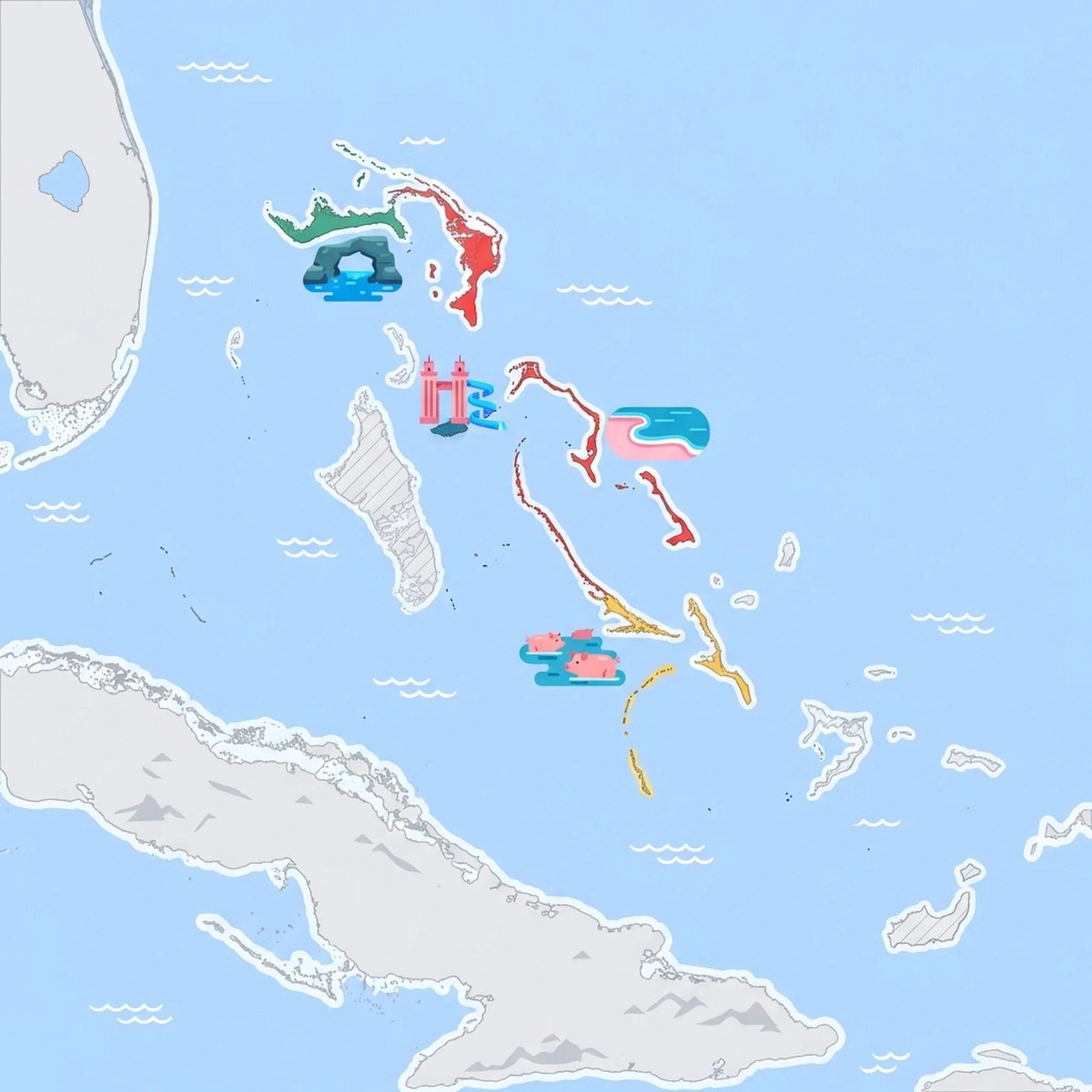
4 Regions
Exumas (swimming pigs)
365 islands of sapphire water and swimming pigs 🐷🏝️
Grand Bahama (Freeport)
Nature, caves, and calm waters just minutes from Florida 🌿🦇
Nassau & Paradise Island
Where pirate history meets world-class water parks 🏴☠️🎢
Out Islands (Eleuthera, Harbour Island, Abacos)
Pink sands, pastel cottages, and island hopping 🐚⛵
Click on a region marker to explore details. Use the dropdown to color regions by activity suitability.

Getting There & Around
Getting There
- By Air – Lynden Pindling International Airport (NAS) in Nassau is the main hub, with frequent direct flights from US cities, Toronto, and London. The Grand Bahama International Airport (FPO) serves Freeport. Smaller airports in the Out Islands (like ELH in Eleuthera) are accessible via small "puddle jumper" planes from Florida or Nassau.
- By Sea – Nassau is one of the world's busiest cruise ports. Ferries also run from Fort Lauderdale, Florida, to Grand Bahama and Bimini (approx. 2–3 hours), offering a convenient surface link for US travelers.
- Entry Requirements – US, Canadian, and UK citizens do not generally need a visa for tourist stays up to 8 months (UK) or 90 days (US/Canada), but a return ticket is required. Check your government website for the latest visa requirements, or use the IATA Travel Centre entry-requirements checker.
Getting Around
- Taxis – The primary way to get around Nassau and Freeport. Rates are fixed by the government based on zones, but you should always confirm the fare before getting in. Most drivers only accept cash.
- Jitneys (Buses) – In Nassau, these colorful minibuses are a cheap and adventurous way to travel, costing about B$1.50 per person. They run from roughly 6:30 am to 7:00 pm but do not service the airport.
- Water Taxis – A popular way to travel between downtown Nassau and Paradise Island. Tickets cost around B$6–8 per person. Expect a lively ride, often with a guide pointing out celebrity homes.
- Golf Carts – The standard mode of transport in the Out Islands like Harbour Island and Hope Town. They are fun for families but require a valid driver's license to rent.
- Ferries – Bahamas Ferries connect Nassau to major Out Islands like Eleuthera and the Abacos. The "Fast Ferry" is comfortable and reliable for island hopping.

Packing List
The best way to remove sticky wet sand from children's legs and feet before getting back in the car or hotel room.
Essential for protecting the coral ecosystems; local supplies can be extremely expensive or limited in brand choice.
Sand flies (no-see-ums) appear at dusk and their bites are itchy; standard mosquito spray often doesn't work on them.
Resorts charge a premium for these; packing your own deflated set saves money and ensures you have them immediately.
With so many boat excursions and water activities, this keeps your device safe while capturing family memories.
The UV index is extreme; full-coverage swim shirts prevent sunburn better than sunscreen during long snorkeling sessions.

Activities & Best Times

Adventure & Nature
Very GoodHiking, wildlife, outdoor exploration, ecotourism
Features unique wildlife encounters such as the swimming pigs and the world-class Leon Levy Native Plant Preserve. The winter months provide the most comfortable temperatures for exploring trails and coastal geological features like the Glass Window Bridge.
Offers a mix of curated marine encounters at Blue Lagoon and authentic terrestrial exploration at Clifton Heritage National Park. The winter months provide comfortable temperatures for hiking coastal trails and exploring primeval forests.
Unique wildlife encounters with swimming pigs, nurse sharks, and iguanas provide a globally distinctive nature experience for families. The dry winter months offer the most comfortable conditions for boat-based wildlife tours.

City & Cultural
Very GoodUrban tourism, museums, historical sites, architecture
Nassau boasts a rich colonial heritage and a thriving contemporary art scene centered around the National Art Gallery and Graycliff Heritage Village. Sophisticated travelers prefer the cooler, drier months to explore the historic architecture and vibrant markets of the capital.
Loyalist heritage and sites like Hope Town Lighthouse are regionally significant but not internationally outstanding. These islands are primarily beach/nature destinations with good heritage offerings, not cultural tourism destinations of global significance.
George Town and The Hermitage provide authentic heritage experiences, but this is a nature-focused destination. The cultural offerings are good but not internationally significant enough to warrant 'very_good' when compared to globally recognized cultural destinations.

Sports & Active
Very GoodSport tourism, fitness activities, active recreation
Home to major international-standard infrastructure including world-class water parks and resort-based sporting facilities. The dry, temperate winter months are ideal for active outdoor pursuits and water-based adventure sports.
World-class diving through UNEXSO and extensive hiking trails in national parks define the active scene. Activities are most reliable during the dry season when sea conditions are calm and trails are well-maintained.
Offers distinctive active experiences like the Ocean Hole and varied coastal hiking trails across the Abaco and Eleuthera chains. Peak conditions for physical activity occur during the cooler winter window, as summer heat can be prohibitive for land-based sports.

Beach & Sea
GoodBeach resorts, marine activities: diving, snorkelling, kite surfing, wind surfing, sailing
Home to iconic pink sand beaches and crystal-clear snorkeling spots like Treasure Cay, offering a high-end yet laid-back atmosphere. Peak season aligns with the dry winter months, while the late summer risk of hurricanes and high humidity makes August through October less desirable.
Features iconic stretches like Cable and Cabbage Beach with world-class resort infrastructure and crystal-clear turquoise waters. Peak season aligns with the dry winter months, while the summer off-season carries high humidity and hurricane risks.
Home to iconic spots like the Tropic of Cancer Beach and Thunderball Grotto, the region offers world-class water clarity and snorkeling. Peak season avoids the humidity and storm risks of the late summer hurricane window.

Educational & Exploratory
GoodLearning experiences, scientific sites, historical education
The region features world-class marine conservation and education facilities, particularly the extensive Marine Habitat at Atlantis. These sites offer significant learning opportunities for families interested in Caribbean ecology outside of the oppressive summer heat.
The Cape Eleuthera Institute provides significant marine research and sustainability education opportunities for interested families. Optimal visitation occurs during the active research and academic seasons in the first half of the year.
The Sea Aquarium at O'Brien's Cay offers a significant marine-focused educational experience for families. Calm sea conditions and peak tourism services are most reliable from December through April.

Road Trips & Scenic
GoodScenic drives, countryside tours, route-based travel
Established scenic routes like West Bay Street and the Eastern Road Historical Drive offer glimpses of both coastal beauty and colonial history. Best experienced during the dry season when clear skies and cooler air make for pleasant coastal touring.
The Queen's Highway offers a scenic driving route across the narrow length of Eleuthera, showcasing dramatic coastal views. Driving is most pleasant during the cooler, drier winter months with the best visibility for scenic overlooks.
The Queen's Highway on Great Exuma provides a scenic driving route connecting various settlements and beaches. Clear skies and dry roads during the winter peak provide the best driving environment for families.

Festivals & Seasonal
MarginalEvents, celebrations, seasonal attractions

Theme Park & Entertainment
MarginalAmusement parks, family entertainment venues

Public Holidays & Calendar Next 12 months
Public holidays, festivals, cultural celebrations, and seasonal natural phenomena coming up in The Bahamas over the next 12 months.
Loading holidays and events...
Climate & Weather
Exumas (swimming pigs)
Show Details
| Month | Temp °C | Rain | Humidity |
|---|
Grand Bahama (Freeport)
Show Details
| Month | Temp °C | Rain | Humidity |
|---|
Nassau & Paradise Island
Show Details
| Month | Temp °C | Rain | Humidity |
|---|
Out Islands (Eleuthera, Harbour Island, Abacos)
Show Details
| Month | Temp °C | Rain | Humidity |
|---|

Travel Advisory
While several agencies maintain a baseline advisory, a significant number of major partners advise increased vigilance due to high rates of violent crime in urban hubs. Travelers should stay alert in Nassau and Freeport.
Safety Topics
Traveller Advice (2 groups)

Local social attitudes tend to be conservative. While same-sex relations are legal, public displays of affection may attract negative attention or hostility in some communities.

Female visitors should be particularly cautious as reports of sexual assault have occurred, sometimes involving watercraft operators or happening in poorly lit areas. It is recommended to avoid walking alone after dark or visiting isolated beaches.
Agency Summaries
Increased safety precautions are advised due to the persistent threat of violent crime in popular tourist and residential areas.
General travel is permitted, though visitors should remain alert to street crime and exercise caution with water-based activities and in secluded areas.
The safety environment is considered stable, but travellers should maintain standard personal security awareness as they would at home.
Heightened vigilance is recommended due to prevalent violent crime, including armed robberies and sexual assaults, occurring across the islands.
Travellers are urged to be highly vigilant because of significant crime levels, particularly in the urban centers of Nassau and Freeport.
No specific travel restrictions are in place, but visitors are encouraged to have full insurance and stay informed about local conditions.
Information is provided for general guidance only and does not constitute travel, safety, medical, or legal advice. Conditions may change. Users are responsible for independently verifying information before travel.