

Overview
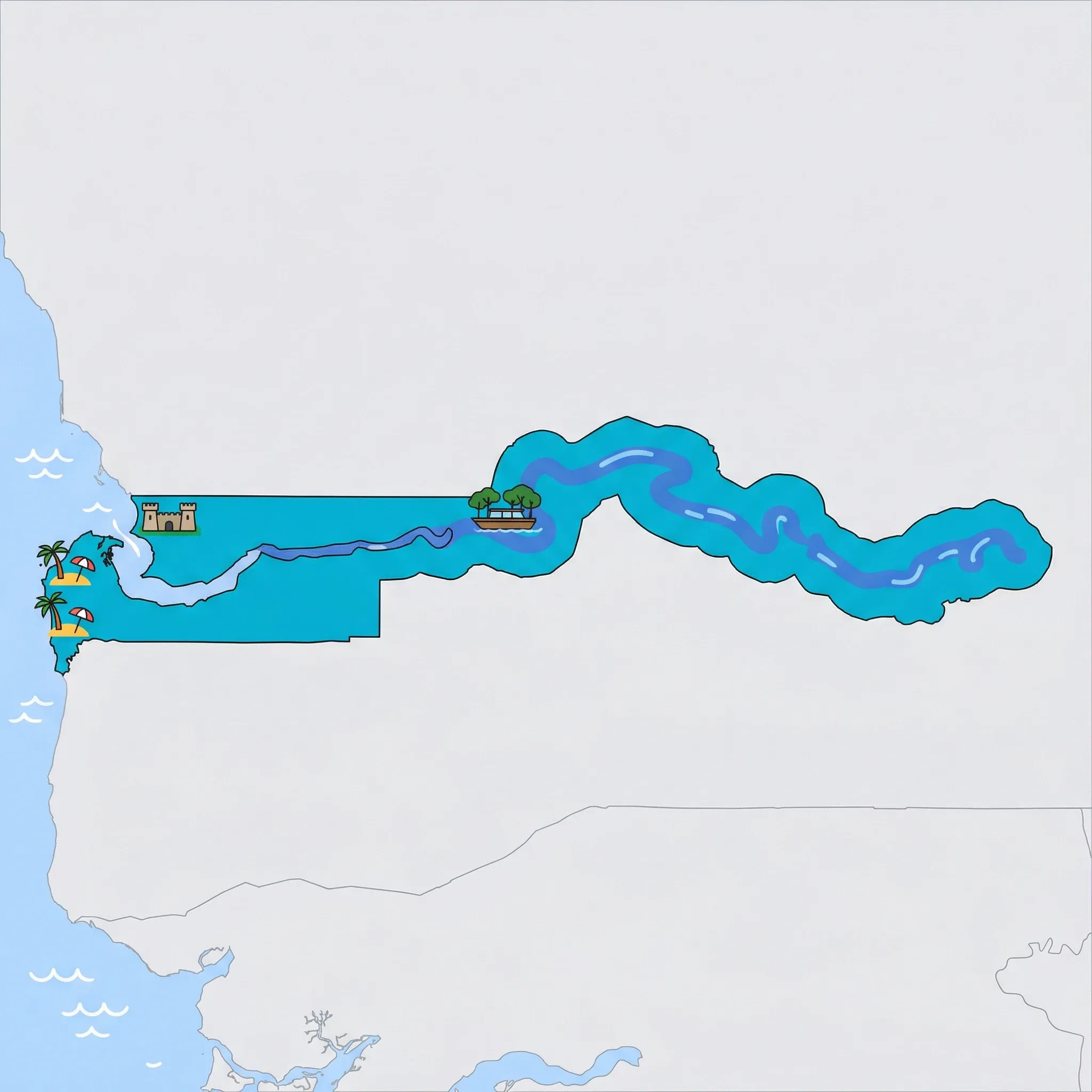
The Gambia is the smallest country on mainland Africa, a narrow finger of land that follows the winding path of the Gambia River into the heart of Senegal. For families, it is widely considered one of the best introductions to Africa. The country earns its nickname, the "Smiling Coast," through the genuine warmth of its people and a relaxed, safe atmosphere that puts parents at ease. Unlike many safari destinations that require long, dusty travel, The Gambia's wildlife and culture are accessible; you can be spotting monkeys in a forest park in the morning and building sandcastles on the Atlantic coast by the afternoon.
The climate is dominated by two seasons: the dry season (November to May), which guarantees winter sun and comfortable humidity, and the green season (June to October), which brings lush landscapes but heavier rains. Culturally, it is a vibrant mix of ethnic groups living in harmony, with English as the official language making communication effortless for many travelers. Families will love the blend of river adventures, history, and beach relaxation, all packaged in a destination where children are treated with exceptional kindness.
Key Attractions
Wildlife encounters here are intimate and exciting for children. A visit to the Katchikally Crocodile Pool is unforgettable; families can get remarkably close to (and even touch) docile crocodiles in a sacred setting that feels like a real-life jungle book. Just down the coast, Bijilo Forest Park offers shaded walking trails where Green Vervet and Red Colobus monkeys frequently frolic near the paths, delighting younger visitors without the need for a strenuous trek. For a day by the ocean, Kololi Beach provides a lively base with wide sands and plenty of amenities.
History and river life are the soul of the country. A boat trip to Kunta Kinteh Island (formerly James Island) is a moving history lesson suitable for older children, exploring the UNESCO-listed ruins that tell the story of the transatlantic slave trade. Further inland, the mysterious Wassu Stone Circles offer an ancient megalithic puzzle often compared to Stonehenge. For true adventurers, a multi-day trip upriver to the River Gambia National Park reveals the country's wilder side, where you can spot hippos, baboons, and the rehabilitated chimpanzees of the Baboon Islands Project from the safety of a boat.
Practical Advice
The best time to visit is during the dry season (November to April). Health is a priority; malaria prophylaxis is highly recommended for all family members, and a Yellow Fever vaccination certificate is often required for entry. The currency is the Dalasi (GMD), and while credit cards are accepted in major hotels, cash is king elsewhere. The country operates on "Gambia Maybe Time" (GMT) - a local joke about the relaxed pace of life - so patience is a virtue. English is the official language, which helps immensely with logistics.
Food & Drink
Typical meal times: Lunch is typically served from 1:00 pm to 3:00 pm, and dinner is often eaten late, from 7:30 pm to 10:00 pm.
Typical meal costs: D400–900 (approx. $5.50–12.50 USD / €5–11 EUR) for a main dish in a tourist restaurant; local street food is much cheaper at D50–150 (approx. $0.70–2.00 USD / €0.60–1.80 EUR).
Dietary requirements: Vegetarian options are generally available, often featuring rice, vegetables, and beans. Peanuts (groundnuts) are a staple ingredient, so those with nut allergies must be extremely cautious and ask about ingredients in stews and sauces.
Family-friendly dining: Gambians love children, and restaurants are very welcoming. However, service can be slow, so bringing snacks or ordering immediately upon arrival is wise for hungry kids. Highchairs are rare outside major hotels.
Signature dishes:
- Domoda – A rich, savory peanut butter stew usually cooked with beef or chicken and served over white rice; the national dish and a favorite with kids who like nutty flavors.
- Benachin – Literally meaning "one pot," this is the Gambian version of Jollof rice, a flavorful dish of rice cooked with tomato, vegetables, and fish or meat.
- Chicken Yassa – Grilled chicken marinated in onions, lime, and mustard, offering a tangy but not too spicy flavor profile that appeals to many palates.
- Tapalapa – A dense, baguette-style local bread often eaten for breakfast with beans, omelette, or spread.
Safety
The Gambia is politically stable and generally safe for tourists, but petty crime does occur. The most common annoyance for families is the presence of "bumsters" - young men on beaches and outside hotels who offer unwanted guide services or friendship in exchange for money. A polite but firm refusal is usually effective. Be cautious of strong ocean currents; swim only in designated areas or hotel pools. Malaria is a risk year-round; use mosquito nets and repellent diligently.
Family Travel Notice
Parents traveling with minors should carry notarized permission letters, as authorities have previously blocked children from leaving the country when traveling without both legal guardians.
Age Suitability





Did you know? The Gambia welcomes approximately 570,000 international visitors per year. Most visitors come from Europe.
Why this score?
The region offers a moderate level of adventure, balancing comfortable beach resorts with accessible excursions into the African bush and river systems. Families can engage in unique but safe activities like visiting the Katchikally Crocodile Pool or taking river boat trips to Kunta Kinteh Island. While the interior is more rugged, the primary tourist experience is supported by enough infrastructure to keep it from being truly high-adventure.
Why this score?
Medical facilities in The Gambia are very limited, with most high-quality care restricted to a few private clinics in the coastal tourism areas. Public hospitals often face shortages of supplies and specialized staff, making the region unsuitable for complex medical needs. For serious emergencies, international tourists typically require medical evacuation to Dakar, Senegal, or their home countries.
Why this score?
The Gambia attracts approximately 570,000 international visitors annually, primarily from European markets like the UK and Netherlands seeking 'winter sun.' While it is a leading destination in West Africa with established resort clusters in Kololi and Kotu, it remains a niche choice globally compared to major tropical hubs. The tourism infrastructure is concentrated along the coast, leaving the interior largely undeveloped for mass travel.

The Gambia is generally a budget-friendly destination, though prices in the Senegambia tourist strip are higher. A comfortable family hotel room costs 3,500–7,000 GMD (approx. $50–100 USD / €45–95 EUR) per night. Supermarket imports are expensive, but local fruit and bread are incredibly cheap. A bottle of water is around 25–50 GMD (approx. $0.35–0.75 USD / €0.30–0.70 EUR).

Getting There & Around
Getting There
- By Air – Banjul International Airport (BJL) is the main gateway. It receives seasonal charter flights from the UK and Europe (Thomas Cook, TUI) and scheduled flights via Brussels or Casablanca. Note that an Airport Security Fee (approx. $20 / €20 / £20) is payable in cash upon both arrival and departure.
- By Land – The Gambia is an enclave within Senegal. Borders are open, but crossings can be chaotic. The Trans-Gambia Highway crosses the river via the Senegambia Bridge, facilitating travel from Dakar.
- Entry Requirements – Visas are not required for UK, Commonwealth, and ECOWAS citizens for short stays. US citizens typically need a visa (check latest rules as this can fluctuate). A Yellow Fever vaccination certificate is frequently requested by border officials. Check your government website for the latest visa requirements, or use the IATA Travel Centre entry-requirements checker.
Getting Around
- Tourist Taxis (Green) – These are painted green and parked outside hotels. They have fixed prices (displayed on notice boards) and are the safest, most hassle-free option for families. They are more expensive than local taxis but worth the extra cost for reliability.
- Local Taxis (Yellow) – Painted yellow with green stripes, these are cheaper and operate on a shared basis or private hire. They are often not permitted to pick up tourists from inside resort areas. Negotiate the price before getting in.
- Ferries – The ferry between Banjul and Barra is a quintessential Gambian experience, though it can be crowded, hot, and slow. It connects the capital to the North Bank and sites like The Gambia's border with Senegal.
Official Links

Packing List
Often requested by officials at the airport even if not strictly mandatory for your origin.
Power cuts are common even in hotels; street lighting is minimal in many areas.
ATMs can be unreliable or out of service; bring clean, newer notes to exchange.
Essential for preventing heat rash (prickly heat) in the humid climate.
The electrical grid fluctuates; protect your devices and keep phones charged.

Activities & Best Times

Adventure & Nature
Very GoodHiking, wildlife, outdoor exploration, ecotourism
Renowned for exceptional birdwatching and river-based wildlife encounters in River Gambia and Kiang West National Parks. The dry season is peak for animal visibility and trail accessibility, while the heavy rains of July to September can hinder deep wilderness exploration.

City & Cultural
Very GoodUrban tourism, museums, historical sites, architecture
Rich in West African heritage with significant sites like Kunta Kinteh Island and the Wassu Stone Circles offering profound historical context. Peak visitation aligns with cooler dry months to allow for comfortable walking tours and market exploration in Banjul and Serrekunda.

Beach & Sea
GoodBeach resorts, marine activities: diving, snorkelling, kite surfing, wind surfing, sailing
The Gambia offers accessible Atlantic coastlines with established resort areas at Kotu and Kololi, though it lacks the coral biodiversity of premier global destinations. Peak season occurs during the dry, sunny winter months when conditions are ideal for sun-seeking families.

Educational & Exploratory
GoodLearning experiences, scientific sites, historical education
Kunta Kinteh Island is a UNESCO World Heritage Site with major educational significance for understanding the transatlantic slave trade. The National Museum and Wassu Stone Circles add further educational value. 'Marginal' significantly underrates the country's educational tourism potential.

Road Trips & Scenic
GoodScenic drives, countryside tours, route-based travel
The North and South Bank Roads offer scenic routes through rural landscapes and riverside villages, though road quality varies. Dry months are peak to ensure reliable road conditions and easier access to remote river crossings.

Sports & Active
GoodSport tourism, fitness activities, active recreation
Offers established nature trails for hiking and cycling within Bijilo and Abuko reserves. These active pursuits are best enjoyed during the cooler, dry months before the intense April heat and subsequent monsoon rains make outdoor exertion difficult.

Theme Park & Entertainment
MarginalAmusement parks, family entertainment venues
Facilities like Qcity and Dream Park provide local recreation but are not international-scale destination parks. These are best visited during the dry season when outdoor amusement rides are fully operational and weather is pleasant.

Attractions (11 total)



Public Holidays & Calendar Next 12 months
Public holidays, festivals, cultural celebrations, and seasonal natural phenomena coming up in The Gambia over the next 12 months.
Loading holidays and events...

Travel Advisory
Most major agencies advise exercising a high degree of caution or increased caution country-wide. This is primarily driven by high rates of petty crime and localized security concerns in border regions.
Safety Topics
Traveller Advice (3 groups)

Be polite but firm when declining unsolicited help from 'bumsters'—young men who approach tourists on beaches and in tourist areas seeking money or romantic connections.

Same-sex relationships are illegal and can result in severe prison sentences. There is zero tolerance for LGBTQ+ individuals, and laws even criminalize specific dress codes.

Parents traveling with minors should carry notarized permission letters, as authorities have previously blocked children from leaving the country when traveling without both legal guardians.
Agency Summaries
A high level of vigilance is recommended due to crime, including muggings on beaches and theft in crowded markets. Travelers should avoid being alone at night and be aware of financial scams often targeting visitors.
Visitors are advised to be more careful because of high crime rates, potential for civil unrest, and poor medical infrastructure. Petty theft is frequent in Banjul and tourist zones. There is a heightened risk of instability near the southern border with Senegal's Casamance region.
Irish citizens are urged to research their destination thoroughly as risks are higher than in Ireland. Specific caution is advised for border regions where armed groups and landmines pose a threat.
Travelers should remain vigilant throughout The Gambia due to prevalent petty crime. Specific risks include attacks on roads near the southern border with Senegal and safety concerns regarding overcrowded river transport.
There are significant security concerns related to crime and potential civil unrest. Regional warnings advise against non-essential travel to the southern border with Senegal due to rebel activity.
While no specific travel restrictions are in place, travelers should avoid protests and be wary of 'bumsters' who approach tourists. The country has strict laws against LGBTQ+ individuals, and security checkpoints are common on major roads.
Information is provided for general guidance only and does not constitute travel, safety, medical, or legal advice. Conditions may change. Users are responsible for independently verifying information before travel.