

Timor-Leste is not your typical Southeast Asian family holiday. It lacks the slick infrastructure of Bali or Thailand, but for adventurous families, it offers something far rarer: the thrill of genuine exploration. Rising from the sea as a spine of rugged mountains surrounded by pristine coral reefs, this young nation-only independent since 2002-feels undiscovered. The vibe here is raw and authentic; you won't find theme parks or kids' clubs, but you will find misty hill towns, empty white-sand beaches, and a resilience in the local people that is deeply moving. It is a place where travel requires patience and a sense of humour, but the rewards are profound connections and unforgettable nature.
For families, the primary appeal lies in the outdoors. The waters around Dili and Ataúro Island are world-class for marine life, boasting some of the highest biodiversity on the planet. Dolphins and migrating whales are frequently spotted right from the shore. Inland, the Eastern Mountains offer cooler climates and coffee plantations, while the South Coast feels wild and remote. While the history of resistance and conflict is a major part of the national identity, it is presented in ways that can be educational for older children, fostering discussions about freedom and resilience.
Key Attractions
Start your journey in the capital, where the Cristo Rei of Dili stands atop a headland. It involves a climb of over 500 steps, but the panoramic views are worth it, and families can cool off afterwards at the sheltered Cristo Rei Beach below, which is generally safe for swimming. For a dose of history, the Timorese Resistance Archive and Museum provides a modern, well-curated insight into the country's struggle for independence; while sombre, it is an essential stop for understanding where you are. Nearby, the Xanana Gusmão Reading Room and Museum offers a more personal look at the nation's founding father and includes a small library.
Venture east to the Nino Konis Santana National Park, a vast area covering forests, lakes, and marine areas. It sits at the eastern tip of the island and is home to the stunning Jaco Island (a boat ride away), where the water is impossibly clear. This region is an adventure to reach but offers a "lost world" atmosphere that captivates children. Off the coast of Dili, a trip to Ataúro Island is mandatory for water-loving families; the snorkeling here is shallow, accessible, and teeming with colourful fish, making it perfect for young swimmers.
Practical Advice
The best time to visit is the dry season (May to November), when roads are more passable and diving visibility is best. October and November are peak months for whale watching. Health is a major consideration: Dengue fever is common, so vigilant mosquito protection is essential. Medical facilities are limited, so comprehensive travel insurance with evacuation cover is non-negotiable. Travel logistics can be slow; "island time" is very real here. Bring a sense of adventure and plenty of snacks for long car journeys on winding roads.
Safety
Timor-Leste is generally safe for tourists, but families should exercise increased caution. Crime, such as bag snatching, can occur in Dili, so avoid walking alone at night. The biggest risks are often environmental: saltwater crocodiles are present in many coastal areas (including beaches and mangroves) and are dangerous. Always ask locals before swimming in unknown waters; Cristo Rei Beach and Ataúro Island are generally considered safer spots. Roads can be in poor condition with deep potholes and erratic driving; hire a 4WD with an experienced driver for trips outside the capital.
Food & Drink
Typical meal times: Lunch is typically served from 12:00 pm to 2:00 pm, and dinner from 6:30 pm to 9:00 pm.
Typical meal costs: $3–8 USD (approx. €2.75–7.50 EUR / £2.30–6.20 GBP) for local meals; $15–30 USD (approx. €14–28 EUR / £11.50–23 GBP) for Western restaurants.
Dietary requirements: Vegetarian options are available, particularly tofu and tempeh dishes in local eateries. Gluten-free awareness is low, but rice-based dishes are staples. Peanuts are common in sauces.
Family-friendly dining: Dili has a growing number of international restaurants (pizza, burgers) that cater to children. Local warungs are welcoming but basic; highchairs are rare outside major hotels.
Signature dishes:
- Ikan Pepes – Fish marinated in spices, tamarind, and basil, wrapped in banana leaves and grilled.
- Batar Da'an – A comforting stew made from corn, mung beans, and pumpkin, often served as a vegetarian main.
- Feijoada – A Portuguese-influenced stew of beans, pork, and chorizo, rich and hearty.
- Bibingka – A grilled rice cake with coconut, a popular sweet snack for children.

While local food is cheap, travel here is surprisingly costly due to the US dollar economy and reliance on imports. A family can expect to spend $150–250 USD (approx. €140–230 EUR / £115–190 GBP) per day. Budget hotels are scarce; decent mid-range family rooms cost $80–120 USD (approx. €75–110 EUR). Car hire is expensive at $100–140 USD (approx. €90–130 EUR) per day.
Age Suitability





Did you know? Timor-Leste welcomes approximately 6,000 international visitors per year. Most visitors come from East Asia and the Pacific.

Explore Regions
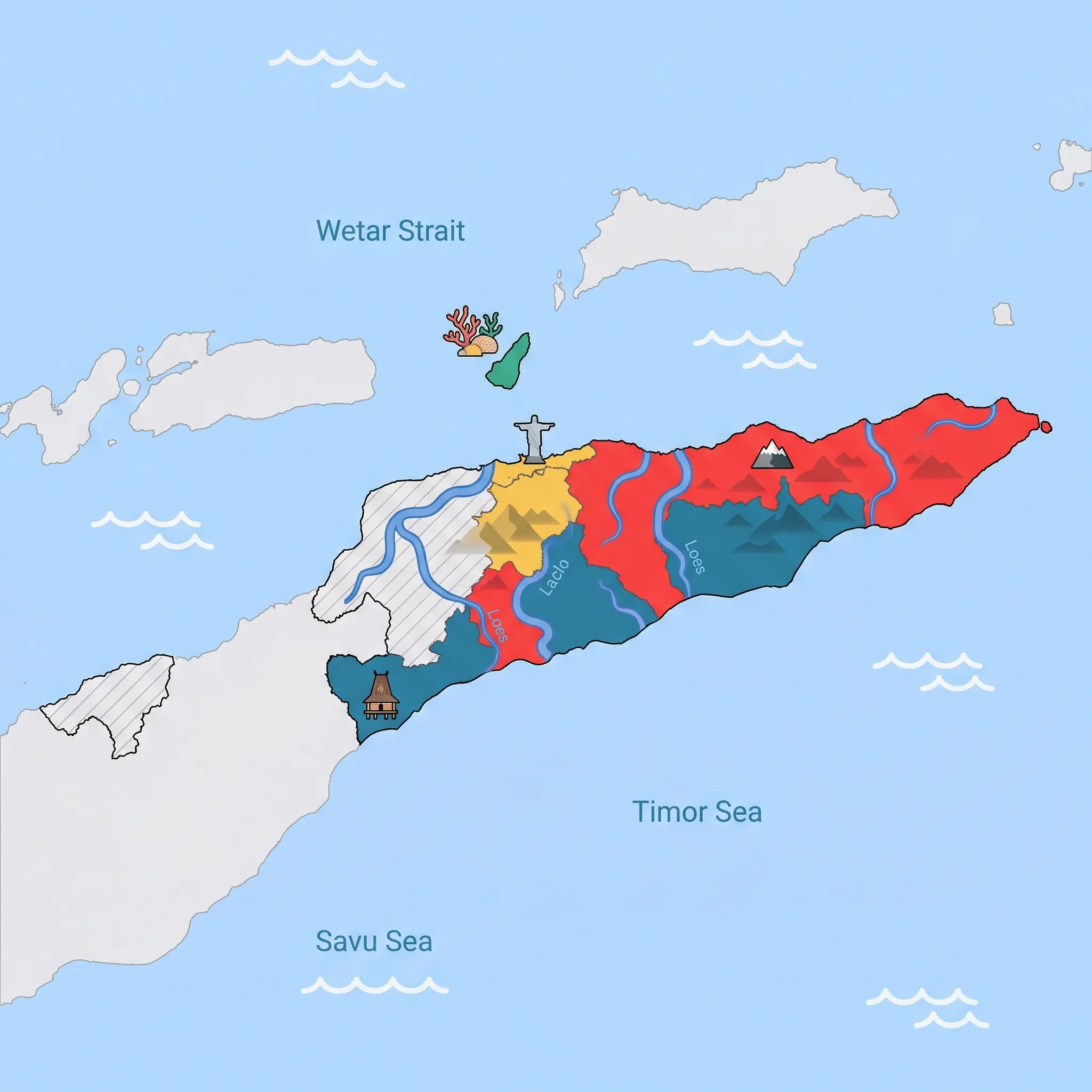
4 Regions
Ataúro Island
The world's most biodiverse waters 🐠
Dili
A seaside capital of history and hope 🇹🇱
Eastern Mountains
Misty peaks and ancient forests 🏔️
South Coast
Wild frontiers and crocodile legends 🐊
Click on a region marker to explore details. Use the dropdown to color regions by activity suitability.

Getting There & Around
Getting There
- By Air – Presidente Nicolau Lobato International Airport (DIL) in Dili is the main gateway. Regular flights arrive from Darwin (Australia) via Qantas/Airnorth, and from Denpasar (Bali) via Citilink and Aero Dili. There is also a connection to Singapore.
- By Land – The main border crossing with Indonesia (West Timor) is at Mota'ain. Buses run from Kupang to Dili, but the journey is long (10-12 hours).
- Entry Requirements – Many nationalities (including US, UK, NZ, and Australians) require a visa. A Visa on Arrival is available at Dili airport ($30 USD cash). Schengen Area citizens (EU) currently enjoy a visa-waiver for short stays. Land border crossings often require a visa authorization letter obtained in advance from a consulate. Check your government website for the latest visa requirements, or use the IATA Travel Centre entry-requirements checker.
Getting Around
- Car Hire – Essential for exploring outside Dili. You will need a high-clearance 4WD to tackle the potholed and winding mountain roads of the Eastern Mountains. Renting a car with a driver is highly recommended for safety and navigation.
- Microlets – These colourful minibuses are the primary public transport in Dili. They are cheap (25 cents) and fun for older kids, but can be crowded and confusing.
- Ferry – Several boats connect Dili to Ataúro Island. The 'Dragon Star' fast ferry takes about 1 hour, while the 'Nakroma' is slower and cheaper.
- Taxis – Blue taxis in Dili are metered and generally reliable. Yellow taxis require negotiating the fare before you get in.
Official Links

Packing List
ATMs are rare outside Dili and vendors often cannot change large notes ($50/$100).
Essential for coral beaches and rocky shores to protect feet from cuts and stonefish.
Mountain roads are incredibly winding and journey times are long.
Street lighting is minimal and power cuts can occur, especially in rural districts.
Rental gear is often adult-sized or poor quality; bring your own for the kids.

Activities & Best Times

Adventure & Nature
Very GoodHiking, wildlife, outdoor exploration, ecotourism
Home to the massive Nino Konis Santana National Park and Tilomar Nature Reserve, offering raw, high-biodiversity wilderness experiences for intrepid families. Peak months align with the dry season, ensuring trail accessibility and better conditions for wildlife observation in dense jungle environments.
Authentic high-altitude trekking and unique biodiversity in the Mundo Perdido and Matebian ranges appeal to experienced adventure-seeking families. Peak months offer clear visibility and safe trail conditions, whereas the wet season poses significant safety risks due to landslides.
Offers rugged, authentic wilderness experiences including the Mount Manukoko summit and protected marine areas for eco-conscious families. The dry season is essential for safe trekking on steep, unpaved trails and accessing remote coastal nature reserves.

City & Cultural
Very GoodUrban tourism, museums, historical sites, architecture
Baucau's unique Portuguese colonial architecture and the historical significance of Venilale offer a sophisticated cultural experience. Best visited in the dry season when the atmosphere of the municipal markets and historic streets can be explored comfortably on foot.
Dili offers deeply authentic cultural sites, including world-class resistance museums and traditional Tais markets that reflect the nation's unique heritage. Optimal walking conditions for urban exploration are found from May to October, while heavy tropical rains in the off-season can disrupt city touring.
Features unique cultural heritage such as the Boneca de Ataúro women's collective and colonial history in Vila Maumeta. Travel between villages and outdoor markets is most pleasant during the dry months when regional logistics are most reliable.

Beach & Sea
GoodBeach resorts, marine activities: diving, snorkelling, kite surfing, wind surfing, sailing
Pristine, undeveloped beaches like Lore and Betano offer an authentic, 'off-the-map' coastal experience far from commercial tourism. The South Coast faces the Timor Sea, where heavy monsoon swells from December to March make beaches unsuitable and potentially dangerous for swimming.
Renowned for some of the world's highest marine biodiversity, offering exceptional snorkeling and diving directly from shore. Peak season aligns with the dry season when sea conditions are calmest and underwater visibility is at its maximum.
Dili provides direct access to significant coastal spots like Cristo Rei and serves as a hub for world-class diving with high marine biodiversity. Peak visitation occurs during the dry season (May-Oct) when sea visibility is highest and conditions are calm for family-friendly snorkeling.

Road Trips & Scenic
GoodScenic drives, countryside tours, route-based travel
The Tasi Mane Highway and Southern Coastal Route provide dramatic coastal vistas and access to remote villages. Peak travel is restricted to the driest months when road conditions are most stable and the risk of landslides or flooding is minimal.
Features dramatic mountain routes and scenic coastal highways that connect Baucau with Viqueque and the interior. Driving is optimal during the core dry season to avoid dangerous washouts and ensure access to remote highland viewpoints.
Major scenic routes like the Northern Coastal Road provide spectacular vistas, though infrastructure requires an adventurous mindset for families. Driving is safest and most scenic during the dry months, as the wet season brings significant risks of landslides and poor road visibility.

Sports & Active
GoodSport tourism, fitness activities, active recreation
Significant trekking routes like Mount Kablaki and Mundo Perdido offer world-class hiking challenges for active families. These high-altitude adventures are best undertaken in the coolest, driest months to avoid slippery terrain and persistent cloud cover that obscures summit views.
Home to established hiking circuits and challenging summit routes that provide world-class panoramic views of the Wetar Strait. Activity is restricted during the monsoon (Dec-Mar) due to heavy precipitation making the volcanic terrain slippery and hazardous.
With established diving centers and recognized hiking routes, Dili supports organized active tourism for families seeking structured outdoor engagement. Peak conditions align with the dry season, ensuring optimal underwater visibility for divers and firm terrain for mountain trekkers.

Relaxation & Wellness
MarginalSpa retreats, wellness centers, peaceful getaways

Theme Park & Entertainment
MarginalAmusement parks, family entertainment venues

Public Holidays & Calendar Next 12 months
Public holidays, festivals, cultural celebrations, and seasonal natural phenomena coming up in Timor-Leste over the next 12 months.
Loading holidays and events...

Climate & Weather
Ataúro Island
Show Details
| Month | Temp °C | Rain | Humidity |
|---|
Dili
Show Details
| Month | Temp °C | Rain | Humidity |
|---|
Eastern Mountains
Show Details
| Month | Temp °C | Rain | Humidity |
|---|
South Coast
Show Details
| Month | Temp °C | Rain | Humidity |
|---|

Travel Advisory
All major agencies agree that travellers should exercise increased caution in Timor-Leste. The primary concerns involve civil unrest, gang-related violence in urban areas, and a higher-than-average risk of crime. Additionally, the limited medical infrastructure means serious health issues often necessitate expensive air evacuation.
Safety Topics
Traveller Advice (3 groups)

Female travellers face a high risk of sexual harassment, including verbal abuse and indecent exposure. It is strongly recommended to avoid walking or using public transport alone, particularly after dark.

Infrastructure for mobility and accessibility is very limited throughout the country. Travellers with physical disabilities should prepare for significant challenges in transport and public facilities.

Be aware that dual nationals may face different entry and exit requirements, and consular assistance from their other country of citizenship may be restricted by local authorities.
Agency Summaries
Travellers should remain highly vigilant because of the inconsistent security situation and prevalent criminal activity across the country.
While the general security environment has seen improvements, underlying political friction remains. Foreigners should avoid large public gatherings and be mindful of crime, which frequently includes theft and assault.
Irish citizens are urged to be very careful regarding their personal safety and health. Medical facilities are extremely limited, and most serious cases require evacuation to neighboring countries.
Increased vigilance is recommended due to risks of civil disturbances and crime. Public demonstrations can occasionally result in forceful police interventions, and gang-related incidents like stone-throwing are common.
Heightened awareness is necessary due to the threat of criminal acts and a lack of comprehensive medical infrastructure. Protests can occur without much warning, especially in the capital.
There are notable safety concerns, including the potential for robbery targeting foreigners and sudden escalations in civil unrest. Travellers are advised to monitor local news closely.
Information is provided for general guidance only and does not constitute travel, safety, medical, or legal advice. Conditions may change. Users are responsible for independently verifying information before travel.