

Overview
Togo is one of Africa’s narrowest nations, a ribbon of land stretching from the Gulf of Guinea to the Sahel. For families, this compact size is a huge advantage-you can drive from the coconut groves of the coast to the lush coffee plantations of the plateaus in just a few hours. Unlike its larger neighbours, Togo feels manageable and intimate. The capital, Lomé, is a laid-back city where broad boulevards meet golden beaches, and the interior offers a verdant playground of waterfalls and hills that active children will love exploring. The climate is tropical, with a humid coast and cooler, drier hills, making the dry season (November to February) the perfect time for a family visit.
Culturally, Togo is a fascinating classroom for older children and teens. It is the spiritual heartland of Voodoo (Vodun), an indigenous religion that emphasizes harmony with nature and ancestors. Far from the Hollywood stereotypes, families here will find vibrant festivals, sacred forests, and a deep respect for tradition. While the infrastructure is developing, the warmth of the Togolese people-often cited as the friendliest in West Africa-makes navigating the country a rewarding adventure. Whether you are tasting your first fufu or bargaining for fabric in a bustling market, the experience is authentic, colourful, and unforgettable.
Key Attractions
Start your journey in the capital at the Palais de Lomé. Once a colonial governor's palace, it has been transformed into a stunning art centre and park. It is arguably the most family-friendly spot in the city, with sculpture gardens where kids can run free and exhibitions that showcase contemporary African art in an accessible way. Nearby, the Grand Marché de Lomé offers a sensory explosion of colour and commerce. It can be intense, so keep a close eye on little ones, but seeing the famous "Nana Benz" (wealthy fabric merchants) and mounds of spices is a quintessential Togolese experience.
Just east of the capital lies Lake Togo, a shallow lagoon perfect for a family boat trip. You can hire a traditional pirogue to cross the calm waters to Togoville Historic Village. This red-earth village is the historic centre of the country, where you can visit the treaty site that created the German protectorate and see ancient animist shrines sitting peacefully beside a grand Catholic cathedral. It is a quiet, car-free environment that feels like stepping back in time.
For a taste of wildlife without the intense logistics of a major safari, head north to the Sarakawa Wildlife Reserve. Located in the Kara region (check safety advice before travelling this far north), this compact reserve offers accessible game drives where families can easily spot zebras, buffalo, kobs, and ostriches in the savannah. Note: The famous Koutammakou, the Land of the Batammariba with its fortress-like mud houses is a UNESCO highlight, but it sits near the northern danger zone. Check the latest government safety maps carefully before planning a visit here.
Practical Advice
Best Time to Visit: The dry season from November to February is ideal, with lower humidity and fewer mosquitoes. The "Harmattan" wind can bring dust in December/January.
Health & Safety: A Yellow Fever vaccination certificate is mandatory for entry (children included). Malaria prophylaxis is essential for all family members. Drink only bottled water and avoid ice.
Logistics: Pavements are rare and strollers are difficult to use outside of hotel grounds; a baby carrier is much more practical. Private car hire with a driver is the safest and most comfortable transport method for families.
Food & Drink
Typical meal times: Lunch is the main meal, eaten between 12:00 pm and 2:00 pm. Dinner is usually served from 7:00 pm to 9:00 pm.
Typical meal costs: Street food or simple local meals cost 1,500–3,500 CFA (approx. $2.50–6.00 USD / €2.30–5.30 EUR). A meal in a mid-range sit-down restaurant costs 8,000–15,000 CFA (approx. $13–25 USD / €12–23 EUR).
Dietary requirements: Vegetarians will find options like koliko (fried yams) and vegetable sauces, but meat and fish are central to most dishes. Peanuts and shellfish are common ingredients, so allergy sufferers must be vigilant and carry translation cards.
Family-friendly dining: Togolese dining is communal and relaxed. Kids will enjoy eating with their hands (right hand only!) where appropriate. Fufu is fun and filling, often described by kids as "mashed potato balls." Highchairs are rare outside international hotels.
Signature dishes:
- Fufu – Pounded yam or cassava served with a variety of soups (groundnut, palm nut, or light soup). It is the national staple and very mild.
- Pâte – A dense dough made from corn flour, usually served with a spicy sauce. A hearty everyday meal.
- Gboma Dessi – A spinach-based stew often cooked with smoked fish or crab; a nutritious way to get kids to eat greens.
- Djenkoumé – A tomato cornmeal cake that is savoury and soft, often served with fried chicken-a big hit with children.
- Grilled Fish – Freshly caught tilapia or sea bream, grilled simply and served with spicy yessa (onion) sauce on the side.
Safety
Beyond the specific northern border warnings, Lomé requires standard urban precautions. Pickpocketing is common on beaches and in markets. The ocean currents along the coast are extremely strong and dangerous; do not swim in the sea unless in a designated safe area with lifeguards, or stick to hotel pools. Avoid driving at night due to poor road lighting and animals on the road.

While street food is cheap, a comfortable family trip requiring private transport and secure hotels pushes costs to a mid-range level. Expect to pay 40,000–80,000 CFA (approx. $65–130 USD / €60–120 EUR) per night for a decent family room with AC. A full day of car hire with a driver costs around 45,000–60,000 CFA (approx. $75–100 USD / €70–90 EUR) plus fuel.
Age Suitability





Did you know? Togo welcomes approximately 482,000 international visitors per year. Most visitors come from Africa.
Explore Regions
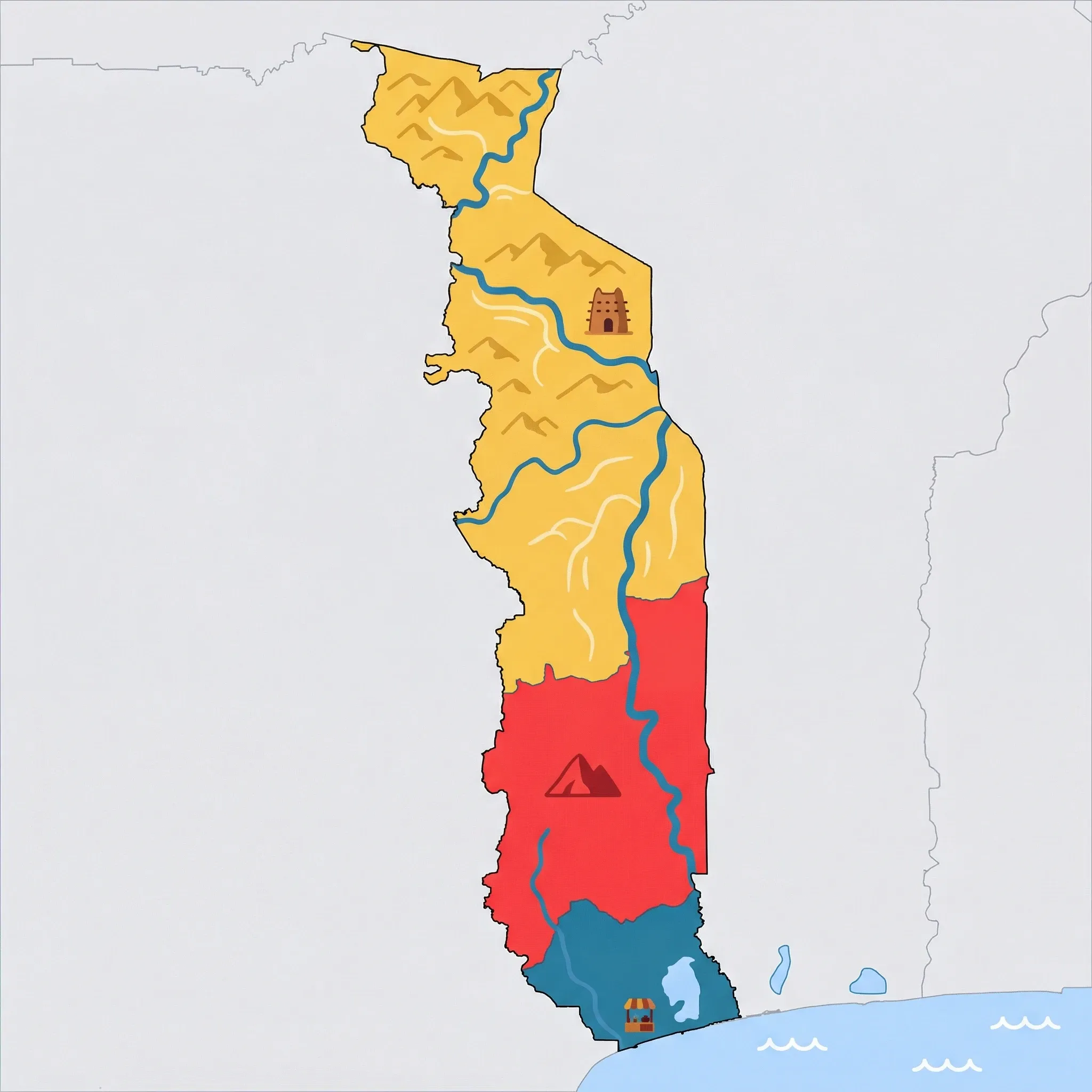
3 Regions
Kara & Northern Togo
Ancient mud castles and savannah wildlife 🦁🏘️
Kpalimé & Plateaux
Waterfalls, butterflies, and green mountains 🦋🌿
Lomé & Coast
Golden beaches, vibrant markets, and living history 🏖️🛶
Click on a region marker to explore details. Use the dropdown to color regions by activity suitability.

Getting There & Around
Getting There
- By Air – Lomé-Tokoin International Airport (LFW) is the main gateway, with flights from Paris, Brussels, and regional hubs like Accra and Addis Ababa. It serves the Lomé & Coast region directly.
- By Land – The border with Ghana (Aflao) is literally next to Lomé, making it one of the easiest African borders to cross on foot, though it can be chaotic. The Benin border (Hilacondji) is about an hour east.
- Entry Requirements – Most visitors need a visa. The "Visa on Arrival" is currently restricted (often 7 days only) and unreliable. It is strongly recommended to apply for an E-Visa via the official Voyage Togo portal at least 5-6 days before travel. Check your government website for the latest visa requirements, or use the IATA Travel Centre entry-requirements checker.
Getting Around
- Private Driver – The best option for families. Hiring a car with a local driver removes the stress of navigation and police checkpoints. Most hotels in Lomé & Coast can arrange reliable drivers for day trips or longer circuits.
- Taxis – Shared "bush taxis" connect towns but are often overcrowded, fast-driven, and unsafe for children. In cities, private taxis (negotiate the fare before getting in) are safer than the omnipresent "zémidjans" (motorbike taxis), which are not recommended for children due to high accident rates.
- Domestic Travel – There are no domestic flights or passenger trains. Travel is entirely by road. The main north-south road is paved but can be potholed; allow plenty of time for journeys to Kara & Northern Togo.

Packing List
Mandatory physical document. You will be refused entry without the original yellow card.
Power cuts (load shedding) are common, and streets are often poorly lit at night.
The CFA Franc is pegged to the Euro. Euros are the easiest currency to exchange; USD is harder to use.
English is rarely spoken outside major hotels; basic French is essential for daily interactions.
Essential for cleaning dusty hands before eating fufu and for humid travel days.

Activities & Best Times

Adventure & Nature
Very GoodHiking, wildlife, outdoor exploration, ecotourism
The UNESCO Mono Transboundary Biosphere Reserve and Togodo Fauna Reserve offer authentic West African ecosystem immersion. Travel is most rewarding in the dry months when river navigation is reliable and wildlife viewing is optimal.
Offers exceptional biodiversity in the Kloto-Missahoé forest and trekking to Mount Agou with authentic plantation experiences. Peak season coincides with the dry months when forest trails are accessible and the mountain flora is most vibrant.
Offers unique trekking through the Atakora mountains and wildlife viewing in the Sarakawa Reserve; peak season (Nov-Feb) provides cooler nights and dry trails, avoiding the heavy summer rains.

City & Cultural
Very GoodUrban tourism, museums, historical sites, architecture
Lomé features unique attractions like the world-class Palais de Lomé art center and the historic voodoo sites of Togoville. Peak visitation aligns with the dry seasons when the vibrant markets and colonial architecture are best explored on foot.
Home to the UNESCO-listed Koutammakou, featuring the iconic Batammariba mud tower houses which offer a world-class authentic cultural experience; best visited when dry conditions allow access to remote valley communities.
Rich in artisanal heritage and colonial history, notably the artisanal center of Kpalimé and the Agbogbo walls of Notsé. Cultural exploration is best in the dry season, though indoor artisanal workshops remain accessible throughout most of the year.

Beach & Sea
GoodBeach resorts, marine activities: diving, snorkelling, kite surfing, wind surfing, sailing

Road Trips & Scenic
GoodScenic drives, countryside tours, route-based travel
The scenic drive ascending Mount Agou and the Plateau de Dayes provides some of West Africa's most breathtaking highland vistas. Dry months offer optimal road safety and clear visibility across the coffee and cocoa valleys.
Features dramatic mountain driving through the Aledjo Fault and scenic loops in the Kabyè Mountains; peak months offer stable road conditions and better visibility before the extreme pre-monsoon heat of April.
The RN2 provides a scenic coastal drive from the capital to the historic slave-trade site of Aného. While picturesque, the route is short, and its appeal is largely limited to the dry season when road visibility and conditions are best.

Sports & Active
GoodSport tourism, fitness activities, active recreation
Lake Togo serves as a hub for sailing and kayaking, while the Lomé-Aného route is a recognized corridor for cycling enthusiasts. These activities are best enjoyed during the dry seasons to avoid heavy tropical rain and extreme humidity.
Internationally recognized trails for mountain biking and hiking connect Kpalimé to the Danyi Plateau. The dry season provides firm trail conditions and more manageable humidity for physically demanding highland activities.
Significant trekking and cycling infrastructure exists via the Koutammakou and Kabyè trails; activity is highly seasonal, restricted to the dry months when mountain paths are safe and navigable for families.

Public Holidays & Calendar Next 12 months
Public holidays, festivals, cultural celebrations, and seasonal natural phenomena coming up in Togo over the next 12 months.
Loading holidays and events...

Climate & Weather
Kara & Northern Togo
Show Details
| Month | Temp °C | Rain | Humidity |
|---|
Kpalimé & Plateaux
Show Details
| Month | Temp °C | Rain | Humidity |
|---|
Lomé & Coast
Show Details
| Month | Temp °C | Rain | Humidity |
|---|

Travel Advisory
Travelers should exercise increased vigilance across the country. Significant security risks exist in northern border areas due to terrorism, while urban centers face risks from crime and occasional political demonstrations.
Safety Topics
Traveller Advice (3 groups)

Aid workers should exercise extreme care in the Savanes region due to the specific targeting of foreign nationals by extremist groups.

Same-sex relationships are prohibited by law, and individuals may face fines or imprisonment for participating in activities deemed 'unnatural' or 'indecent'.

Female visitors are advised to dress modestly and respect local customs to avoid unwanted attention or cultural offense.
Agency Summaries
No specific travel warning is in place, but travelers are encouraged to ensure they have comprehensive insurance and stay informed about local health risks.
A high degree of caution is necessary, especially near the border with Burkina Faso, where the security environment is unstable due to kidnapping and extremist threats.
While general travel is permitted, there is a serious threat of terrorism and kidnapping near the northern border. Demonstrations can occur and may become confrontational.
Visitors should maintain significant vigilance due to the potential for social disturbances, political protests, and incidents of violent crime.
Heightened caution is recommended due to the activities of criminal and extremist groups, particularly in border regions, alongside risks of civil unrest and kidnapping.
Australians are advised to be highly alert to security threats, including the risk of terrorist attacks and civil instability across the country.
Information is provided for general guidance only and does not constitute travel, safety, medical, or legal advice. Conditions may change. Users are responsible for independently verifying information before travel.