
Lomé & Coast
Golden beaches, vibrant markets, and living history 🏖️🛶
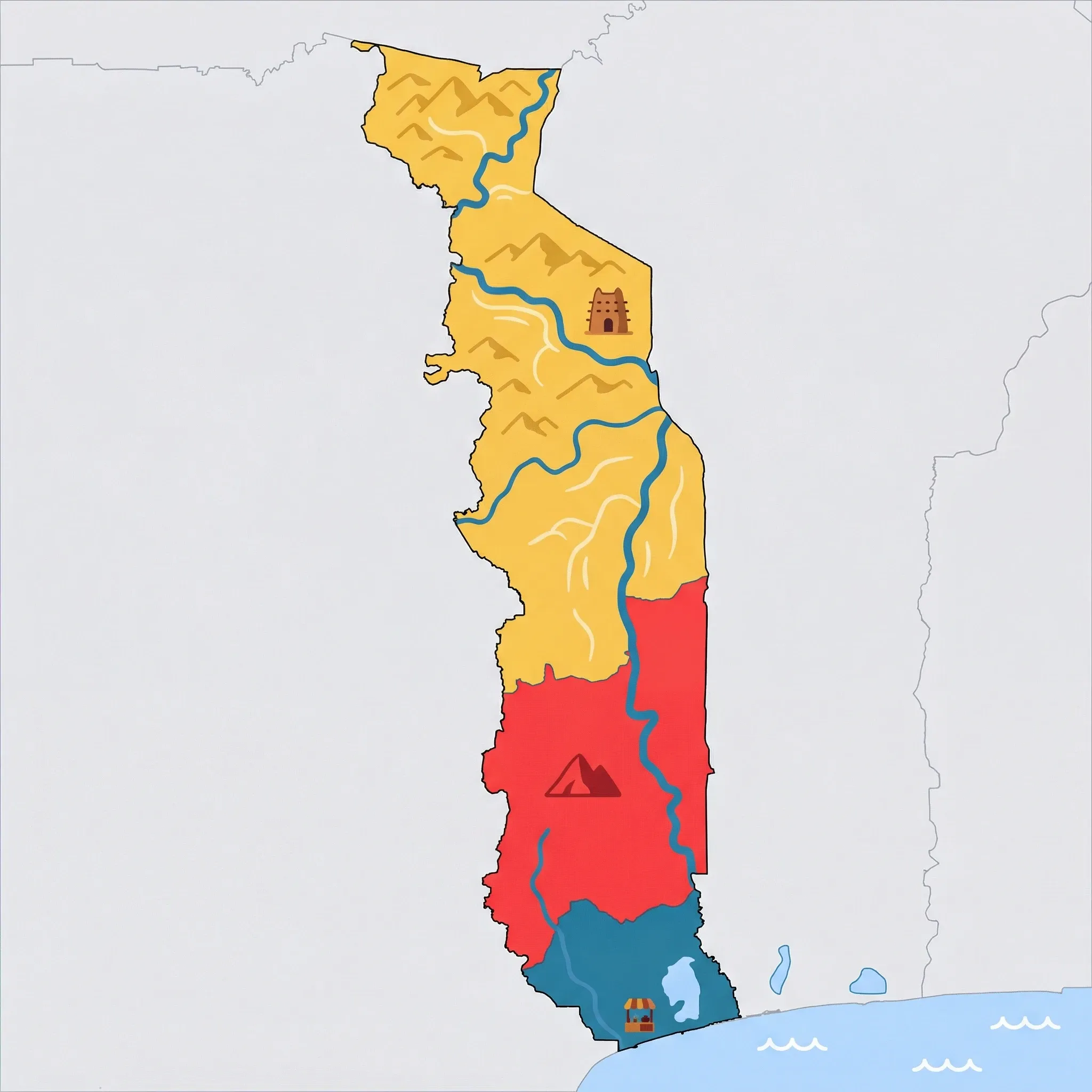
Click a region to explore
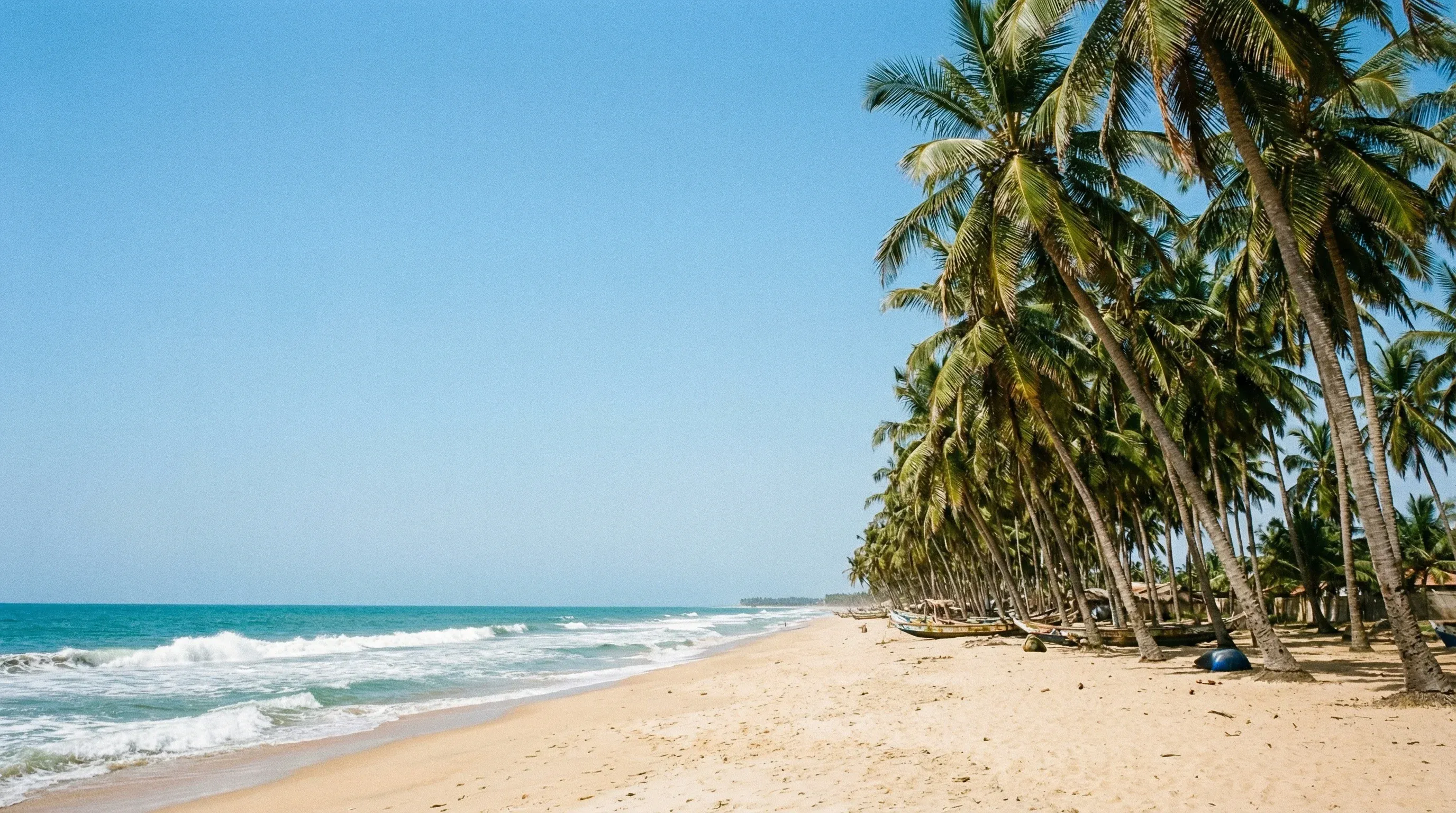
Lomé is a capital city that manages to be both chaotic and charmingly laid-back. It is the only African capital situated directly on a border (with Ghana), giving it a unique international flair. For families, the coast offers a mix of cultural education and relaxation. The city itself features broad boulevards from the colonial era, fading German and French architecture, and a palm-lined seafront that stretches for miles. While the ocean current in the Gulf of Guinea is notoriously strong and often unsafe for swimming, the beaches are perfect for sandcastles, fresh coconut breaks, and watching the fishermen haul in their giant nets—a rhythmic spectacle that mesmerizes children.
Beyond the capital, the region transforms into a tranquil world of lagoons and rivers. This is the spiritual heartland of Voodoo (Vodun), a religion often misunderstood but integral to Togolese culture. Visiting the smaller towns along the coast allows families to learn about these traditions in a respectful, non-scary way. The area around Lake Togo is particularly family-friendly, offering calm waters for boating and water sports, providing a safe alternative to the rough ocean surf.
Key Attractions
Start your journey at the Palais de Lomé. This former governor's palace has been beautifully restored into an art and culture center. It sits in a magnificent botanical park where kids can run free among sculptures and ancient trees, offering a quiet respite from the city noise. Afterward, brave the Grand Marché de Lomé. It is intense, loud, and colorful, famous for the "Nana Benz"—wealthy women who built empires selling wax print fabrics. It’s a sensory explosion where you can buy vibrant clothes and souvenirs.
For a day trip, head east to Lake Togo. Here, you can take a traditional pirogue (wooden boat) across the water to Togoville Historic Village. The boat ride is a highlight for kids, and the village itself is fascinating, known for its cathedral visited by Pope John Paul II and its traditional shrines. Nearby is the Maison des Esclaves (Wood Home) in Agbodrafo. While the history of the slave trade is heavy, this small site is intimate and educational, suitable for older children to learn about the region's past.
Practical Advice
Lomé is hot and humid year-round. Hydration is key. The traffic can be heavy, especially "zemidjans" (moto-taxis) weaving through cars, so hold hands tight when crossing streets. The ocean has a dangerous undertow (rip currents); do not let children swim in the sea unless in a specifically protected hotel lagoon. Stick to hotel pools or Lake Togo for swimming.
Food & Drink
Typical meal times: Lunch is generally 12:00 pm to 2:30 pm. Dinner is a social affair, often starting around 7:30 pm to 9:30 pm.
Typical meal costs: Lomé has the widest range of prices. A street snack costs 500 XOF ($0.80 USD). A meal in a nice air-conditioned restaurant costs 8,000–15,000 XOF (approx. $13–25 USD / €12–23 EUR). Western-style hotel buffets can reach 20,000 XOF (approx. $33 USD / €30 EUR).
Dietary requirements: Lomé is cosmopolitan. You can find French bakeries, Lebanese restaurants, and pizzerias easily if kids are picky. Gluten-free is harder to guarantee in local dishes due to the use of stock cubes.
Signature dishes:
- Gboma Dessi – A rich, spinach-based stew cooked with dried fish, crab, or meat. It is savory and deep in flavor.
- Ablo – Small, slightly sweet, steamed rice cakes. They have a texture like sponge cake and are loved by children; usually sold wrapped in leaves.
- Ayimolou – Rice and beans cooked together, often served for breakfast with a spicy tomato sauce (the sauce can be served on the side for kids).
Why this score?
The coastal region is largely developed with paved roads and urban amenities, offering low-risk activities like boat trips on Lake Togo and market visits. Adventure here is characterized more by the sensory intensity of the city markets than by any physical or environmental hazards.
Why this score?
Lomé provides the highest level of healthcare in Togo, including private clinics that often cater to the expatriate community. However, facilities still face quality and equipment shortages, and language barriers can be a significant hurdle for non-French speaking international patients.
Why this score?
As the nation's capital and primary gateway, Lomé receives the bulk of Togo's 482,000 annual visitors, many of whom are there for business or regional transit. While the fetish market and beaches are unique attractions, the city remains an emerging niche destination with very few international tourists compared to global hubs.

Lomé is the most expensive part of Togo, but still affordable by international standards. A 4-star hotel room costs roughly 80,000–120,000 XOF (approx. $130–200 USD / €120–180 EUR). Entrance to museums like the <a data-attraction-id="32773">Palais de Lomé</a> is around 3,000–5,000 XOF (approx. $5–8 USD / €4.50–7.50 EUR) for non-nationals.

Getting Here & Around
Getting Here
- Airports – Lomé-Tokoin International Airport (LFW) is the main gateway, located just 10–15 minutes from the city center and major hotels like the Hotel 2 Fevrier near the Monument de l'Indépendance.
- Driving – The border crossing from Ghana (Aflao) is directly adjacent to the city; you can literally walk from the Ghanaian border into Lomé's beach area, though the crossing can be chaotic.
Getting Around
- Taxi – The safest option for families. Taxis are yellow and green. They do not have meters, so you must negotiate the fare before getting in. A ride across town should be 1,000–2,000 XOF (approx. $1.60–3.30 USD).
- Zémidjans – Motorcycle taxis are everywhere, but they are risky for families and not recommended for children.
- Walking – The Beach Road is nice for walking, but the city center is hot and crowded. Walking is best reserved for attractions like the Palais de Lomé park.
Nearby Airports (1 airport)
Lome Tokoin
LFWLome
View full flight map for Togo →
Official Links

Packing List
Many budget and mid-range hotel sinks in the city miss their plugs, making hand-washing clothes difficult.
The high coastal humidity means thick cotton towels in bathrooms never fully dry out.
Essential for boat rides on Lake Togo and navigating wet market floors.
English is rarely spoken by taxi drivers or market vendors; basic French is essential.
Mandatory physical document. You will be refused entry without the original yellow card.
Power cuts (load shedding) are common, and streets are often poorly lit at night.
The CFA Franc is pegged to the Euro. Euros are the easiest currency to exchange; USD is harder to use.
English is rarely spoken outside major hotels; basic French is essential for daily interactions.
Essential for cleaning dusty hands before eating fufu and for humid travel days.

Activities & Best Times

Hiking, wildlife, outdoor exploration, ecotourism
The UNESCO Mono Transboundary Biosphere Reserve and Togodo Fauna Reserve offer authentic West African ecosystem immersion. Travel is most rewarding in the dry months when river navigation is reliable and wildlife viewing is optimal.

Urban tourism, museums, historical sites, architecture
Lomé features unique attractions like the world-class Palais de Lomé art center and the historic voodoo sites of Togoville. Peak visitation aligns with the dry seasons when the vibrant markets and colonial architecture are best explored on foot.

Beach resorts, marine activities: diving, snorkelling, kite surfing, wind surfing, sailing
The region offers palm-fringed Atlantic beaches and the calmer waters of Lake Togo for family-friendly recreation. International travelers typically visit during the dry months for sun-focused resort stays and better water conditions.

Sport tourism, fitness activities, active recreation
Lake Togo serves as a hub for sailing and kayaking, while the Lomé-Aného route is a recognized corridor for cycling enthusiasts. These activities are best enjoyed during the dry seasons to avoid heavy tropical rain and extreme humidity.

Scenic drives, countryside tours, route-based travel
The RN2 provides a scenic coastal drive from the capital to the historic slave-trade site of Aného. While picturesque, the route is short, and its appeal is largely limited to the dry season when road visibility and conditions are best.




Public Holidays & Calendar Next 12 months
Public holidays, festivals, cultural celebrations, and seasonal natural phenomena coming up in Lomé & Coast over the next 12 months.
Loading holidays and events...

Travel Advisory
Travelers should exercise increased vigilance across the country. Significant security risks exist in northern border areas due to terrorism, while urban centers face risks from crime and occasional political demonstrations.
Safety Topics
Traveller Advice (3 groups)

Aid workers should exercise extreme care in the Savanes region due to the specific targeting of foreign nationals by extremist groups.

Same-sex relationships are prohibited by law, and individuals may face fines or imprisonment for participating in activities deemed 'unnatural' or 'indecent'.

Female visitors are advised to dress modestly and respect local customs to avoid unwanted attention or cultural offense.
Agency Summaries
No specific travel warning is in place, but travelers are encouraged to ensure they have comprehensive insurance and stay informed about local health risks.
A high degree of caution is necessary, especially near the border with Burkina Faso, where the security environment is unstable due to kidnapping and extremist threats.
While general travel is permitted, there is a serious threat of terrorism and kidnapping near the northern border. Demonstrations can occur and may become confrontational.
Visitors should maintain significant vigilance due to the potential for social disturbances, political protests, and incidents of violent crime.
Heightened caution is recommended due to the activities of criminal and extremist groups, particularly in border regions, alongside risks of civil unrest and kidnapping.
Australians are advised to be highly alert to security threats, including the risk of terrorist attacks and civil instability across the country.
Information is provided for general guidance only and does not constitute travel, safety, medical, or legal advice. Conditions may change. Users are responsible for independently verifying information before travel.