

Overview
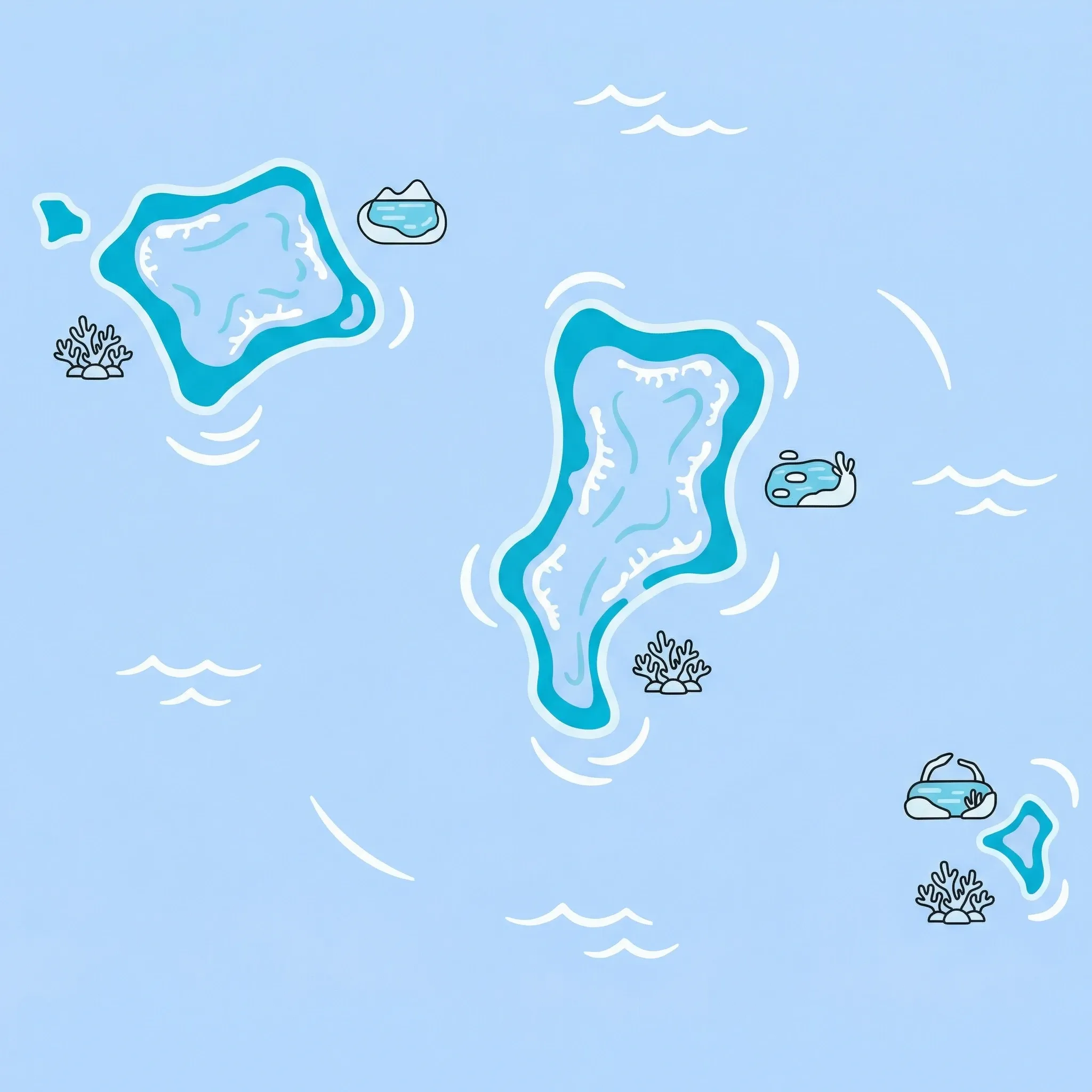
Tokelau is not a typical holiday destination; it is an adventure into the heart of the Pacific. Comprising three coral atolls-Atafu, Nukunonu, and Fakaofo-it sits isolated in the ocean, a territory of New Zealand that governs itself with a deep respect for community and tradition. There are no cars (beyond a few service vehicles), no airports, and no high-rise hotels. For families, this is a chance to see a way of life that has remained largely unchanged for centuries, where children roam freely and the community raises everyone together.
The journey itself is a rite of passage: a 24-to-30-hour voyage aboard the ferry Mataliki from Apia, Samoa. Once ashore, the vibe is incredibly laid-back. The lagoons are the playground, offering safe, warm, and impeccably clear water for swimming and snorkelling. Families will find that entertainment here isn't bought; it's made-through fishing, weaving sessions with local women, or simply watching the sunset over the vast Pacific. It is best suited for families with teenagers or adaptable children who can handle the long sea crossing and basic amenities.
Key Attractions
Nukunonu Atoll is the largest of the three and typically the most visitor-friendly. It is home to the only hotel-style accommodation in the territory. Families can explore the expansive lagoon, which is dotted with small islets (motu). A day trip to a deserted motu for a picnic and swim is a highlight, offering a "Castaway" experience with the comfort of knowing a boat will pick you up. The local Catholic church is a central landmark and a hub of village life, especially on Sundays.
Fakaofo Atoll offers a different experience, where the population is denser and living space is reclaimed from the sea using coral rocks. It provides a fascinating look at how the community adapts to life on a small strip of land. Children will be fascinated by the pigs engaging in "fishing" in the shallows at low tide. Atafu Atoll, the northernmost island, is known for its skilled woodcarvers and traditional canoe building. While getting between atolls takes time (the boat visits them in sequence), each offers a warm welcome.
Practical Advice
Best time to visit: The cooler months from May to October are less humid and outside the cyclone season. However, boat schedules dictate everything.
Visa & Logistics: You must obtain a permit from the Tokelau Apia Liaison Office (TALO) in Apia, Samoa. This requires a medical check, police report, and approval from the the village council. There are no banks or ATMs in Tokelau; you must bring all the cash (New Zealand Dollars) you need for your entire stay.
Health: There are no hospitals, only small clinics with basic first aid. Serious medical issues require evacuation to Samoa, which can take days. Travel insurance including medical evacuation is non-negotiable.
Food & Drink
Typical meal times: 7:00 am to 8:30 am (Breakfast), 12:00 pm to 1:30 pm (Lunch), 6:30 pm to 8:00 pm (Dinner).
Typical meal costs: NZ$15–30 (approx. $9–18 USD / €8–17 EUR) per meal if not included. Most accommodation provides full board (3 meals) included in the room rate.
Dietary requirements: Challenging. The diet relies heavily on fish, coconut, breadfruit, rice, and imported tinned goods. Fresh vegetables are scarce. Vegetarians and vegans should bring their own supplements and non-perishable protein sources.
Family-friendly dining: Dining is almost exclusively communal or at your guesthouse. It is inherently family-friendly as children are cherished, but don't expect highchairs or children's menus.
Signature dishes:
- Ika Mata – Raw fish marinated in fresh coconut cream and lime juice, a staple of the Pacific.
- Kaleva – Fermented coconut toddy (mildly alcoholic, but the sweet unfermented version is a treat for kids).
- Feke – Octopus, often cooked in coconut cream or grilled.
- Popo – Coconuts in all stages, from drinking nuts to the spongy interior of sprouting nuts (uto), which tastes like marshmallows.

While daily living costs are low, the logistics make it a mid-range destination. Accommodation often includes all meals for around NZ$50–100 (approx. $30–60 USD / €28–55 EUR) per person per night. The return boat fare is approx. NZ$290 (approx. $175 USD / €160 EUR). You must bring enough NZD cash for your entire stay.
Age Suitability




Why this score?
The journey itself is a major adventure, involving a 24-to-30-hour sea voyage across the Pacific Ocean on a dedicated supply ship. Once on the atolls, visitors experience a traditional, rugged lifestyle with no tourism-oriented infrastructure, requiring high levels of self-sufficiency and adaptability to remote island conditions.
Why this score?
Medical facilities are limited to small clinics on each atoll that provide only basic primary care and have very limited supplies. In the event of a serious injury or illness, patients must endure a lengthy sea evacuation to Samoa before they can access a modern hospital, making it a high-risk destination for those with medical needs.
Why this score?
Tokelau is among the least visited territories in the world, primarily due to the absence of an airport and a total lack of commercial hotels. Foreign arrivals are extremely rare, usually limited to a handful of intrepid travelers or those visiting for official government business via the multi-day boat service from Samoa.
While getting to Samoa and paying for the ferry (approx. NZ$280 return for non-residents) is the main expense, daily life in Tokelau is inexpensive. Accommodation at the Luana Liki Hotel (Nukunonu) typically costs NZ$50–90 (approx. $30–55 USD / €28–50 EUR) per night, often including three hearty meals. There is little else to spend money on beyond snacks at the co-op store.

Getting There & Around
Getting There
- By Sea (The Only Way) – There is no airport. You must fly to Apia, Samoa, and take the government ferry, the MV Mataliki. The journey takes 24–30 hours one way. The ship usually sails once every two weeks.
- Permits & Visas – All visitors require a permit issued by the Tokelau Apia Liaison Office in Samoa. This process takes at least one month and requires a medical clearance and police report. Check your government website for the latest visa requirements, or use the IATA Travel Centre entry-requirements checker.
- Transit in Samoa – Since the boat schedule is subject to weather and change, families should plan a buffer of at least 3–4 days in Samoa before and after the Tokelau leg.
Getting Around
- Walking – The villages on Tokelau are small and flat. You can walk from one end of a village to the other in minutes. It is the primary way to get around.
- Small Boats (Dinghy) – To travel between the main village motu and other islets in the lagoon (for picnics or harvesting), you will travel by aluminium dinghy. Families can arrange these trips with their hosts.
- Inter-Atoll Boat – Moving between Atafu, Nukunonu, and Fakaofo is only possible via the inter-atoll ferry service (the Mataliki), which may only happen once every week or fortnight depending on the schedule.
Official Links

Packing List
There are zero ATMs or credit card facilities. You must bring cash for accommodation, donations, and snacks.
The ferry berths are vinyl-covered mattresses; passengers are often expected to provide their own bedding for comfort.
Essential for protecting feet from sharp coral when swimming or wading in the lagoons.
The 24+ hour boat crossing from Samoa can be rough; essential even if you don't usually get sick.
Supplies are limited or non-existent on the atolls, and the equatorial sun is extremely strong.
Medical facilities are very limited (no hospital). Bring your own antiseptics, plasters, and basic meds.
Village co-op stores have very limited stock. If your kids need specific snacks, bring them from Apia.

Activities & Best Times

Beach & Sea
GoodBeach resorts, marine activities: diving, snorkelling, kite surfing, wind surfing, sailing
Tokelau offers pristine coral lagoons and an authentic, non-commercialized Pacific experience for experienced travelers seeking isolation. Peak conditions occur during the drier months from May to September when underwater visibility is highest and the risk of tropical storms is lowest.

City & Cultural
MarginalUrban tourism, museums, historical sites, architecture
The region provides a unique opportunity to experience 'faka-Tokelau' (the Tokelauan way of life) through significant landmarks like the Tui Tokelau Shrine. Visitation is best during the drier season to facilitate walking through villages and attending community gatherings without the disruption of heavy tropical downpours.

Public Holidays & Calendar Next 12 months
Public holidays, festivals, cultural celebrations, and seasonal natural phenomena coming up in Tokelau over the next 12 months.
Loading holidays and events...

Travel Advisory
The overall security environment is very safe with no major threats to personal safety. However, the territory is extremely remote with critical infrastructure limitations.
Safety Topics
Traveller Advice (3 groups)

Ensure you have pre-arranged permits and confirmed return boat passage before departing Samoa. Carry enough cash for your entire stay as cards and ATMs are not available. Due to the lack of local hospitals, comprehensive medical evacuation insurance is mandatory.

Be aware that swimming and water activities are unsupervised. Use protective footwear to avoid injuries from coral and stonefish. Emergency rescue services are not guaranteed to meet international standards.

While same-sex activity is not illegal, local culture is conservative and public displays of affection may be considered offensive.
Agency Summaries
New Zealand does not issue specific safety warnings for Tokelau but emphasizes the need for comprehensive insurance that covers air medical evacuation. Health risks in the region include insect-borne diseases and waterborne illnesses. Medical facilities are very basic, making preparation essential for any visitor.
No specific travel warnings are in place, but travellers should note the complete absence of hospitals or ambulance services on the islands. Visitors are required to obtain prior permission from the local Tokelau Council and must carry sufficient cash as there are no banking facilities or ATMs. Entry is via ferry from Samoa.
Standard safety measures are recommended. There is no resident Irish diplomatic representation, so consular assistance must be sought from the Department of Foreign Affairs in Dublin. Travellers should register their plans and ensure they have robust travel insurance.
The safety situation is stable with low crime rates, though petty theft can occur. Visitors must be aware that tourist infrastructure is extremely limited, and essential services like electricity and telecommunications are minimal. Access is exclusively by boat from Samoa, a journey that can take over 24 hours and is subject to irregular schedules.
Information is provided for general guidance only and does not constitute travel, safety, medical, or legal advice. Conditions may change. Users are responsible for independently verifying information before travel.