

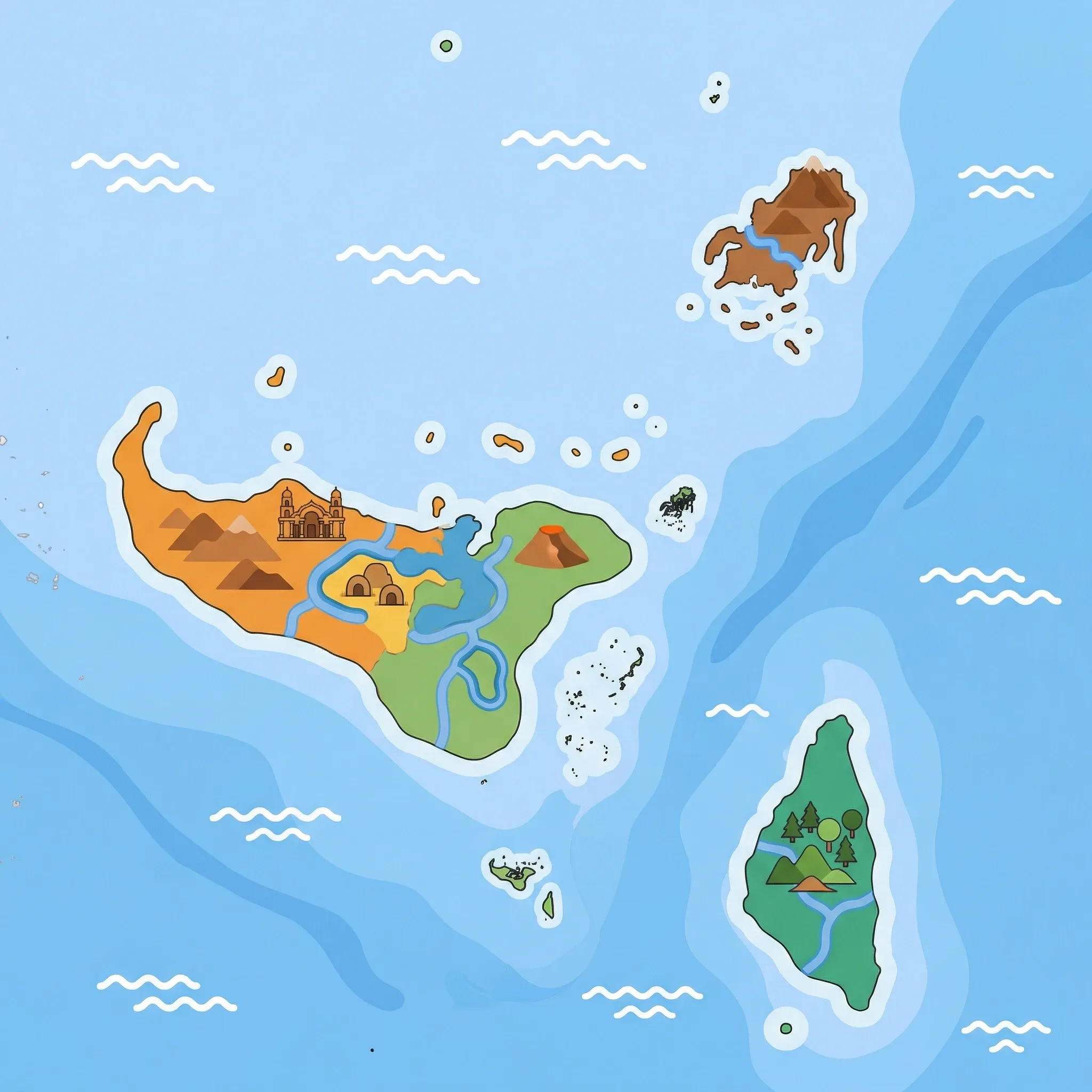
Welcome to the Kingdom of Tonga, the only Pacific nation never colonised and the solitary monarchy in the region. For families, Tonga feels like stepping into a storybook of island life that has remained largely unchanged for centuries. Unlike the polished resorts of Fiji or Tahiti, Tonga offers a raw, authentic experience where "Tonga Time" (a very relaxed approach to schedules) rules the day. The archipelago is divided into three main island groups: the main island of Tongatapu (home to the capital and ancient history), the low-lying coral atolls of Ha'apai (perfect for quiet beach time), and the lush, hilly islands of Vava'u (a world-class sailing and whale-watching hub).
The atmosphere here is incredibly safe and welcoming for children, who are cherished in Tongan culture. However, families must be aware of the strict Sabbath observance. Sundays in Tonga are sacred. By law, almost all commerce stops, flights are grounded, and public play-including swimming at public beaches and loud games-is prohibited. The country falls silent for church and family feasting. Rather than a restriction, view this as a unique opportunity for your family to slow down, attend a moving church service filled with harmonious singing, and enjoy a quiet day together.
Key Attractions
Your journey will likely start on Tongatapu, where the Mapu 'a Vaea Blowholes are a guaranteed hit with children. Stretching for five kilometres along the coast, these natural vents blast seawater up to 30 metres into the air as waves crash into the reef. It is a noisy, spectacular display of nature's power that can entertain kids for hours. Just down the road, you can turn a history lesson into a mystery at the Ha'amonga 'a Maui Trilithon. Often called the "Stonehenge of the Pacific," this massive 13th-century coral limestone structure was likely used as a seasonal calendar. It offers plenty of green space for kids to run around while parents marvel at the engineering feat.
For active families, a short flight or ferry ride to the island of 'Eua reveals a different side of Tonga. 'Eua National Park is a prehistoric landscape of high cliffs, caves, and rainforests that feels like a scene from Jurassic Park. The hiking here is accessible but adventurous, offering views that are vastly different from the flat coral atolls elsewhere. Finally, between July and October, Tonga becomes one of the few places on Earth where you can swim with humpback whales. While swimming is usually restricted to strong swimmers (often aged 13+), many operators welcome younger children on the boats to watch these gentle giants breach and play from a safe, dry distance-an unforgettable wildlife encounter.
Practical Advice
The best time to visit is during the dry season (May to October), which coincides with the whale migration. Be prepared for the cash economy; outside of major resorts and Nuku'alofa, credit cards are rarely accepted, and ATMs can be unreliable on outer islands. Pack plenty of insect repellent as dengue fever is a risk. Water safety is crucial; while lagoon beaches are calm, ocean-facing coasts often have strong rips and sharp coral.
Food & Drink
Typical meal times: Breakfast is usually 7:00 am to 9:00 am, lunch 12:00 pm to 2:00 pm, and dinner 6:00 pm to 8:30 pm. On Sundays, the main meal is a large mid-afternoon feast.
Typical meal costs: Local meals are affordable, costing around 20–40 TOP (approx. $8–17 USD / €7–16 EUR). Western-style resort dinners are pricier, ranging from 45–90 TOP (approx. $19–38 USD / €18–36 EUR).
Dietary requirements: Vegetarians may find options limited to side dishes like taro, yams, and salads outside of tourist resorts. Vegan and gluten-free specific options are rare in local eateries; communicating needs clearly is essential. Fresh fruit is abundant.
Family-friendly dining: Tongan culture is communal and family-centric. Children are welcome everywhere. Highchairs are available in resort restaurants but rare in local cafes.
Signature dishes:
- Lu Sipi – Spiced lamb (or sometimes corned beef) marinated in coconut cream, wrapped in taro leaves, and baked in an earth oven. Soft, creamy, and mild enough for adventurous kids.
- 'Ota 'ika – Raw fish marinated in citrus juice and coconut cream with diced veg. A fresh, ceviche-style national dish.
- Topai – Doughboys (flour dumplings) boiled and served in a sweet, warm coconut syrup. A dessert kids absolutely love.
- Feke – Grilled or stewed octopus, often prepared in coconut sauce, a staple of the island diet.
Family Travel Notice
Minors traveling without both parents may need to provide documented parental consent or legal guardianship papers for entry and exit.

While not as cheap as Southeast Asia, Tonga is more affordable than neighbours like Fiji. A family of four can expect to spend around 350–500 TOP (approx. $150–210 USD / €140–200 EUR) per day for mid-range accommodation, car hire, and meals. Whale swimming tours are a premium add-on, costing approx. 450–600 TOP ($190–250 USD) per person.
Age Suitability





Did you know? Tonga welcomes approximately 18,000 international visitors per year. Most visitors come from East Asia and the Pacific.
Why this score?
Tonga offers a moderate level of adventure through activities like swimming with humpback whales in open water and exploring the rugged terrain of 'Eua National Park. Navigating between the island groups requires a degree of self-reliance and patience with local transport, providing a genuine sense of exploration for active families.
Why this score?
Healthcare facilities are very limited, with the main hospital in Nuku'alofa providing only basic services that may not meet international expectations for serious care. Medical evacuation to New Zealand or Australia is standard for complex emergencies, and outer islands have almost no specialized medical infrastructure.
Why this score?
With fewer than 20,000 annual international arrivals, Tonga remains a niche destination that avoids the mass tourism seen in other Pacific hubs like Fiji. The limited number of hotel beds and flights primarily restricts visitor numbers to dedicated whale watchers and those seeking an authentic Polynesian experience.
Tonga is moderately priced compared to major Western destinations but can be more expensive than Southeast Asia due to reliance on imported goods. A mid-range family guesthouse or resort bungalow typically costs TOP 250–450 (approx. $105–190 USD / €95–170 EUR) per night. Fresh local produce at markets is very cheap, but supermarket items are pricey. Entry fees to sites like the <a data-attraction-id="32919">Ha'amonga 'a Maui Trilithon</a> are nominal or free.

Getting There & Around
Getting There
- By Air – Fuaʻamotu International Airport (TBU) on Tongatapu is the main gateway. Flights arrive from Auckland (Air New Zealand), Sydney (Qantas/Jetstar), and Nadi (Fiji Airways). Transfers to the domestic terminal are required for outer islands.
- Entry Requirements – Visitors from the US, UK, Canada, and most EU countries are granted a free visitor visa on arrival (valid for 31 days). You must have a return ticket. Check your government website for the latest visa requirements, or use the IATA Travel Centre entry-requirements checker.
Getting Around
- Car Hire – The best way to explore Tongatapu and Vava'u. You must obtain a local temporary driving permit from the police station in Nuku'alofa (approx. 40 TOP) by presenting your home license. Driving is on the left.
- Domestic Flights – Lulutai Airlines connects Tongatapu to Ha'apai, Vava'u, and 'Eua. These small planes offer scenic views but schedules can change on short notice.
- Taxis – Available in main towns but they do not use meters. Agree on a fare before getting in. A trip from the airport to Nuku'alofa typically costs 40–50 TOP (approx. $17–21 USD).
- Ferries – The Friendly Island Shipping Agency runs ferries between islands. They are cheap and adventurous but slow and can be rough for children prone to seasickness.
Official Links

Packing List
Essential for all ages; beaches often have sharp coral, stonefish, and rough limestone closer to shore.
Tonga is conservative; swimming in skimpy bikinis is culturally inappropriate on public beaches. Cover up to show respect.
Rental gear on outer islands is often adult-sized or poor quality. Bring a set that fits your child's face well.
Whale watching boats and inter-island ferries can be very choppy. Essential for kids even if they don't usually get sick.
Many shops, cafes, and taxis on outer islands do not accept cards. ATMs frequently run out of money.
If you plan to attend church (a highlight), pack a collared shirt for boys and a dress/skirt below the knee for girls.

Activities & Best Times

Adventure & Nature
Very GoodHiking, wildlife, outdoor exploration, ecotourism
Features unique geological formations like the Mapu 'a Vaea blowholes and the rugged hiking of 'Eua National Park. Peak season avoids the heavy rains and humidity of the austral summer, ensuring trails are navigable and wildlife sightings are frequent.

City & Cultural
Very GoodUrban tourism, museums, historical sites, architecture
The kingdom's unique royal heritage is showcased through the Nuku'alofa Palace and the Ha'amonga 'a Maui Trilithon. Visiting during the drier months is essential for exploring the outdoor royal tombs and megalithic sites comfortably.

Beach & Sea
GoodBeach resorts, marine activities: diving, snorkelling, kite surfing, wind surfing, sailing
Tonga offers authentic Polynesian coastal experiences and exceptional marine visibility for snorkeling and diving. The peak period aligns with the humpback whale migration (July-Oct) and the drier winter months when sea conditions are calmest.

Sports & Active
GoodSport tourism, fitness activities, active recreation
Offers world-recognized sailing conditions in Vava'u and established hiking routes like the Mt Talau trails. Optimal conditions occur during the trade wind season from June to October, providing cooler temperatures for physical activity.

Road Trips & Scenic
MarginalScenic drives, countryside tours, route-based travel
Scenic island loops on Tongatapu and Vava'u provide glimpses into rural Polynesian life and coastal scenery. Best explored when roads are dry and visibility is high, typically between June and October.




Public Holidays & Calendar Next 12 months
Public holidays, festivals, cultural celebrations, and seasonal natural phenomena coming up in Tonga over the next 12 months.
Loading holidays and events...

Travel Advisory
All major agencies maintain their lowest baseline risk level for Tonga, recommending standard safety awareness and vigilance against petty crime and natural hazards.
Safety Topics
Traveller Advice (4 groups)

Solo female travelers may experience verbal harassment. It is recommended to avoid isolated beaches and walking alone after sunset.

Minors traveling without both parents may need to provide documented parental consent or legal guardianship papers for entry and exit.

Travelers should be mindful of local cultural sensitivities and review general safety guidelines for sexual and gender minorities before arrival.

Engaging in whale-related activities requires licensed guides and vessels. Failure to follow these regulations can result in significant legal penalties.
Agency Summaries
Ireland advises standard safety vigilance. Since there is no local Irish embassy, consular assistance is managed through New Zealand.
The safety situation in Tonga is considered low-risk. Visitors are encouraged to maintain standard safety awareness and note that medical facilities are limited.
Tonga is generally stable, though travelers should remain aware of petty crime and recent fuel rationing measures that may impact services. Environmental risks include seasonal cyclones and seismic activity.
Most visits to Tonga are trouble-free. Standard precautions are advised regarding petty crime and natural hazards like cyclones and tsunamis.
No major safety or security warnings are in place for Tonga. Travelers should check entry requirements and ensure they have comprehensive health insurance due to basic local medical facilities.
The security environment is comparable to New Zealand. Key considerations include maritime safety, local laws regarding Sunday observances, and seasonal weather events.
Information is provided for general guidance only and does not constitute travel, safety, medical, or legal advice. Conditions may change. Users are responsible for independently verifying information before travel.