

Overview
Sitting just off the coast of South America, Trinidad and Tobago offers an English-speaking Caribbean experience that feels distinct from the typical resort-heavy islands further north. For families, the appeal lies in the duality: Trinidad is the energetic cultural heart, boasting incredible biodiversity and bustling cities, while Tobago is the laid-back younger sibling, home to calm beaches and protected rainforests. The climate is tropical and warm year-round, with a rainy season from June to December that often brings short, sharp downpours followed by sunshine.
Culturally, the islands are a melting pot of African, Indian, European, and Middle Eastern influences, which is vividly reflected in the food, festivals, and architecture. Families will find a welcoming atmosphere where children are fussed over, though the pace of service can be relaxed on "island time." Whether you are watching leatherback turtles lay eggs on the east coast or taking a glass-bottom boat to a coral reef, the connection to nature here is profound and accessible for all ages.
Key Attractions
In Trinidad, nature lovers should prioritize the Caroni Bird Sanctuary. A flat-bottomed boat tour at sunset offers the unforgettable sight of thousands of scarlet ibises returning to roost, turning the mangrove islands a vibrant red-a magical spectacle for children. For a geology lesson like no other, visit Pitch Lake, the world's largest natural deposit of asphalt, where kids can walk on the semi-solid surface and learn about its prehistoric origins. Near the capital, the Royal Botanic Gardens providing a safe, green space for toddlers to run free, right next to the Emperor Valley Zoo.
On the northern coast, Maracas Bay is the most famous beach, renowned for its golden sand and the iconic "Bake and Shark" food stalls. Further inland, the reopened Asa Wright Nature Centre offers family-friendly birdwatching from its famous verandah. In Tobago, the Nylon Pool is a must-do; this shallow, crystal-clear sandbar miles out at sea allows even small children to stand waist-deep in warm water. Families can also hike the Main Ridge Forest Reserve, the oldest protected rainforest in the Western Hemisphere, which is teeming with hummingbirds and butterflies.
Practical Advice
The best time to visit is during the dry season (January to May), though accommodation prices peak around Trinidad Carnival in February/March. English is the official language, making communication easy. Insect repellent is essential, as dengue fever cases can occur; dress children in light, long sleeves for forest trips. Tap water is generally safe in cities but bottled water is recommended for short-term visitors to avoid stomach upsets.
Food & Drink
Typical meal times: Breakfast is early, often on the go (7:00 am to 9:00 am). Lunch is the main meal, served from 12:00 pm to 2:00 pm. Dinner is typically eaten between 6:30 pm and 8:30 pm.
Typical meal costs: Street food is incredibly good value at around $10–25 TTD (approx. $1.50–3.70 USD / €1.40–3.50 EUR). A mid-range restaurant meal costs $150–300 TTD (approx. $22–45 USD / €20–42 EUR) per person.
Dietary requirements: Excellent for vegetarians and vegans due to the strong Indo-Trinidadian influence. Roti shops and street vendors offer extensive plant-based options (pumpkin, spinach, chickpeas). Gluten-free travelers should be cautious with rotis and fried items; always ask about ingredients.
Family-friendly dining: "Doubles" (curried chickpeas in soft fried dough) are a favorite breakfast for kids-ask for "slight pepper" or "no pepper" to keep it mild. Casual beach shacks and open-air food courts are common, meaning restless children aren't an issue.
Signature dishes:
- Doubles – Two soft fried flatbreads (barra) filled with curried chickpeas (channa), topped with cucumber, tamarind, and mango chutneys. The ultimate breakfast street food.
- Bake and Shark – A fried flatbread sandwich filled with seasoned shark meat (or kingfish/shrimp options), allowing kids to customize their own toppings from a huge salad bar.
- Pelau – A savory one-pot dish of caramelized chicken or beef, pigeon peas, rice, and coconut milk, often taken on beach picnics.
- Callaloo – A creamy, nutritious soup made from dasheen leaves (taro), okra, and coconut milk, often served as a side dish.
- Curry Crab and Dumpling – Tobago's signature dish, featuring curried crab served atop a large, dense flour dumpling-messy but delicious.
Safety
While most visits are trouble-free, violent crime is a serious concern in parts of Trinidad. Families should stay in established tourist areas and avoid venturing into non-tourist neighborhoods in Port of Spain. Tobago is significantly safer but not crime-free; lock doors and windows and do not leave valuables unattended on beaches.

Trinidad and Tobago offers good value for families, especially regarding food. Street food is very cheap, with filling meals for under $35 TTD (approx. $5 USD / €4.50 EUR). Mid-range hotels and guesthouses cost $800–1,500 TTD (approx. $120–220 USD / €110–200 EUR) per night. Car rentals are essential for families and cost around $300–450 TTD (approx. $45–65 USD / €40–60 EUR) per day.
Age Suitability





Did you know? Trinidad and Tobago welcomes approximately 334,000 international visitors per year. Most visitors come from Americas.

Explore Regions
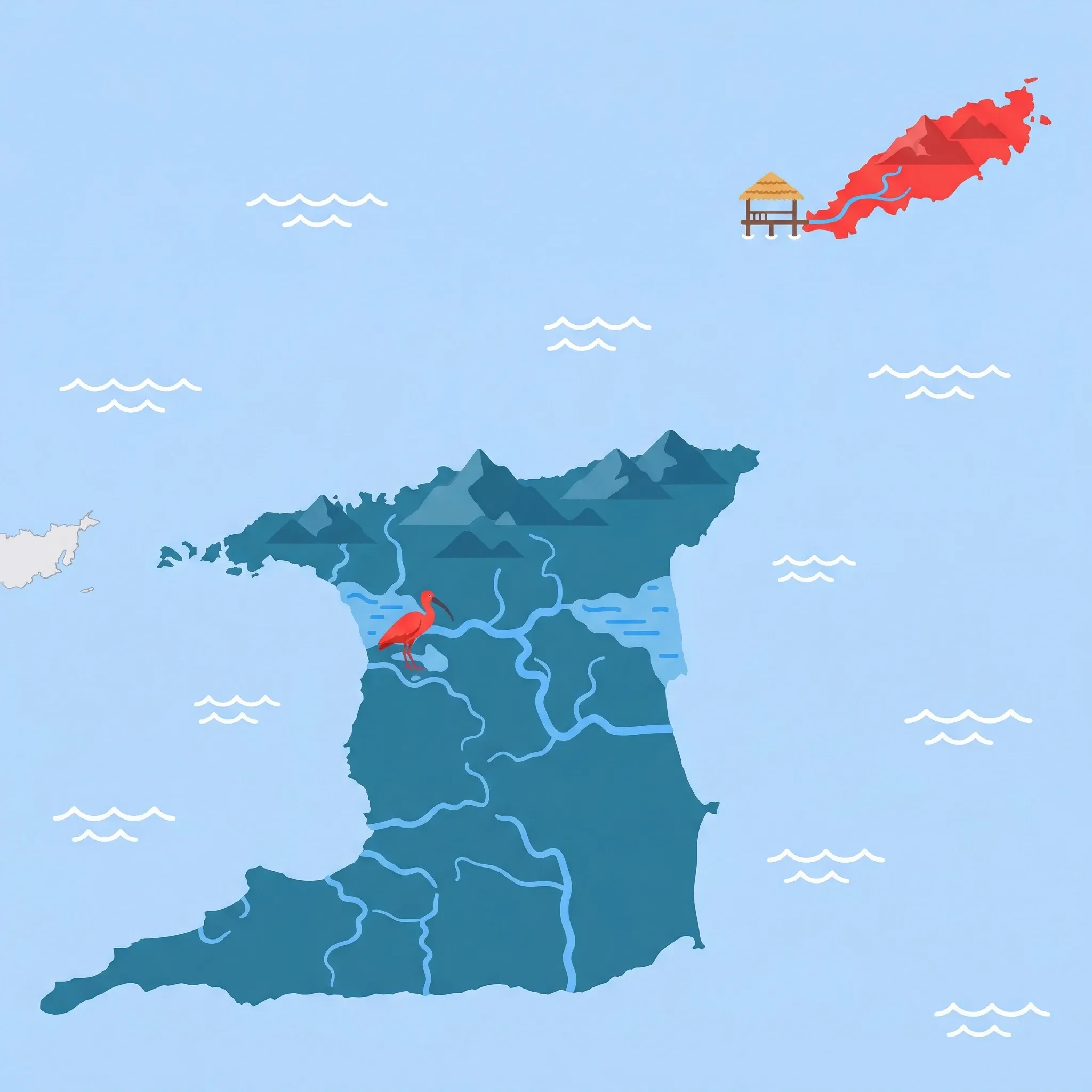
Click on a region marker to explore details. Use the dropdown to color regions by activity suitability.

Getting There & Around
Getting There
- By Air – Piarco International Airport (POS) in Trinidad is the main hub, with direct flights from Miami, New York, London, and Toronto. ANR Robinson International Airport (TAB) in Tobago receives some direct international flights, mostly from the UK and Germany.
- By Sea – Cruise ships dock at the Port of Spain Cruise Ship Complex and the Scarborough Port. Private yachts can clear customs at Chaguaramas or Scarborough.
- Entry Requirements – Visitors generally require a valid passport and proof of a return ticket. Visa rules vary by nationality. Check your government website for the latest visa requirements, or use the IATA Travel Centre entry-requirements checker.
Getting Around
- Car Hire – The most flexible option for families. Driving is on the left. Roads in Trinidad can be congested, while Tobago has winding coastal roads. GPS is recommended.
- Inter-Island Ferry – The government ferry service connects Port of Spain and Scarborough in about 3–4 hours. It is affordable and scenic, but sea conditions can be rough. Book tickets in advance online.
- Domestic Flights – Caribbean Airlines operates a 20-minute air bridge between the islands. It is faster than the ferry and very reliable, making it the preferred choice for families with young children.
- Maxi Taxis – Privately owned minibuses (color-coded by route) that ply main roads. They are cheap and frequent but can be crowded and drive fast-better for short hops than full-day exploring with luggage.

Packing List
Strictly illegal for civilians to wear or carry camouflage patterns (even on bags/hats); items will be confiscated.
Crucial for protecting the coral reefs at Nylon Pool and Buccoo Reef while avoiding sunburn.
Dengue fever is a risk; sandflies (midges) on Tobago beaches can be very itchy at dusk.
Outlets are US-style (Type A/B), so UK/EU travelers definitely need adapters.
Protects feet from sharp coral and rocks at secluded beaches and waterfalls.

Activities & Best Times

Festivals & Seasonal
ExcellentEvents, celebrations, seasonal attractions

Adventure & Nature
Very GoodHiking, wildlife, outdoor exploration, ecotourism
Home to the Western Hemisphere's oldest protected rainforest, offering authentic ecotourism and birdwatching. Trails are most accessible during the dry months, while heavy rainfall in late year makes jungle expeditions difficult.
Trinidad is world-renowned for birdwatching at Asa Wright and the Caroni Bird Sanctuary, alongside the unique geological wonder of Pitch Lake. The dry season provides the best access to hiking trails and optimal wildlife viewing, while the shoulder months coincide with the turtle nesting season.

City & Cultural
Very GoodUrban tourism, museums, historical sites, architecture
Port of Spain offers a sophisticated mix of colonial history and vibrant multi-ethnic culture, best experienced during the Carnival season in February and March. Outside the peak rainy season (September-November), visitors can explore the 'Magnificent Seven' mansions and lush Botanic Gardens.
Tobago's cultural offerings (Fort King George, Tobago Museum) are modest compared to international city/cultural destinations. The island is primarily a beach/nature destination with limited urban cultural infrastructure. 'Marginal' better reflects its position - cultural sites exist but are not a primary draw.

Beach & Sea
GoodBeach resorts, marine activities: diving, snorkelling, kite surfing, wind surfing, sailing
Features iconic Caribbean spots like Pigeon Point and the Nylon Pool with exceptional marine biodiversity. Peak conditions align with the dry season for optimal water visibility and calm seas.
Features dramatic, scenic beaches like Maracas Bay and the world-significant leatherback turtle nesting site at Grande Riviere. Conditions are most favorable for swimming and visibility during the dry season, with turtle watching possible into the early wet season.

Road Trips & Scenic
GoodScenic drives, countryside tours, route-based travel
The North Coast Road and Windward Road offer world-class scenic driving through lush terrain and coastal vistas. Dry season months ensure safer road conditions and clear viewpoints across the Atlantic and Caribbean coasts.
The North Coast Road and the scenic Manzanilla-Mayaro drive offer spectacular coastal and mountain vistas. Dry months are preferred to ensure road safety and clear views, avoiding the heavy rainfall that can affect mountain passes.

Sports & Active
GoodSport tourism, fitness activities, active recreation
Offers established hiking and cycling routes like the Gilpin Trace and Argyle Falls Trail. These active pursuits are best enjoyed during the drier window to avoid muddy trails and high humidity found in the peak wet season.
The island features rugged hiking trails like Paria Bay and El Tucuche, alongside modern adventure parks. The dry season is essential for safe mountain trekking and consistent operation of outdoor adventure facilities.

Educational & Exploratory
MarginalLearning experiences, scientific sites, historical education
The Tobago Museum provides significant historical context for the island's colonial and indigenous past. While a quality facility, it serves as a supplementary educational experience rather than a primary destination driver.
The National Science Centre offers educational engagement for families visiting the capital. Peak months align with the general tourist high season when logistics and city exploration are most convenient.

Theme Park & Entertainment
MarginalAmusement parks, family entertainment venues

Public Holidays & Calendar Next 12 months
Public holidays, festivals, cultural celebrations, and seasonal natural phenomena coming up in Trinidad and Tobago over the next 12 months.
Loading holidays and events...

Climate & Weather
Tobago
Show Details
| Month | Temp °C | Rain | Humidity |
|---|
Trinidad
Show Details
| Month | Temp °C | Rain | Humidity |
|---|

Travel Advisory
The majority of international agencies advise exercising a high degree of caution throughout the country. While most tourist areas remain accessible, high rates of violent crime and gang-related incidents require travellers to maintain constant vigilance and avoid high-risk zones in major cities.
Safety Topics
Traveller Advice (3 groups)

Do not resist if targeted by robbers, as this can lead to violence. Use only hotel-recommended or registered private taxis, and avoid shared 'maxi' taxis for personal safety.

Although same-sex relations were decriminalized, social attitudes remain conservative. Discretion is recommended as public displays of affection might be met with hostility.

Female travellers may experience unwanted attention or verbal harassment. It is advisable to avoid walking alone in secluded areas or at night.
Agency Summaries
Visitors should maintain heightened vigilance across the islands due to significant levels of violent crime. Specific areas in Port of Spain and certain neighborhoods should be avoided entirely due to gang-related activities.
A high level of security awareness is required due to the constant threat of violent crime. Visitors should be particularly careful when attending major public events or moving through urban centers.
Travellers are urged to reassess their plans because of pervasive crime, including murder and kidnapping. Risks are particularly high in parts of the capital where gang violence and the threat of terrorism are ongoing concerns.
Security risks are notably higher than in New Zealand, driven by violent crime and gang activity. Travellers should pay close attention to personal safety and avoid isolated areas.
Most visits are trouble-free, but caution is necessary regarding street crime and gang violence. Particular neighborhoods in Port of Spain carry higher risks, and visitors should stay informed about local security developments.
Irish citizens are advised to be very careful and mindful of their personal safety. Consular assistance is limited as there is no local resident embassy.
Information is provided for general guidance only and does not constitute travel, safety, medical, or legal advice. Conditions may change. Users are responsible for independently verifying information before travel.