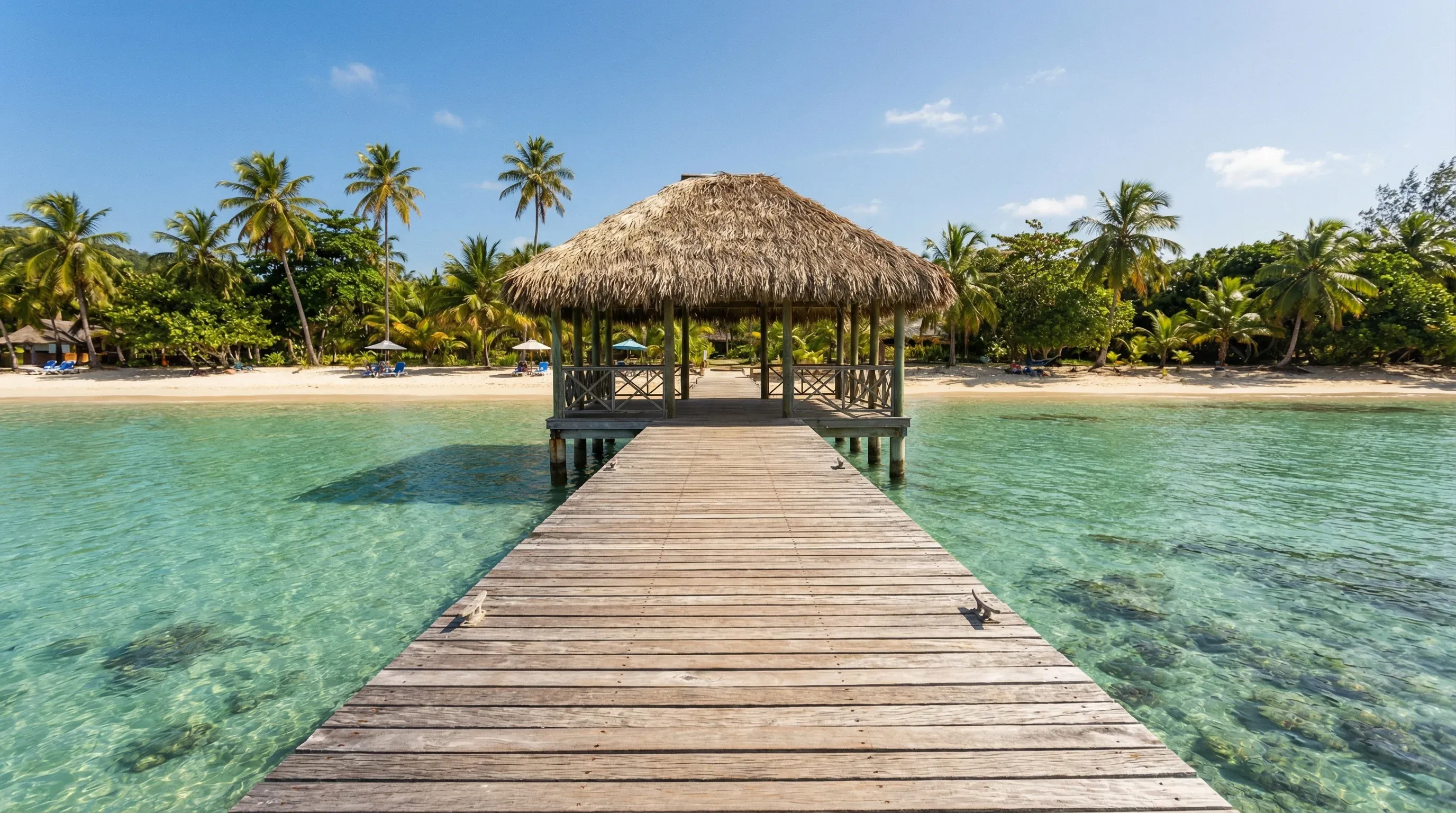

Tobago
Caribbean serenity with coral reefs and ancient rainforests 🐢🏝️
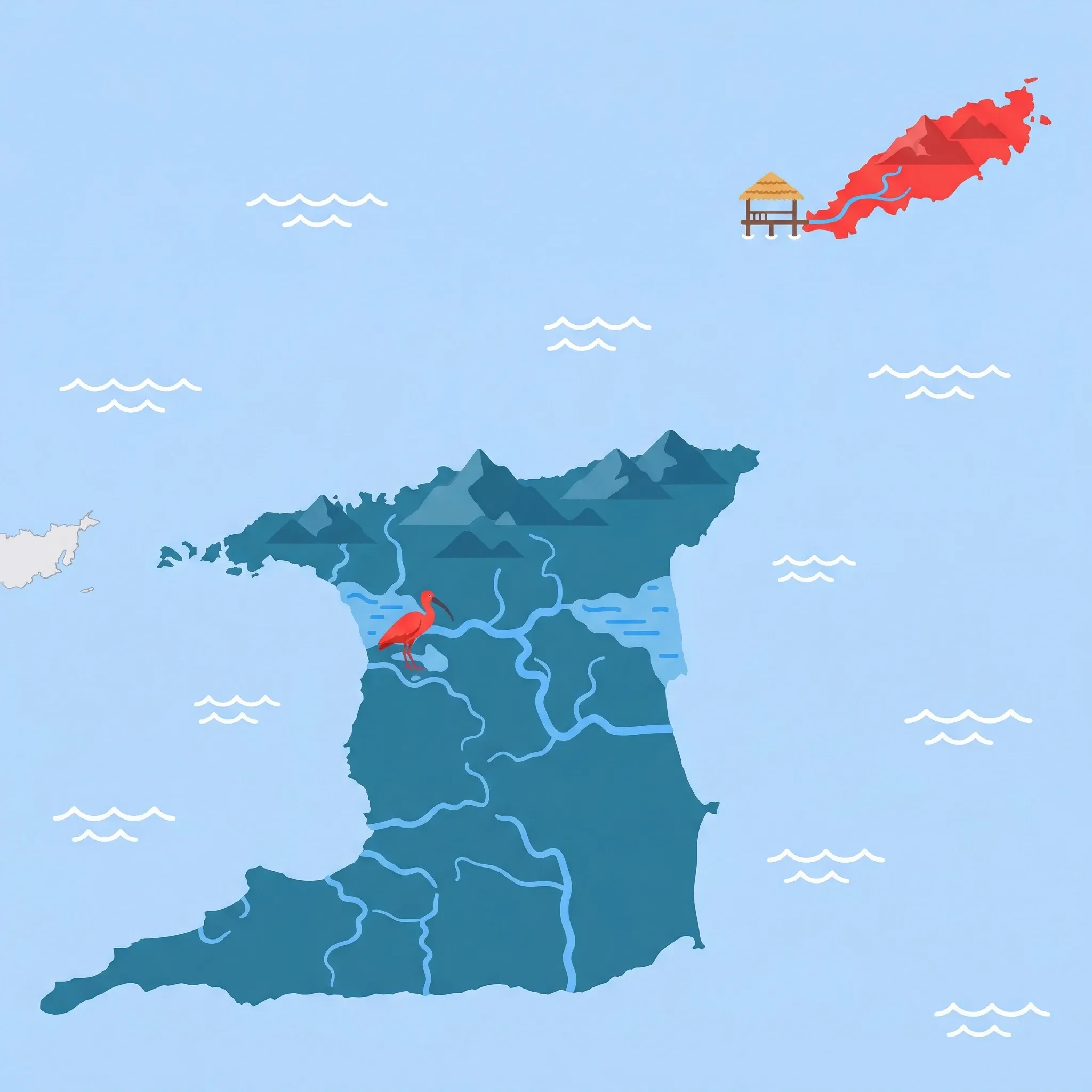
Click a region to explore
While Trinidad bustles with industrial energy and commerce, Tobago moves at a much slower, barefoot pace that is perfect for families seeking genuine relaxation. This cigar-shaped island is defined by its deep connection to nature, from the coral-rich waters of Buccoo Reef to the mist-covered peaks of the Main Ridge. For children, the island feels like a manageable adventure park; the drives are short, the beaches are calm, and the wildlife is accessible. The southwest is flatter and home to popular beaches, while the east offers winding coastal roads and secluded fishing villages like Castara and Speyside.
The atmosphere here is distinctly "island village." Locals are friendly, and it is common to see fishermen pulling in seines (nets) on the beach in the morning—a spectacle kids often find fascinating. Unlike many Caribbean destinations that are dominated by walled-off resorts, Tobago encourages exploration. Families can easily drive from a waterfall hike in the morning to a snorkeling trip in the afternoon, finishing with a sunset dinner of fresh catch by the water. The lack of heavy commercialisation means fewer crowds, allowing for a more intimate family bonding experience in nature.
Key Attractions
The crown jewel for families is undoubtedly the Nylon Pool. Accessible via glass-bottom boat tours from Pigeon Point or Store Bay, this offshore sandbar offers waist-high, crystal-clear turquoise water in the middle of the ocean, allowing even young non-swimmers to splash safely while spotting fish. It is often paired with a visit to the nearby Buccoo Reef.
For a change of scenery, a drive into the Main Ridge Forest Reserve exposes children to the jungle without extreme trekking. The Gilpin Trace trail is relatively well-maintained and offers the chance to see the rare White-tailed Sabrewing hummingbird. Guides here are excellent at pointing out trapdoor spiders and medicinal plants that capture children's imaginations.
Practical Advice
The dry season (January to May) is ideal for beach days, though the island is lush and green year-round. Leatherback turtle nesting season runs from March to August, which can be a magical evening activity for families. Renting a car is highly recommended to see the island's diverse coasts, but be prepared for narrow, winding roads in the north.
Food & Drink
Typical meal times: Lunch is usually served from 12:00 pm to 2:30 pm, while dinner service typically runs from 6:30 pm to 9:30 pm.
Typical meal costs: A casual meal costs around 60–120 TTD (approx. $9–18 USD / €8–16 EUR). Higher-end dining at hotels may cost 250–400 TTD (approx. $37–60 USD / €34–54 EUR).
Dietary requirements: Fresh fruit and vegetables are abundant. Vegetarian options are common due to Hindu influences in the national cuisine, though less prevalent in Tobago than Trinidad. Gluten-free awareness is growing in tourist areas like Crown Point but requires checking in smaller villages.
Signature dishes:
- Curry Crab and Dumpling – The island's iconic dish; curried blue crab served with dense flour dumplings, usually eaten with hands—messy and delicious.
- Bene Balls – A sweet treat made from sesame seeds (benne) and caramelized sugar, perfect for a quick energy boost.
- Pacro Water – A spicy broth made from chitons (sea mollusks), believed by locals to have strengthening properties, often sold at street stalls.
Why this score?
The island offers moderate adventure through the Main Ridge Forest Reserve, which features well-maintained hiking trails through ancient rainforest. Marine adventures like diving at Speyside and snorkeling at the Nylon Pool are popular but highly accessible for families. While the rugged north coast offers some off-the-beaten-path exploration, most tourism remains centered around comfortable coastal infrastructure.
Why this score?
Medical services are limited on the island, with the Scarborough General Hospital serving as the primary facility for emergencies. While basic care is available and English-speaking staff is the norm, specialized treatment or major trauma often requires medical evacuation to Trinidad. It is adequate for minor issues but lacks the robust infrastructure found in major international hubs or even Port of Spain.
Why this score?
Tobago serves as a niche international destination primarily for European and North American travelers seeking a quieter alternative to the more commercialized Caribbean islands. While Pigeon Point and Buccoo Reef are regionally famous, the island's visitor numbers remain low on a global scale, consistent with the country's total arrivals. Infrastructure is geared toward small-scale eco-tourism and boutique resorts rather than mass international flow.

Tobago caters to a range of budgets. Guest houses and self-catering villas offer good value for families, often costing 600–1,200 TTD (approx. $90–180 USD / €80–160 EUR) per night. Street food is affordable, but resort dining aligns with international Caribbean prices. Car rental averages 300–450 TTD (approx. $45–65 USD / €40–60 EUR) per day.

Getting Here & Around
Getting Here
- Airports – A.N.R. Robinson International Airport (TAB) in Crown Point receives international flights and the "airbridge" connection from Trinidad.
- Ferry – The inter-island ferry from Port of Spain to Scarborough takes 3–4 hours. It is a popular, affordable option, though the sea crossing can sometimes be rough.
Getting Around
- Car – The best way for families to explore. A 4x4 is useful for steeper driveways in the north but a standard sedan works for most main roads.
- Taxi – Route taxis (cars with H license plates) ply the main roads and are cheap, but private hires are better for family logistics.
- Public Bus – PTSC buses are very cheap (blue, white, and red buses) but schedules can be infrequent and unreliable for tight itineraries.
Nearby Airports (1 airport)
Crown Point
TABTobago
View full flight map for Trinidad and Tobago →
Official Links

Packing List
Protecting the sensitive coral at Buccoo Reef is vital; traditional sunscreens can harm marine life.
Essential for rocky beaches and protecting feet from coral fragments or urchins in shallow waters.
The winding coastal roads to Castara and Speyside can induce car sickness in children.
Sandflies on beaches at dusk and mosquitoes in the rainforest can be persistent.
Strictly illegal for civilians to wear or carry camouflage patterns (even on bags/hats); items will be confiscated.
Dengue fever is a risk; sandflies (midges) on Tobago beaches can be very itchy at dusk.
Outlets are US-style (Type A/B), so UK/EU travelers definitely need adapters.

Activities & Best Times

Hiking, wildlife, outdoor exploration, ecotourism
Home to the Western Hemisphere's oldest protected rainforest, offering authentic ecotourism and birdwatching. Trails are most accessible during the dry months, while heavy rainfall in late year makes jungle expeditions difficult.

Beach resorts, marine activities: diving, snorkelling, kite surfing, wind surfing, sailing
Features iconic Caribbean spots like Pigeon Point and the Nylon Pool with exceptional marine biodiversity. Peak conditions align with the dry season for optimal water visibility and calm seas.

Scenic drives, countryside tours, route-based travel
The North Coast Road and Windward Road offer world-class scenic driving through lush terrain and coastal vistas. Dry season months ensure safer road conditions and clear viewpoints across the Atlantic and Caribbean coasts.

Sport tourism, fitness activities, active recreation
Offers established hiking and cycling routes like the Gilpin Trace and Argyle Falls Trail. These active pursuits are best enjoyed during the drier window to avoid muddy trails and high humidity found in the peak wet season.

Urban tourism, museums, historical sites, architecture
Tobago's cultural offerings (Fort King George, Tobago Museum) are modest compared to international city/cultural destinations. The island is primarily a beach/nature destination with limited urban cultural infrastructure. 'Marginal' better reflects its position - cultural sites exist but are not a primary draw.

Learning experiences, scientific sites, historical education
The Tobago Museum provides significant historical context for the island's colonial and indigenous past. While a quality facility, it serves as a supplementary educational experience rather than a primary destination driver.




Public Holidays & Calendar Next 12 months
Public holidays, festivals, cultural celebrations, and seasonal natural phenomena coming up in Tobago over the next 12 months.
Loading holidays and events...

Travel Advisory
The majority of international agencies advise exercising a high degree of caution throughout the country. While most tourist areas remain accessible, high rates of violent crime and gang-related incidents require travellers to maintain constant vigilance and avoid high-risk zones in major cities.
Safety Topics
Traveller Advice (3 groups)

Do not resist if targeted by robbers, as this can lead to violence. Use only hotel-recommended or registered private taxis, and avoid shared 'maxi' taxis for personal safety.

Although same-sex relations were decriminalized, social attitudes remain conservative. Discretion is recommended as public displays of affection might be met with hostility.

Female travellers may experience unwanted attention or verbal harassment. It is advisable to avoid walking alone in secluded areas or at night.
Agency Summaries
Visitors should maintain heightened vigilance across the islands due to significant levels of violent crime. Specific areas in Port of Spain and certain neighborhoods should be avoided entirely due to gang-related activities.
A high level of security awareness is required due to the constant threat of violent crime. Visitors should be particularly careful when attending major public events or moving through urban centers.
Travellers are urged to reassess their plans because of pervasive crime, including murder and kidnapping. Risks are particularly high in parts of the capital where gang violence and the threat of terrorism are ongoing concerns.
Security risks are notably higher than in New Zealand, driven by violent crime and gang activity. Travellers should pay close attention to personal safety and avoid isolated areas.
Most visits are trouble-free, but caution is necessary regarding street crime and gang violence. Particular neighborhoods in Port of Spain carry higher risks, and visitors should stay informed about local security developments.
Irish citizens are advised to be very careful and mindful of their personal safety. Consular assistance is limited as there is no local resident embassy.
Information is provided for general guidance only and does not constitute travel, safety, medical, or legal advice. Conditions may change. Users are responsible for independently verifying information before travel.