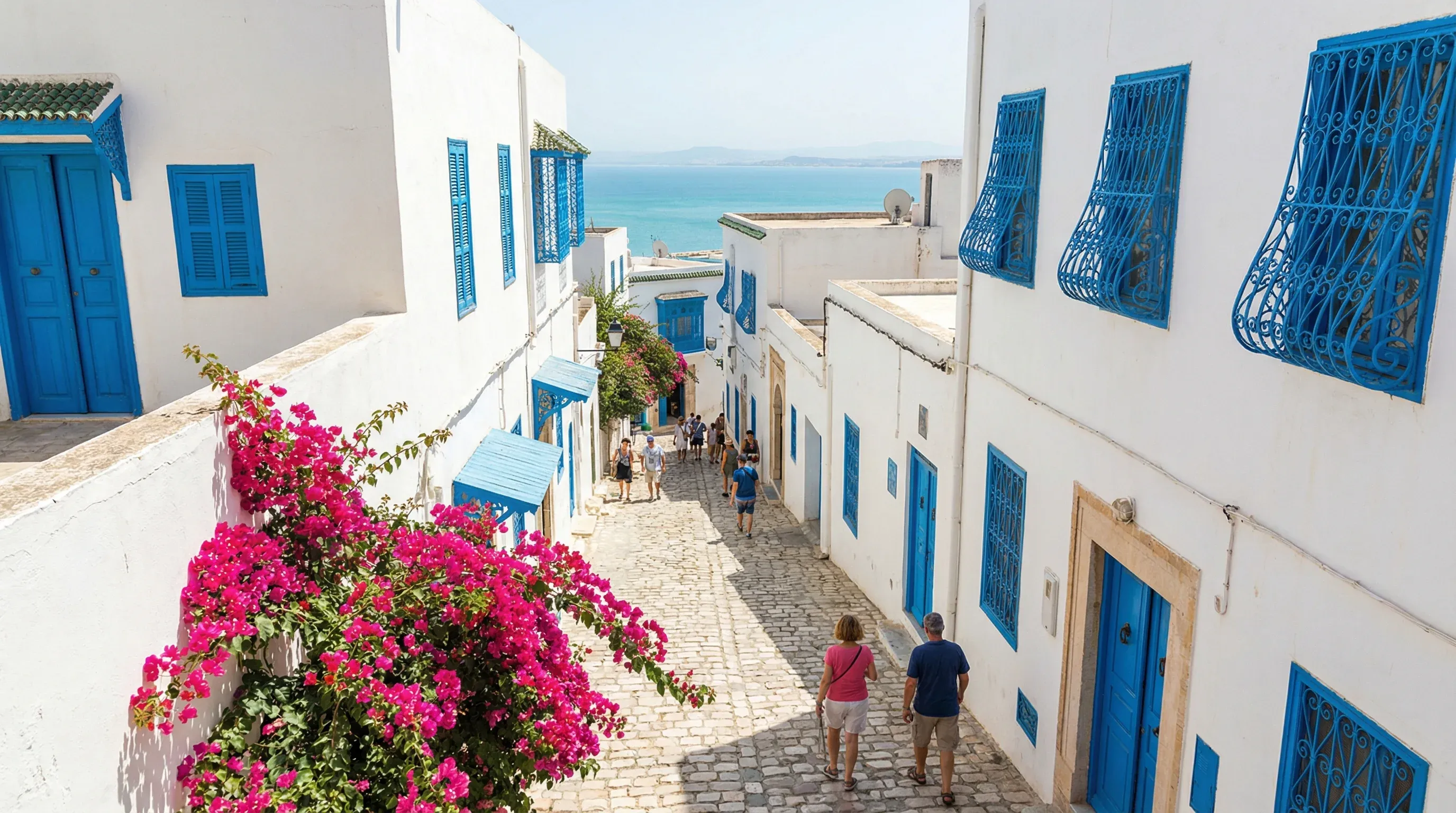

Tunis & North (Carthage, Sidi Bou Said)
🏛️ Ancient ruins, blue villages, and city buzz
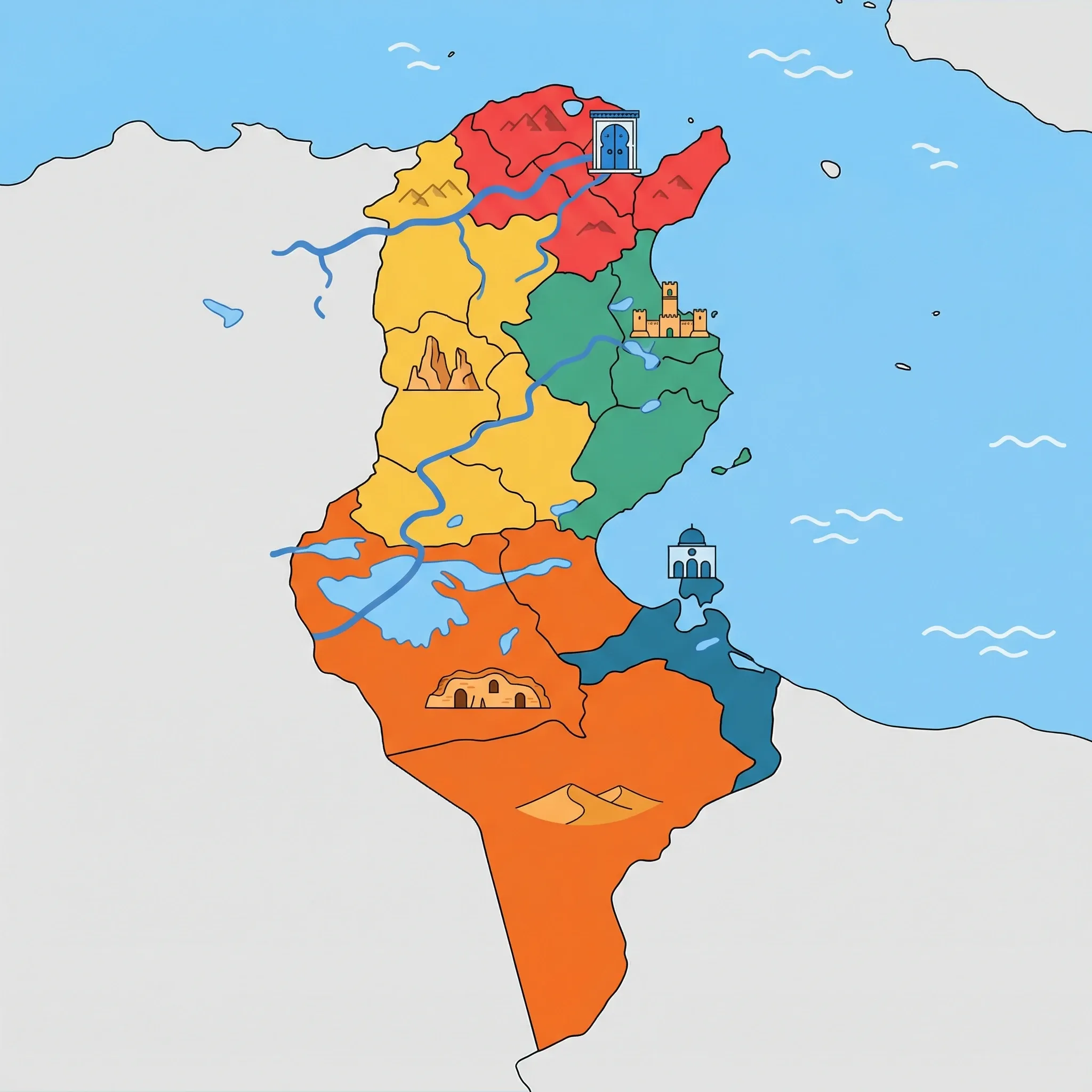
Click a region to explore
Tunis is a city of layers, where the ancient, medieval, and modern worlds stack on top of each other. For families, the capital offers a stimulating mix of education and leisure. Unlike the beach-focused resorts, a trip here is about discovery. You can stand where Hannibal once commanded armies in Carthage, get lost in the sensory maze of the UNESCO-listed Medina, and then relax in a chic cafe in the European-style New Town. It is a vibrant, bustling metropolis that feels authentically North African yet surprisingly Mediterranean. The suburbs—La Marsa, Carthage, and Sidi Bou Said—are linked by a historic train line and offer a relaxed, seaside vibe that balances the frenetic energy of the city center.
The region is visually stunning. Sidi Bou Said Village, perched on a cliff overlooking the azure sea, is a photographer's dream with its cobbled streets and blue-studded doors; it's a pedestrian zone, making it safe for kids to explore. History is the main draw here, but it's accessible history. The ruins of Carthage are spread out in a park-like setting, and the Bardo Museum contains mosaics so detailed they look like paintings, featuring animals and gladiators that capture children's imaginations. With excellent flight connections and high-quality amenities, Tunis is the perfect entry point for a family adventure in Tunisia.
Key Attractions
The Archaeological Site of Carthage is not one single site but several; the Antonine Baths are the most impressive for kids, offering massive ruins to scramble around by the sea. Just up the hill, Sidi Bou Said Village is essential for a sunset walk and a famous "Bambalouni" donut. In the city center, the Bardo National Museum houses the world's largest collection of Roman mosaics—look for the ones depicting tigers and giants. For a break from history, the Tunis Science City (Cité des Sciences à Tunis) is a modern, interactive museum with a planetarium that is great for school-aged children.
Practical Advice
Spring and Autumn are best for sightseeing. Summer in the city center is stiflingly hot. The TGM train is a cheap and fun way to travel between Tunis, Carthage, and Sidi Bou Said. Taxis are plentiful but traffic in Tunis can be heavy during rush hour (8:00 am and 5:00 pm).
Food & Drink
Typical meal times: Lunch 12:30 pm to 2:30 pm. Dinner is later here, typically 8:00 pm to 10:00 pm in the capital.
Typical meal costs: Prices vary from cheap street food to high-end dining. A nice family lunch in La Marsa costs 100–160 TND (approx. $32–51 USD / €30–48 EUR).
Dietary requirements: The capital has the most diverse food scene. Vegan and gluten-free options are increasingly available in hip cafes in La Marsa and Berges du Lac.
Signature dishes:
- Lablabi – A chickpea soup served over torn stale bread, topped with tuna, soft egg, and capers. It's a cheap, filling lunch favorite of locals.
- Bambalouni – A sweet, ring-shaped donut rolled in sugar, iconic to Sidi Bou Said. You must eat one hot while walking the village.
- Couscous au Poisson – Tunis is a coastal city, and the fish couscous (often with grouper or quince) is a regional specialty.
Why this score?
This region is almost entirely urbanized or consists of well-maintained archaeological parks, offering minimal adventure for families. While Jebel Zaghouan offers some hiking to the south, the primary visitor experience involves museums, dining, and walking through paved historic districts. It is the most developed and least rugged part of the country.
Why this score?
Tunis is the premier medical hub for the Maghreb region, boasting world-class private clinics and highly specialized hospitals. Many physicians are trained in Europe and speak multiple languages, making it the most reliable place for foreign families to receive advanced care. It offers the highest density of pharmacies, specialists, and modern emergency services in the country.
Why this score?
As the national capital and primary gateway, Tunis attracts a diverse mix of cultural tourists, cruise passengers, and business travelers. The iconic blue-and-white village of Sidi Bou Said and the ruins of Carthage are among the most photographed and visited sites in Africa. While not a primary 'beach resort' zone, its historical significance maintains a heavy international presence.

Tunis is the most expensive city in the country, but still cheap by Western standards. Boutique hotels in the Medina or seaside villas in La Marsa can cost 250–450 TND (approx. $80–145 USD / €75–135 EUR). Entry to cultural sites like <a data-attraction-id="57367">Carthage</a> is incredibly cheap, usually under 12 TND (approx. $3.80 USD / €3.60 EUR).

Getting Here & Around
Getting Here
- Airports – Tunis-Carthage International Airport (TUN) is the main gateway, located just 15 minutes from the city center and coastal suburbs.
- Ferry – Ferries from France and Italy dock at La Goulette port, which is connected to the city by the TGM train.
- Train – The central station (Place Barcelone) connects Tunis to all major cities in the south and west.
Getting Around
- TGM Train – The historic light rail connecting Tunis Marine to Carthage, Sidi Bou Said, and La Marsa. Cheap and scenic.
- Taxis – Yellow taxis are the easiest way to move within the city. Use the Bolt app if you are unsure about hailing one.
- Walking – Essential for the Medina of Tunis and Sidi Bou Said, which are pedestrian-only zones.
Nearby Airports (1 airport)
Tunis–Carthage International Airport
TUNTunis
View full flight map for Tunisia →
Official Links

Packing List
The cobbles in Sidi Bou Said and the Medina are slippery, especially if polished by foot traffic.
Strollers are nearly impossible to use in the stepped streets of Sidi Bou Said and crowded Medina alleys.
The Medina is a maze; GPS can be spotty, so having a downloaded map helps navigate the souks.
English is not widely spoken outside major hotels; French is the primary second language and essential for local interactions.
Multipurpose: essential for covering shoulders/hair when visiting holy sites and useful for protection against desert dust.
Roman sites like Carthage and El Jem have uneven, rubble-strewn ground that is difficult to navigate in flip-flops.
Public restrooms outside of high-end hotels and restaurants frequently lack toilet paper.
Taxi drivers and small shopkeepers in the souks rarely have change for large bills; keep plenty of 1, 5, and 10 Dinar coins/notes.

Activities & Best Times

Urban tourism, museums, historical sites, architecture
Home to the UNESCO-listed Medina of Tunis, the ruins of Carthage, and the world-class Bardo Museum, this region offers exceptional historical depth. Peak months avoid the oppressive July-August heat, which makes exploring the dense urban quarters and archaeological sites uncomfortable.

Hiking, wildlife, outdoor exploration, ecotourism
Ichkeul National Park and the Jebel Zaghouan massifs provide significant biodiversity and hiking opportunities of international interest. Spring is ideal for birdwatching and mild temperatures, whereas the peak summer heat and mid-winter rains create challenging conditions.

Beach resorts, marine activities: diving, snorkelling, kite surfing, wind surfing, sailing
Upscale coastal suburbs like La Marsa and Gammarth offer high-quality Mediterranean beach life with sophisticated dining. Peak season aligns with high sea temperatures in summer, while the Mediterranean winter is too cool for coastal recreation.

Scenic drives, countryside tours, route-based travel
The Cap Bon Peninsula and coastal routes to Bizerte offer scenic driving with well-maintained infrastructure and cultural stops. Best driven in spring or autumn to enjoy the Mediterranean landscape in clear light and comfortable temperatures.

Sport tourism, fitness activities, active recreation
Offers established hiking trails on Jebel Ressas and Zaghouan, alongside adventure parks like Carthage Land for families. Best visited during the shoulder seasons when the climate supports strenuous physical activity and outdoor recreation.

Learning experiences, scientific sites, historical education
Facilities like Tunis Science City provide educational engagement, though they lack the global significance of top-tier international museums. These indoor sites are accessible year-round, but summer heat makes the transition between city sites difficult.

Events, celebrations, seasonal attractions
The Carthage International Festival and Carthage Film Festival attract global talent, making mid-summer the peak for event-driven travel. Outside of these specific festival windows, there are few events that would motivate international family travel.

Spa retreats, wellness centers, peaceful getaways
Authentic historic hammams offer a traditional North African wellness experience, though the region lacks a high concentration of destination-level modern spa resorts. The experience is most appealing during the cooler winter months.
Amusement parks, family entertainment venues
Regional parks like Dah Dah provide localized family entertainment but do not meet the standards of major global theme park destinations. They are most vibrant during the summer school holidays and warmer evenings.

Attractions (12 total)



Public Holidays & Calendar Next 12 months
Public holidays, festivals, cultural celebrations, and seasonal natural phenomena coming up in Tunis & North (Carthage, Sidi Bou Said) over the next 12 months.
Loading holidays and events...

Travel Advisory
While most tourist areas remain open, all major agencies recommend increased vigilance due to the threat of terrorism and regional instability. Specific border and mountainous zones carry extreme risk and should be avoided.
Safety Topics
Traveller Advice (3 groups)

Ensure you have comprehensive travel insurance that covers medical evacuation. Always carry a copy of your passport and monitor local media for news of protests or security incidents.

Homosexual acts are illegal in Tunisia and can lead to imprisonment. Public displays of affection should be avoided to prevent legal issues or harassment.

Female travellers may experience unwanted attention or verbal harassment, particularly when travelling alone. Dressing modestly and exercising discretion in public can help mitigate these risks.
Agency Summaries
Irish citizens should maintain a strong level of security awareness. Terrorism remains a primary concern, particularly following historical attacks on tourist infrastructure. Avoid demonstrations and border regions.
New Zealanders should be aware of significant security concerns, including terrorism and the possibility of violent protests. Foreigners have previously been targeted, and border areas carry a risk of kidnapping.
A heightened level of caution is necessary because of the risk of terrorist attacks and potential civil unrest. Protests can occur without warning, and the security environment near international borders is volatile.
Travellers are advised to maintain vigilance throughout the country due to the ongoing threat of terrorism. Extremely strict warnings are in place for areas near the borders with Libya and Algeria, where travel should be completely avoided.
The government warns against all travel to border regions with Libya and Algeria due to security operations and militant activity. While major tourist resorts are generally accessible, visitors must stay informed of shifting security conditions.
Increased caution is recommended due to potential terrorist activity. High-risk zones, including specific mountainous regions in the west and border zones, are designated as Level 4 areas where travel is prohibited for embassy personnel and discouraged for citizens.
Information is provided for general guidance only and does not constitute travel, safety, medical, or legal advice. Conditions may change. Users are responsible for independently verifying information before travel.