

Overview
Turkey is a sensory wonderland that bridges Europe and Asia, offering families a travel experience unlike any other. Geographically, it is incredibly diverse, shifting from the pine-clad mountains and turquoise waters of the Mediterranean to the lunar-like volcanic landscapes of Central Anatolia. For families, the country’s greatest asset is its culture; Turkish people adore children, and you will find your little ones welcomed with smiles, treats, and the affectionately spoken "Maşallah" (a blessing of protection) wherever you go. This innate hospitality makes navigating the country less stressful, as locals are often eager to help families with strollers or distract a fussing toddler with a glass of tea.
The climate is just as varied as the terrain, making Turkey a year-round destination if you choose your region wisely. Summers on the coast are hot and perfect for swimming, while spring and autumn offer mild weather ideal for exploring ancient ruins without the crowds. Whether you are navigating the energetic bustle of Istanbul, hiking through honey-coloured valleys, or sailing on a traditional gulet schooner, the country offers a perfect balance of education and relaxation. It is a place where history books come to life, not in stuffy museums, but in open-air amphitheatres and underground tunnels that beg to be explored.
Key Attractions
No family trip to Turkey is complete without visiting the magical region of Cappadocia. Here, the landscape looks like it was drawn by a child, filled with "fairy chimney" rock formations. Families can explore the Göreme Open Air Museum, a UNESCO World Heritage site where ancient churches are carved directly into soft rock. For a true adventure, descend into the Derinkuyu Underground City, a fascinating subterranean network of tunnels and rooms that once hid thousands of people-kids love the maze-like feel, though it can be tight for parents carrying backpacks.
On the coast, history becomes a playground. The Ephesus Archaeological Site is one of the best-preserved Roman cities in the world; children can walk down marble streets and sit in the vast Great Theatre. For nature lovers, Iztuzu Beach near Dalyan is essential. Known as "Turtle Beach," it is a protected nesting ground for Loggerhead (Caretta caretta) turtles and features shallow, warm waters perfect for young swimmers. Nearby, active families can try white-water rafting suitable for beginners in the stunning Köprülü Canyon National Park.
In the northwest, closer to Istanbul, the Istanbul Aquarium offers a break from the heat with its impressive thematic zones. For a unique outdoor experience, visit Ormanya in Kocaeli, a massive nature park featuring "Hobbit houses" and a zoo that feels lifted from a storybook. If you head south to Antalya, the Antalya Aquarium is another world-class facility, boasting the world's biggest tunnel aquarium, which mesmerises children of all ages.
Safety
Turkey is generally safe for tourists, particularly in popular coastal and cultural areas. However, visitors should exercise increased caution (Level 2) due to the potential for terrorism and arbitrary detentions, though these risks rarely affect typical family tourists. Avoid all travel to the provinces of Hakkari and Sirnak, and stay at least 10 km away from the Syrian border. In crowded tourist hubs like Istanbul, keep an eye on belongings to prevent pickpocketing. Always carry passports (or clear copies) as ID checks can occur.
Practical Advice
The best times to visit are April–May and September–October, when temperatures are manageable, and crowds are thinner. Most visitors (including US, Canadian, and Australian citizens) need an e-Visa before arrival; however, UK and many EU citizens are currently visa-exempt for short tourist stays-always check the latest rules. Health-wise, tap water is generally not potable; stick to bottled water. Pharmacies (Eczane) are widespread and well-stocked.
Food & Drink
Typical meal times: Lunch is usually 12:30 pm to 2:00 pm. Dinner is eaten later than in northern Europe, typically from 7:30 pm to 9:30 pm, though tourist restaurants serve all day.
Typical meal costs: 350–600 TL (approx. $10–17 USD / €9–16 EUR) for a casual meal; 1,000–2,000 TL (approx. $28–55 USD / €26–52 EUR) for a mid-range dinner with drinks.
Dietary requirements: Vegetarian options are abundant, with dishes like stuffed vine leaves, grilled vegetables, and lentil soups. Vegan and gluten-free awareness is growing in cities but can be harder to find in rural areas. Nuts (especially pistachios and walnuts) are common in desserts.
Family-friendly dining: Turkish dining is incredibly child-friendly. Restaurants often provide highchairs and waiters will frequently entertain babies. Meze platters are great for letting kids sample small bites of different foods.
Signature dishes:
- Kahvaltı (Turkish Breakfast) – A massive spread of cheeses, olives, eggs, tomatoes, cucumbers, jams, and honey-a fun, interactive family feast.
- Pide – Boat-shaped flatbread topped with cheese, meat, or vegetables; often called "Turkish pizza" and a guaranteed hit with kids.
- Gözleme – Hand-rolled savoury pancakes filled with spinach, cheese, or potato, often made fresh before your eyes.
- Köfte – Grilled meatballs made from minced lamb or beef, mild in spice and easy for children to eat.
- Maraş Dondurma – Traditional stretchy ice cream made with orchid root; vendors often perform a funny, teasing routine when serving it, which kids adore.

While traditionally a budget destination, prices have risen significantly. A family of four should budget 6,000–9,000 TL (approx. $165–250 USD / €155–235 EUR) per day for mid-range hotels, meals, and transport. Museum entry fees for foreigners are now pegged to the Euro (e.g., €25–40 per person), making sightseeing the most expensive part of the trip.
Age Suitability





Did you know? Turkey welcomes approximately 50.5 million international visitors per year. Most visitors come from Europe.
Explore Regions
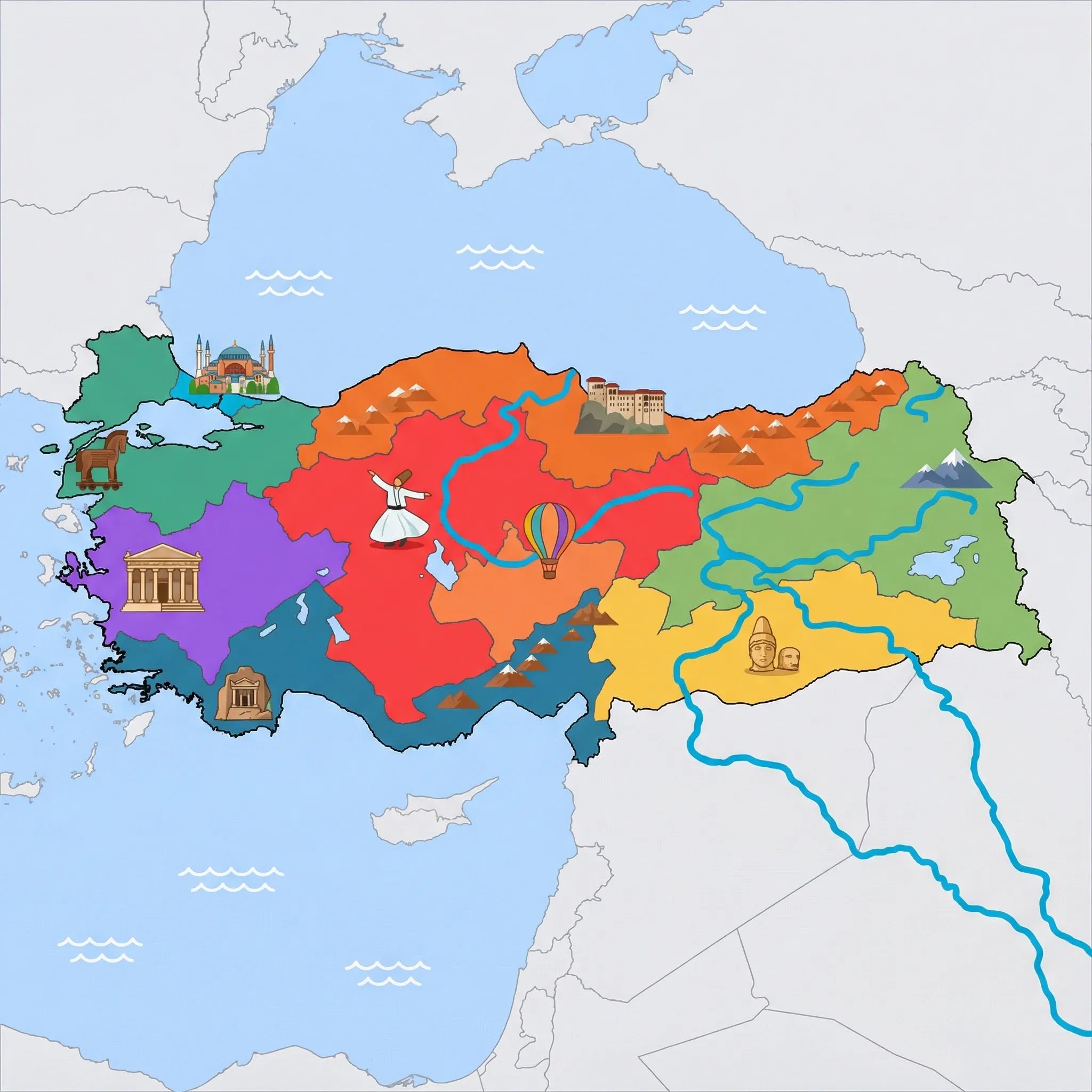
9 Regions
Aegean Coast
Where ancient ruins meet crystal-clear waters 🏛️🌊
Black Sea Coast
Misty mountains, green tea fields, and wild coastlines 🌲☁️
Cappadocia
Land of fairy chimneys, caves, and balloons 🧚♀️🎈
Central Anatolia
The heart of the nation: Salt lakes, modern cities, and ancient roots 🇹🇷🌾
Eastern Anatolia
Rugged mountains and legendary frontiers 🏔️🦅
Istanbul
The only city spanning two continents 🕌🚢
Marmara & Gallipoli/Troy
Legends of Troy, Ottoman capitals, and olive groves 🐴🌿
Southeastern Anatolia
Ancient cities and world-class gastronomy 🌶️🏺
Turquoise Coast / Mediterranean (Lycian Coast)
Sun, sea, and sunken cities ☀️🐢
Click on a region marker to explore details. Use the dropdown to color regions by activity suitability.

Getting There & Around
Getting There
- By Air – Istanbul (IST) and Sabiha Gökçen (SAW) are major global hubs connecting to Europe, Asia, and the Americas. Antalya (AYT) and Dalaman (DLM) serve the southern coast directly during summer.
- By Sea – Cruise ships frequently dock at Galataport in Istanbul, Kuşadası (for Ephesus), and Bodrum. Ferries also connect Greek islands like Rhodes and Kos to Turkish coastal towns.
- By Land – Long-distance trains and buses connect from Bulgaria and Greece, though these routes are slow and less popular for families than flying.
- Entry Requirements – UK and many EU citizens are currently visa-exempt for tourism (up to 90 days). US, Canadian, and Australian citizens typically need an e-Visa. Check your government website for the latest visa requirements, or use the IATA Travel Centre entry-requirements checker.
Getting Around
- Domestic Flights – The quickest way to cover long distances, such as Istanbul to Cappadocia. Carriers like Turkish Airlines and Pegasus offer frequent, affordable connections.
- Buses – Intercity buses are a national institution-modern, comfortable, and often featuring seat-back screens and tea service. They are safe and reach almost every town.
- Car Hire – Essential for exploring the Aegean Coast or Turquoise Coast at your own pace. Roads are generally good, but fuel is expensive.
- Trains – The High-Speed Train (YHT) efficiently connects Istanbul, Ankara, and Konya. It is comfortable and family-friendly, though the network is limited compared to buses.
- Taxis & Transfers – Yellow taxis are common in cities. Ensure the meter is running. Ride-hailing apps operate in Istanbul and simplify payment.

Packing List
You will frequently remove shoes when entering mosques and private homes; laces become a hassle.
Many beaches on the Turquoise Coast are pebbly or have rocky entries that can hurt little feet.
Essential for women and girls to cover heads/shoulders when visiting mosques (men may need to cover knees too).
Strollers struggle on the uneven cobblestones of historic centers and ancient ruins; a carrier is far more practical.
Public restrooms outside major hotels often lack toilet paper; carrying your own supply is a must.
The morning call to prayer is beautiful but loud and starts very early (around 5 am); helpful for light sleepers.

Activities & Best Times

Adventure & Nature
ExcellentHiking, wildlife, outdoor exploration, ecotourism
Home to the world-renowned Babadağ paragliding site and Köprülü Canyon, offering elite-level nature immersion and wilderness exploration. May to October provides stable conditions for canyoning and mountain activities, while winter precipitation limits mountain accessibility.
Features world-class long-distance trails like the Carian Trail and diverse national parks such as Dilek Peninsula. Spring and autumn offer the ideal temperate climate for trekking and nature exploration, avoiding the extreme heat of mid-summer and winter rains.
World-class lunar landscapes, fairy chimneys, and cave dwellings offer a unique immersion in nature, complemented by iconic hot air ballooning. Peak months offer ideal temperatures for valley hiking and consistent flight conditions, while winter cold and wind frequently ground balloons and block trails.

City & Cultural
ExcellentUrban tourism, museums, historical sites, architecture
Features internationally significant heritage sites like Aspendos and the Antalya Museum, reflecting deep Lycian and Roman history. High summer heat and winter rainfall make the transitional spring and autumn months the most comfortable for exploring archaeological sites.
Boasts globally significant archaeological sites like Ephesus and historic landmarks like Bodrum Castle alongside Izmir's vibrant urban culture. Spring and autumn are the most pleasant for visiting open-air ruins, whereas July and August can be excessively hot for sightseeing.
Rich in UNESCO heritage from the Selimiye Mosque to Ancient Troy and the Ottoman capital of Bursa. Ideal visiting windows avoid the intense summer heat and the cold, damp winters of the Marmara basin.

Educational & Exploratory
Very GoodLearning experiences, scientific sites, historical education
Boasts significant scientific and historical learning centers, including the GUHEM space center and unique medical history museums. Most facilities are indoor, but peak travel seasons align with broader regional tourism for easier logistics.
Boasts specialized facilities like the Van Cat House and university biodiversity museums that provide genuine scientific engagement for curious families. Peak visitation coincides with milder weather windows when traveling between these geographically dispersed educational centers is safest and most reliable.
The Antalya Aquarium and Science Center provide world-class, purpose-built educational environments for families. While these are indoor facilities, they align with the broader tourism peak and shoulder seasons when regional infrastructure is fully operational.

Sports & Active
Very GoodSport tourism, fitness activities, active recreation
The Fırtına Valley is a premier destination for white-water rafting and ziplining, while the Kaçkar range offers elite high-altitude trekking routes. High summer is the essential window for these activities to ensure safe river levels and accessible mountain passes.
Excellent infrastructure for cycling via the EuroVelo 8 and organized adventure activities at specialized centers. The region's active sports season is focused on the shoulder months when air temperatures allow for intensive physical exertion.
Internationally recognized for technical mountain biking trails and horseback riding through the Red and Rose valleys. Conditions are optimal in the mild shoulder seasons; summer heat can be intense for high-output sports, and winter ice makes many steep valley routes hazardous.

Theme Park & Entertainment
Very GoodAmusement parks, family entertainment venues
Hosts major water parks like Adaland and Aqua Fantasy that are highly popular with international families. These venues primarily operate during the warm summer window from June to August, with shoulder months subject to seasonal opening dates.
High-quality regional entertainment like Ormanya and major aquaparks in Bursa and Edirne cater well to families. These facilities are primarily summer-focused, with peak operations coinciding with the school holidays.
Offers quality regional entertainment venues including Sealanya Dolphinpark and Aktur Park which are highly appealing for family leisure. These venues primarily operate during the warm tourism season, with significant operational reductions or closures during the cooler, wetter winter months.

Beach & Sea
GoodBeach resorts, marine activities: diving, snorkelling, kite surfing, wind surfing, sailing
A greener, more authentic alternative to the Mediterranean, featuring unique fjords like Hamsilos and the sandy shores of Atakum. Swimming is restricted to a short summer window due to cooler water temperatures and the region's characteristic high precipitation.
Home to high-quality beaches like Ilıca and Altınkum, offering clear waters and established resort infrastructure. Peak season aligns with the warmest sea temperatures from June to September, while winter months are too cool for coastal recreation.
Features accessible beaches like Ayazma and Erikli, though lacking the turquoise waters of the south. Peak summer offers warm, calm conditions suitable for family swimming and coastal visits to historical coves.

Road Trips & Scenic
GoodScenic drives, countryside tours, route-based travel
The Lake Van circuit and mountain passes near Ararat provide dramatic, high-altitude scenery perfect for adventurous driving tours. Summer is the only recommended time for road trips, as heavy snowfall and ice frequently close key mountain passes during the long winter and early spring.
Features celebrated scenic drives along the Datça Peninsula and the North Aegean Olive Coast. Optimal driving conditions occur in late spring and early autumn when visibility is high and landscapes are most vibrant.
Features dramatic, open-road scenery across the salt flats and ancient Phrygian valleys. Ideal visibility and road safety are highest in spring and autumn; winter brings risk of ice and fog on the high plateau.

Festivals & Seasonal
GoodEvents, celebrations, seasonal attractions
Hosts internationally recognized events like GastroAntep and the Mardin Biennial, celebrating unique regional heritage. Seasonal peaks align precisely with the traditional Newroz celebrations in March and the harvest-based gastronomy festivals in September.
Anchored by the International Izmir Festival in June and the unique Selçuk Efes Camel Wrestling in January. These specific months draw international interest, though the festival calendar is not as dense as in major European capitals.
Primarily anchored by the internationally significant Seb-i Arus festival in December. Outside of this specific cultural window, the region has fewer festivals that draw global family travelers.

Relaxation & Wellness
GoodSpa retreats, wellness centers, peaceful getaways
Renowned for the unique thermal travertine pools of Pamukkale and Hierapolis. Spring and autumn provide a comfortable balance for outdoor bathing, while mid-summer heat makes the hot springs less inviting for relaxation.
Rich in historic Roman and Seljuk thermal baths with therapeutic hot springs in areas like Kızılcahamam. The experience is most authentic and restorative during the cold winter months, whereas thermal bathing is less popular in the summer heat.
Authentic Turkish hamam culture and regional thermal springs provide a restorative experience alongside luxury cave-hotel spas. Peak visitation aligns with the warmer months when the contrast between hot days and cool evenings enhances the spa experience, while deep winter reduces the appeal of travel to outlying thermal sites.

Ski & Snow
GoodWinter sports, ski resorts, snow activities
Mount Erciyes is a high-altitude volcanic peak offering modern infrastructure and reliable snow coverage for families. The season is strictly limited to the winter window when sub-zero temperatures maintain the ski base.
Regional ski centers like Denizli and Bozdağ provide modest winter sports options for local travelers but lack international-scale infrastructure. Snow coverage is most reliable in January and February, with very limited windows outside mid-winter.
Karacadağ provides a niche skiing experience on a volcanic shield, primarily serving local enthusiasts. The season is highly restricted by the short duration of reliable snow cover in this southern latitude.

Public Holidays & Calendar Next 12 months
Public holidays, festivals, cultural celebrations, and seasonal natural phenomena coming up in Turkey over the next 12 months.
Loading holidays and events...
Climate & Weather
Aegean Coast
Show Details
| Month | Temp °C | Rain | Humidity |
|---|
Black Sea Coast
Show Details
| Month | Temp °C | Rain | Humidity |
|---|
Cappadocia
Show Details
| Month | Temp °C | Rain | Humidity |
|---|
Central Anatolia
Show Details
| Month | Temp °C | Rain | Humidity |
|---|
Eastern Anatolia
Show Details
| Month | Temp °C | Rain | Humidity |
|---|
Istanbul
Show Details
| Month | Temp °C | Rain | Humidity |
|---|

Travel Advisory
All major agencies maintain a consensus that travelers should exercise a high degree of vigilance country-wide. This assessment is driven by persistent terrorism risks and potential for civil unrest. Extreme regional risks (L3) exist near the borders, but the national level remains L1.
Safety Topics
Traveller Advice (4 groups)

Climbing Mount Ararat requires a special military permit obtained months in advance. Trekking in remote areas of the southeast is dangerous due to ongoing security operations and the risk of being caught in military zones.

Homosexuality is not illegal, but social acceptance varies widely. Public events like pride marches are frequently banned by local authorities, and travelers may encounter discrimination or social stigma.

Female travelers have reported incidents of harassment and sexual assault in tourist zones. It is recommended to remain alert when traveling alone and to dress modestly, particularly in rural areas or when visiting religious sites.

Ensure passports are valid for at least six months from the date of entry. Maintain a high level of situational awareness in crowded public spaces, transportation hubs, and locations frequented by Westerners.
Agency Summaries
Heightened vigilance is recommended because of terrorism concerns and the risk of arbitrary detentions. Security forces have previously held foreign nationals on politically motivated grounds. Avoid the border regions with Syria and Iraq entirely, as well as the provinces of Sirnak and Hakkari.
There is a heightened risk of terrorism in major cities and tourist locations. Travelers should stay informed of local events and avoid protests. Extreme caution or avoidance is necessary for southeastern provinces and areas bordering Syria.
Vigilance is required throughout the country, particularly in major urban centers like Istanbul and Ankara, where terrorist attacks have occurred. The situation in the southeast is serious, and travel to within 10km of the Syrian border is strongly discouraged.
Travelers should remain vigilant across the country due to the threat of terrorist activity and the potential for public demonstrations. Particular danger exists in the southeastern provinces, especially near the borders with Syria and Iraq, where all travel is discouraged due to volatile security and military activity.
While most of the country is accessible, there is a significant risk of terrorism and regional instability. Specific warnings are in place for the Syrian border area. Recent regional escalations in the Middle East have led to increased security monitoring and potential travel disruptions.
An elevated level of caution is advised due to the persistent threat of terrorism. Travelers should monitor regional tensions following military actions in the Middle East, as these can affect flight availability and security. Avoid large gatherings and demonstrations which may turn violent.
Information is provided for general guidance only and does not constitute travel, safety, medical, or legal advice. Conditions may change. Users are responsible for independently verifying information before travel.