
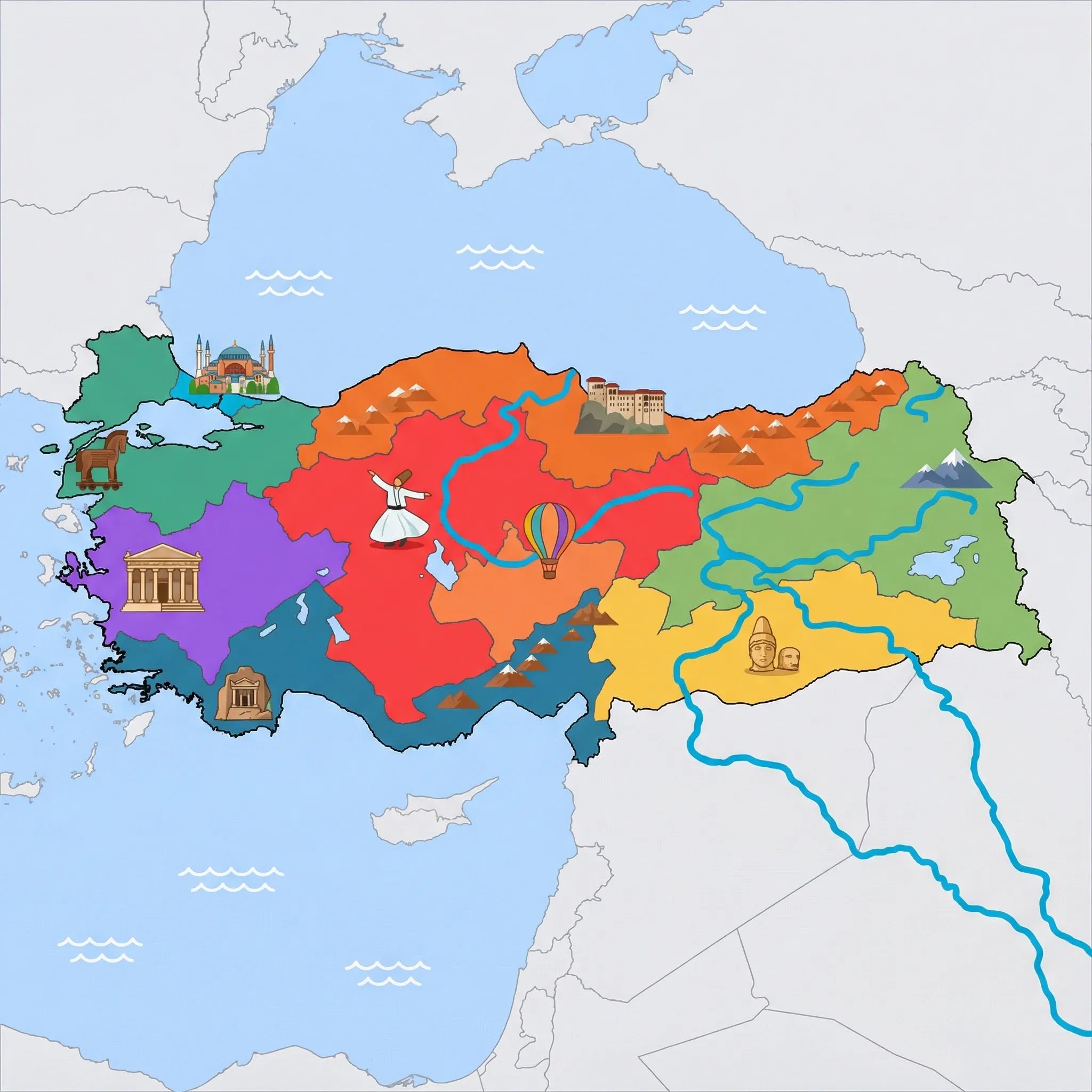
Click a region to explore
The Aegean Coast offers one of the most family-friendly introductions to Turkey, combining a relaxed Mediterranean lifestyle with an open-air museum of antiquity. Stretching from the olive groves of the north down to the chic peninsula of Bodrum, this region is defined by its indented coastline, myriad islands, and a climate that encourages outdoor living. For families, the appeal lies in the variety; one day you might be walking down marble streets walked by Romans, and the next you are splashing in the shallow, warm waters of a sandy bay. The culture here is noticeably laid-back, with a strong emphasis on leisurely dining and evening strolls along palm-lined promenades (known locally as the 'kordon').
Unlike the more humid Black Sea or the intense heat of the south, the Aegean often benefits from the 'meltem' breeze, making summer exploration more bearable for young children. The infrastructure is well-developed for tourism, meaning reliable roads, modern hospitals, and a wide range of accommodation options from family-run pensions in vineyards to high-end all-inclusive resorts. It is a place where history feels accessible rather than stuffy; kids can clamber over fallen columns and see history brought to life, rather than just staring at artifacts behind glass.
Key Attractions
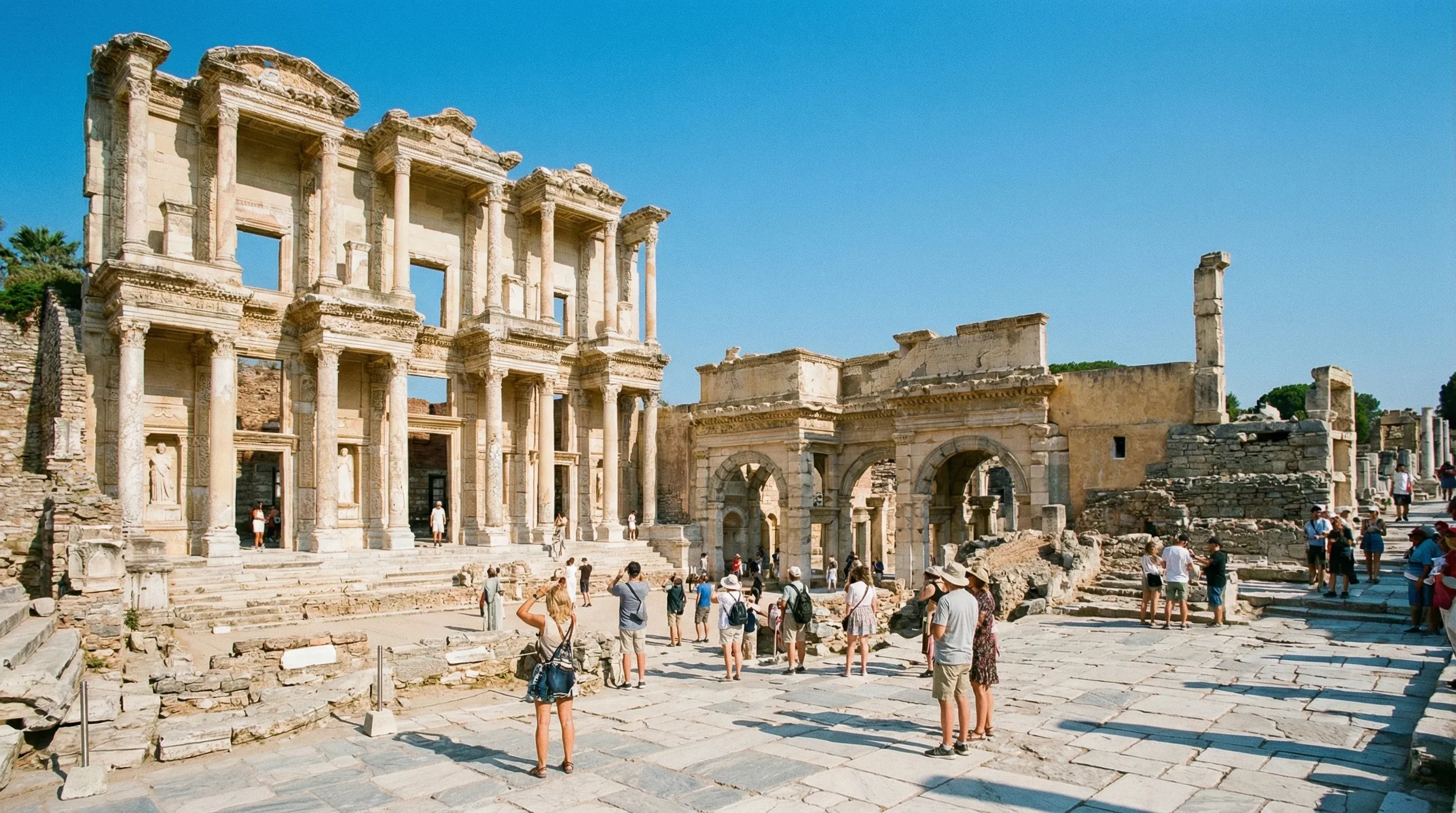
The crown jewel of the region is undoubtedly the Ephesus Archaeological Site near Selçuk. It is one of the best-preserved Roman cities in the Mediterranean. For families, it is an evocative place where imaginations run wild; children can sit in the Great Theatre, count the cats that famously inhabit the ruins, and marvel at the Celsus Library. Just inland, the surreal landscape of Pamukkale and Hierapolis is a must-visit. The white travertine terraces look like a frozen waterfall or a cotton castle, and children love wading in the warm, mineral-rich pools. Within the same complex, the Hierapolis Archaeological Site offers the chance to swim in the Antique Pool (Cleopatra's Pool) above submerged Roman columns—a truly unique snorkeling experience.
For a day dedicated to nature and sea, the Dilek Peninsula-Büyük Menderes Delta National Park near Kuşadası is outstanding. It offers pristine pebbled beaches, wild boars that often wander near the picnic areas (keep food secure!), and clear water perfect for spotting fish. Further south, Iztuzu Beach is not only a beautiful swimming spot but a vital nesting ground for Loggerhead (Caretta Caretta) turtles. Visiting the nearby turtle rehabilitation center is an inspiring educational experience for young conservationists. In historic Bodrum, the Bodrum Castle (housing the Museum of Underwater Archaeology) captivates kids with its shipwrecks and knightly towers.
Practical Advice
The best time to visit is late spring (May-June) or early autumn (September-October) when temperatures are warm but not scorching. July and August can see highs over 35°C (95°F), making midday sightseeing difficult. Renting a car gives families the freedom to explore remote coves, though local minibuses (dolmuş) are a cheap adventure. Many beaches are pebbly, so pack water shoes for the kids.
Food & Drink
Typical meal times: Breakfast is a grand affair served from 8:00 am to 11:00 am. Lunch is typically 12:30 pm to 2:30 pm. Dinner is eaten late, with families often sitting down between 7:30 pm and 9:30 pm.
Typical meal costs: A meal for a family of four in a casual 'lokanta' costs around 1,200–2,000 TRY (approx. $35–60 USD / €32–54 EUR). Seafood dinners in resort towns will be significantly higher.
Dietary requirements: The Aegean diet is plant-heavy and olive oil-based, making it excellent for vegetarians and vegans. Gluten-free travelers should be wary of bulgur wheat, but grilled meats and vegetable dishes (zeytinyağlılar) are safe bets.
Signature dishes:
- Şevketi Bostan – A lamb stew made with blessed thistle and a lemon-egg sauce, unique to the Aegean region.
- Izmir Köfte – Spiced meatballs baked with potatoes, peppers, and tomato sauce, a favorite with children.
- Boyoz – A flaky, oily pastry associated with Izmir, often eaten for breakfast with a boiled egg.
- Kabak Çiçeği Dolması – Delicate squash blossoms stuffed with herbed rice, usually served cold as an appetizer.
Why this score?
While the Carian Trail offers significant trekking opportunities, the region is largely developed with comfortable resort infrastructure and accessible historical sites. Most visitor activity centers on well-maintained beaches and organized tours of ancient ruins.
Why this score?
Izmir is a major metropolitan hub with high-quality private hospitals that cater to international patients, while resort towns like Bodrum have modern clinics with English-speaking staff. Emergency services are well-established, though more specialized care may require travel to Izmir.
Why this score?
This region is a major international draw, anchored by world-famous archaeological sites like Ephesus and Bergama alongside high-end resort towns like Bodrum and Çeşme. It receives millions of visitors annually via international airports in Izmir and Bodrum and remains a primary destination for Mediterranean cruise ships.

While cheaper than Western Europe, the Aegean coast is one of Turkey's pricier regions due to its popularity. Boutique hotels in Alaçatı or Bodrum can be expensive. A mid-range family hotel room costs 2,500–4,500 TRY (approx. $75–130 USD / €68–120 EUR). Entry to major sites like Ephesus is around €40 EUR per adult (priced in Euros for tourists).

Getting Here & Around
Getting Here
- Airports – Adnan Menderes Airport (ADB) in Izmir is the main hub. Milas-Bodrum Airport (BJV) serves the southern resort areas.
- Driving – The region is connected to Istanbul via the O-5 motorway (approx. 4.5 hours to Izmir).
- Ferry – Frequent ferries connect coastal towns like Çeşme, Kuşadası, and Bodrum to nearby Greek islands (Chios, Samos, Kos).
Getting Around
- Car – The most convenient way to beach-hop. Roads are generally good, though coastal drives can be winding.
- Bus – An extensive network of coaches connects major towns. For short hops, look for 'dolmuş' (minibuses).
- Train – A regional train line connects Izmir to Selçuk (for Ephesus Archaeological Site) and Denizli (for Pamukkale Thermal Pools), which is comfortable and cheap.
Nearby Airports (3 airports)
İzmir Adnan Menderes Airport
ADBIzmir
Cardak
DNZDenizli
Zafer Airport
KZRKutahya
View full flight map for Turkey →

Packing List
Many Aegean beaches are pebbly or have sea urchins near rocky areas.
The sun is extremely strong; sunscreen alone often isn't enough for kids in the water.
Coastal areas and river deltas can have mosquitoes in the evenings.
Buying this card saves significant money if visiting Ephesus, Pamukkale, and Troy.
You will frequently remove shoes when entering mosques and private homes; laces become a hassle.
Essential for women and girls to cover heads/shoulders when visiting mosques (men may need to cover knees too).
Strollers struggle on the uneven cobblestones of historic centers and ancient ruins; a carrier is far more practical.
Public restrooms outside major hotels often lack toilet paper; carrying your own supply is a must.
The morning call to prayer is beautiful but loud and starts very early (around 5 am); helpful for light sleepers.

Activities & Best Times

Hiking, wildlife, outdoor exploration, ecotourism
Features world-class long-distance trails like the Carian Trail and diverse national parks such as Dilek Peninsula. Spring and autumn offer the ideal temperate climate for trekking and nature exploration, avoiding the extreme heat of mid-summer and winter rains.

Urban tourism, museums, historical sites, architecture
Boasts globally significant archaeological sites like Ephesus and historic landmarks like Bodrum Castle alongside Izmir's vibrant urban culture. Spring and autumn are the most pleasant for visiting open-air ruins, whereas July and August can be excessively hot for sightseeing.

Sport tourism, fitness activities, active recreation
Excellent infrastructure for cycling via the EuroVelo 8 and organized adventure activities at specialized centers. The region's active sports season is focused on the shoulder months when air temperatures allow for intensive physical exertion.

Amusement parks, family entertainment venues
Hosts major water parks like Adaland and Aqua Fantasy that are highly popular with international families. These venues primarily operate during the warm summer window from June to August, with shoulder months subject to seasonal opening dates.

Beach resorts, marine activities: diving, snorkelling, kite surfing, wind surfing, sailing
Home to high-quality beaches like Ilıca and Altınkum, offering clear waters and established resort infrastructure. Peak season aligns with the warmest sea temperatures from June to September, while winter months are too cool for coastal recreation.

Learning experiences, scientific sites, historical education
Offers specialized learning experiences at the Tales Mathematics Museum and Ege University's Natural History Museum. Visiting conditions are best in the mild transition seasons, as summer temperatures and winter precipitation can affect travel comfort.

Spa retreats, wellness centers, peaceful getaways
Renowned for the unique thermal travertine pools of Pamukkale and Hierapolis. Spring and autumn provide a comfortable balance for outdoor bathing, while mid-summer heat makes the hot springs less inviting for relaxation.

Scenic drives, countryside tours, route-based travel
Features celebrated scenic drives along the Datça Peninsula and the North Aegean Olive Coast. Optimal driving conditions occur in late spring and early autumn when visibility is high and landscapes are most vibrant.

Events, celebrations, seasonal attractions
Anchored by the International Izmir Festival in June and the unique Selçuk Efes Camel Wrestling in January. These specific months draw international interest, though the festival calendar is not as dense as in major European capitals.

Winter sports, ski resorts, snow activities
Regional ski centers like Denizli and Bozdağ provide modest winter sports options for local travelers but lack international-scale infrastructure. Snow coverage is most reliable in January and February, with very limited windows outside mid-winter.

Attractions (22 total)



Public Holidays & Calendar Next 12 months
Public holidays, festivals, cultural celebrations, and seasonal natural phenomena coming up in Aegean Coast over the next 12 months.
Loading holidays and events...

Travel Advisory
All major agencies maintain a consensus that travelers should exercise a high degree of vigilance country-wide. This assessment is driven by persistent terrorism risks and potential for civil unrest. Extreme regional risks (L3) exist near the borders, but the national level remains L1.
Safety Topics
Traveller Advice (4 groups)

Climbing Mount Ararat requires a special military permit obtained months in advance. Trekking in remote areas of the southeast is dangerous due to ongoing security operations and the risk of being caught in military zones.

Homosexuality is not illegal, but social acceptance varies widely. Public events like pride marches are frequently banned by local authorities, and travelers may encounter discrimination or social stigma.

Female travelers have reported incidents of harassment and sexual assault in tourist zones. It is recommended to remain alert when traveling alone and to dress modestly, particularly in rural areas or when visiting religious sites.

Ensure passports are valid for at least six months from the date of entry. Maintain a high level of situational awareness in crowded public spaces, transportation hubs, and locations frequented by Westerners.
Agency Summaries
Heightened vigilance is recommended because of terrorism concerns and the risk of arbitrary detentions. Security forces have previously held foreign nationals on politically motivated grounds. Avoid the border regions with Syria and Iraq entirely, as well as the provinces of Sirnak and Hakkari.
There is a heightened risk of terrorism in major cities and tourist locations. Travelers should stay informed of local events and avoid protests. Extreme caution or avoidance is necessary for southeastern provinces and areas bordering Syria.
Vigilance is required throughout the country, particularly in major urban centers like Istanbul and Ankara, where terrorist attacks have occurred. The situation in the southeast is serious, and travel to within 10km of the Syrian border is strongly discouraged.
Travelers should remain vigilant across the country due to the threat of terrorist activity and the potential for public demonstrations. Particular danger exists in the southeastern provinces, especially near the borders with Syria and Iraq, where all travel is discouraged due to volatile security and military activity.
While most of the country is accessible, there is a significant risk of terrorism and regional instability. Specific warnings are in place for the Syrian border area. Recent regional escalations in the Middle East have led to increased security monitoring and potential travel disruptions.
An elevated level of caution is advised due to the persistent threat of terrorism. Travelers should monitor regional tensions following military actions in the Middle East, as these can affect flight availability and security. Avoid large gatherings and demonstrations which may turn violent.
Information is provided for general guidance only and does not constitute travel, safety, medical, or legal advice. Conditions may change. Users are responsible for independently verifying information before travel.