
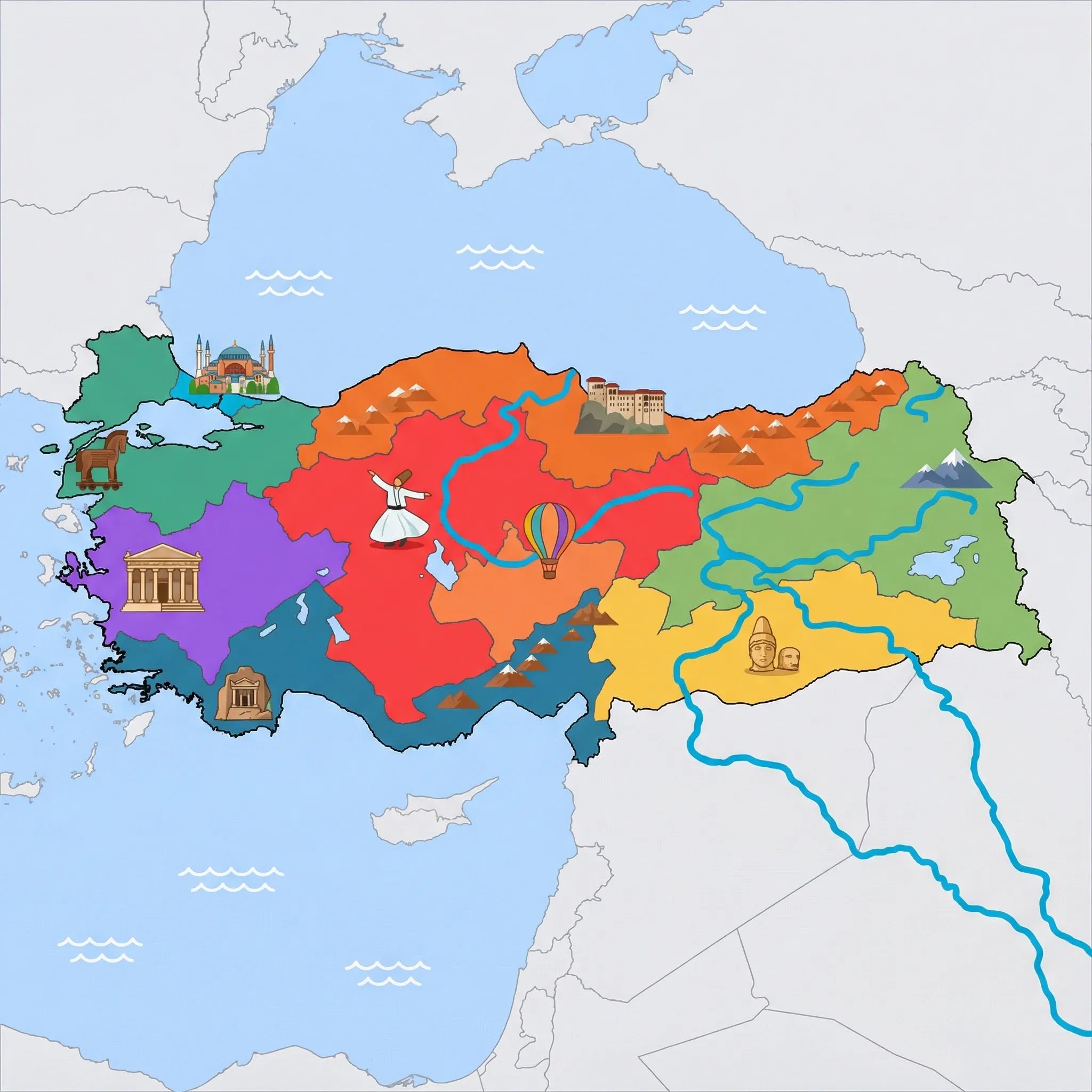
Click a region to explore
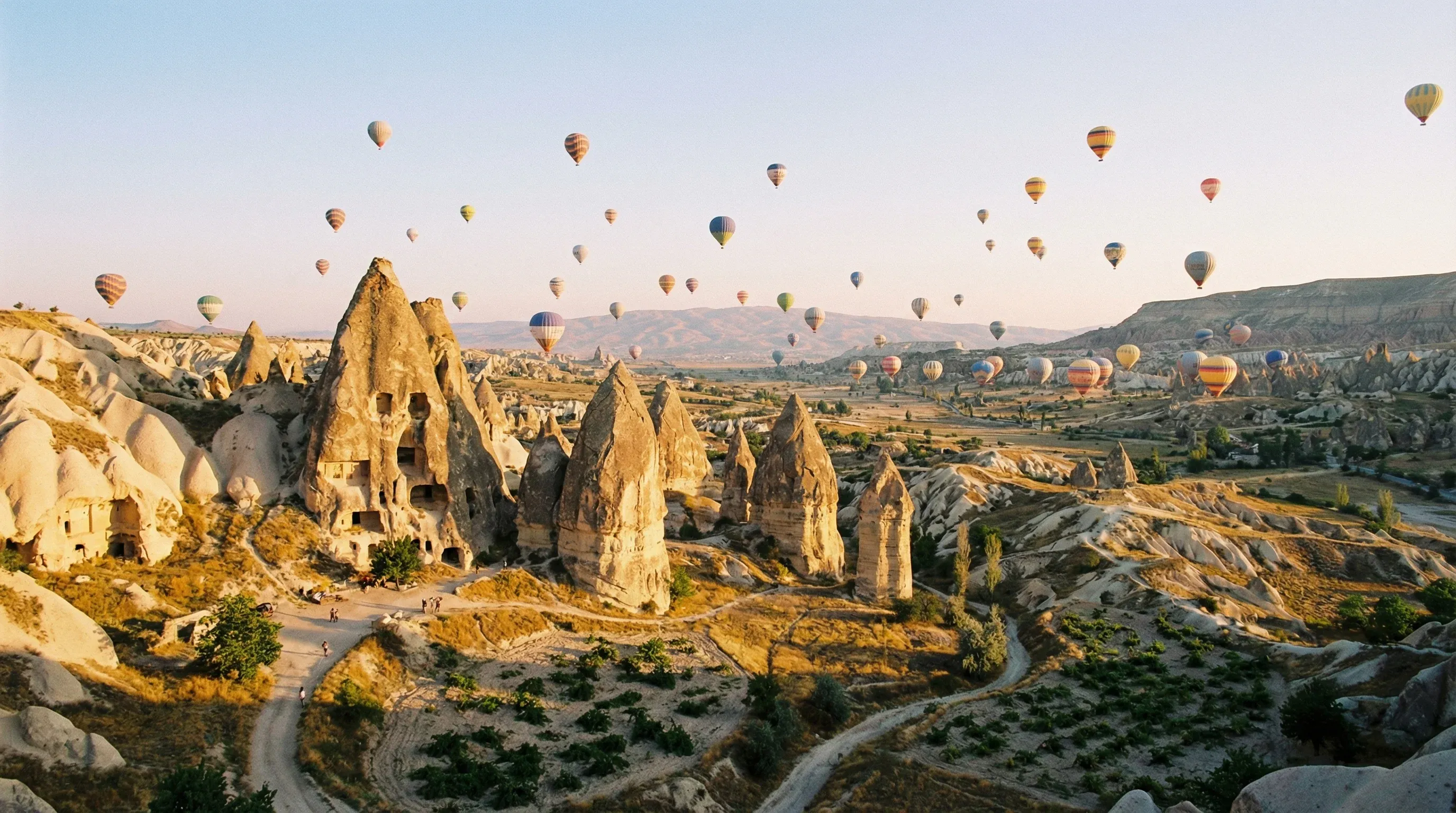
Cappadocia is arguably one of the most exciting destinations on the planet for children. The landscape, formed by ancient volcanic eruptions and erosion, looks like the surface of the moon or a set from Star Wars. Here, geology becomes a playground. The famous 'fairy chimneys'—tall, cone-shaped rock formations—dot the valleys, and for centuries, locals have carved homes, churches, and entire cities into the soft stone. The novelty of staying in a 'cave hotel' is a huge thrill for kids, offering a cozy, flintstones-esque experience with modern comforts.
Beyond the novelty accommodation, the region is set up for adventure. The valleys are crisscrossed with hiking trails that are manageable for active children, often leading to hidden tunnels and abandoned rock houses they can explore. It is a safe, compact region where the main towns are close together. The highlight for many is the sight of hundreds of hot air balloons rising at sunrise—even if you don't fly (it is expensive and has age limits, usually 6+), watching them from a rooftop terrace is magical. The region also offers pottery workshops in Avanos and horse riding tours, adding to the hands-on appeal for families.
Key Attractions
The Göreme Open Air Museum is the essential starting point. It is a UNESCO World Heritage site containing the finest rock-cut churches with colorful frescoes. It is walkable and fascinating, though strollers struggle on the uneven paths. For a true adventure, head underground. The Derinkuyu Underground City and Kaymaklı Underground City are vast subterranean complexes where thousands of people once hid. Navigating the narrow, low tunnels is like exploring a secret maze—kids love it, though it can be claustrophobic for some adults.
Above ground, Uçhisar Castle is the highest point in the region. It is a giant rock perforated with rooms and tunnels; the climb to the top offers the best panorama of Cappadocia. For a nature walk, the Ihlara Valley is a lush, green canyon with a river running through it. It is a cooling break from the dusty plains, where you can hike along the riverbank and pop into rock churches carved into the canyon walls. The Zelve Open Air Museum is another favorite—it was an inhabited village until the 1950s and feels more like a ghost town that kids can scramble around freely.
Practical Advice
The best times to visit are spring and autumn. Winters are snowy and magical but cold; summers are hot and dry. If you plan to fly in a balloon, book months in advance. Wear shoes with good grip, as the volcanic rock can be slippery (sandy) on slopes.
Food & Drink
Typical meal times: Lunch 12:00 pm to 2:00 pm, Dinner 7:00 pm to 9:30 pm. Restaurants are very used to tourists and offer flexible hours.
Typical meal costs: Tourist-focused but good value. A family dinner costs 1,500–2,500 TRY (approx. $45–75 USD / €40–68 EUR).
Dietary requirements: Very easy. Tourist restaurants cater to all diets. Local dishes are often vegetable-rich.
Signature dishes:
- Testi Kebabı (Pottery Kebab) – Meat and veg slow-cooked in a sealed clay pot. The waiter cracks the pot open at your table with a hammer/knife—great theater!
- Mantı – Tiny Turkish dumplings topped with garlic yogurt and spiced butter.
- Aside – A local dessert made from grape molasses, flour, and butter, often served warm.
Why this score?
The landscape offers surreal hiking through valleys and exploration of deep underground cities, providing a sense of discovery. However, the region is highly managed with paved paths and structured tours, keeping the physical challenge moderate for most families.
Why this score?
The local towns of Göreme and Ürgüp have medical clinics used to treating tourists for minor issues, while nearby Nevşehir offers more comprehensive care. For serious emergencies, international patients are often stabilized and transferred to larger facilities in Kayseri or Ankara.
Why this score?
Cappadocia is an iconic global destination famous for its unique geological formations and hot air ballooning, attracting a high volume of international travelers year-round. The concentration of cave hotels and UNESCO-listed open-air museums in Göreme and Ürgüp creates a dense tourism corridor comparable to other top-tier global sites.

Accommodation prices vary wildly from budget hostels to luxury caves. A mid-range cave hotel family suite is roughly 3,500–6,000 TRY (approx. $100–175 USD / €95–160 EUR). Balloon flights are the big expense, often €200–300 EUR per person.

Getting Here & Around
Getting Here
- Airports – Nevşehir Kapadokya (NAV) is closer, but Kayseri (ASR) has more flight options. Both are under an hour from the main towns.
- Bus – Overnight buses from Istanbul or Antalya are popular but tiring for young kids.
Getting Around
- Car – Highly recommended for flexibility. You can easily drive to Derinkuyu Underground City or the Ihlara Valley.
- Tours – The region is famous for 'Red Tour' and 'Green Tour' group options which cover the main sights efficiently.
- Walking – The valleys around Göreme are best explored on foot.
Nearby Airports (2 airports)
Erkilet
ASRKayseri
Kapadokya
NAVNevsehir
View full flight map for Turkey →
Official Links

Packing List
The 'tuff' rock is dusty and slippery; flip-flops are dangerous on trails.
Valleys can be very dusty in summer, especially if hiking or riding ATVs.
Mornings (for balloon watching) are surprisingly cold, even in August.
The climate is extremely dry (continental) and dehydrates skin quickly.
You will frequently remove shoes when entering mosques and private homes; laces become a hassle.
Many beaches on the Turquoise Coast are pebbly or have rocky entries that can hurt little feet.
Essential for women and girls to cover heads/shoulders when visiting mosques (men may need to cover knees too).
Strollers struggle on the uneven cobblestones of historic centers and ancient ruins; a carrier is far more practical.
Public restrooms outside major hotels often lack toilet paper; carrying your own supply is a must.
The morning call to prayer is beautiful but loud and starts very early (around 5 am); helpful for light sleepers.

Activities & Best Times

Hiking, wildlife, outdoor exploration, ecotourism
World-class lunar landscapes, fairy chimneys, and cave dwellings offer a unique immersion in nature, complemented by iconic hot air ballooning. Peak months offer ideal temperatures for valley hiking and consistent flight conditions, while winter cold and wind frequently ground balloons and block trails.

Urban tourism, museums, historical sites, architecture
Rich Byzantine history and unique troglodyte architecture are preserved in sites like Göreme Open Air Museum and the Derinkuyu underground city. Spring and autumn provide the best walking weather for exploring these heritage sites, whereas winter temperatures make the unheated stone structures uncomfortable for families.

Sport tourism, fitness activities, active recreation
Internationally recognized for technical mountain biking trails and horseback riding through the Red and Rose valleys. Conditions are optimal in the mild shoulder seasons; summer heat can be intense for high-output sports, and winter ice makes many steep valley routes hazardous.

Spa retreats, wellness centers, peaceful getaways
Authentic Turkish hamam culture and regional thermal springs provide a restorative experience alongside luxury cave-hotel spas. Peak visitation aligns with the warmer months when the contrast between hot days and cool evenings enhances the spa experience, while deep winter reduces the appeal of travel to outlying thermal sites.

Scenic drives, countryside tours, route-based travel
Spectacular scenic drives connect the Ihlara Valley and various underground cities through dramatic volcanic landscapes. Clear visibility and dry roads in spring and autumn are ideal for touring, while winter snow and fog can significantly obscure the region's famous panoramic views.

Learning experiences, scientific sites, historical education
Kayseri's science and natural history museums provide structured learning opportunities for families exploring the region's geology. These facilities are primarily regional draws, best visited during the main tourism window when travel between Nevşehir and Kayseri is easiest.

Events, celebrations, seasonal attractions
Events like the Cappadocia Hot Air Balloon Festival and Cappadox offer unique cultural and visual spectacles. These are strictly seasonal summer/late-spring events, with almost no international-level festival activity occurring during the cold, windy winter months.

Winter sports, ski resorts, snow activities
Mount Erciyes offers modern ski infrastructure within reach of the Cappadocia region for a winter day-trip. The season is relatively short, peaking in mid-winter when snow cover is most reliable, but it remains a secondary activity for most international visitors.

Attractions (12 total)



Public Holidays & Calendar Next 12 months
Public holidays, festivals, cultural celebrations, and seasonal natural phenomena coming up in Cappadocia over the next 12 months.
Loading holidays and events...

Travel Advisory
All major agencies maintain a consensus that travelers should exercise a high degree of vigilance country-wide. This assessment is driven by persistent terrorism risks and potential for civil unrest. Extreme regional risks (L3) exist near the borders, but the national level remains L1.
Safety Topics
Traveller Advice (4 groups)
Climbing Mount Ararat requires a special military permit obtained months in advance. Trekking in remote areas of the southeast is dangerous due to ongoing security operations and the risk of being caught in military zones.

Homosexuality is not illegal, but social acceptance varies widely. Public events like pride marches are frequently banned by local authorities, and travelers may encounter discrimination or social stigma.

Female travelers have reported incidents of harassment and sexual assault in tourist zones. It is recommended to remain alert when traveling alone and to dress modestly, particularly in rural areas or when visiting religious sites.

Ensure passports are valid for at least six months from the date of entry. Maintain a high level of situational awareness in crowded public spaces, transportation hubs, and locations frequented by Westerners.
Agency Summaries
Heightened vigilance is recommended because of terrorism concerns and the risk of arbitrary detentions. Security forces have previously held foreign nationals on politically motivated grounds. Avoid the border regions with Syria and Iraq entirely, as well as the provinces of Sirnak and Hakkari.
There is a heightened risk of terrorism in major cities and tourist locations. Travelers should stay informed of local events and avoid protests. Extreme caution or avoidance is necessary for southeastern provinces and areas bordering Syria.
Vigilance is required throughout the country, particularly in major urban centers like Istanbul and Ankara, where terrorist attacks have occurred. The situation in the southeast is serious, and travel to within 10km of the Syrian border is strongly discouraged.
Travelers should remain vigilant across the country due to the threat of terrorist activity and the potential for public demonstrations. Particular danger exists in the southeastern provinces, especially near the borders with Syria and Iraq, where all travel is discouraged due to volatile security and military activity.
While most of the country is accessible, there is a significant risk of terrorism and regional instability. Specific warnings are in place for the Syrian border area. Recent regional escalations in the Middle East have led to increased security monitoring and potential travel disruptions.
An elevated level of caution is advised due to the persistent threat of terrorism. Travelers should monitor regional tensions following military actions in the Middle East, as these can affect flight availability and security. Avoid large gatherings and demonstrations which may turn violent.
Information is provided for general guidance only and does not constitute travel, safety, medical, or legal advice. Conditions may change. Users are responsible for independently verifying information before travel.