
Central Anatolia
The heart of the nation: Salt lakes, modern cities, and ancient roots 🇹🇷🌾
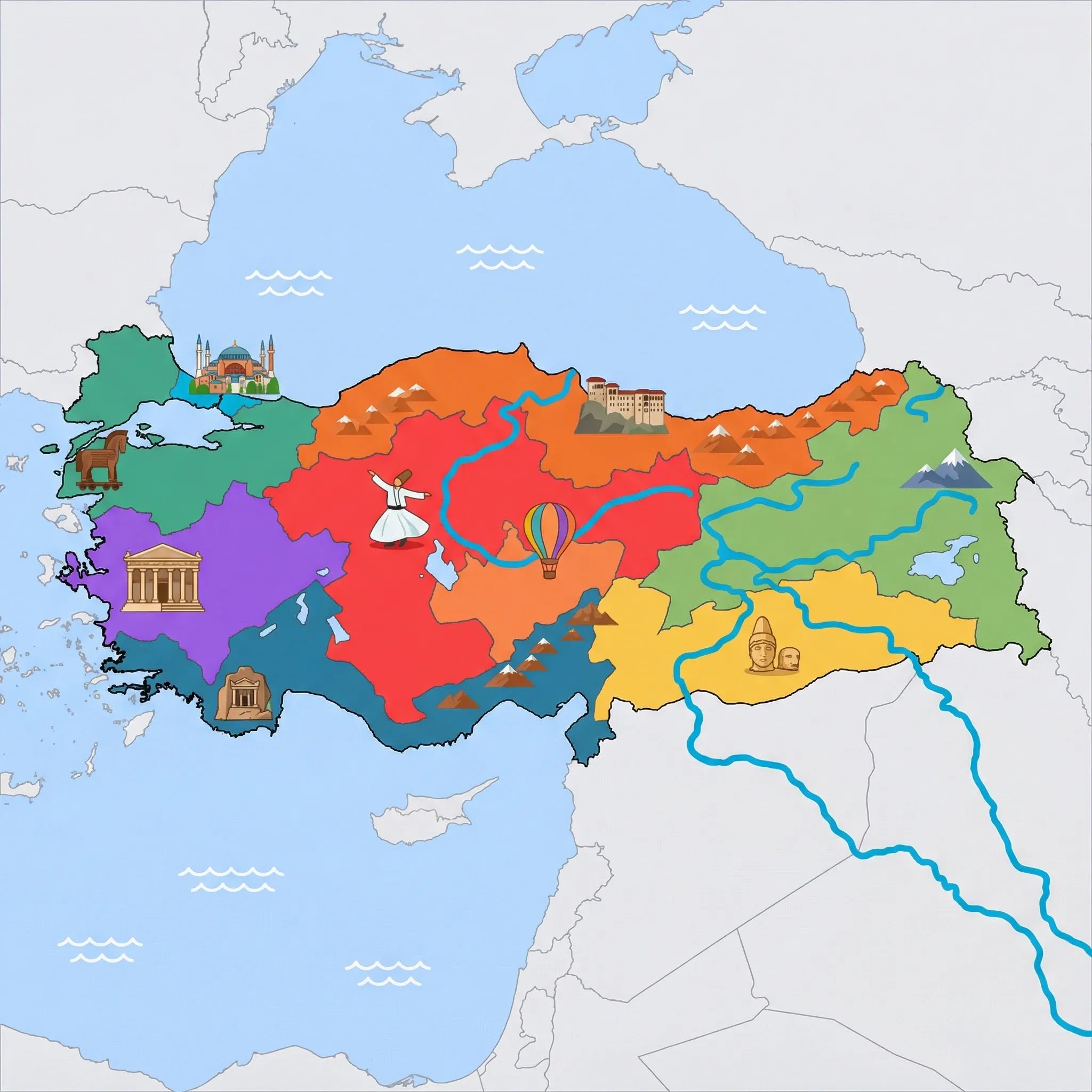
Click a region to explore
Central Anatolia is often overlooked by tourists rushing to the coast or Cappadocia, but it holds surprising gems for families who take the time to explore. This is the vast, rolling steppe of the Anatolian plateau—the breadbasket of the nation and the cradle of civilizations like the Hittites and Phrygians. At its center lies Ankara, the capital city. Far from being just a bureaucratic hub, Ankara is home to world-class museums and massive parks. It offers a glimpse into modern Turkish life that resort towns cannot provide.
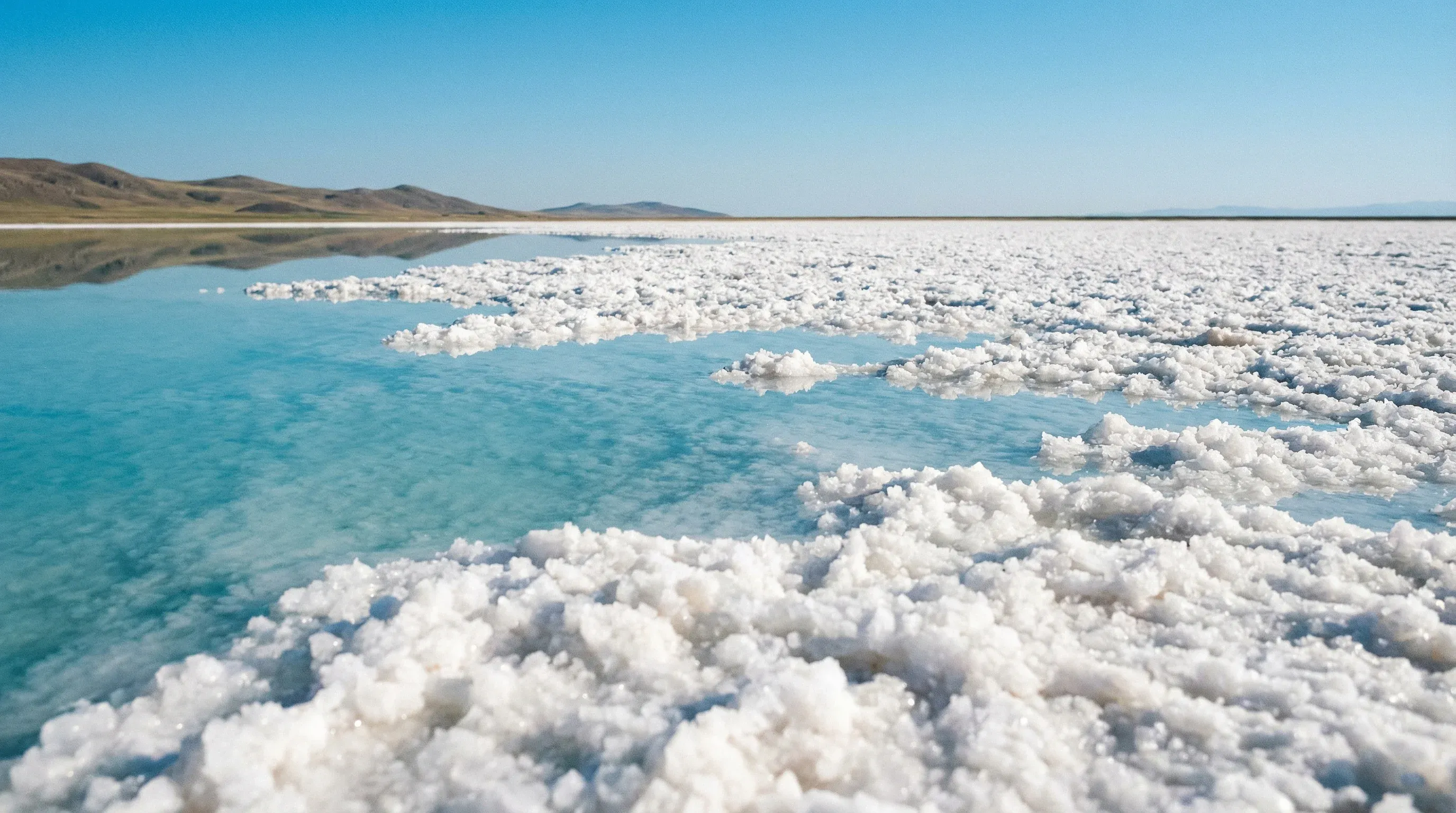
To the west of Ankara lies Eskişehir, often called the most family-friendly city in Turkey. With its Venetian-style canals, massive parks, and fairytale castles, it is designed for children. To the south is Konya, a city of deep spirituality and the home of the Whirling Dervishes. The landscape between these cities is dramatic in its emptiness, punctuated by the blinding white expanse of Tuz Gölü (Salt Lake). The region is connected by excellent high-speed trains, making travel between these major hubs comfortable and easy for families.
Key Attractions
In Ankara, Anıtkabir (the mausoleum of Atatürk) is not just a monument but a massive complex with a museum that brings the country's war of independence to life (with changing of the guard ceremonies that kids enjoy). The Ankara Castle (Citadel) offers a labyrinth of old streets and great views. But the real surprise is Eskişehir. Here, the Sazova Science, Culture and Art Park is a masterpiece—it features a full-scale pirate ship, a fairytale castle, a zoo, and an interactive science center. It is arguably the best municipal park in the country.
For a unique natural experience, Tuz Gölü (Salt Lake) is unmissable. In summer, the water evaporates leaving a thick crust of salt that you can walk on—it looks like a frozen lake but is hot to the touch. It makes for incredible perspective-bending photos. In Konya, the Konya Tropical Butterfly Garden is a colorful, heated dome filled with thousands of butterflies, a perfect contrast to the arid steppe outside. History buffs should visit the Gordion Museum and Midas Tumulus to see the tomb of King Midas (he of the golden touch).
Practical Advice
The climate is continental: hot, dry summers and cold, snowy winters. Spring is the greenest and most pleasant time. The high-speed train (YHT) connects Istanbul, Ankara, Eskişehir, and Konya, and is the best way to travel.
Food & Drink
Typical meal times: Lunch 12:00 pm to 2:00 pm. Dinner 7:00 pm to 9:00 pm.
Typical meal costs: Ankara and Eskişehir have options for all budgets. A family meal is around 1,200–2,000 TRY (approx. $35–60 USD / €32–54 EUR).
Dietary requirements: Standard Turkish cuisine rules apply. Wheat (bread/bulgur) is a staple.
Signature dishes:
- Etli Ekmek – Konya's version of pizza; a very long, thin flatbread topped with minced meat.
- Çibörek – A deep-fried, moon-shaped pastry filled with raw minced meat that cooks instantly in the oil. A Tatar specialty famous in Eskişehir.
- Ankara Tava – A pilaf dish made with orzo pasta and lamb, traditionally unique to the capital.
Why this score?
The terrain is a high, flat plateau that is largely developed and agriculturally intensive, offering few rugged outdoor opportunities for families. Activities are primarily cultural and urban, with well-connected highways and modern infrastructure making travel very straightforward.
Why this score?
Ankara is a premier medical hub in Turkey, featuring top-tier university hospitals and private medical groups with many Western-trained, English-speaking specialists. The quality of care and accessibility for foreigners in the capital is among the best in the country.
Why this score?
Despite housing the capital city of Ankara and the spiritual center of Konya, the region is often treated as a transit zone or business destination rather than a leisure tourism primary target. Beyond the Phrygian Valley and Anıtkabir, international visitor numbers remain modest compared to the coast.

Eskişehir and Ankara offer great value compared to the coast. A modern hotel in Eskişehir costs 2,000–3,500 TRY (approx. $60–100 USD / €54–95 EUR). Museums are often state-run and inexpensive.

Getting Here & Around
Getting Here
- Airports – Ankara Esenboğa (ESB) is a major international hub. Konya (KYA) also has flights.
- Train – The YHT high-speed train connects Istanbul to Eskişehir (3 hrs) and Ankara (4.5 hrs). This is the most comfortable option for families.
Getting Around
- Train – Excellent high-speed links between Ankara, Konya, and Eskişehir.
- Car – Useful if visiting Tuz Gölü (Salt Lake) or Gordion, which are outside the cities.
- Public Transport – Ankara and Eskişehir have good metro/tram systems.
Nearby Airports (4 airports)
Anadolu Airport
AOEEskisehir
Ankara Esenboğa Airport
ESBAnkara
Konya
KYAKonya
Sivas
VASSivas
View full flight map for Turkey →
Official Links

Packing List
The glare from the white Salt Lake (Tuz Gölü) is intense and blinding.
The central plateau is very dry; skin cracks easily.
Eskişehir's parks are massive and perfect for sitting on the grass.
For wiping off salt after walking barefoot in Tuz Gölü (there are no showers).
You will frequently remove shoes when entering mosques and private homes; laces become a hassle.
Many beaches on the Turquoise Coast are pebbly or have rocky entries that can hurt little feet.
Essential for women and girls to cover heads/shoulders when visiting mosques (men may need to cover knees too).
Strollers struggle on the uneven cobblestones of historic centers and ancient ruins; a carrier is far more practical.
Public restrooms outside major hotels often lack toilet paper; carrying your own supply is a must.
The morning call to prayer is beautiful but loud and starts very early (around 5 am); helpful for light sleepers.

Activities & Best Times

Hiking, wildlife, outdoor exploration, ecotourism
Offers unique geological landscapes like Tuz Gölü and historical trekking routes such as the Phrygian and Hittite Ways. Spring and autumn provide ideal temperatures for hiking, whereas the central plateau experiences extreme cold in winter and dry heat in mid-summer.

Urban tourism, museums, historical sites, architecture
Home to world-class museums in Ankara and the spiritual heart of the Mevlevi Order in Konya. Peak periods align with comfortable walking weather, while summer heat and winter frost can make urban exploration less pleasant for families.

Learning experiences, scientific sites, historical education
Features internationally significant science centers and natural history museums in Ankara and Konya. These indoor facilities are excellent for families year-round, though peak visitation avoids the mid-summer heat when travel is uncomfortable.

Spa retreats, wellness centers, peaceful getaways
Rich in historic Roman and Seljuk thermal baths with therapeutic hot springs in areas like Kızılcahamam. The experience is most authentic and restorative during the cold winter months, whereas thermal bathing is less popular in the summer heat.

Scenic drives, countryside tours, route-based travel
Features dramatic, open-road scenery across the salt flats and ancient Phrygian valleys. Ideal visibility and road safety are highest in spring and autumn; winter brings risk of ice and fog on the high plateau.

Winter sports, ski resorts, snow activities
Mount Erciyes is a high-altitude volcanic peak offering modern infrastructure and reliable snow coverage for families. The season is strictly limited to the winter window when sub-zero temperatures maintain the ski base.

Sport tourism, fitness activities, active recreation
Boasts well-established long-distance hiking and cycling infrastructure through the Phrygian Valley and Cappadocia-adjacent trails. Activity is best in transitional seasons to avoid the plateau's extreme temperature swings.

Amusement parks, family entertainment venues
Eskişehir's Sazova Park offers a creative, high-quality experience for families, alongside several significant water parks. These are primarily outdoor summer attractions that close or become unappealing during the region's cold months.

Beach resorts, marine activities: diving, snorkelling, kite surfing, wind surfing, sailing
Unique but limited options including the salt-crust shores of Tuz Gölü and artificial urban beaches. These provide seasonal recreation for locals but lack the international standing of Turkey's coastal resorts.

Events, celebrations, seasonal attractions
Primarily anchored by the internationally significant Seb-i Arus festival in December. Outside of this specific cultural window, the region has fewer festivals that draw global family travelers.

Attractions (29 total)



Public Holidays & Calendar Next 12 months
Public holidays, festivals, cultural celebrations, and seasonal natural phenomena coming up in Central Anatolia over the next 12 months.
Loading holidays and events...

Travel Advisory
All major agencies maintain a consensus that travelers should exercise a high degree of vigilance country-wide. This assessment is driven by persistent terrorism risks and potential for civil unrest. Extreme regional risks (L3) exist near the borders, but the national level remains L1.
Safety Topics
Traveller Advice (4 groups)

Climbing Mount Ararat requires a special military permit obtained months in advance. Trekking in remote areas of the southeast is dangerous due to ongoing security operations and the risk of being caught in military zones.

Homosexuality is not illegal, but social acceptance varies widely. Public events like pride marches are frequently banned by local authorities, and travelers may encounter discrimination or social stigma.

Female travelers have reported incidents of harassment and sexual assault in tourist zones. It is recommended to remain alert when traveling alone and to dress modestly, particularly in rural areas or when visiting religious sites.

Ensure passports are valid for at least six months from the date of entry. Maintain a high level of situational awareness in crowded public spaces, transportation hubs, and locations frequented by Westerners.
Agency Summaries
Heightened vigilance is recommended because of terrorism concerns and the risk of arbitrary detentions. Security forces have previously held foreign nationals on politically motivated grounds. Avoid the border regions with Syria and Iraq entirely, as well as the provinces of Sirnak and Hakkari.
There is a heightened risk of terrorism in major cities and tourist locations. Travelers should stay informed of local events and avoid protests. Extreme caution or avoidance is necessary for southeastern provinces and areas bordering Syria.
Vigilance is required throughout the country, particularly in major urban centers like Istanbul and Ankara, where terrorist attacks have occurred. The situation in the southeast is serious, and travel to within 10km of the Syrian border is strongly discouraged.
Travelers should remain vigilant across the country due to the threat of terrorist activity and the potential for public demonstrations. Particular danger exists in the southeastern provinces, especially near the borders with Syria and Iraq, where all travel is discouraged due to volatile security and military activity.
While most of the country is accessible, there is a significant risk of terrorism and regional instability. Specific warnings are in place for the Syrian border area. Recent regional escalations in the Middle East have led to increased security monitoring and potential travel disruptions.
An elevated level of caution is advised due to the persistent threat of terrorism. Travelers should monitor regional tensions following military actions in the Middle East, as these can affect flight availability and security. Avoid large gatherings and demonstrations which may turn violent.
Information is provided for general guidance only and does not constitute travel, safety, medical, or legal advice. Conditions may change. Users are responsible for independently verifying information before travel.