
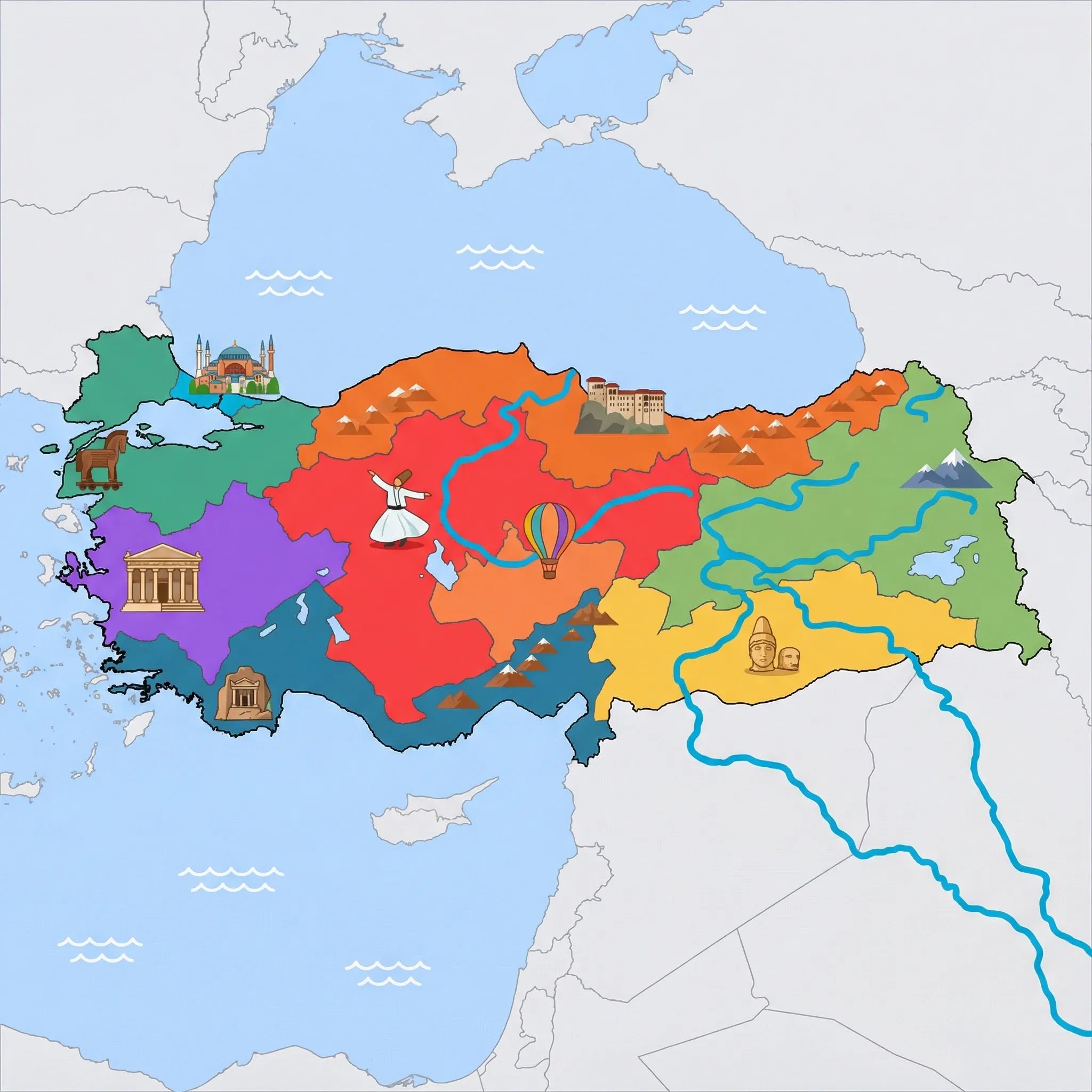
Click a region to explore
⚠️ SAFETY WARNING: Due to the potential for regional instability and proximity to sensitive borders, government agencies (including the CA, USA, and UK) advise travelers to exercise increased caution or reconsider travel to parts of this region. Specifically, travelers should avoid Hakkari and Tunceli provinces and any areas near the Iranian or Iraqi borders. Families are strongly urged to consult their own government's official travel advisory before considering a trip, as circumstances and risk assessments vary.
For families who do visit the safer hubs of Eastern Anatolia (such as Erzurum, Kars, and Van), the reward is a landscape of epic proportions. This is the roof of Turkey, a high-altitude plateau where winter lasts for months and history feels ancient and raw. It is a destination for the adventurous—those who want to ride the Eastern Express train through snowy gorges or see castles that look like they belong in 'Game of Thrones'. The scale of nature here dwarfs everything else; mountains are higher, skies are bigger, and the distances are vast.
Culturally, this region is a melting pot of Turkish, Kurdish, Armenian, and Caucasian influences. In winter, it becomes a wonderland where horse-drawn sleighs glide over frozen lakes. In summer, the green pastures are dotted with nomadic tents and herds of sheep. While infrastructure is less developed than in the west, the hospitality is legendary. A visit here teaches children about the Silk Road, harsh climates, and the diverse tapestry of Anatolian history.
Key Attractions
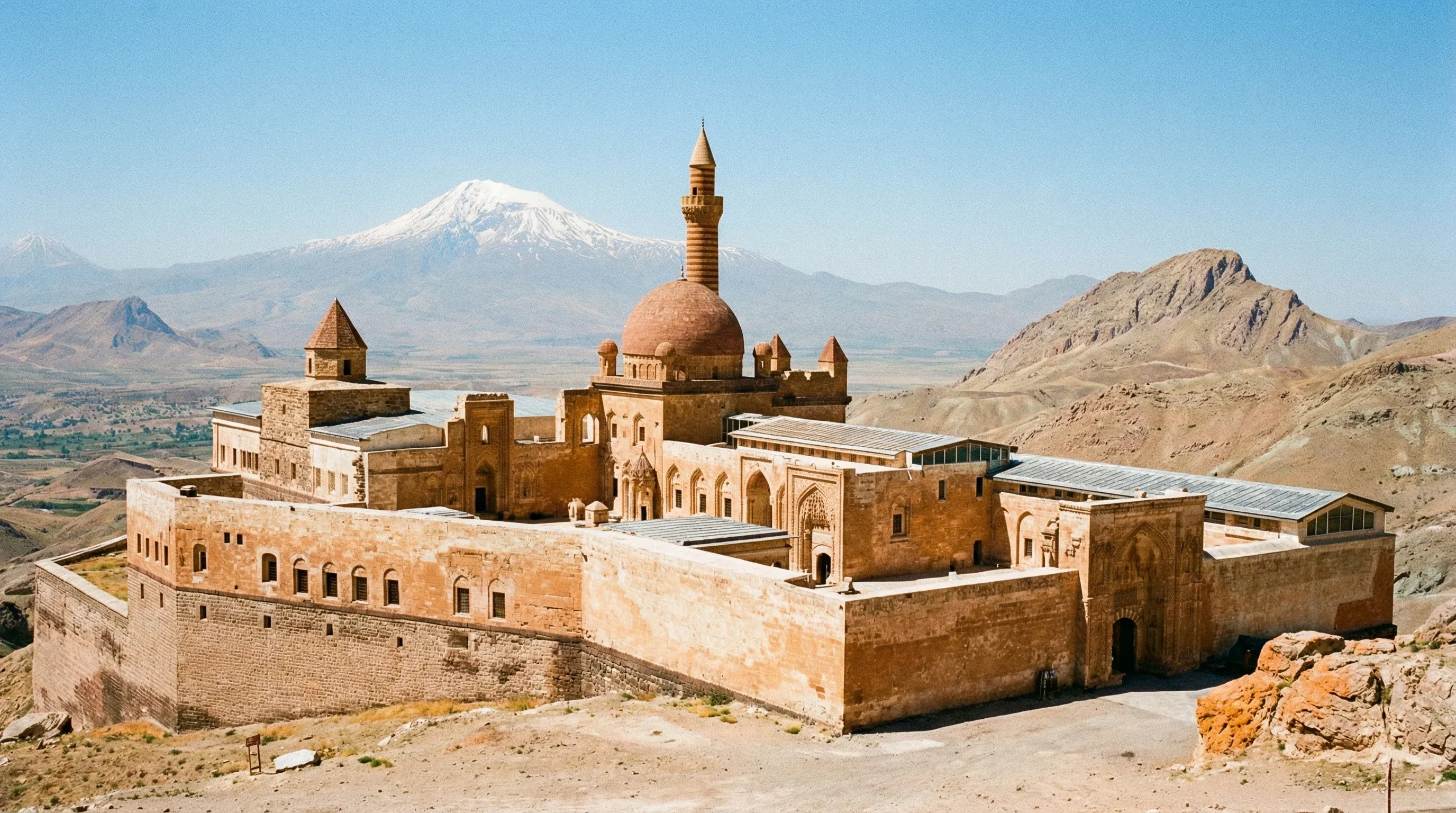
The Ishak Pasha Palace near Doğubayazit is a fairytale structure sitting on a hill against a backdrop of rugged mountains. Its mix of Ottoman, Persian, and Seljuk architecture is stunning, and kids love exploring the vast courtyards (though it is near the border, so check safety advice). Dominating the skyline is Mount Ararat, the legendary resting place of Noah's Ark. While climbing it is for serious mountaineers, the views from the foothills in Mount Ararat National Park are breathtaking.
In winter, Lake Çıldır near Kars freezes over completely. Families can take horse-drawn sleigh rides across the ice and watch fishermen break holes to catch fish—a magical experience. In Van, a boat trip to Akdamar Island and Church is a highlight; the 10th-century church is covered in stone carvings of animals that children enjoy spotting. Erzurum's Double Minaret Madrasa is a masterpiece of Seljuk stone carving in the city center.
Practical Advice
Winter (December-March) is the most atmospheric time but requires serious cold-weather gear (temps can drop to -30°C). Summer is pleasant and mild. This is a vast region; sticking to organized tours or hiring a driver is often safer and easier than self-driving for tourists unfamiliar with the terrain.
Food & Drink
Typical meal times: Standard Turkish times apply, though dinner may be earlier in winter due to early sunset.
Typical meal costs: Very affordable. A hearty meal costs 800–1,400 TRY (approx. $23–40 USD / €21–37 EUR).
Dietary requirements: This is meat country. Vegetarians may struggle to find variety beyond salad, cheese, and bread.
Signature dishes:
- Cağ Kebabı – The ancestor of döner kebab; lamb marinated and roasted horizontally over a wood fire. A must-try in Erzurum.
- Van Breakfast (Van Kahvaltısı) – A legendary breakfast spread with dozens of small dishes, famous across the country.
- Goose (Kaz) – Roasted goose with rice is the specialty of Kars, especially in winter.
Why this score?
With Mount Ararat, high-altitude plateaus, and long distances between settlements, this is Turkey's most rugged region. The terrain is challenging, infrastructure is sparse in rural areas, and the Eastern Express train journey provides a true sense of remote exploration.
Why this score?
Hospitals in Erzurum and Van provide essential services, but the region faces significant language barriers and limited resources for international visitors. In remote mountain areas, emergency access can be difficult and medical infrastructure is extremely basic.
Why this score?
This remote frontier region receives very few foreign tourists due to its distance from major hubs and harsh winter climate. While sites like the ruins of Ani and Lake Van are historically significant, they remain emerging destinations for niche travelers rather than mainstream families.

Costs are significantly lower than in western Turkey. A good hotel in Kars or Van costs 1,500–2,500 TRY (approx. $45–75 USD / €40–68 EUR). Transport and food are very cheap.

Getting Here & Around
Getting Here
- Airports – Erzurum (ERZ), Kars (KSY), and Van (VAN) all have domestic flights from Istanbul/Ankara.
- Train – The 'Eastern Express' (Doğu Ekspresi) is a famous scenic train ride from Ankara to Kars (24+ hours). Tickets sell out instantly.
Getting Around
- Car/Driver – Distances are huge. Hiring a car with a driver is recommended for safety and ease.
- Tour – Organized small-group tours are the best way to navigate the region safely.
Nearby Airports (11 airports)
Agri
AJIAgri
Bingol Airport
BGGBingol
Erzincan
ERCErzincan
Erzurum
ERZErzurum
Elazig
EZSElazig
Igdir Airport
IGDIgdir
Kars Airport
KSYKars
Erhac
MLXMalatya
Mus Airport
MSRMus
Van
VANVan
Hakkari Yuksekova Selahaddin Eyyubi Airport
YKOYuksekova
View full flight map for Turkey →

Packing List
Essential in winter/spring; temperatures can reach -30°C (-22°F).
Cold drains batteries quickly, and you will be in remote areas.
Snow blindness is a real risk in winter due to high altitude sun.
English is spoken much less here than in western Turkey.
You will frequently remove shoes when entering mosques and private homes; laces become a hassle.
Many beaches on the Turquoise Coast are pebbly or have rocky entries that can hurt little feet.
Essential for women and girls to cover heads/shoulders when visiting mosques (men may need to cover knees too).
Strollers struggle on the uneven cobblestones of historic centers and ancient ruins; a carrier is far more practical.
Public restrooms outside major hotels often lack toilet paper; carrying your own supply is a must.
The morning call to prayer is beautiful but loud and starts very early (around 5 am); helpful for light sleepers.

Activities & Best Times

Hiking, wildlife, outdoor exploration, ecotourism
Home to iconic landscapes like Mt Ararat and Lake Van, this region offers authentic, rugged wilderness experiences including high-altitude trekking and unique wildlife encounters. The summer months are essential for accessibility, as the harsh Anatolian winter renders most trails and remote natural sites impassable for families.

Urban tourism, museums, historical sites, architecture
Features profound, uncommercialized heritage sites such as the ruins of Ani and Ishak Pasha Palace, which offer world-class historical depth. Late spring and early autumn provide the most comfortable temperatures for exploring these extensive outdoor archaeological sites without the extreme cold of winter or the intense high-altitude summer sun.

Learning experiences, scientific sites, historical education
Boasts specialized facilities like the Van Cat House and university biodiversity museums that provide genuine scientific engagement for curious families. Peak visitation coincides with milder weather windows when traveling between these geographically dispersed educational centers is safest and most reliable.

Scenic drives, countryside tours, route-based travel
The Lake Van circuit and mountain passes near Ararat provide dramatic, high-altitude scenery perfect for adventurous driving tours. Summer is the only recommended time for road trips, as heavy snowfall and ice frequently close key mountain passes during the long winter and early spring.

Sport tourism, fitness activities, active recreation
Offers specialized infrastructure for high-altitude trekking on Mt Ararat and cycling around Lake Van, attracting serious outdoor enthusiasts. The season is extremely narrow due to the altitude; even in June, snow can persist on higher routes, making the peak of summer the only viable window for these activities.
Beach resorts, marine activities: diving, snorkelling, kite surfing, wind surfing, sailing
While inland, Lake Van offers unique Blue Flag lake beaches such as Mollakasım, providing a distinctive high-altitude swimming experience. The season is very short, with water temperatures only reaching comfortable levels for children during the peak heat of July and August.

Attractions (9 total)



Public Holidays & Calendar Next 12 months
Public holidays, festivals, cultural celebrations, and seasonal natural phenomena coming up in Eastern Anatolia over the next 12 months.
Loading holidays and events...

Travel Advisory
All major agencies maintain a consensus that travelers should exercise a high degree of vigilance country-wide. This assessment is driven by persistent terrorism risks and potential for civil unrest. Extreme regional risks (L3) exist near the borders, but the national level remains L1.
Safety Topics
Traveller Advice (4 groups)
Climbing Mount Ararat requires a special military permit obtained months in advance. Trekking in remote areas of the southeast is dangerous due to ongoing security operations and the risk of being caught in military zones.

Homosexuality is not illegal, but social acceptance varies widely. Public events like pride marches are frequently banned by local authorities, and travelers may encounter discrimination or social stigma.

Female travelers have reported incidents of harassment and sexual assault in tourist zones. It is recommended to remain alert when traveling alone and to dress modestly, particularly in rural areas or when visiting religious sites.

Ensure passports are valid for at least six months from the date of entry. Maintain a high level of situational awareness in crowded public spaces, transportation hubs, and locations frequented by Westerners.
Agency Summaries
Heightened vigilance is recommended because of terrorism concerns and the risk of arbitrary detentions. Security forces have previously held foreign nationals on politically motivated grounds. Avoid the border regions with Syria and Iraq entirely, as well as the provinces of Sirnak and Hakkari.
There is a heightened risk of terrorism in major cities and tourist locations. Travelers should stay informed of local events and avoid protests. Extreme caution or avoidance is necessary for southeastern provinces and areas bordering Syria.
Vigilance is required throughout the country, particularly in major urban centers like Istanbul and Ankara, where terrorist attacks have occurred. The situation in the southeast is serious, and travel to within 10km of the Syrian border is strongly discouraged.
Travelers should remain vigilant across the country due to the threat of terrorist activity and the potential for public demonstrations. Particular danger exists in the southeastern provinces, especially near the borders with Syria and Iraq, where all travel is discouraged due to volatile security and military activity.
While most of the country is accessible, there is a significant risk of terrorism and regional instability. Specific warnings are in place for the Syrian border area. Recent regional escalations in the Middle East have led to increased security monitoring and potential travel disruptions.
An elevated level of caution is advised due to the persistent threat of terrorism. Travelers should monitor regional tensions following military actions in the Middle East, as these can affect flight availability and security. Avoid large gatherings and demonstrations which may turn violent.
Information is provided for general guidance only and does not constitute travel, safety, medical, or legal advice. Conditions may change. Users are responsible for independently verifying information before travel.