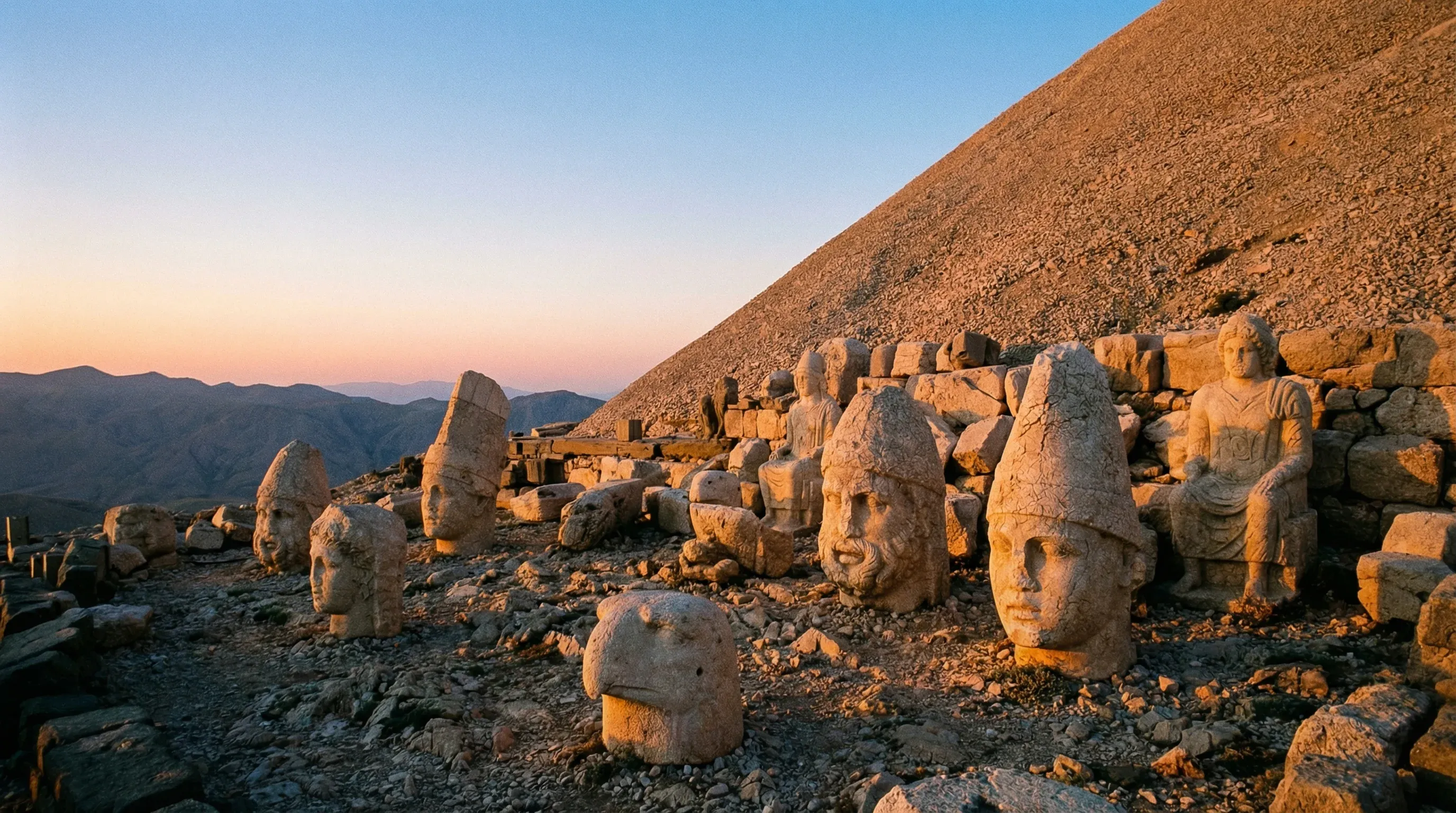

Southeastern Anatolia
Ancient cities and world-class gastronomy 🌶️🏺
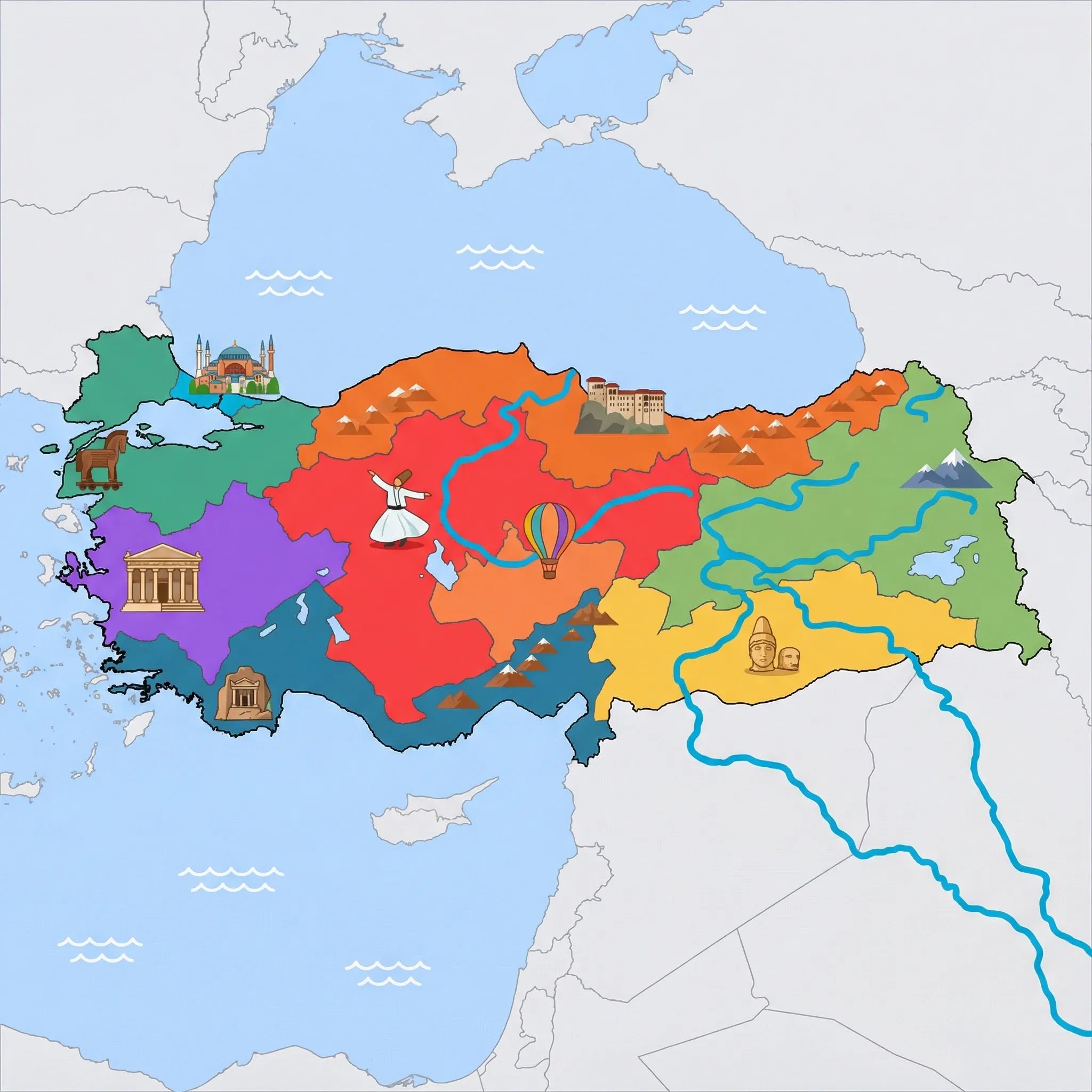
Click a region to explore
⚠️ SAFETY WARNING: Due to the unpredictable security situation near the Syrian border and the threat of terrorism, government agencies (including the USA, UK, and Australia) advise travelers to avoid all travel to areas within 10km of the Syrian border and specific provinces like Şırnak and Hakkari. Other areas like Diyarbakır carry elevated risks. Families are strongly urged to consult their own government's official travel advisory before considering a trip, as circumstances and risk assessments vary significantly.
For families who choose to visit the safer, vibrant city centers like Gaziantep and Şanlıurfa (often deemed safe for tourism by local authorities despite the regional warnings), Southeastern Anatolia offers a sensory explosion. This is the Middle East proper; the landscape is hot, dry, and golden, and the culture is a hospitable blend of Turkish, Kurdish, and Arab influences. It is famous above all for its food—Gaziantep is a UNESCO City of Gastronomy and the undisputed capital of baklava and kebabs.
The history here is mind-bogglingly old. This is Upper Mesopotamia, the cradle of agriculture. The architecture features flat-roofed stone houses and narrow alleyways that look like movie sets. While summer heat can be oppressive (often topping 40°C/104°F), the shoulder seasons offer a chance to explore a part of the world that feels timeless. The hospitality is intense; you will likely be offered tea by strangers and treated with great warmth, especially children.
Key Attractions
In Gaziantep, the Gaziantep Zoo is one of the largest in the region and a major draw for local families, situated in a large park perfect for picnics. The city is also home to the Zeugma Mosaic Museum (one of the world's biggest), though not ID-linked here, it is the main cultural draw. In Diyarbakır, the Hevsel Gardens link the city walls to the Tigris River. These fertile gardens have been cultivated for thousands of years and offer a green, historic walking area below the imposing black basalt walls of the fortress.
Practical Advice
Avoid summer (July-August) due to extreme heat. Dress modestly to respect local conservative culture. Stick to major city centers and fly between them rather than driving remote border roads.
Food & Drink
Typical meal times: Lunch 12:00 pm to 2:00 pm. Dinner 7:00 pm to 9:30 pm.
Typical meal costs: Incredible value. A feast costs 1,000–1,800 TRY (approx. $30–53 USD / €27–48 EUR).
Dietary requirements: Difficult for vegetarians. This is the heartland of kebabs. However, the meze (appetizers) are plentiful and vegetarian.
Signature dishes:
- Baklava – Gaziantep is the world capital. It is made with bright green local pistachios and is crisper/fresher than anywhere else.
- Lahmacun – Thin, crispy flatbread topped with minced meat and herbs.
- Ali Nazik – Smoked eggplant puree mixed with yogurt, topped with tender lamb pieces.
- Çiğ Köfte – Spicy bulgur patties (traditionally raw meat, now usually vegetarian in street stalls) eaten in lettuce leaves.
Why this score?
The region’s semi-arid, rocky terrain and intense summer heat create a challenging environment for travelers. Visiting the remote statues of Mount Nemrut or the stone houses of Mardin requires significant travel through less-modernized areas compared to Western Turkey.
Why this score?
Gaziantep and Diyarbakır have large, modern hospitals, but medical services for foreigners in smaller towns are limited. English proficiency among medical staff is generally lower than in coastal regions, and facilities are focused on the local population's needs.
Why this score?
Despite the rising fame of Göbeklitepe and the culinary reputation of Gaziantep, international tourism remains low due to proximity to sensitive borders and perceived security issues. It is currently a niche destination for history enthusiasts rather than a standard family holiday spot.

One of the cheapest regions in Turkey. You can stay in a historic stone mansion hotel in Mardin or Gaziantep for 2,000–3,500 TRY (approx. $60–100 USD / €54–95 EUR). Food is cheap and portions are massive.

Getting Here & Around
Getting Here
- Airports – Gaziantep (GZT) and Şanlıurfa (GNY) have frequent flights from Istanbul/Ankara.
- Bus – Long-distance buses exist but are not recommended for families due to the number of security checkpoints and duration.
Getting Around
- Taxi/City Transport – Within cities like Gaziantep, taxis are cheap and easy.
- Tour Guide – Highly recommended to hire a local guide/driver for intercity travel to ensure you stay on safe routes.
Nearby Airports (10 airports)
Adiyaman Airport
ADFAdiyaman
Batman
BALBatman
Diyarbakir
DIYDiyarbakir
Sanliurfa GAP Airport
GNYGolgen
Oguzeli
GZTGaziantep
Hatay Airport
HTYAntakya
Kahramanmaras
KCMKahramanmaras
Mardin Airport
MQMMardin
Cherry Point Mcas
NKTCizre
Siirt Airport
SXZSiirt
View full flight map for Turkey →

Packing List
The region is socially conservative; shorts/tank tops attract unwanted stares.
The heat is intense and dry; kids dehydrate very quickly.
You will be eating a lot of finger food (kebabs, baklava) and dusty environments.
Essential for summer visits to keep body temperature down.
You will frequently remove shoes when entering mosques and private homes; laces become a hassle.
Many beaches on the Turquoise Coast are pebbly or have rocky entries that can hurt little feet.
Essential for women and girls to cover heads/shoulders when visiting mosques (men may need to cover knees too).
Strollers struggle on the uneven cobblestones of historic centers and ancient ruins; a carrier is far more practical.
Public restrooms outside major hotels often lack toilet paper; carrying your own supply is a must.
The morning call to prayer is beautiful but loud and starts very early (around 5 am); helpful for light sleepers.

Activities & Best Times

Hiking, wildlife, outdoor exploration, ecotourism
Offers unique wildlife conservation for the Northern Bald Ibis and substantial adventure park facilities for families. Extreme summer temperatures and wet winters limit the best hiking and outdoor exploration to the temperate transition months.

Urban tourism, museums, historical sites, architecture
Home to historic gardens and vibrant urban culture in Gaziantep, Şanlıurfa, and Diyarbakır. Discerning travelers prefer the spring and autumn to explore the city quarters comfortably, as summer heat often exceeds 35 degrees.

Events, celebrations, seasonal attractions
Hosts internationally recognized events like GastroAntep and the Mardin Biennial, celebrating unique regional heritage. Seasonal peaks align precisely with the traditional Newroz celebrations in March and the harvest-based gastronomy festivals in September.

Beach resorts, marine activities: diving, snorkelling, kite surfing, wind surfing, sailing
River-based coastal recreation at Halfeti and Çatak offers unique boat-based exploration of sunken heritage. Peak visitation occurs in late spring and early autumn to avoid the intense summer heat of the Mesopotamian plains.

Winter sports, ski resorts, snow activities
Karacadağ provides a niche skiing experience on a volcanic shield, primarily serving local enthusiasts. The season is highly restricted by the short duration of reliable snow cover in this southern latitude.

Sport tourism, fitness activities, active recreation
Infrastructure including adventure parks at Erikçe and GAP Vadisi provides facilities for climbing and organized outdoor activity. Active pursuits are best scheduled during the milder spring and autumn months to ensure safe and pleasant conditions.




Public Holidays & Calendar Next 12 months
Public holidays, festivals, cultural celebrations, and seasonal natural phenomena coming up in Southeastern Anatolia over the next 12 months.
Loading holidays and events...

Travel Advisory
All major agencies maintain a consensus that travelers should exercise a high degree of vigilance country-wide. This assessment is driven by persistent terrorism risks and potential for civil unrest. Extreme regional risks (L3) exist near the borders, but the national level remains L1.
Safety Topics
Traveller Advice (4 groups)

Climbing Mount Ararat requires a special military permit obtained months in advance. Trekking in remote areas of the southeast is dangerous due to ongoing security operations and the risk of being caught in military zones.

Homosexuality is not illegal, but social acceptance varies widely. Public events like pride marches are frequently banned by local authorities, and travelers may encounter discrimination or social stigma.

Female travelers have reported incidents of harassment and sexual assault in tourist zones. It is recommended to remain alert when traveling alone and to dress modestly, particularly in rural areas or when visiting religious sites.

Ensure passports are valid for at least six months from the date of entry. Maintain a high level of situational awareness in crowded public spaces, transportation hubs, and locations frequented by Westerners.
Agency Summaries
Heightened vigilance is recommended because of terrorism concerns and the risk of arbitrary detentions. Security forces have previously held foreign nationals on politically motivated grounds. Avoid the border regions with Syria and Iraq entirely, as well as the provinces of Sirnak and Hakkari.
There is a heightened risk of terrorism in major cities and tourist locations. Travelers should stay informed of local events and avoid protests. Extreme caution or avoidance is necessary for southeastern provinces and areas bordering Syria.
Vigilance is required throughout the country, particularly in major urban centers like Istanbul and Ankara, where terrorist attacks have occurred. The situation in the southeast is serious, and travel to within 10km of the Syrian border is strongly discouraged.
Travelers should remain vigilant across the country due to the threat of terrorist activity and the potential for public demonstrations. Particular danger exists in the southeastern provinces, especially near the borders with Syria and Iraq, where all travel is discouraged due to volatile security and military activity.
While most of the country is accessible, there is a significant risk of terrorism and regional instability. Specific warnings are in place for the Syrian border area. Recent regional escalations in the Middle East have led to increased security monitoring and potential travel disruptions.
An elevated level of caution is advised due to the persistent threat of terrorism. Travelers should monitor regional tensions following military actions in the Middle East, as these can affect flight availability and security. Avoid large gatherings and demonstrations which may turn violent.
Information is provided for general guidance only and does not constitute travel, safety, medical, or legal advice. Conditions may change. Users are responsible for independently verifying information before travel.