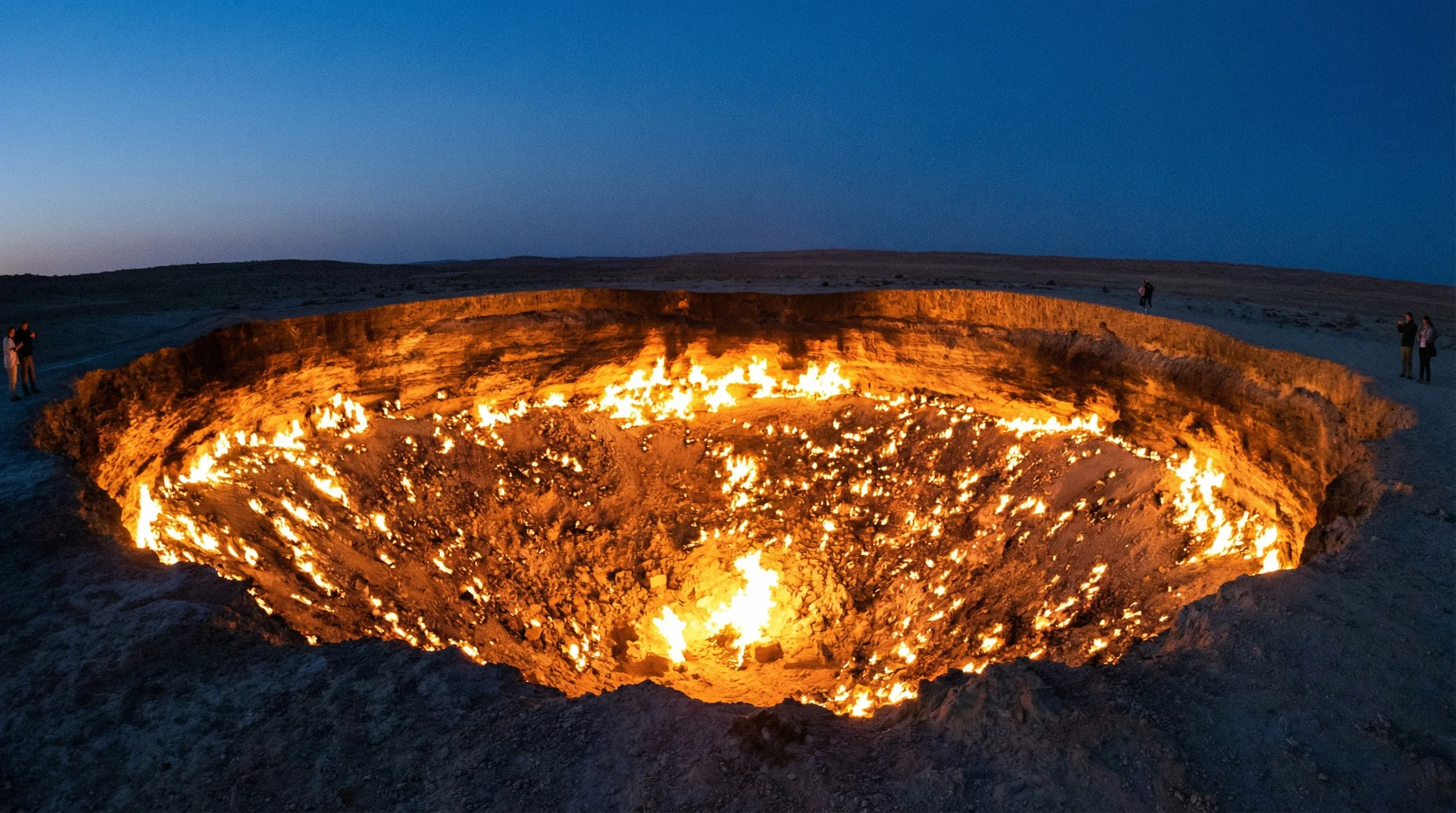

Darvaza (Gates of Hell)
Camping by the eternal fire of the desert 🔥⛺
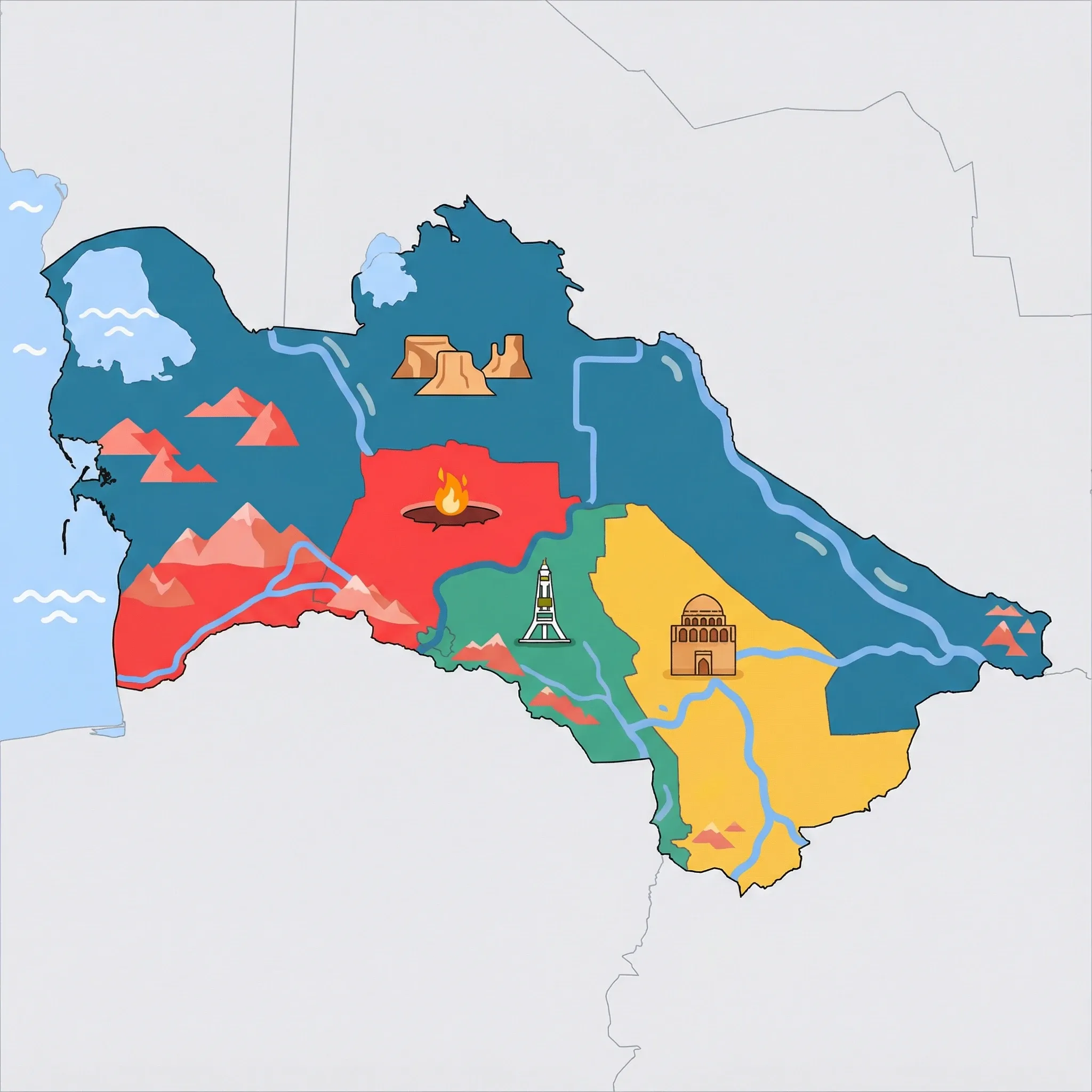
Click a region to explore
The Darvaza Gas Crater, colloquially known as the 'Gates of Hell', is one of the world's most peculiar and mesmerizing travel destinations. Located deep in the heart of the Karakum Desert, this fiery pit has been burning for decades, creating a spectacle that looks like science fiction come to life. For families with older children or teens who crave adventure over luxury, this is the highlight of a trip to Turkmenistan. The journey involves a bumpy 4x4 ride through the dunes, setting the stage for a true desert expedition. Arriving at the crater as the sun sets is magical; the roaring flames illuminate the desert night, providing a backdrop for camping that you cannot find anywhere else on the planet.
There is no town here, only the vast silence of the desert and the crackle of the fire. The experience is rustic and raw. Families typically stay in yurts or tents set up by tour guides a safe distance from the crater. It is an opportunity to disconnect completely from the digital world and connect with nature. Children are often fascinated by the story of how the crater was formed (a Soviet drilling mishap in 1971) and the sheer heat radiating from the pit. While the site is the main attraction, the surrounding desert offers opportunities for sandboarding or simply running down the dunes. The clear desert sky also makes for exceptional stargazing, with the Milky Way often visible to the naked eye.
Key Attractions
The singular attraction here is the Darvaza Gas Crater (Gates of Hell). It is a massive collapsed natural gas field roughly the size of an American football field. Seeing it during the day is interesting, but the real show begins at dusk when the orange glow intensifies. Guides will take you near the rim—be very careful with children as there are no guardrails or fences, and the edge can be unstable. It is a visceral lesson in geology and physics. Nearby, there are smaller water and mud craters, though they pale in comparison to the burning giant. The experience of sleeping in a traditional yurt nearby is an attraction in itself, offering a cozy and culturally immersive night.
Practical Advice
This is a remote desert location with zero permanent infrastructure. There are no toilets (expect 'nature' stops or basic pit latrines provided by camps) and no running water. Bring wet wipes and hand sanitizer. The best time to visit is spring or autumn; summer is dangerously hot, and winter can be freezing. Nights in the desert get very cold even after hot days, so pack layers. This region is not suitable for toddlers or children who cannot follow strict safety instructions near the crater edge.
Food & Drink
Typical meal times:
Dinner is usually a campfire BBQ served around 7:00 pm to 8:30 pm after sunset. Breakfast is served early, around 7:00 am to 8:00 am.
Typical meal costs:
Meals are almost always included in the tour price. If purchasing independently (rare), a camp dinner might be valued at 70–105 TMT (approx. $20–30 USD / €18–27 EUR).
Dietary requirements:
Vegetarians must notify guides in advance, as the standard camp meal is meat-heavy. Guides can prepare grilled vegetables and rice if given notice. Gluten-free options like rice and fruit are usually available.
Signature dishes:
- Campfire Shashlik – Meat skewers grilled over an open fire or coals, tasting smoky and fresh in the desert air.
- Chorek – Local flatbread, often brought from the nearest village, served with every meal.
- Shurpa – A hearty mutton and vegetable soup, perfect for warming up during the chilly desert nights.
Why this score?
Visiting the crater involves a multi-hour drive into the Karakum Desert, often requiring 4x4 vehicles to navigate off-road sandy tracks. Accommodations are limited to wild camping in tents or basic yurts with no running water or electricity. The combination of extreme desert temperatures and the lack of safety barriers around the fiery pit creates a high-adventure environment.
Why this score?
There are virtually no medical facilities at the crater or in the nearby tiny village of Derweze. The nearest hospital is several hours away in Ashgabat, making any emergency situated here extremely dangerous. Travelers must carry their own comprehensive first-aid kits and ensure they have a reliable means of communication for evacuation.
Why this score?
The Darvaza Gas Crater is Turkmenistan's most iconic landmark and the primary reason many of its few tourists visit. Despite its fame on social media, the actual number of visitors remains very low due to the logistical challenges of reaching the remote desert site. It is a bucket-list destination for adventure travelers but lacks any mass-market tourism volume.

While there are no entrance fees, the cost is embedded in the mandatory 4x4 hire and guide services. A private overnight tour for a family typically costs 1,400–2,800 TMT (approx. $400–800 USD / €370–740 EUR) total, including transport, food, and camping gear. It is a mid-to-high upfront cost but includes everything.

Getting Here & Around
Getting Here
- Driving – The only way to reach Darvaza is by 4x4 vehicle. It is roughly a 3.5 to 4-hour drive north from Ashgabat. The last section is off-road through sand.
- Tour Bus – Organized groups may arrive in rugged off-road buses, but private 4x4s are more common for families visiting the Darvaza Gas Crater.
Getting Around
- Walking – Once at the camp, you will walk to the crater rim. The ground is sandy and uneven. Strollers are not suitable; baby carriers are essential for infants.
- Car – Your tour vehicle will transport you between the main road, the camp, and the crater if the distance is too far to walk.
No airports in this region. See the country flight map for nearby connections.

Packing List
Campsites are pitch black at night; essential for navigating to the toilet tent.
Scorpions and spiders exist in the desert; avoid walking barefoot or in sandals at night.
Desert temperatures drop drastically at night, even if the day was hot.
There are no showers or running water at the crater campsites.
Essential for navigating the Darvaza Gas Crater area at night, which has zero artificial lighting and uneven ground.
Credit cards rarely work. Bring new, crisp bills (no marks/tears) as pre-2013 or damaged notes are often rejected.
Local pharmacies may lack specific Western brands or pediatric medicines. Bring your own stomach and pain relief supplies.
toilets in the desert and rural stops are often basic pit latrines with no running water or paper.
Even in summer, the desert temperature drops sharply at night, especially when camping at the crater.
You will frequently remove shoes when entering yurts, mosques, and private homes.

Activities & Best Times

Hiking, wildlife, outdoor exploration, ecotourism
The Darvaza Gas Crater offers a surreal, fire-in-the-desert experience that is globally unique; peak visiting occurs in spring and autumn to avoid the Karakum's extreme temperatures. While facilities are limited to basic desert camps, the raw authenticity and visual impact provide a world-class adventure for intrepid families.

Scenic drives, countryside tours, route-based travel
The North-South Highway through the Karakum Desert provides a stark, scenic route for travelers heading to the craters. Driving is best during transitional months to avoid extreme summer heat and winter freezes, though infrastructure remains minimal and geared toward rugged 4x4 exploration.



Public Holidays & Calendar Next 12 months
Public holidays, festivals, cultural celebrations, and seasonal natural phenomena coming up in Darvaza (Gates of Hell) over the next 12 months.
Loading holidays and events...

Travel Advisory
The majority of international agencies recommend exercising a high degree of caution in Turkmenistan due to strict local laws, surveillance, and security risks in border regions.
Safety Topics
Traveller Advice (4 groups)

Women are advised against travelling alone. Local authorities may scrutinize or take action against relationships between foreign men and local women.

Male-to-male sexual activity is a criminal offense punishable by imprisonment. Public displays of affection are culturally inappropriate and may lead to harassment or legal trouble.

Media activities are strictly monitored and restricted. Surveillance of communications, including internet and telephone use, is common.

A visa and a certified letter of invitation are mandatory for entry. Travellers must register with local authorities if staying for more than three working days and should always carry their original passport.
Agency Summaries
Irish citizens are encouraged to use a high degree of caution. The political climate and strict enforcement of local regulations present specific challenges for foreign visitors.
Heightened vigilance is recommended due to the regional security situation. Comprehensive insurance covering medical evacuation is strongly encouraged due to limited local healthcare.
While general safety precautions are recommended, visitors should be aware of ubiquitous police presence, potential surveillance, and the requirement to always carry identification to avoid detention.
Most travel is without incident, though entry from Iran requires special permission. Travellers are advised against all but essential travel to within 5km of the Afghan border.
Travellers should remain highly vigilant due to regional tensions and risks associated with crime. A specific warning is in place to avoid all travel to areas bordering Afghanistan.
A high level of caution is advised throughout the country due to the threat of crime. Strict entry requirements, including a letter of invitation, are mandatory for all visitors.
Information is provided for general guidance only and does not constitute travel, safety, medical, or legal advice. Conditions may change. Users are responsible for independently verifying information before travel.