
Karakum Desert
A journey through sands, canyons, and Silk Road legends 🐪🏜️
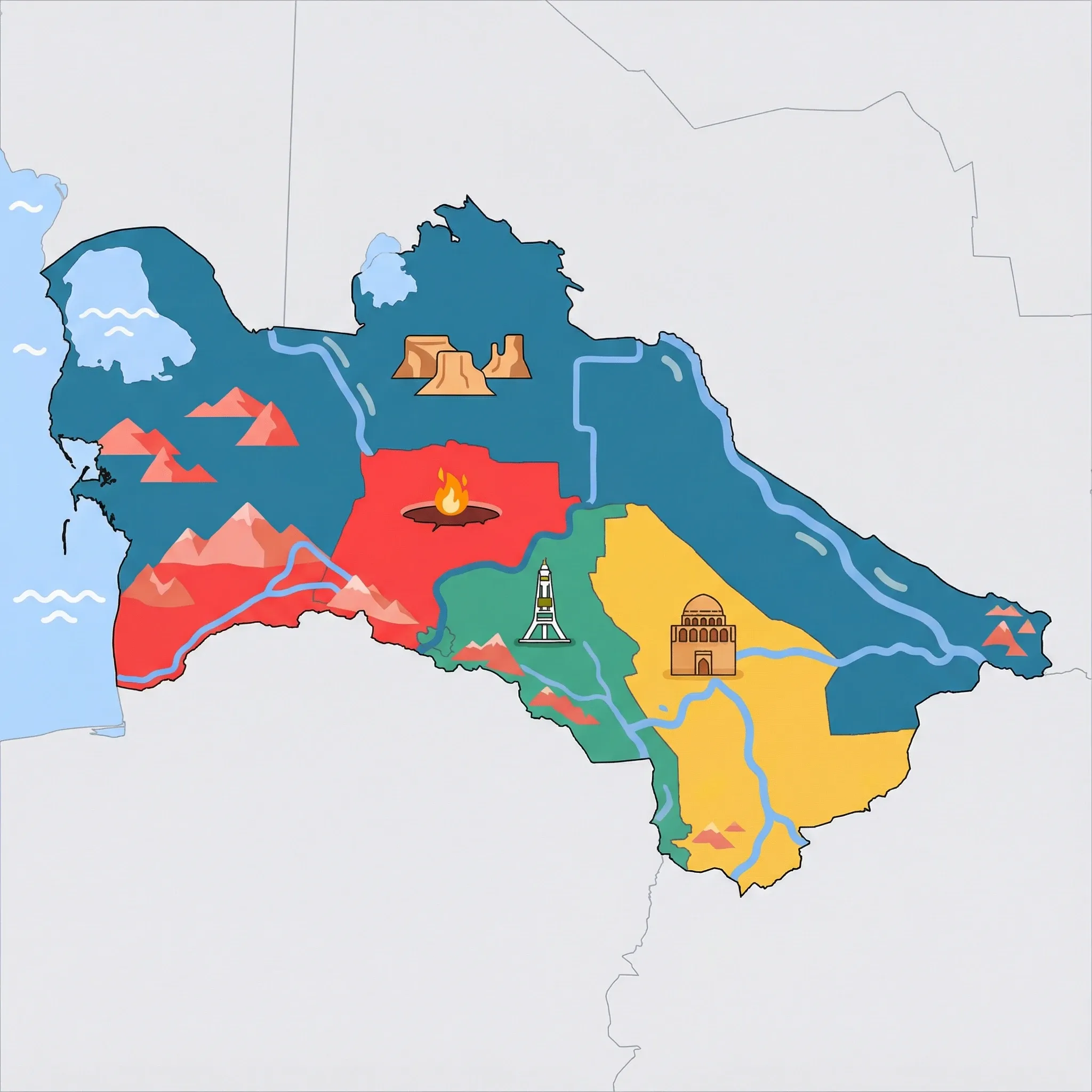
Click a region to explore
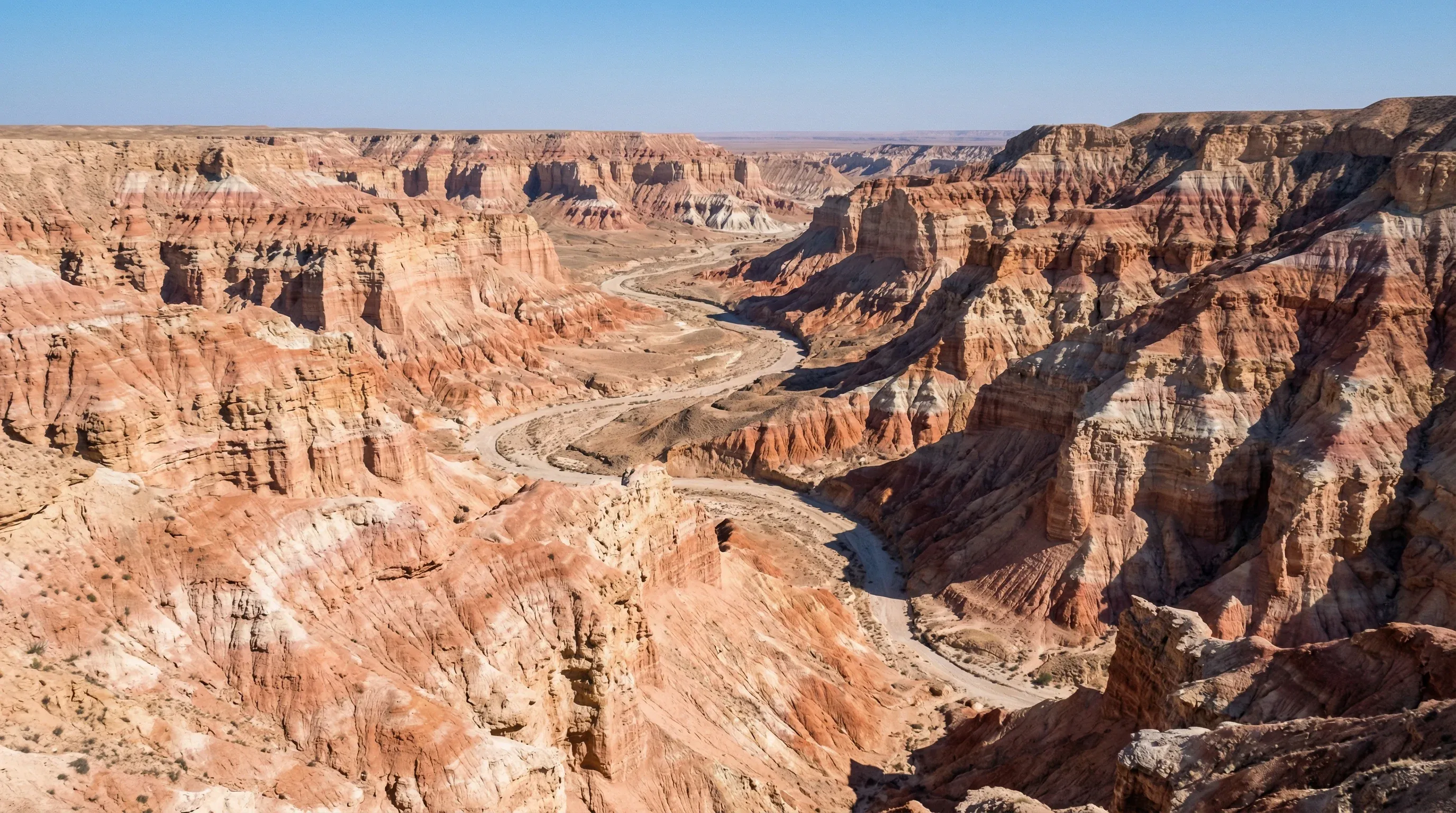
The Karakum Desert (Black Sand Desert) is not just an empty void; it is the canvas upon which the history of Turkmenistan is written. Covering 70% of the country, this region is perfect for families who love road trips and rugged nature. The landscape shifts from rolling sand dunes to dramatic limestone cliffs and canyons that rival those in the US Southwest. For children, the desert is a giant sandbox filled with camels, ancient fortresses, and strange geological phenomena. Traveling across the Karakum is an adventure in itself, following the path of the ancient Silk Road where traders once led caravans of spices and silk.
One of the most family-friendly stops in this vast region is the Kow Ata Underground Lake. Located inside a dark cave, the naturally heated sulphurous water allows for a warm swim year-round—a thrilling experience for kids who get to descend a long staircase into the earth to find a swimming pool at the bottom. Further north, the desert reveals the ancient city of Kunya-Urgench, a UNESCO World Heritage site. Here, families can walk among leaning minarets and mausoleums that have survived for centuries. The vastness of the Karakum teaches patience and appreciation for nature, with the M37 Silk Road Drive connecting these disparate wonders. It is a region for those who appreciate the journey as much as the destination.
Key Attractions
The Kow Ata Underground Lake is a major highlight. The water is a constant 35°C (95°F), and the cave is home to a colony of bats (high up and harmless), which adds a spooky but fun element for kids. Changing rooms are available, making it a practical stop.
For history buffs, Kunya-Urgench offers a glimpse into the past with the Kutlug-Timur Minaret, one of the tallest in Central Asia. Exploring the ruins feels like a treasure hunt. If your route takes you west towards the Caspian, the Avaza National Tourist Zone appears like a mirage—a massive resort complex on the coast offering beaches and modern hotels, providing a bizarre but comfortable break from the desert heat. Driving the M37 Silk Road Drive allows you to see the changing landscapes and spot wild camels grazing near the roadside.
Practical Advice
Travel in the Karakum requires a reliable vehicle and a guide. The distances are huge—expect days with 5-7 hours of driving. Ensure the car has working air conditioning. The best seasons are spring and autumn. Summer travel is grueling due to extreme heat. Carry plenty of water and snacks, as roadside shops (chaikhanas) can be infrequent. Bathroom facilities on the road are often basic squat toilets.
Food & Drink
Typical meal times:
Roadside stops serve lunch from 11:30 am to 3:00 pm. Dinner is typically eaten at guesthouses or hotels upon arrival, around 7:00 pm to 9:00 pm.
Typical meal costs:
Roadside meals are cheap, around 35–70 TMT (approx. $10–20 USD / €9–18 EUR) per person. Hotel dining in resort areas like Avaza will be higher, around 105–175 TMT (approx. $30–50 USD / €27–46 EUR).
Dietary requirements:
Vegetarian options are scarce in the desert. Bread, tomato salads, and cheese are the staples. You may need to rely on packed snacks. Nut allergies can be tricky as walnuts and oils are used; communicate clearly with your guide.
Signature dishes:
- Chal – Fermented camel milk, a sparkling, sour drink that is an acquired taste but a quintessential desert experience.
- Somsa – Pastry pockets filled with meat and onions, baked in a clay oven—perfect for a quick car snack.
- Gutap – Flatbread stuffed with greens (spinach, purslane) or pumpkin, a great vegetarian option often found in village homes.
Why this score?
This is an extreme desert environment characterized by vast shifting dunes, intense heat, and remote attractions like the Yangykala Canyon. Survival depends on skilled local guides, satellite navigation, and self-sufficiency in terms of water and fuel. The sheer isolation and the ruggedness of the terrain make it an expedition-level destination for families.
Why this score?
Medical services are non-existent in the deep desert, with the nearest basic clinics located in distant peripheral towns like Mary or Balkanabat. In the event of a medical emergency, the lack of road infrastructure and mobile signal would make reaching professional care nearly impossible without specialized support. This region represents the lowest tier of medical accessibility globally.
Why this score?
Outside of the specific Darvaza site, the vast Karakum Desert sees almost no foreign visitors except for specialized 4x4 expeditions. The infrastructure is non-existent for tourists, and the region is largely inhabited by nomadic herders or used for transit. It remains one of the least visited geographical features in Central Asia.

Costs are driven by transport. Hiring a driver and vehicle for multi-day desert crossings is the main expense, costing approx. 525–875 TMT (approx. $150–250 USD / €140–230 EUR) per day. Accommodation in guesthouses is budget-friendly (approx. $30-50 USD), while hotels in Avaza are priced at international mid-range standards.

Getting Here & Around
Getting Here
- Driving – The primary way to see the region is via the M37 Silk Road Drive. The road quality varies from new tarmac to potholed tracks.
- Train – The rail line crosses the desert, stopping at major towns, but it is slow and lacks air conditioning in older carriages.
- Airports – Domestic flights to Dashoguz (for Kunya-Urgench) or Turkmenbashi (for Avaza) save hours of driving across the sands.
Getting Around
- Car – A 4x4 Land Cruiser or similar is essential for comfort and safety on long desert roads.
- Walking – Only relevant at specific sites like Kunya-Urgench. The desert terrain itself is too harsh for walking between locations.
Nearby Airports (4 airports)
Turkmenabat
CRZChardzhev
Kerki International Airport
KEAKerki
Turkmenbashi Airport
KRWTurkmanbashi
Dasoguz Airport
TAZDashoguz
View full flight map for Turkmenistan →

Packing List
The desert sun is relentless and there is often zero shade at archaeological sites.
Roads can be very bumpy for long stretches; helpful for kids in the back seat.
Essential for the Kow Ata Underground Lake or the Caspian coast at Avaza.
Protect against blowing sand and dust during stops or windy days.
Essential for navigating the Darvaza Gas Crater area at night, which has zero artificial lighting and uneven ground.
Credit cards rarely work. Bring new, crisp bills (no marks/tears) as pre-2013 or damaged notes are often rejected.
Local pharmacies may lack specific Western brands or pediatric medicines. Bring your own stomach and pain relief supplies.
toilets in the desert and rural stops are often basic pit latrines with no running water or paper.
Even in summer, the desert temperature drops sharply at night, especially when camping at the crater.
You will frequently remove shoes when entering yurts, mosques, and private homes.

Activities & Best Times

Hiking, wildlife, outdoor exploration, ecotourism
Home to the world-renowned Darvaza Gas Crater and the spectacular Yangykala Canyon, the region offers unique geological wonders. Peak visitation occurs during spring and autumn to avoid the extreme desert heat of July and the freezing temperatures of mid-winter.

Urban tourism, museums, historical sites, architecture
The region boasts incredible Silk Road heritage sites including Ancient Merv and Kunya-Urgench, which are UNESCO World Heritage sites. These outdoor archaeological complexes are best explored in the temperate transition months when walking between ruins is comfortable.

Scenic drives, countryside tours, route-based travel
The Trans-Karakum Highway and the drive to Yangykala Canyon offer vast, cinematic desert landscapes for experienced travelers. Travel is best in spring and autumn when visibility is high and the risk of vehicle overheating in extreme desert temperatures is reduced.

Sport tourism, fitness activities, active recreation
Cycling and hiking routes around the ancient ruins of Merv and the canyons provide rugged active exploration opportunities. High heat in summer and sub-zero nights in winter create safety barriers for physical activity, concentrating the season into the temperate windows.

Beach resorts, marine activities: diving, snorkelling, kite surfing, wind surfing, sailing
The Avaza National Tourist Zone offers a modern resort experience on the Caspian Sea, though it is largely localized and lacks global marine biodiversity. Best visited in mid-summer when water temperatures are conducive to swimming; winter temperatures are too low for coastal recreation.

Learning experiences, scientific sites, historical education
The Repetek Biosphere Reserve offers significant scientific insight into desert ecology and unique wildlife, though its museum facilities are modest. Visits are dictated by desert accessibility, favoring the milder spring and fall months.

Spa retreats, wellness centers, peaceful getaways
Kow Ata Underground Lake is a unique natural thermal bath located in a deep cave, providing a stable 33-37°C swimming environment year-round. It is most popular during the cooler months as a restorative escape, whereas the extreme summer heat makes the humid cave environment uncomfortable.

Amusement parks, family entertainment venues
Large water parks like those in Awaza provide family entertainment but are domestic-focused and lack the international standing of global theme park brands. Facilities are primarily operational and appealing during the peak summer heat.

Attractions (14 total)



Public Holidays & Calendar Next 12 months
Public holidays, festivals, cultural celebrations, and seasonal natural phenomena coming up in Karakum Desert over the next 12 months.
Loading holidays and events...

Travel Advisory
The majority of international agencies recommend exercising a high degree of caution in Turkmenistan due to strict local laws, surveillance, and security risks in border regions.
Safety Topics
Traveller Advice (4 groups)

Women are advised against travelling alone. Local authorities may scrutinize or take action against relationships between foreign men and local women.

Male-to-male sexual activity is a criminal offense punishable by imprisonment. Public displays of affection are culturally inappropriate and may lead to harassment or legal trouble.

Media activities are strictly monitored and restricted. Surveillance of communications, including internet and telephone use, is common.

A visa and a certified letter of invitation are mandatory for entry. Travellers must register with local authorities if staying for more than three working days and should always carry their original passport.
Agency Summaries
Irish citizens are encouraged to use a high degree of caution. The political climate and strict enforcement of local regulations present specific challenges for foreign visitors.
Heightened vigilance is recommended due to the regional security situation. Comprehensive insurance covering medical evacuation is strongly encouraged due to limited local healthcare.
While general safety precautions are recommended, visitors should be aware of ubiquitous police presence, potential surveillance, and the requirement to always carry identification to avoid detention.
Most travel is without incident, though entry from Iran requires special permission. Travellers are advised against all but essential travel to within 5km of the Afghan border.
Travellers should remain highly vigilant due to regional tensions and risks associated with crime. A specific warning is in place to avoid all travel to areas bordering Afghanistan.
A high level of caution is advised throughout the country due to the threat of crime. Strict entry requirements, including a letter of invitation, are mandatory for all visitors.
Information is provided for general guidance only and does not constitute travel, safety, medical, or legal advice. Conditions may change. Users are responsible for independently verifying information before travel.