

Overview
Visiting Tuvalu feels like stepping back in time to a Pacific before commercial tourism. Comprising nine tiny coral atolls scattered across the turquoise ocean, the entire nation is so narrow that in many places you can see the sea on both sides of the road. For families, the appeal lies in this profound simplicity and safety. There are no crowds, no queues, and no dangerous animals. The local culture is incredibly welcoming to children, who are treated with warmth and affection everywhere. Life moves at a slow, relaxing pace, governed by the tides and church bells rather than clocks.
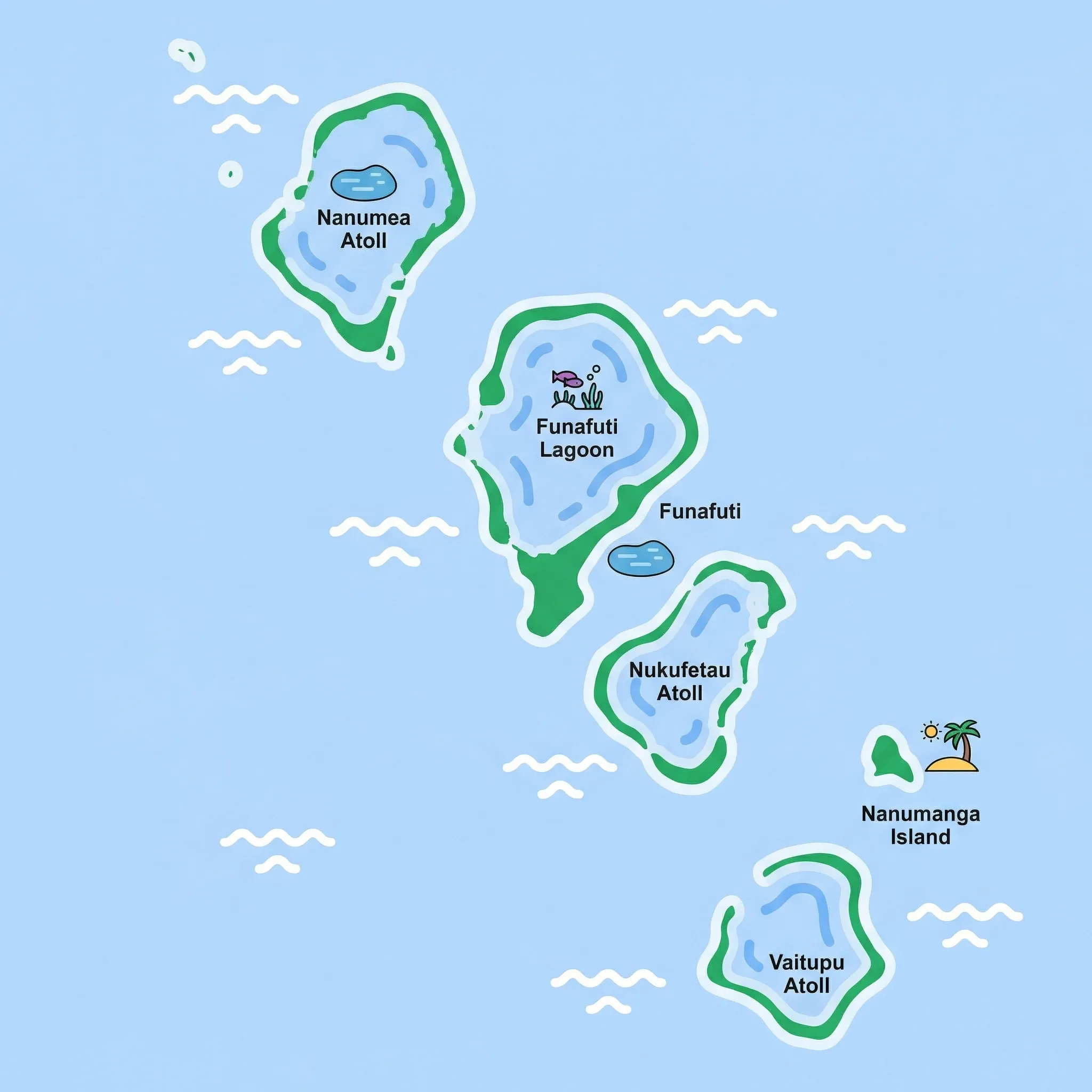
The capital, Funafuti, is the heart of the action (what little there is). The most magical experience for families occurs every evening around 5:00 pm, when the heat of the day subsides. As flights are rare, the international airport runway transforms into a communal backyard. Hundreds of locals gather to play football, volleyball, and rugby, while families walk, cycle, and picnic on the tarmac. It is a joyous, unique spectacle where tourist children can easily join in games with local kids. Beyond the runway, the calm lagoon waters offer safe, shallow swimming spots ideal for young ones, free from heavy surf.
Key Attractions
The crown jewel of Tuvalu is the Funafuti Conservation Area. This protected marine park covers 33 square kilometers of lagoon, reef, and uninhabited islets (motu). A boat trip here is essential; families can picnic on pristine white-sand beaches that feel like the edge of the world, snorkel in water as clear as gin, and spot nesting seabirds and turtles. The islets of Tepuka and Fualopa are particularly popular for their castaway vibe, allowing children to explore safe, shallow waters teeming with colourful fish.
Back in town, the Tuvalu Philatelic Bureau is a surprisingly engaging stop. Tuvalu's postage stamps are world-famous for their beauty and rarity. Families can visit the bureau to see historic collections and let children pick out colorful stamps to send on postcards to grandparents-a novelty in the digital age. For history-loving older children, the lagoon and parts of the main island hold WWII Wrecks, including the remains of American bunkers and sunken aircraft that are visible with a mask and snorkel in shallow water.
Practical Advice
The best time to visit is during the dry season from May to October, when trade winds keep the temperature comfortable. Tuvalu is extremely safe, but medical facilities are basic, so comprehensive travel insurance is non-negotiable. Sunday is a strict day of rest; almost everything closes, including the airport and shops, and noise is discouraged. Use this day to attend a church service for the singing, which is harmonious and moving, or simply relax quietly by the lagoon.
Food & Drink
Typical meal times: 7:00 am to 9:00 am for breakfast, 12:00 pm to 1:30 pm for lunch, and 6:30 pm to 8:00 pm for dinner.
Typical meal costs: $15–25 AUD (approx. $10–16 USD / €9–15 EUR) for a simple lunch; $30–50 AUD (approx. $20–33 USD / €18–30 EUR) for a dinner main course. Imported goods are expensive.
Dietary requirements: Options are limited. Vegetarians can rely on breadfruit, taro, and imported rice/vegetables, but fresh produce is scarce and dependent on supply ships. Gluten-free items are rarely labelled. It is advisable to bring specific snacks from home.
Family-friendly dining: Restaurants are casual and informal (often just a room in a guesthouse). Children are welcome everywhere. Highchairs are virtually non-existent, so be prepared to hold babies or use a stroller.
Signature dishes:
- Pulaka – A swamp taro grown in large pits, often roasted or mashed with coconut cream; a staple energy source.
- Fresh Fish (Ika) – Usually tuna, snapper, or wahoo, served grilled, fried, or raw as ota ika (marinated in lime and coconut milk).
- Coconut Crab – A local delicacy, these large land crabs have sweet meat and are often served simply boiled or roasted.
- Fekei – A sweet, sticky pudding made from grated pulaka or taro mixed with coconut cream and wrapped in leaves.

While local life is simple, the cost of visiting is surprisingly high due to remoteness. Flights are expensive, and almost all food (except fish and coconut) is imported. A family of four should budget roughly $350–500 AUD (approx. $230–330 USD / €210–300 EUR) per day for accommodation, meals, and motorbike rental. Cash is essential as credit cards are rarely accepted.
Age Suitability





Did you know? Tuvalu welcomes approximately 200 international visitors per year. Most visitors come from East Asia and the Pacific.
Why this score?
The adventure here is defined by extreme isolation and the difficulty of access rather than physical ruggedness, as the atolls are entirely flat. For families, the experience is less about high-adrenaline activities and more about navigating a remote environment with very limited tourist services.
Why this score?
Medical infrastructure is confined to a single hospital in Funafuti that provides basic care but lacks specialized services and advanced technology. Any serious medical emergency or complex health issue for a visiting family would necessitate a costly air evacuation to Fiji or Australia.
Why this score?
Tuvalu is one of the least visited countries globally, receiving only a few hundred international arrivals annually. The lack of commercial flights, major resorts, and tourism marketing keeps it as a niche destination primarily for researchers and intrepid travelers.
While local produce is cheap, the reliance on imports makes some items expensive. Accommodation is limited and can feel pricey for the basic standard provided, averaging $100–180 AUD (approx. $65–115 USD / €60–105 EUR) per night. No tipping is expected.

Getting There & Around
Getting There
- By Air – Fiji Airways flies to Funafuti (FUN) from Suva, Fiji, typically on Tuesdays and Thursdays. This is the only scheduled air connection.
- Entry Requirements – Visitors typically receive a visa on arrival (free for UK/Schengen/some others; $100 AUD for many other nationalities). Check your government website for the latest visa requirements, or use the IATA Travel Centre entry-requirements checker.
- By Sea – There are no regular passenger ferries from other countries. Cargo ships with limited passenger cabins sail occasionally from Fiji, but schedules are erratic and not recommended for families on short trips.
Getting Around
- Motorbike/Scooter – The primary way to move around Tuvalu. Rentals are available at hotels and small shops. It is common to see whole families on one bike, but for safety, rent two. Driving is on the left.
- Walking – The main islet, Fongafale, is narrow and flat, making it easy to explore on foot, especially in the cool of the evening.
- Boats – Essential for visiting the Conservation Area or outer islets. These must be chartered privately or arranged through your guesthouse.
Official Links

Packing List
Beaches are often coral rubble rather than soft sand; protects feet from sharp coral and stonefish.
Rental gear is scarce or poor quality; essential for enjoying the lagoon.
ATMs are very new and may be unreliable; credit cards are almost never accepted.
Essential for covering legs in villages and churches to respect strict local modesty customs.
Street lighting is minimal and power cuts can occur; useful for walking at night.
Local medical supplies are limited; bring plasters, antiseptic, and children's medication.

Activities & Best Times

Adventure & Nature
GoodHiking, wildlife, outdoor exploration, ecotourism
The region provides rare access to pristine atoll ecosystems and marine conservation areas, ideal for families seeking authentic Pacific wilderness. Peak conditions occur from May to October when the trade winds are consistent and heavy monsoon rains are less frequent.

City & Cultural
MarginalUrban tourism, museums, historical sites, architecture
Tuvalu has no cities and minimal cultural tourism infrastructure. While authentic Polynesian culture exists, it lacks museums, cultural centers, or heritage sites that would justify 'good' on international standards. The philatelic heritage mentioned appeals to a micro-niche. 'Marginal' better reflects the reality: genuine culture but extremely limited visitor facilities.




Public Holidays & Calendar Next 12 months
Public holidays, festivals, cultural celebrations, and seasonal natural phenomena coming up in Tuvalu over the next 12 months.
Loading holidays and events...

Travel Advisory
All major agencies agree that Tuvalu is a safe destination with no elevated security risks, provided standard travel precautions are followed.
Safety Topics
Traveller Advice (3 groups)

Ensure you bring enough Australian Dollar cash for your entire stay as there are no ATMs and credit cards are not widely accepted. Respect the conservative local culture by dressing modestly when visiting villages.

Tuvalu has very limited accessibility infrastructure. There are no mandated building standards for disabled access, and even government buildings often lack reliable elevator service.

Homosexual acts are illegal and can lead to prison sentences of up to 14 years. Travelers should exercise extreme discretion and be aware of significant local legal risks.
Agency Summaries
Tuvalu maintains a very low crime rate, though visitors should protect their belongings. Dangerous currents exist on the outer coasts, and the lagoon in Funafuti is significantly contaminated. Infrastructure and medical facilities are extremely limited, and water shortages occur frequently.
Tuvalu is safe for tourists with standard safety measures. Travelers are encouraged to obtain comprehensive insurance and monitor local news for weather-related updates, particularly during the cyclone season.
No major security threats are identified. It is essential to have medical insurance that includes air evacuation. Visitors should practice high levels of personal hygiene and boil water before consumption.
Travelers should maintain standard safety awareness. There are concerns regarding port security practices and unassessed aviation safety oversight. Public transportation is primarily limited to motorcycles and taxis, and the economy is cash-based with no available ATMs.
No specific travel restrictions are in place. Visitors should ensure passports are valid for six months and be aware of health risks like dengue fever. There is no permanent British diplomatic presence on the islands.
Irish citizens do not require visas for short stays but must meet entry requirements including proof of funds. Consular help is limited as the nearest embassy is located in New Zealand.
Information is provided for general guidance only and does not constitute travel, safety, medical, or legal advice. Conditions may change. Users are responsible for independently verifying information before travel.