
Jinja & East (source of Nile)
Where the mighty Nile begins its journey 🌊🛶
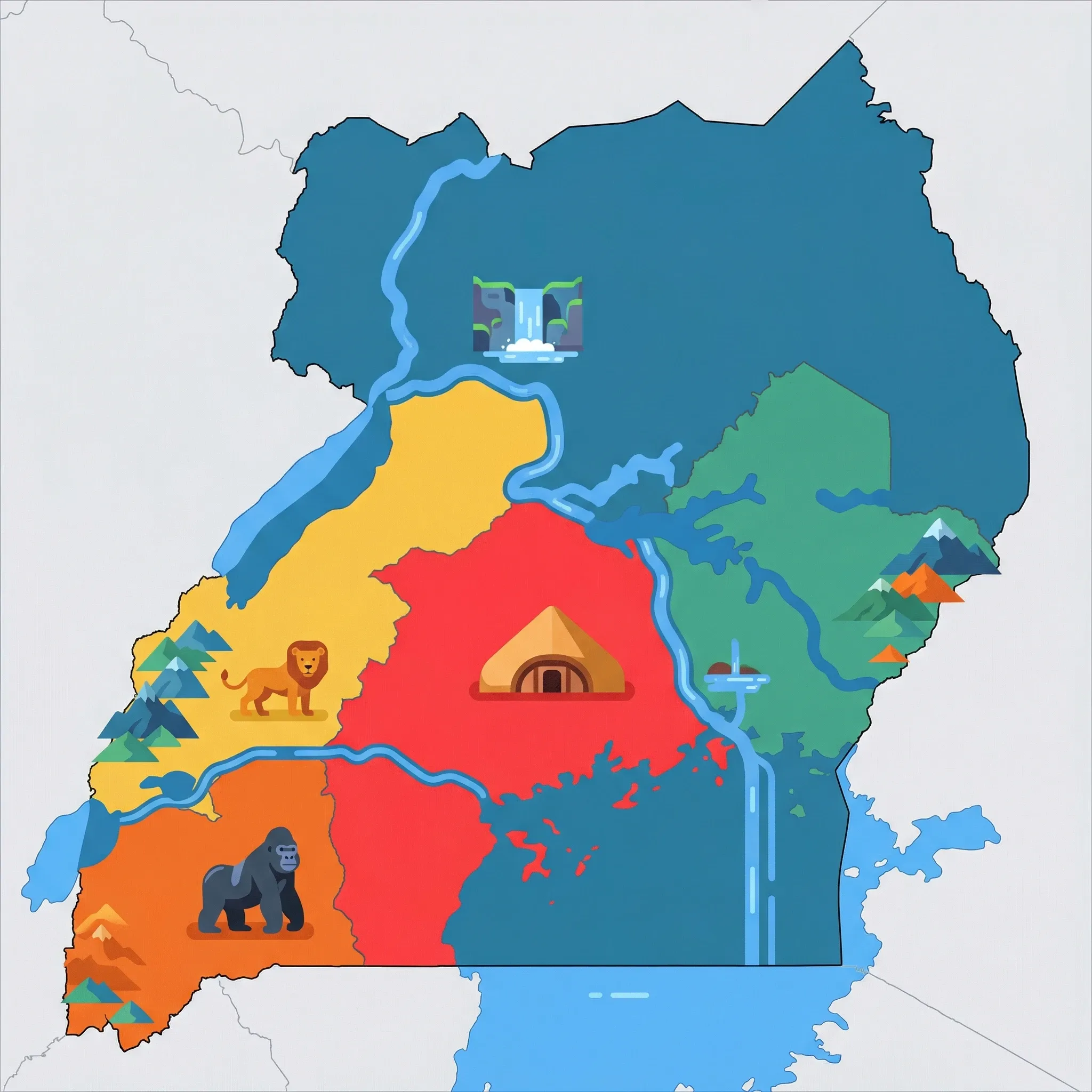
Click a region to explore
Jinja and the East offer a dynamic mix of history, adrenaline, and stunning water landscapes. Best known as the home of the Source of the Nile, where the world’s longest river exits Lake Victoria, Jinja has transformed into a hub for outdoor activity. For families, the vibe is relaxed and tropical. While the region is famous for Grade 5 white-water rafting, there are plenty of "soft adventure" options suitable for children, such as family float trips, water tubing, and cruises on the calm upper waters of the Nile.
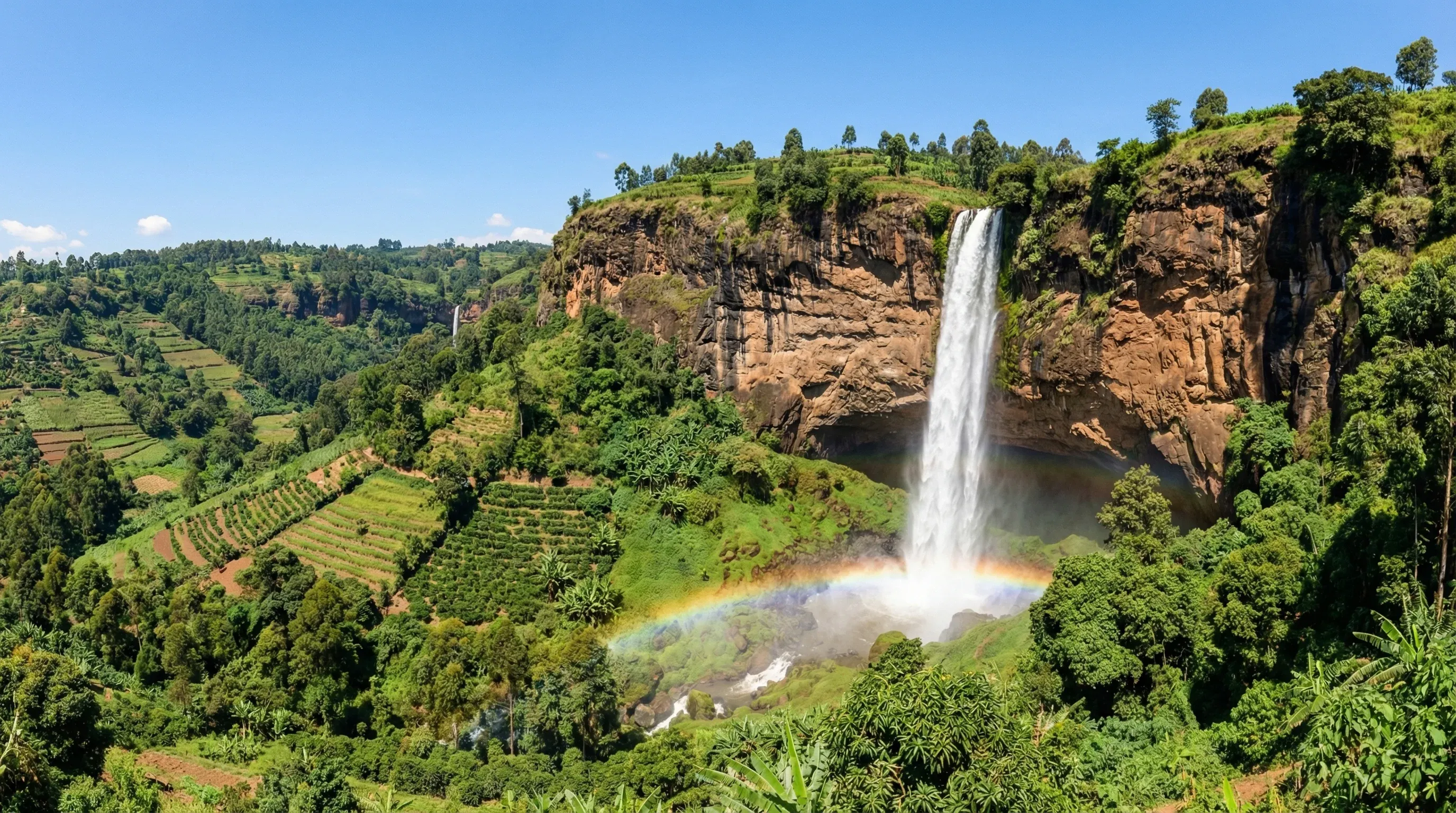
Further east, the landscape rises toward Mount Elgon, an ancient extinct volcano. The highlight here is Sipi Falls, a series of three stunning waterfalls cascading down the mountain edge. The walks around Sipi are manageable for active children and offer panoramic views of the Karamoja plains below. The region is lush, green, and culturally rich, with the Bagisu people’s coffee farming traditions shaping the landscape.
Key Attractions
The Source of the Nile gardens allow families to take a motorized boat ride to the exact point where the river starts—a geography lesson come to life. Bujagali Falls (now a dammed lake area) is excellent for quad biking and horseback riding safaris tailored to all ages. In the east, the Sipi Falls hike is a must-do; the second waterfall allows you to walk behind the curtain of water, which children find magical. Mount Elgon National Park offers caves to explore where elephants traditionally mined for salt.
Practical Advice
Jinja is an easy 2-hour drive from Kampala (traffic permitting), making it a great weekend escape. The climate is warm and humid. If visiting Sipi, bring hiking shoes with good grip as the trails can be muddy.
Food & Drink
Typical meal times: Lunch is usually 1:00 pm to 2:30 pm, and dinner 7:00 pm to 9:00 pm.
Typical meal costs: Family dining is affordable; expect to pay UGX 80,000–150,000 (approx. $22–40 USD / €20–38 EUR) for a meal for four.
Dietary requirements: Jinja has a cosmopolitan food scene with many Indian, Chinese, and continental restaurants that cater well to vegetarian and allergy-aware diets.
Signature dishes:
- The Rolex – Originating in this region, this is a rolled chapati with an omelette inside (Rolled Eggs = Rolex). It is Uganda's favorite street food.
- Malewa – A traditional dish from the Mbale area made from smoked bamboo shoots, served with groundnut sauce.
- Nile Tilapia – Fresh fish from the lake/river, usually deep-fried whole and served with chips.
Why this score?
The region is defined by high-intensity water sports, including world-class white-water rafting and kayaking on the Victoria Nile. Beyond the river, the East offers challenging treks on Mount Elgon and multi-stage hikes at Sipi Falls. While activities are organized, the environment remains wild and physically demanding for families.
Why this score?
Jinja City has some of the better medical facilities in Uganda outside of Kampala, including private clinics that can handle minor tourist ailments. However, for serious trauma or complex surgery, patients are still typically referred to the capital. Facilities in the more remote eastern reaches like Mount Elgon are very limited and basic.
Why this score?
Jinja is widely recognized as the adventure capital of East Africa, attracting a steady mix of international backpackers and domestic weekenders from Kampala. While it is a primary stop on the East African overland circuit for its Nile activities, it lacks the massive infrastructure of top-tier global adventure hubs. The Sipi Falls area serves as a significant secondary niche attraction for hikers.

Jinja is one of the more affordable tourism hubs. A family room in a good hotel costs UGX 250,000–450,000 (approx. $68–120 USD / €62–112 EUR). Food and transport are cheap. Adventure activities are the main expense: a family Nile cruise might cost UGX 185,000 (approx. $50 USD / €46 EUR) total.

Getting Here & Around
Getting Here
- Driving – The main route is the Kampala-Jinja highway (approx. 2–3 hours), though traffic can be heavy.
- Shuttle Bus – The "Pineapple Express" offers comfortable, safe shuttle transfers between Entebbe/Kampala and Jinja.
- Airports – Most travelers arrive via Entebbe (EBB) and drive, as there are no commercial flights directly to Jinja.
Getting Around
- Boda Boda – Motorcycle taxis are everywhere but are generally not recommended for families due to safety risks.
- Private Hire – Taxis (special hire) are the safest way to move between hotels and activity centers.
- Walking – Jinja town is walkable and leafy, with colonial-era architecture.
No airports in this region. See the country flight map for nearby connections.
Official Links

Packing List
Essential for water activities on the Nile and rocky shores
To capture photos during boat rides and waterfalls without water damage
Humidity is high and you will likely get wet; cotton takes forever to dry
Sun protection is crucial during hours spent on the river
Protect hands from thorns and stinging nettles when gripping vegetation during chimpanzee or gorilla treks.
Tsetse flies are attracted to blue and black; wear khaki, tan, or olive green to avoid painful bites.
Tuck trousers in to prevent safari ants (which have a nasty bite) from crawling up your legs on forest walks.
Keeps kids engaged on game drives when animals are distant; sharing one adult pair leads to frustration.
Roads to parks like Bwindi are winding and bumpy; essential for kids prone to car sickness.

Activities & Best Times

Hiking, wildlife, outdoor exploration, ecotourism
Features iconic landmarks like the Source of the Nile and Mount Elgon National Park, offering world-class river activities and volcanic trekking. Peak seasons align with the drier months which provide optimal visibility and trail accessibility for families.

Urban tourism, museums, historical sites, architecture
Jinja and Mbale provide authentic glimpses into Ugandan urban life and colonial history, though they lack the high-end cultural infrastructure of major capitals. Drier months are preferred for navigating the cities and visiting local markets.

Public Holidays & Calendar Next 12 months
Public holidays, festivals, cultural celebrations, and seasonal natural phenomena coming up in Jinja & East (source of Nile) over the next 12 months.
Loading holidays and events...

Travel Advisory
Five out of six major agencies recommend exercising increased vigilance or a high degree of caution due to significant crime and terrorism risks, though travel is not generally discouraged for the whole country.
Safety Topics
Traveller Advice (4 groups)

Female visitors should take extra precautions when travelling alone, particularly after dark, and be aware of cultural norms regarding attire.

Strict legislation passed in 2023 criminalizes same-sex relations with severe penalties, including life imprisonment or the death penalty. Discretion is vital.

Maintain a low profile, avoid carrying valuable items in public, and stay informed through local news to avoid areas of sudden unrest.

Personnel working in the Karamoja region or near the border with the Democratic Republic of Congo should implement enhanced security protocols due to the risk of banditry and cross-border violence.
Agency Summaries
Heightened vigilance is required due to security concerns involving terrorism and violent crime. Medical facilities are extremely limited outside the capital city.
Visitors should re-evaluate their need to travel due to the dangers posed by violent crime, terrorist activity, and potential civil unrest. Additionally, local legislation targeting individuals based on sexual orientation presents a serious risk.
A high level of alertness is recommended because of the ongoing threat of terrorism and violent criminal acts. Political tensions following elections may cause sudden changes in local security measures.
Travellers are advised to be highly vigilant due to persistent threats of terrorism and significant crime rates. Specific travel restrictions are in place for regions bordering South Sudan and the Democratic Republic of Congo.
It is necessary to exercise extreme care in public areas given the high risk of indiscriminate terror attacks. Avoiding political gatherings and rallies is strongly encouraged.
Most regions are under standard advice, though travellers must remain alert to crime and terrorism. Some previously restricted national parks are now accessible, but border areas remain hazardous.
Information is provided for general guidance only and does not constitute travel, safety, medical, or legal advice. Conditions may change. Users are responsible for independently verifying information before travel.