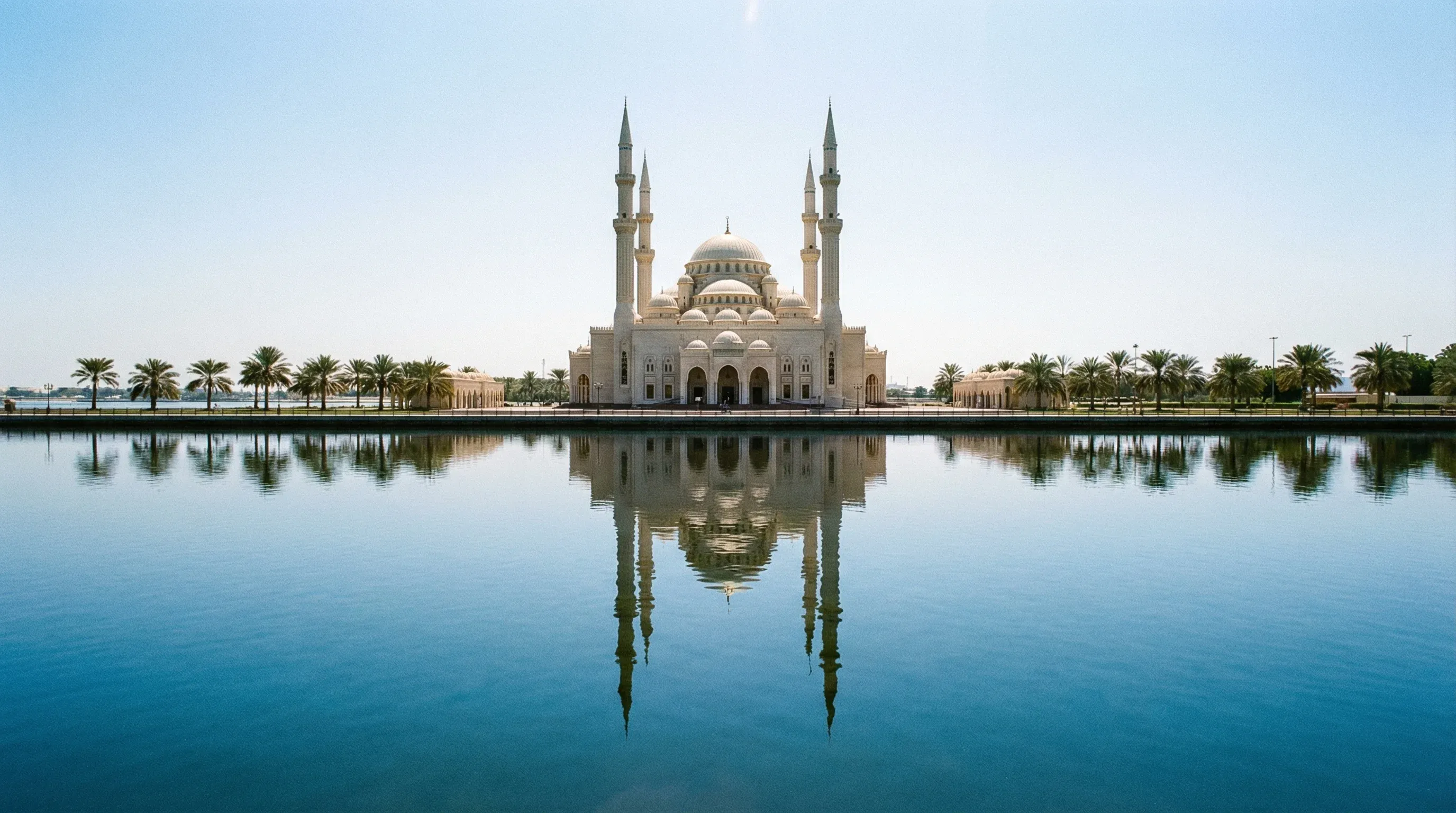

Sharjah & Northern Emirates
Culture, history, and family fun 🕌📚
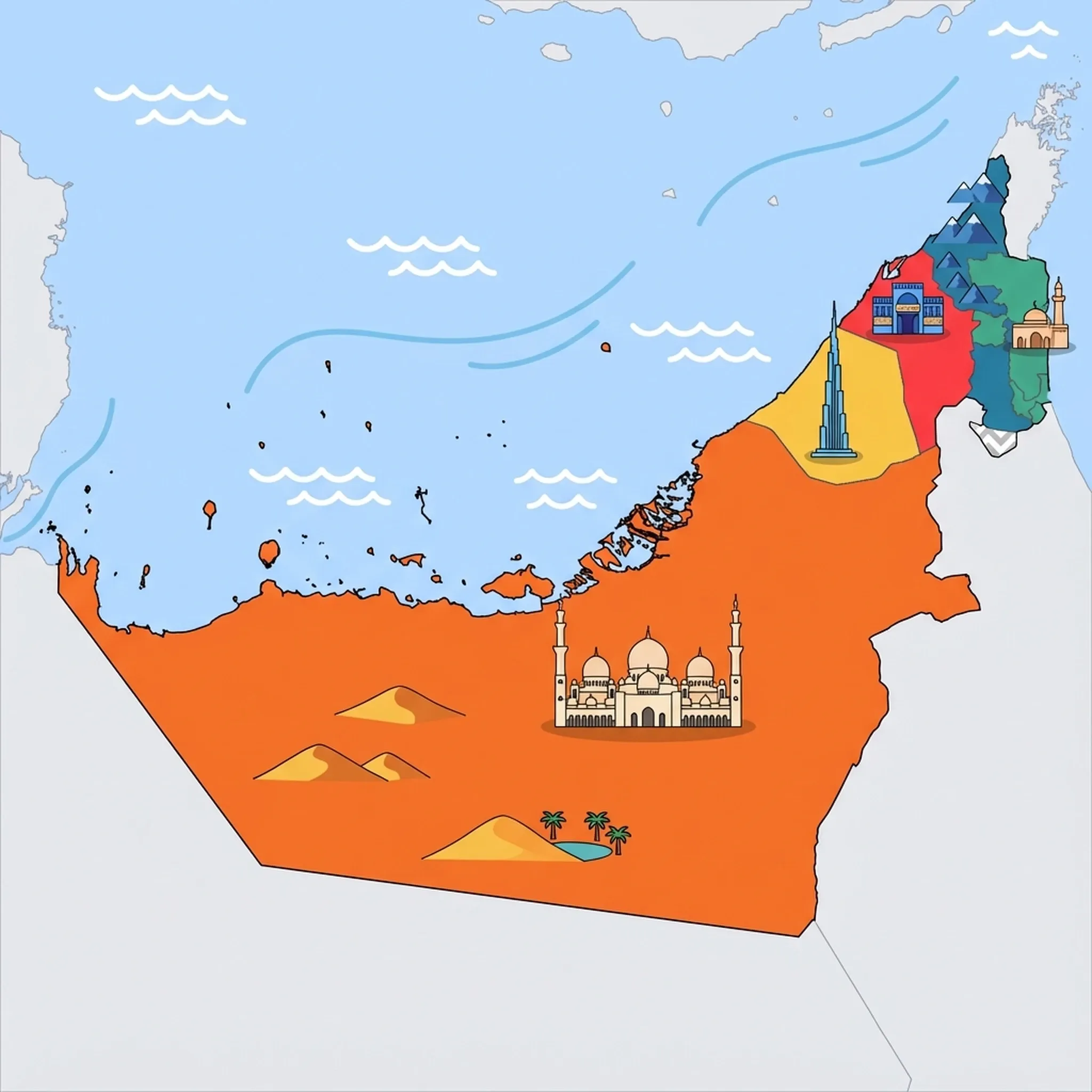
Click a region to explore
Overview
Sharjah, along with its smaller neighbours Ajman and Umm Al Quwain, forms the historic and cultural core of the UAE. UNESCO named Sharjah the 'Cultural Capital of the Arab World,' and it lives up to the title with a dedication to arts and heritage that is unmatched in the region. For families, this translates into a destination that is less about glitz and more about substance. The region is more conservative than Dubai (Sharjah is a 'dry' emirate, meaning no alcohol is sold), which creates a safe, wholesome, and calm environment. The streets are lined with grand government buildings designed in traditional Islamic architectural styles, and the pace of life is distinctly family-centric.
The geography here is surprising. While Sharjah City is an urban extension of Dubai, the emirate stretches deep into the desert to the archaeological site of Mleiha and north to the mangroves of Umm Al Quwain. It is a place of learning. The museums here are world-class and specifically designed for children, covering everything from science and archaeology to classic cars and calligraphy. Traffic can be heavy, but the reward is a deeper connection to the local identity and a much lower price point for accommodation and food. It is the best region for families who want to understand the soul of the Emirates.
Key Attractions
Sharjah's museums are its strength. The Sharjah Museum of Islamic Civilization is housed in a stunning converted souk and displays artifacts in a way that fascinates even young children. For active fun, Al Montazah Parks offers two distinct sections: 'Pearls Kingdom' (a highly-rated water park) and 'Island of Legends' (an amusement park), located on an island in the Khalid Lagoon. It's a favourite local family hangout.
Further inland, the Mleiha Archaeological Centre is a hidden gem. It offers guided desert tours where kids can find real fossils and visit Stone Age caves, combining desert adventure with genuine history. In the city centre, the 'Rain Room' (part of the Art Foundation) is a magical installation where you walk through pouring rain without getting wet—a surreal experience kids never forget.
Practical Advice
Sharjah has strict decency laws; modest dress (covering shoulders and knees) is expected more rigidly here than in Dubai. Traffic between Sharjah and Dubai is notorious during rush hours (6:30 am–9:00 am and 5:00 pm–8:00 pm); plan your movements to avoid these windows.
Food & Drink
Typical meal times: Similar to the rest of UAE, but restaurants often close briefly for Friday prayers (12:30 pm–1:30 pm). Evenings are lively with families eating out late.
Typical meal costs: Very budget-friendly. A feast for four in a local Mandi restaurant costs AED 80–120 (approx. $22–33 USD / €20–30 EUR). Hotel buffets are around AED 100 ($27 USD) per head.
Dietary requirements: excellent for Halal diets (100% Halal). Vegetarian options are plentiful in the many Indian restaurants. Gluten-free is less common in street eateries.
Signature dishes:
- Mandi – Ideally eaten on the floor with hands; meat (chicken/lamb) cooked in a tandoor-style pit served over spiced rice.
- Kunafa – A warm dessert made of spun pastry, soaked in sweet sugar-based syrup, and layered with cheese or cream.
- Regag Bread – Wafer-thin crispy bread made on a hot plate, smeared with cheese, egg, and crushed chips, a popular cornice snack.
Why this score?
The region offers some outdoor appeal, such as the archaeological and desert adventures at Mleiha and the mangrove forests of Kalba and Umm Al Quwain. However, the majority of the tourist experience is centered around museums, waterfront promenades, and urban heritage districts. It is more developed and less physically demanding than the rugged eastern mountains.
Why this score?
Sharjah boasts a very good healthcare system that is well-integrated with the rest of the UAE's high standards. University Hospital Sharjah and various private clinics provide high-quality, English-speaking services that are easily accessible to tourists. Access to world-class care is further bolstered by the region's immediate proximity to Dubai's medical infrastructure.
Why this score?
Sharjah is a recognized destination known as the cultural capital of the Arab world, attracting international visitors to its numerous museums and heritage sites. It benefits from its proximity to Dubai, often serving as a more affordable base for travelers. The regions of Ajman and Umm Al Quwain contribute moderate domestic and regional visitor flows, particularly for their beaches and waterparks.

Sharjah and Ajman are the most affordable emirates. A high-quality family hotel suite can cost as little as AED 250–450 (approx. $68–122 USD / €62–112 EUR). Food, taxis, and entry tickets are all 20-40% cheaper than in Dubai. Museum entry is often nominal (e.g., AED 10 / $2.70 USD for adults, free for kids).

Getting Here & Around
Getting Here
- Airports – Sharjah International Airport (SHJ) is a hub for budget carrier Air Arabia. Dubai Airport (DXB) is only 15km away.
- Driving – Directly connected to Dubai via E11 and E311. However, rush hour traffic is extremely heavy.
- Taxi – Easy to take a taxi from Dubai to Sharjah, but a cross-emirate surcharge applies (approx. AED 20 / $5 USD).
Getting Around
- Taxi – The best way to get around. Sharjah taxis are cheaper than Dubai's.
- Hop-on Hop-off Bus – The 'City Sightseeing Sharjah' bus is excellent for families, connecting Sharjah Museum of Islamic Civilization, the souks, and the waterfront.
- Walking – The Al Majaz Waterfront and Al Qasba areas are pedestrian-friendly, but you need transport between districts.
Nearby Airports (1 airport)
Sharjah International
SHJSharjah
View full flight map for United Arab Emirates →
Official Links

Packing List
Sharjah has stricter dress codes than Dubai; women should pack skirts/trousers below the knee and high necklines.
Umm Al Quwain's mangroves are full of flamingos and birdlife; binoculars make the boat trips much more engaging.
The abundance of art museums and intricate Islamic architecture often inspires kids to draw; great for quiet museum moments.
You will be taking shoes off frequently to enter mosques, traditional houses, and carpeted areas in museums.
Malls and cinemas have freezing air conditioning; also useful for modesty in souks.
Plastic bottles get hot instantly in the sun; keeps water cold during day trips.
Walking through hotel lobbies in swimwear is frowned upon; a kaftan or cover-up is essential.
Wet snap-towels provide immense relief from the intense heat when queuing outdoors.

Activities & Best Times

Hiking, wildlife, outdoor exploration, ecotourism
Boasts significant biodiversity at Sharjah Safari and Al Zorah Nature Reserve, plus unique desert archeology at Mleiha. Optimal for exploration during the cooler winter season; the summer heat is extreme and limits outdoor exploration.

Urban tourism, museums, historical sites, architecture
Sharjah is a globally recognized cultural hub with authentic heritage districts like the Heart of Sharjah and world-class museums. Winter is perfect for walking tours, while extensive indoor facilities make the shoulder seasons manageable for families.

Beach resorts, marine activities: diving, snorkelling, kite surfing, wind surfing, sailing
Offers high-quality coastal recreation at Ajman Corniche and Khorfakkan, though lacking the extensive reef systems of global leaders. Winter months provide ideal temperatures, while summer humidity and heat make beach activity uncomfortable.

Learning experiences, scientific sites, historical education
A high density of purpose-built learning facilities including the Sharjah Science Museum and Discovery Centre makes this a strong regional educational destination. Most sites are indoor and climate-controlled, though general tourism demand peaks in the cooler winter months.

Scenic drives, countryside tours, route-based travel
The Sharjah-Khor Fakkan Highway offers dramatic mountain scenery and world-class road infrastructure for scenic drives. Best visibility and comfortable stop-off conditions occur in winter; summer haze and heat significantly degrade the experience.

Sport tourism, fitness activities, active recreation
Established hiking routes like Al Rabi Tower and Fossil Rock provide excellent active recreation in desert landscapes. Activity is strictly limited to the winter months when temperatures allow for strenuous outdoor physical exertion.

Amusement parks, family entertainment venues
Features well-maintained water parks and indoor family entertainment centers like Pearls Kingdom. Peak periods align with warm but not extreme temperatures ideal for water activities, while summer heat renders outdoor parks unsuitable.

Events, celebrations, seasonal attractions
Hosts internationally significant events like the Sharjah International Book Fair and the Sharjah Biennial. Peak months are dictated strictly by the major event calendar which typically avoids the hottest summer months.

Attractions (22 total)



Public Holidays & Calendar Next 12 months
Public holidays, festivals, cultural celebrations, and seasonal natural phenomena coming up in Sharjah & Northern Emirates over the next 12 months.
Loading holidays and events...

Travel Advisory
Due to a tie between high-risk levels among major agencies, the advisory is set to the most severe status. The region is currently experiencing active military conflict, including missile and drone strikes. Travel is strongly discouraged, and those present should seek immediate shelter.
Safety Topics
Traveller Advice (3 groups)

Same-sex relationships are strictly illegal and punishable by law. Travellers with passports that indicate 'X' in the gender field are currently barred from entering or transiting through the UAE.

Conservative dress is expected in public. Be aware that victims of sexual assault can face legal challenges in the UAE, particularly if they have consumed alcohol, due to strict local laws and requirements for proof.

Travellers currently in the UAE should confirm the status of their flights before heading to the airport and be prepared to shelter in place during security incidents. Ensure your travel insurance remains valid, as some policies may be voided by high-level government warnings.
Agency Summaries
Smartraveller advises against all travel to the UAE due to the highly unstable security environment and recent military strikes. Australian citizens in the country should prioritize their safety, monitor local media, and consider leaving if safe commercial options are available.
Ireland advises its citizens to avoid non-essential travel to the UAE following a series of strikes and military activity in the Gulf. Those already in the region are told to adopt a shelter-in-place strategy and maintain constant contact with their travel providers.
The UK government advises against all non-essential travel to the UAE. British nationals currently in the country are encouraged to stay indoors and seek cover in reinforced structures during alerts, particularly to protect against falling debris from intercepted projectiles.
Global Affairs Canada recommends avoiding all travel to the United Arab Emirates due to active military operations in the region. Canadian citizens are advised to shelter in safe locations, stay away from military sites or U.S. government facilities, and prepare for departure once commercial flights are available.
The U.S. State Department has raised the advisory to Level 3, urging citizens to reconsider travel plans because of the threat of terrorism and armed conflict. On March 2, 2026, the department ordered the departure of non-emergency government personnel due to the potential for drone and missile attacks targeting the region.
New Zealand's SafeTravel portal advises against all travel to the UAE, citing reports of missile strikes in major cities such as Dubai. Kiwis in the region are urged to leave as soon as it is safe and to be prepared for further flight disruptions.
Information is provided for general guidance only and does not constitute travel, safety, medical, or legal advice. Conditions may change. Users are responsible for independently verifying information before travel.