
Northern Ireland
Mythical coasts, giant legends, and Titanic history 🌊🦕
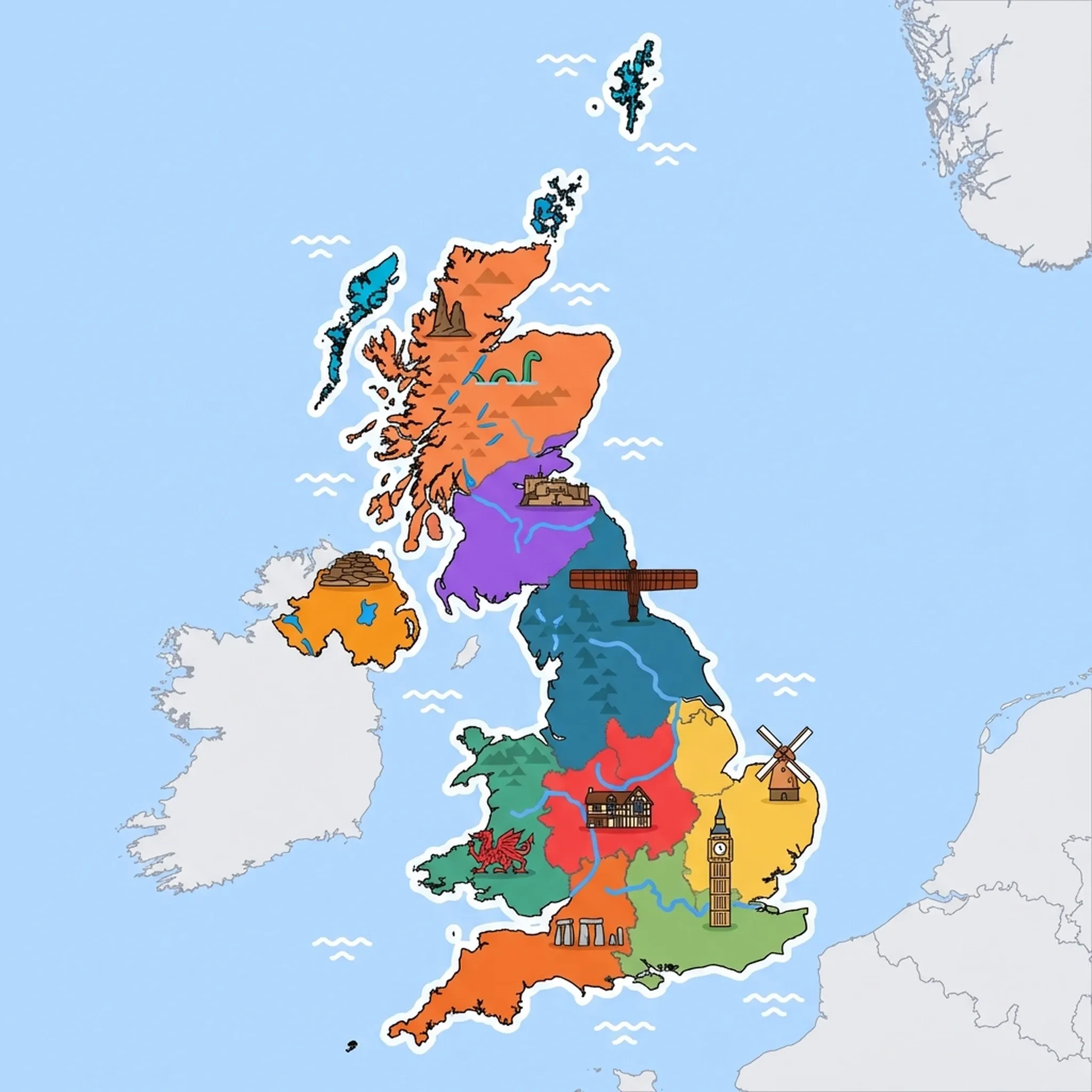
Click a region to explore
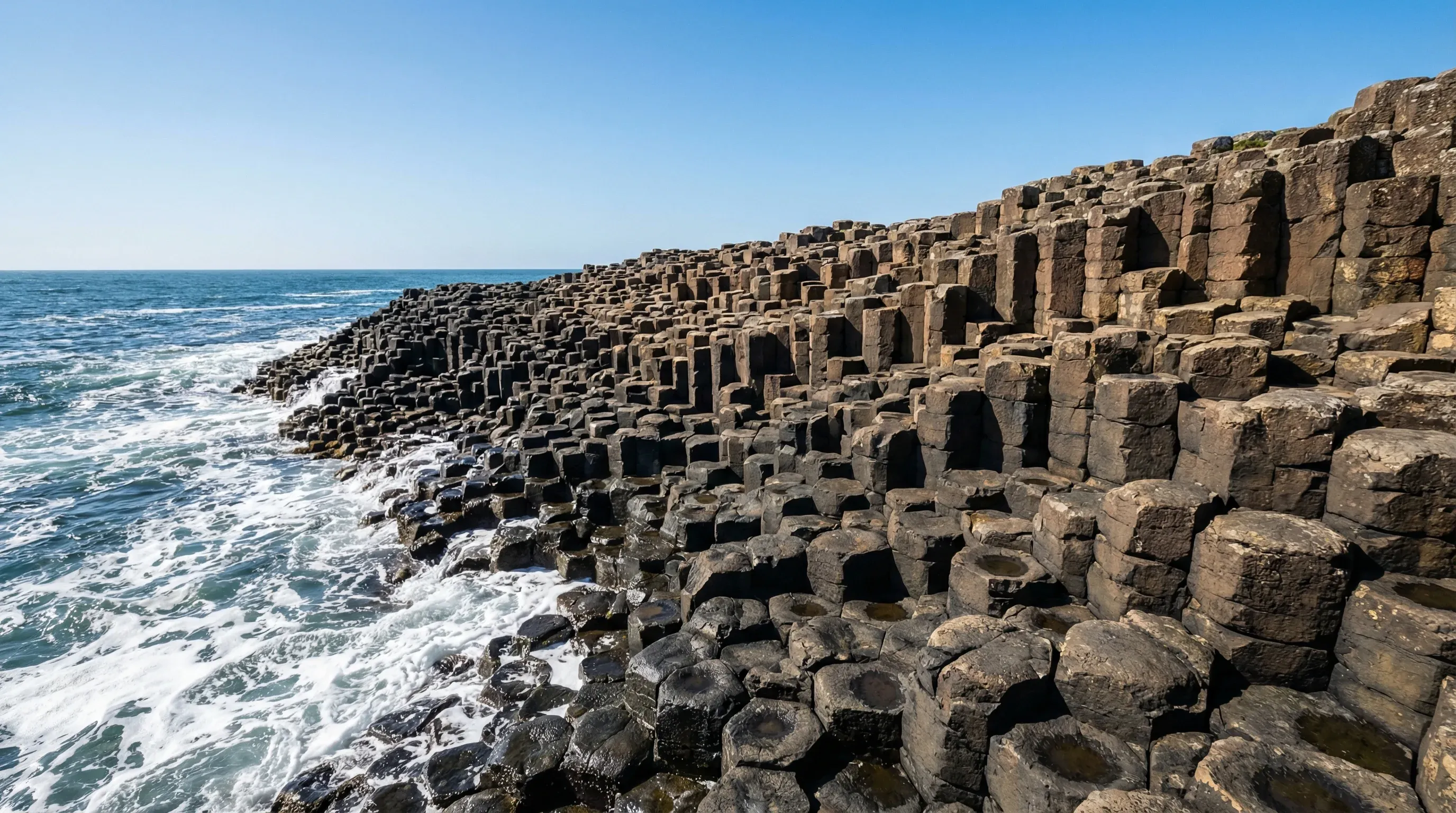
Northern Ireland is small but mighty. You can drive across it in a couple of hours, yet it contains some of the most spectacular coastal scenery in Europe. For families, the headline act is the Causeway Coast, a playground of geology and myth where children can clamber over the hexagonal stones of the Giant's Causeway and imagine the giant Finn McCool fighting his Scottish rival. The coast is rugged and exciting—rope bridges, cliff paths, and castle ruins perched on precipices ignite the imagination.
Belfast has transformed into a modern, welcoming city. It is the birthplace of the Titanic, and the city celebrates this legacy with world-class interactive museums that captivate children. Beyond the coast and capital, the landscape is lush and green, with the Mourne Mountains offering 'Narnia-esque' landscapes (C.S. Lewis was born here and inspired by them). It is a fantastic self-drive destination; the roads are generally quiet, the distances short, and the welcome incredibly warm.
Key Attractions
The Giant's Causeway is the unmissable UNESCO site; arrive early or late to avoid the tour buses. Nearby, the Carrick-a-Rede Rope Bridge offers a thrill for brave kids (and parents) crossing a 30-metre chasm. For a modern cliff-face adventure, The Gobbins Cliff Path is a spectacular guided walk through tunnels and over bridges crashing waves.
In Belfast, Belfast Zoo on the slopes of Cave Hill offers great views and animals. History buffs should visit Carrickfergus Castle, one of the best-preserved medieval structures in Ireland. Fans of fantasy will recognize the Dark Hedges and other spots along the Causeway Coastal Route from Game of Thrones.
Practical Advice
The currency is Pounds Sterling (GBP), not Euro, though some border businesses accept Euro. Sunday mornings can be very quiet with shops opening later (1:00 pm). Rain is frequent—pack layers. Driving is on the left.
Food & Drink
Typical meal times: Lunch 12:30 pm to 2:00 pm; Dinner 5:30 pm to 8:30 pm.
Typical meal costs: Reasonable. Pub mains £13–17 (approx. $16–21 USD / €15–20 EUR). A hotel breakfast is often a massive feast included in the room rate.
Dietary requirements: Good in Belfast and Derry~Londonderry. Gluten-free options are common. In rural areas, expect traditional meat-and-veg staples.
Signature dishes:
- Ulster Fry – The ultimate breakfast: soda bread, potato bread, bacon, sausage, egg, and black pudding.
- Soda Bread – A dense, yeast-free bread risen with bicarbonate of soda, delicious fried or toasted.
- Yellowman – A rock-hard, honeycomb-like yellow toffee sold at country fairs (like the Ould Lammas Fair).
- Fifteens – A traybake made of 15 digestive biscuits, 15 marshmallows, 15 cherries, and condensed milk.
Why this score?
With its rugged coastline, the Mourne Mountains, and unique geological features, Northern Ireland offers a good degree of outdoor adventure. Activities like the Gobbins cliff path and the Causeway Coast provide a sense of wildness that is still relatively accessible.
Why this score?
Belfast provides excellent healthcare facilities, including major teaching hospitals that cater well to tourists. Rural areas are adequately covered, though the density of specialist facilities is lower than in the major metropolitan areas of England.
Why this score?
The Giant's Causeway and the Titanic Belfast museum have significantly raised the region's international profile in recent years. While still seeing fewer visitors than London or Scotland, it is a recognized destination with a growing influx of global travelers.

Northern Ireland is generally cheaper than England and the Republic of Ireland. A family meal is often £50–70 (approx. $65–90 USD / €60–80 EUR). Attractions like the <a data-attraction-id="17181">Giant's Causeway</a> visitor centre charge admission, but you can actually walk to the stones for free if you don't use the centre's parking/facilities.

Getting Here & Around
Getting Here
- Airports – Belfast International (BFS) and George Best Belfast City (BHD) serve UK and European routes.
- Ferry – Ferries run from Cairnryan (Scotland) to Belfast/Larne, and from Liverpool to Belfast. A great way to bring your own car.
- Train – The Enterprise train connects Dublin (Republic of Ireland) to Belfast in about 2 hours.
Getting Around
- Car – The best way to explore. The Causeway Coastal Route is one of the world's great drives.
- Train – NI Railways connects Belfast to the coast (Portrush) and Derry~Londonderry, offering scenic coastal views.
- Bus – Translink creates good connections, but rural schedules can be sparse.
Nearby Airports (3 airports)
Aldergrove Airport
BFSBelfast
City
BHDBelfast
Londonderry Eglinton
LDYDerry
View full flight map for United Kingdom →
Official Links

Packing List
If you plan to cross the border into Donegal (Republic of Ireland) for a day trip.
The Causeway Coast is incredibly exposed to Atlantic winds.
The basalt columns at Giant's Causeway are slippery when wet (which is often).
Essential for kids to play in parks or hike during frequent, unpredictable rain showers.
Many public toilets and seaside arcade machines still require exact change.
UK sockets are unique (three rectangular pins) and different from the rest of Europe.
Many UK beaches are pebbly or rocky; these protect feet while exploring tide pools.
Tap water is safe and delicious; free refill stations are common in museums and cafes.

Activities & Best Times

Hiking, wildlife, outdoor exploration, ecotourism
Features authentic immersion in the Mourne Mountains and the Glens of Antrim with highly developed forest parks and rural experiences. Summer provides the long daylight hours and trail accessibility required for sophisticated wilderness exploration.

Urban tourism, museums, historical sites, architecture
Belfast and Derry offer high-quality urban heritage, from the world-class Titanic Belfast to the historic city walls. The region's culture is best experienced during the vibrant summer festival season or the festive Christmas market period in December.

Sport tourism, fitness activities, active recreation
Features world-class infrastructure for golf and hiking, alongside purpose-built adventure centers like Colin Glen. The primary sports tourism season is concentrated in the drier, brighter months to ensure facility availability and optimal course conditions.

Learning experiences, scientific sites, historical education
Strong educational appeal through purpose-built facilities like W5, Armagh Planetarium, and the unique Marble Arch Caves. These indoor and geological sites provide a solid educational alternative during transitional months outside the deepest winter period.

Scenic drives, countryside tours, route-based travel
The Causeway Coastal Route is an internationally recognized scenic drive connecting major heritage sites. Peak visitation occurs during the late spring to early autumn window for optimal visibility and driving safety on winding coastal roads.
Amusement parks, family entertainment venues
Includes several high-quality aquatic centers and regional amusement parks that cater well to families. Most operations are strictly seasonal, focusing on the peak school holiday windows when all facilities and outdoor rides are fully operational.

Beach resorts, marine activities: diving, snorkelling, kite surfing, wind surfing, sailing
Attractions cited (Giant's Causeway, Gobbins Cliff Path) are coastal *scenery* activities, not beach recreation. 'Good' suggests warm-water beach holidays; this is cold-water coastal walking. Recalibrate to 'marginal'.

Events, celebrations, seasonal attractions
Home to the world-renowned Derry Halloween festival, which offers a truly unique and authentic cultural experience in October. December also provides high-quality seasonal events, though the region lacks other major international festival draws throughout the year.

Spa retreats, wellness centers, peaceful getaways
Offers unique and authentic seaweed baths that reflect local coastal heritage, though dedicated high-end wellness facilities are relatively few. Best visited during months when coastal accessibility and general climate support a relaxing atmosphere.

Attractions (31 total)



Public Holidays & Calendar Next 12 months
Public holidays, festivals, cultural celebrations, and seasonal natural phenomena coming up in Northern Ireland over the next 12 months.
Loading holidays and events...

Travel Advisory
Four out of six major agencies advise exercising increased caution, primarily citing a substantial threat of terrorism. Two agencies maintain baseline ratings, but the consensus indicates a heightened security environment compared to historical norms.
Safety Topics
Traveller Advice (5 groups)

Travellers should use a 'buddy system' and remain aware of their surroundings in crowded nightlife areas to avoid theft or incidents.

Ensure you have obtained a valid Electronic Travel Authorisation (ETA) before your trip if you are from a visa-exempt country. Keep digital and physical copies of identification and monitor local news for security updates.

The UK is generally very safe for LGBTQ+ travellers, though discretion is recommended in some rural areas or specific districts in Northern Ireland where social sensitivities may vary.
The UK has robust accessibility infrastructure, but older public transport systems (like parts of the London Underground) may have limited access. Research specific routes in advance.

Standard safety precautions should be observed, particularly when using public transport at night. Report any harassment to local police.
Agency Summaries
A heightened level of caution is advised because of the likelihood of terrorist attacks. Visitors should also be aware of new digital border requirements that affect dual nationals and visa-exempt travellers.
Heightened vigilance is recommended due to the potential for terrorist attacks, which may target public areas and transport hubs. Dissident violence in Northern Ireland remains a specific localized concern.
Irish citizens should follow local authorities' guidance and stay informed via news outlets. Special rules apply to the Common Travel Area regarding identification and entry.
Travellers should remain highly vigilant in the United Kingdom primarily due to the ongoing threat of terrorist activity. Recent changes to border entry requirements, including the Electronic Travel Authorisation, are being strictly enforced.
Increased caution is recommended due to the persistent risk of terrorism. Travellers can expect visible security measures in public places and should prepare for the new Electronic Travel Authority system.
Information is provided for general guidance only and does not constitute travel, safety, medical, or legal advice. Conditions may change. Users are responsible for independently verifying information before travel.