

Overview
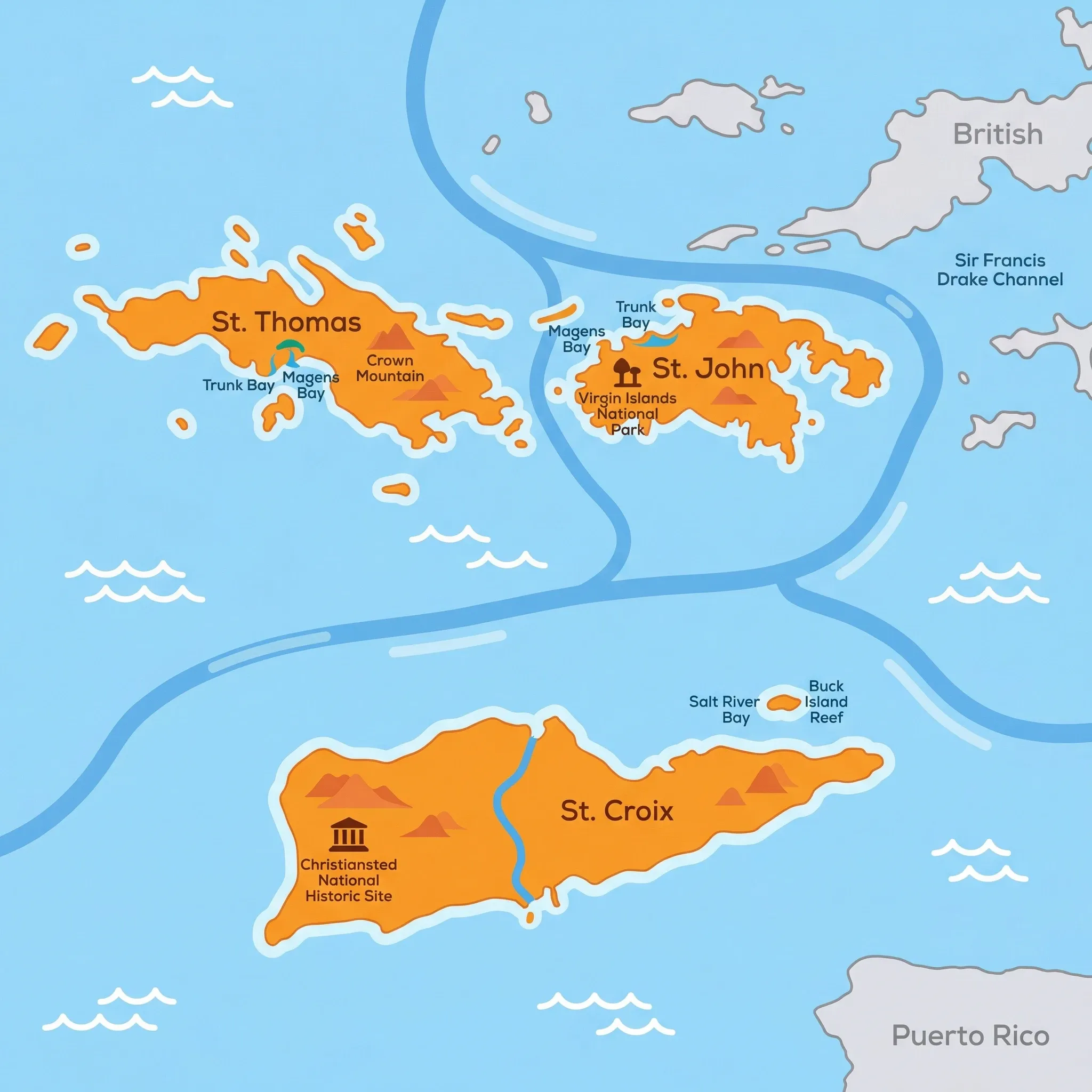
The US Virgin Islands consist of three distinct main islands, each offering a unique vibe for family travelers. St. Thomas is the bustling gateway, known for shopping, steep hills, and the cosmopolitan harbour of Charlotte Amalie. St. John is the nature lover's paradise, with two-thirds of the island protected as a national park, offering pristine hiking trails and some of the world's most beautiful beaches. St. Croix, the largest island, offers a more laid-back, cultural experience with historic towns and a pastoral landscape. The climate is tropical and warm year-round, making it a perfect winter escape.
For families, the islands are exceptionally convenient: U.S. citizens do not need a passport to visit, the currency is the U.S. dollar, and English is the official language. Despite this familiarity, the islands feel distinctly Caribbean, with turquoise waters, coral reefs teeming with fish, and a relaxed island pace. Whether you are exploring the underwater trails at Trunk Bay, learning about history at Fort Christian, or taking a jeep safari through the hills, the islands provide a safe and exotic adventure that is easy to manage with children.
Key Attractions
On St. John, nature takes centre stage. Families must visit the Virgin Islands National Park, which covers most of the island. The crown jewel is Trunk Bay, famous for its underwater snorkelling trail where signs on the sea floor guide you through the coral reef-a magical experience for young swimmers. For a quieter beach day with a high chance of spotting sea turtles in the shallows, Maho Bay Beach is calm, shallow, and incredibly family-friendly. Active families can tackle the Reef Bay Trail, a hike that leads past ancient petroglyphs and sugar mill ruins to a secluded beach.
St. Thomas offers accessible fun and stunning views. Magens Bay is widely considered one of the world's most beautiful beaches, with a mile of white sand and calm waters perfect for wading. History comes alive at Fort Christian, a vibrant red Danish fortress that is the oldest standing structure in the islands, housing a museum that fascinates kids with tales of pirates and colonial life.
St. Croix is rich in culture and history. The Christiansted National Historic Site preserves the colonial Danish grandeur of the waterfront, while Fort Christiansvaern allows kids to explore cannons and dungeons. For a day trip, take a boat to Buck Island Reef National Monument, an uninhabited island with an incredible coral reef and a beach that feels like the edge of the world. The St. George Village Botanical Garden offers a beautiful walk through ruins and tropical flora, providing a shady break from the beach.
Practical Advice
The high season runs from December to April, when the weather is finest but prices are highest. Hurricane season is officially June to November, with peak risk in September. While U.S. currency and plugs are used, a critical difference is that driving is on the left side of the road, though cars have left-hand steering wheels (standard U.S. cars). This can be confusing for drivers, so pay extra attention at roundabouts and turns. Sun protection is vital; the Caribbean sun is intense.
Food & Drink
Typical meal times: Breakfast is usually 7:00 am to 10:00 am, lunch 12:00 pm to 2:00 pm, and dinner 6:00 pm to 9:00 pm.
Typical meal costs: $20–40 (approx. €18–37 EUR / £15–30 GBP) for a casual main dish; $40–60+ (approx. €37–55+ EUR / £30–47+ GBP) for fine dining. Groceries are very expensive.
Dietary requirements: Vegetarian, vegan, and gluten-free options are widely available in tourist areas and resorts. Most menus are in English and staff are knowledgeable about ingredients.
Family-friendly dining: Children are welcome everywhere. Most restaurants offer kids' menus with standard American favourites like burgers and chicken tenders alongside local options.
Signature dishes:
- Pate – A fried pastry turnover filled with spiced ground beef, chicken, or saltfish. A perfect on-the-go snack for kids.
- Johnny Cake – A fluffy, slightly sweet fried unleavened bread often served as a side or with breakfast.
- Fungi – A cornmeal and okra polenta-like side dish, traditionally served with fish.
- Conch Fritters – Deep-fried balls of batter containing conch meat, peppers, and onions, usually served with a dipping sauce.

The USVI is an expensive destination. Expect to pay significantly more than mainland US prices for food and accommodation. A family of four will likely spend $250–400 (approx. €230–370 EUR / £195–310 GBP) per day for moderate lodging, car rental, and casual meals. Grocery prices are notably high due to importation costs.
Age Suitability





Did you know? United States Virgin Islands welcomes approximately 685,000 international visitors per year. Most visitors come from Americas.
Why this score?
Adventure is primarily centered around the Virgin Islands National Park on St. John, which offers rugged trails and world-class snorkeling. St. Croix adds to the appeal with challenging terrain like 'The Beast' and deep-water diving sites along the island's wall. However, the abundance of luxury resorts and developed tourist corridors keeps the adventure level accessible rather than extreme.
Why this score?
As a U.S. territory, the region provides medical services that adhere to American standards, including English-speaking personnel and straightforward insurance billing. Main hospitals on St. Thomas and St. Croix are capable of handling most tourist emergencies and standard care. For highly specialized procedures or major trauma, patients are typically transferred to larger facilities in Puerto Rico or the mainland United States.
Why this score?
With over 680,000 annual inbound tourists and a massive cruise presence, the USVI is a major Caribbean hub that balances international appeal with domestic U.S. ease. It is well-known for its white-sand beaches and historic towns, placing it firmly in the moderate tourism bracket globally. While highly popular regionally, it does not reach the multi-million visitor scale of top-tier global destinations.
The USVI is one of the more expensive Caribbean destinations. Accommodation is pricey, with standard family hotels costing $250–450 (approx. €230–415 EUR / £200–360 GBP) per night. Grocery prices are 20-30% higher than the US mainland. To save money, eat local 'pates' from food trucks ($5–8 / approx. €4.50–7.50 EUR) rather than sit-down lunches.

Getting There & Around
Getting There
- By Air – Two main airports serve the islands: Cyril E. King Airport (STT) on St. Thomas and Henry E. Rohlsen Airport (STX) on St. Croix. Direct flights arrive from major US East Coast hubs.
- By Sea – Cruise ships are a major mode of arrival, docking primarily in St. Thomas. Ferries connect the British Virgin Islands to the US Virgin Islands, but require passport checks.
- Entry Requirements – U.S. citizens do not need a passport but must prove citizenship (birth certificate + photo ID) to return to the mainland, though a passport is highly recommended to speed up the process. Non-U.S. citizens require a valid passport and may need a visa. Check your government website for the latest visa requirements, or use the IATA Travel Centre entry-requirements checker.
Getting Around
- Car Hire – Essential for exploring St. John and St. Croix freely. Jeep Wranglers are the standard rental to handle steep hills. Driving is on the left.
- Safari Buses – On St. Thomas and St. Croix, these open-air converted trucks (often called "dollar rides") offer cheap public transport along fixed routes. They are fun for kids but have no fixed schedule.
- Ferries – The primary link between St. Thomas (Red Hook) and St. John (Cruz Bay). The ride takes about 20 minutes and runs hourly. Passenger ferries also connect downtown Charlotte Amalie to St. John and St. Croix (less frequent).
- Taxis – Widely available but charged per person, not per ride, which adds up quickly for families. Rates are fixed by destination.

Packing List
Strictly enforced law bans 'Toxic 3 Os' chemical sunscreens to protect coral reefs.
The Caribbean sun is intense; these save money on expensive local sunscreen.
Essential for 'no-see-ums' (sand flies) which are active at dusk on beaches.
Tap water is often rainwater cistern; keeping bought water cold is a challenge in the heat.
Essential for the ferry between islands and the very steep, winding roads on St. John.
Protects little feet from hot sand, rocky entrances, and sea urchins.
Required for 'dollar ride' safari buses and some local food stands that don't take cards.

Activities & Best Times

Adventure & Nature
ExcellentHiking, wildlife, outdoor exploration, ecotourism
The Virgin Islands National Park provides world-class immersion in tropical ecosystems, supplemented by botanical gardens and eco-farms on St. Croix. These natural assets are best explored during the cooler, drier winter months when trail conditions are optimal.

Beach & Sea
ExcellentBeach resorts, marine activities: diving, snorkelling, kite surfing, wind surfing, sailing
USVI beaches (Trunk Bay, Magens Bay) are internationally renowned, consistently ranked among world's best. Trunk Bay's underwater snorkel trail is globally famous. This is world-class Caribbean beach territory, not merely 'good'.

City & Cultural
Very GoodUrban tourism, museums, historical sites, architecture
Features exceptionally well-preserved Danish colonial architecture and historic forts in Charlotte Amalie and Christiansted. The winter months offer the most comfortable climate for walking tours of these significant heritage sites.

Sports & Active
Very GoodSport tourism, fitness activities, active recreation
The region boasts significant infrastructure for active tourism, including major zipline courses and well-maintained hiking networks like the Reef Bay Trail. These outdoor activities are most enjoyable during the drier season to avoid tropical downpours and high humidity.

Educational & Exploratory
GoodLearning experiences, scientific sites, historical education
Multiple substantial educational attractions exist: Virgin Islands National Park visitor centers with ecosystem interpretation, Coral World Ocean Park (marine education), Estate Whim Plantation Museum (slavery/colonial history). This is significantly better than 'marginal'.

Road Trips & Scenic
GoodScenic drives, countryside tours, route-based travel
Scenic drives like North Shore Road on St. John and Skyline Drive on St. Thomas offer spectacular coastal vistas. Peak months provide the best visibility and driest road conditions for navigating the islands' steep and winding terrain.

Attractions (14 total)



Public Holidays & Calendar Next 12 months
Public holidays, festivals, cultural celebrations, and seasonal natural phenomena coming up in United States Virgin Islands over the next 12 months.
Loading holidays and events...

Travel Advisory
All major international agencies recommend standard safety precautions. No significant security or health warnings are currently active for the territory beyond seasonal weather risks and common petty crime.
Safety Topics
Traveller Advice (2 groups)

Ensure you have comprehensive travel insurance that specifically covers medical evacuation. Visitors from countries in the Visa Waiver Program must obtain an approved ESTA prior to arrival.

Solo female travellers should be aware that incidents of verbal harassment and sexual assault have been reported; it is advisable to avoid unpopulated areas and isolated beaches after dark.
Agency Summaries
Irish citizens are advised to take standard safety measures. The guidance emphasizes entry requirements via the Visa Waiver Program and warns about the potential for extreme weather during the hurricane season.
The United Kingdom provides general safety guidance for the USA and its territories, including the U.S. Virgin Islands. No specific warnings against travel are in place, though visitors are advised to monitor local conditions and have appropriate insurance.
Travelers should maintain a standard level of safety awareness similar to what they would practice in Canada. While the territory is generally safe, petty crime occurs and natural hazards like hurricanes are seasonal concerns.
Australian authorities recommend standard safety vigilance. Guidance highlights the prevalence of violent and gun-related crime in the broader U.S. context and notes that medical costs are significantly higher than in Australia.
New Zealand does not have a specific restrictive advisory for the islands. Travellers are encouraged to ensure they have comprehensive medical insurance, particularly for air evacuation, and to protect against insect-borne diseases.
Information is provided for general guidance only and does not constitute travel, safety, medical, or legal advice. Conditions may change. Users are responsible for independently verifying information before travel.