

Overview
Uruguay is often described as an oasis of calm in South America. Nestled between giant neighbors Brazil and Argentina, this small nation punches above its weight in terms of stability, safety, and quality of life. For families, it offers a gentle introduction to Latin American culture without the chaotic traffic or intensity found elsewhere. The landscape is defined by rolling green plains (pampas) and a stunning Atlantic coastline that stretches for hundreds of miles. The climate is temperate, with four distinct seasons, though the ocean breeze keeps the air fresh even in summer.
The cultural vibe is famously laid-back-the national motto might as well be "tranquilo". Children are welcomed everywhere, from late-night restaurants to city squares. While the beaches are the main summer draw, the interior offers a chance to stay at working estancias (ranches) where kids can ride horses, help with farm animals, and sleep under starry skies. Whether you are cycling along the endless riverfront in Montevideo or climbing the lighthouse in historic Colonia, Uruguay provides a safe, welcoming, and stress-free environment for family adventures.
Key Attractions
Start your journey in Montevideo, a capital city that feels more like a collection of neighborhoods. The Mercado del Puerto is a feast for the senses; while it's famous for its sizzling steak grills, the lively atmosphere and street performers make it entertaining for all ages. Just a short taxi ride away is Parque Rodó Amusement Park, a vintage-style park that smaller children adore, set within expansive green gardens. For a dose of culture, the majestic Teatro Solís offers family-friendly tours and performances, while the nearby Museo Nacional de Historia Natural engages curious minds with dinosaur fossils and local wildlife exhibits.
West of the capital lies the UNESCO World Heritage gem of Colonia del Sacramento. Its Barrio Histórico is pedestrian-friendly and magical for kids to explore, with drawbridges, climbing lighthouses, and old cannons facing the river. Heading east to the Punta del Este & East Coast region, families flock to the beaches. Playa Mansa in Punta del Este has calm, pool-like waters safe for toddlers, while the famous sculpture La Mano (The Hand) emerging from the sand is a mandatory photo stop. For a unique day trip, visit the nearby Isla de Lobos, home to one of the largest sea lion colonies in the world.
Safety
Uruguay is statistically the safest country in South America, but petty crime does exist. In Montevideo, exercise caution in the Ciudad Vieja (Old City) and downtown areas at night; these areas can become deserted and less safe after business hours. Avoid displaying expensive jewelry or electronics openly in street crowds. During the summer high season, resort towns like Punta del Este see an increase in opportunistic theft, so never leave bags unattended on the beach or valuables visible in parked cars. Violent crime against tourists is rare.
Practical Advice
The best time to visit is during the Southern Hemisphere summer (December to February) for beaches, though prices peak and accommodation books up months in advance. The shoulder seasons (March–April and November) offer pleasant weather and lower costs. No special vaccinations are typically required for Uruguay, but always check current advice. Tap water is generally safe to drink in major cities, a rarity in the region. Most shops and services close on Sundays, so plan accordingly.
Food & Drink
Typical meal times: Uruguayans eat late. Lunch is typically 1:00 pm to 3:00 pm. Dinner restaurants often do not open until 8:00 pm, and locals rarely arrive before 9:30 pm or 10:00 pm. If you have young children, look for cafes that serve food all day or hotel restaurants.
Typical meal costs: 800–1,200 UYU (approx. $20–30 USD / €19–28 EUR) for a main dish in a mid-range restaurant. A casual chivito sandwich costs around 600–800 UYU (approx. $15–20 USD / €14–19 EUR). High-end dining can easily exceed 2,000 UYU (approx. $50 USD / €47 EUR) per person.
Dietary requirements: Uruguay has the highest beef consumption per capita in the world, so vegetarians may find options limited to pasta, pizza, and salads in traditional parrillas. However, modern cafes in Montevideo and Punta del Este increasingly offer vegetarian and gluten-free choices. Celiac awareness is growing, with "Sin Gluten" products available in supermarkets.
Family-friendly dining: Children are welcome everywhere. Most restaurants offer highchairs (sillas altas) and are happy to simplify pasta or meat dishes for kids. It is common to see families dining together very late at night.
Signature dishes:
- Asado – The national barbecue ritual featuring various cuts of beef and sausages cooked over wood embers.
- Chivito – A massive steak sandwich stacked with ham, cheese, bacon, lettuce, tomato, egg, and mayonnaise-a kid favourite.
- Tortas Fritas – Fried dough discs dusted with sugar, traditionally eaten on rainy days with mate.
- Dulce de Leche – A sweet, caramel-like milk spread found in everything from cakes to ice cream.
- Postre Chajá – A sponge cake dessert topped with meringue, cream, and peaches, originating from Paysandú.

Uruguay is the most expensive country in South America. A family of four should budget around 8,000–12,000 UYU (approx. $200–300 USD / €190–280 EUR) per day for mid-range accommodation, meals, and car hire. Supermarket prices are comparable to Western Europe. Fuel is particularly pricey.
Age Suitability




Did you know? Uruguay welcomes approximately 3.1 million international visitors per year.
Explore Regions
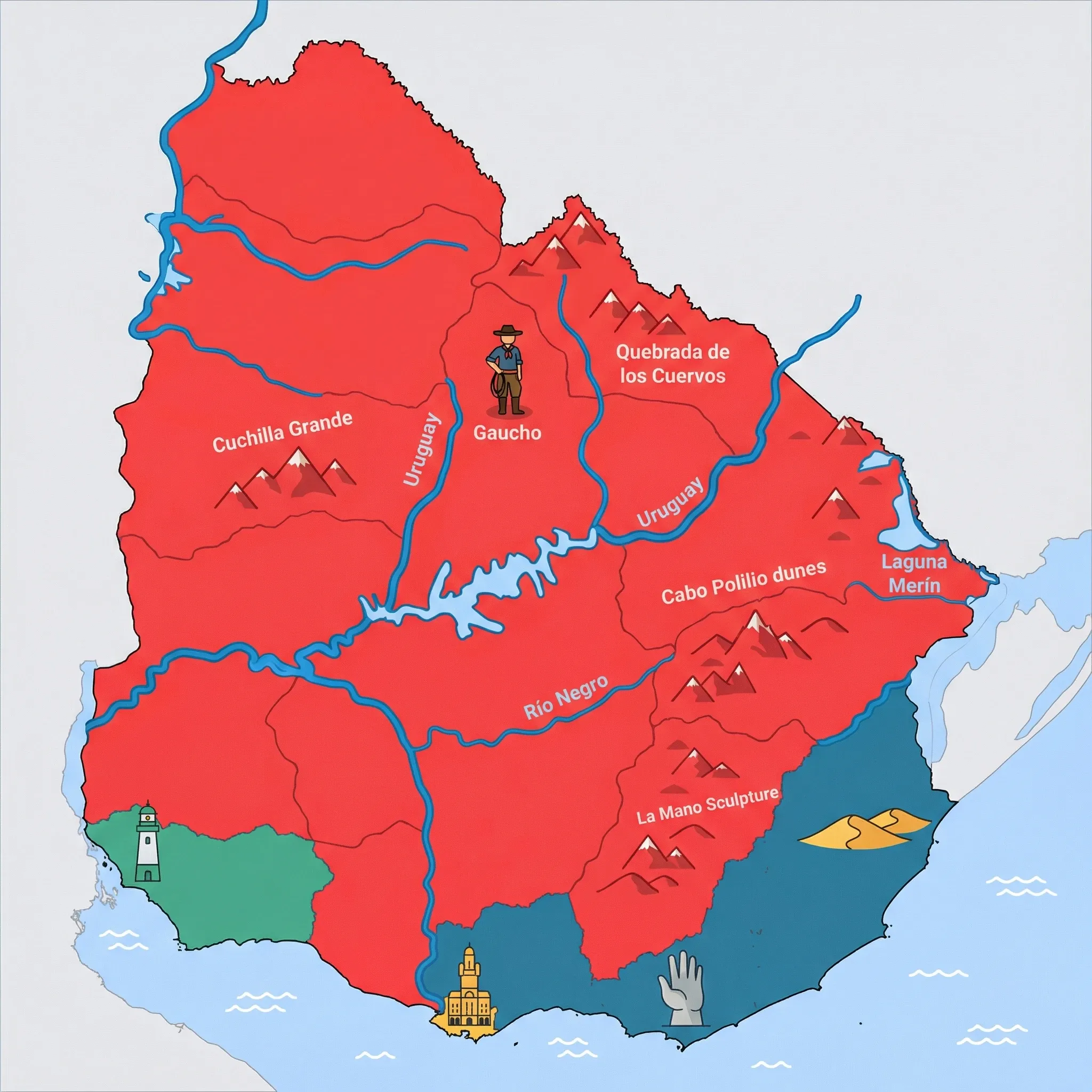
Click on a region marker to explore details. Use the dropdown to color regions by activity suitability.

Getting There & Around
Getting There
- By Air – Carrasco International Airport (MVD) is the main gateway, a modern and manageable airport located 20km from Montevideo.
- By Sea – Frequent high-speed ferries connect Buenos Aires, Argentina to Colonia del Sacramento (1 hour) and Montevideo (2.5 hours). Operators include Buquebus and Colonia Express.
- Entry Requirements – US, UK, EU, and Canadian citizens do not need a visa for stays up to 90 days. Check your government website for the latest visa requirements, or use the IATA Travel Centre entry-requirements checker.
Getting Around
- Car Hire – The most flexible option for families, especially for reaching Interior & Estancias. Roads are generally good and traffic is calm outside Montevideo. Mandatory headlights on at all times.
- Buses – Excellent, safe, and comfortable intercity network connecting Montevideo to all major towns. Tres Cruces is the main terminal.
- Ferries – Regular services connect Montevideo, Colonia, and Punta del Este (seasonal) with Buenos Aires.
- Taxis & Ride-Apps – Uber and Cabify operate in Montevideo and parts of Maldonado. Taxis are metered and safe; use official radio taxis where possible.
Official Links

Packing List
Uruguay uses a mix of sockets, including the 3-pin Italian style (Type L) which is rare elsewhere in the Americas.
The ozone layer is thinner in this region; UV index can be extreme even on mild days. Sunburn happens fast.
Coastal winds (the 'Sudestada') can be strong and chilly even in summer; essential for beach walks.
Uruguay charges for plastic bags and has a strong culture of using reusable grocery totes.
Essential if visiting estancias or riverside areas in the interior, where mosquitoes can be aggressive.

Activities & Best Times

City & Cultural
Very GoodUrban tourism, museums, historical sites, architecture
UNESCO World Heritage Site with extensive Portuguese colonial architecture (Barrio Histórico, Historic Quarter). 5 historic/cultural attractions including well-preserved colonial quarters and landmarks. This is nationally significant cultural heritage that deserves very_good rating.
A sophisticated capital with a rich blend of Art Deco architecture, world-class art museums like MNAV, and vibrant neighborhood life. The city is most authentic and lively during the warmer months, while winter can be damp and quiet.
A vibrant summer cultural scene defined by high-end art galleries and a sophisticated food scene in La Barra and José Ignacio; many venues close during the quiet winter months.

Adventure & Nature
GoodHiking, wildlife, outdoor exploration, ecotourism
Rating claims 'significant wetlands and high-quality botanical gardens' but no such attractions exist in the database. Without evidence of major nature reserves or botanical gardens, very_good rating is not justified. Downgrade to good.
The region features unique coastal wilderness like the dunes and sea lion colonies of Cabo Polonio, which are best explored when seasonal services are active and the climate is mild.
The region features the Quebrada de los Cuervos gorge and Cuchilla de Haedo hills, providing authentic hiking and wilderness experiences for families. Spring and autumn provide the most pleasant temperatures for outdoor exploration, avoiding the summer heat and winter dampness.

Beach & Sea
GoodBeach resorts, marine activities: diving, snorkelling, kite surfing, wind surfing, sailing
Sophisticated beach lifestyle centered on the chic resorts of José Ignacio and Punta del Este; peak summer offers world-class dining and a refined coastal atmosphere.
Iconic urban beaches like Pocitos offer well-maintained sands and a unique riverfront atmosphere on the Rio de la Plata. Peak season is limited to the warm southern summer when water temperatures are suitable for swimming and the Rambla is most active.

Road Trips & Scenic
GoodScenic drives, countryside tours, route-based travel
The gateway to world-class scenic drives along the Uruguayan coast and historic routes to Colonia del Sacramento. Bright summer light and clear conditions in late spring/early autumn offer the best visibility for these celebrated coastal journeys.
Characterized by authentic estancia culture and scenic rural drives through the departments of Tacuarembó, Lavalleja, and Florida. These countryside routes offer sophisticated families a genuine taste of Gaucho heritage during the temperate transition seasons.

Sports & Active
GoodSport tourism, fitness activities, active recreation
Theme Park & Entertainment
MarginalAmusement parks, family entertainment venues

Public Holidays & Calendar Next 12 months
Public holidays, festivals, cultural celebrations, and seasonal natural phenomena coming up in Uruguay over the next 12 months.
Loading holidays and events...
Climate & Weather
Colonia del Sacramento
Show Details
| Month | Temp °C | Rain | Humidity |
|---|
Interior & Estancias
Show Details
| Month | Temp °C | Rain | Humidity |
|---|
Montevideo
Show Details
| Month | Temp °C | Rain | Humidity |
|---|
Punta del Este & East Coast
Show Details
| Month | Temp °C | Rain | Humidity |
|---|

Travel Advisory
The majority of international agencies classify Uruguay as a safe destination where standard travel safety precautions are sufficient, though increased vigilance is noted for Montevideo.
Safety Topics
Traveller Advice (3 groups)

Uruguay is among the most progressive countries in the region regarding sexual orientation and gender identity. Same-sex marriage is legal and anti-discrimination laws are in place.

Accessibility infrastructure for those with disabilities, including pavements and building access, remains limited in many areas outside of modern districts.

Standard personal safety measures should be followed, such as avoiding isolated or poorly lit areas when walking alone at night, particularly in downtown Montevideo.
Agency Summaries
No specific elevated security threat is identified for the country, but New Zealanders should maintain standard situational awareness and carry comprehensive insurance.
Uruguay is considered safe for Irish visitors, though basic precautions against opportunistic theft and bag snatching are advised.
Travellers should use common sense and follow standard safety routines. While violent crime exists, the overall security situation is stable for the average tourist.
Heightened vigilance is recommended across the country due to rising crime rates, including homicides and armed robberies which can impact visitors.
Uruguay is generally safe, though travellers should maintain standard security awareness. There is a specific regional warning to exercise a high degree of caution in Montevideo due to a higher prevalence of crime.
Most visits are trouble-free, though street crime and petty theft occur, particularly in the capital city of Montevideo.
Information is provided for general guidance only and does not constitute travel, safety, medical, or legal advice. Conditions may change. Users are responsible for independently verifying information before travel.