
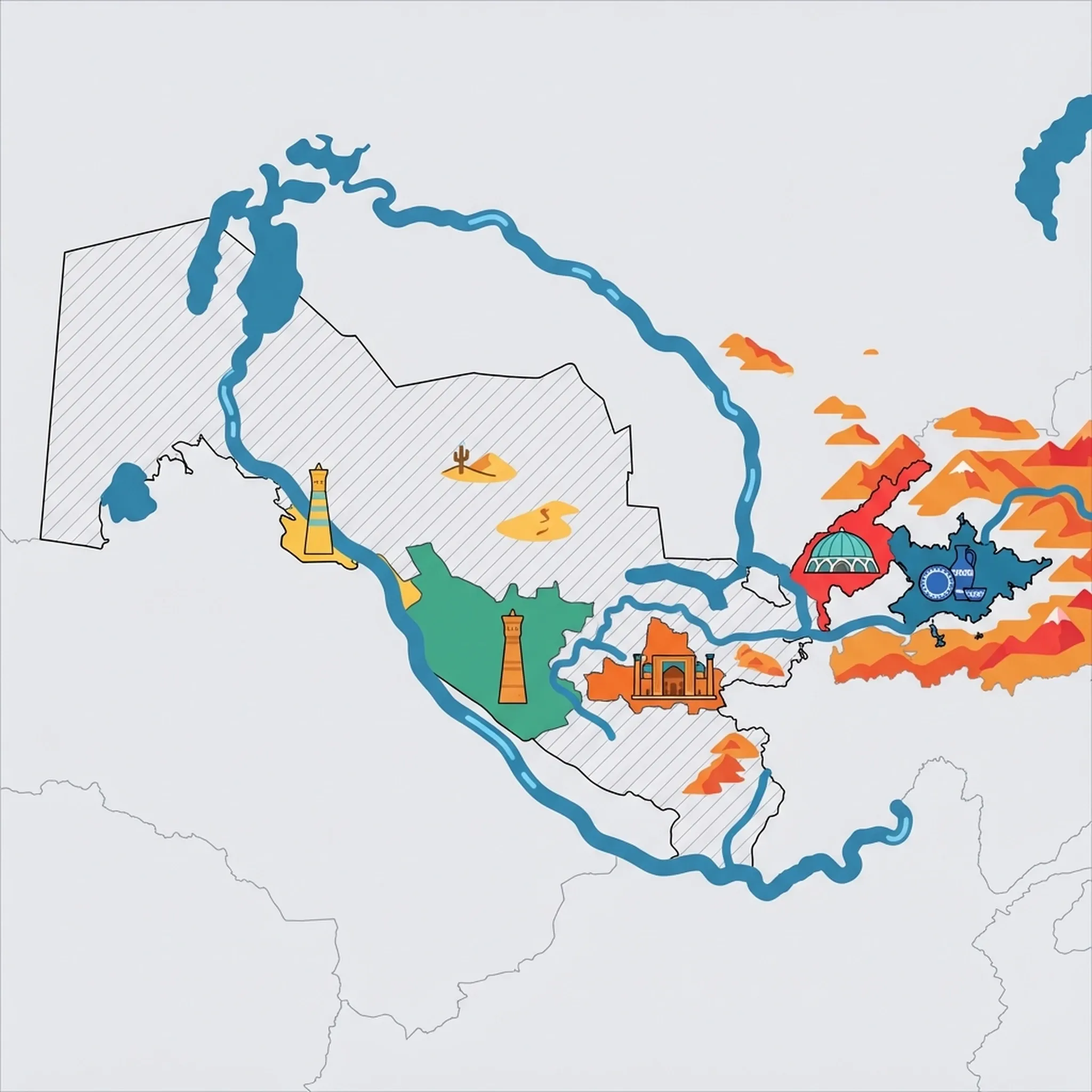
Click a region to explore
Overview
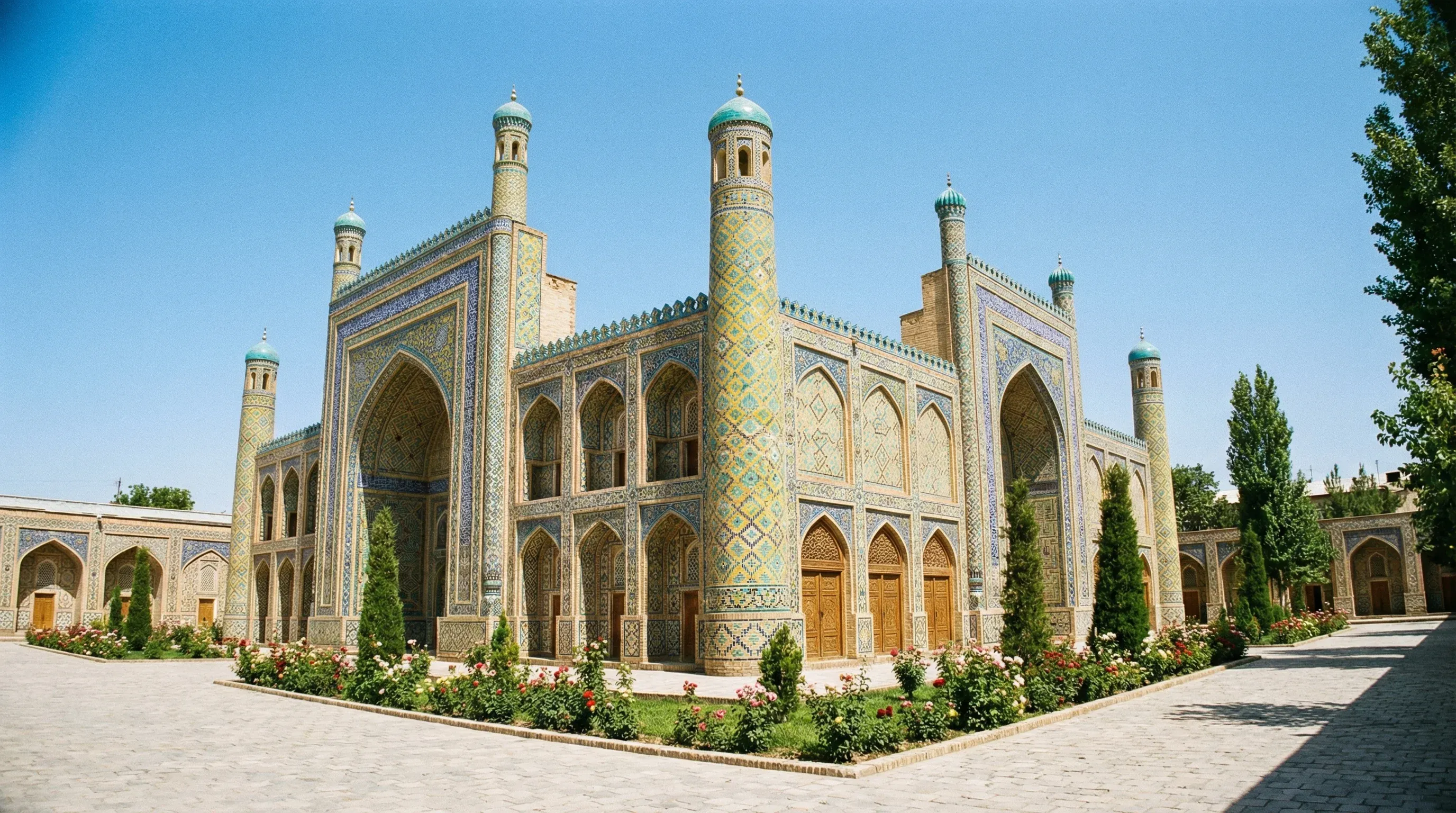
While the Silk Road cities of the west are famous for their blue tiles, the Fergana Valley is defined by its living culture, crafts, and greenery. This broad, fertile valley is Uzbekistan's breadbasket, surrounded by the Tian Shan and Gissar-Alai mountains. For families, the appeal here is tactile: it is a place where you don't just look at history, you touch it. The region is the center of Ikat silk weaving and traditional ceramics, offering countless opportunities for children to visit workshops and see how everyday objects are created from scratch. The atmosphere is more conservative and traditional than Tashkent, but the hospitality is legendary—locals are incredibly welcoming to families with children.
The pace of life in the valley is slower. The cities are greener, filled with plane trees and canals, making them pleasant for strolling. Unlike the desert heat of Bukhara, the valley's climate is slightly milder, and the abundance of fresh fruit (strawberries, apricots, melons) in season provides healthy, safe snacks for kids straight from the markets. It feels like a distinct country within a country, offering a deeper look into authentic Uzbek life away from the main tourist crowds.
Key Attractions
The journey to the valley is an attraction in itself, crossing the dramatic Kamchik Pass, which offers sweeping mountain views and roadside stops selling balls of salty kurt (dried yogurt). Once in the valley, the city of Margilan is essential for the Yodgorlik Silk Factory, where kids can watch the entire process of silk production from boiling cocoons to dyeing the threads. It's educational and mesmerizing.
In Rishtan, almost every house seems to be a pottery workshop. Many masters allow children to sit at the wheel and try molding the local red clay into the region's signature blue-glazed ceramics. In Kokand, the Khudayar Khan Palace offers a colourful, maze-like exploration of 19th-century royal life that feels accessible and manageable for younger visitors. The parks in Fergana City are also excellent, often featuring retro fairground rides that are cheap and fun for younger kids.
Practical Advice
The valley is best visited by car (with a driver) to move easily between the cities of Kokand, Rishtan, Margilan, and Fergana. Spring (April-May) is stunning as the orchards blossom. Be aware that this is a more conservative region; modest dress is appreciated for both adults and teenagers. English is less widely spoken here than in Samarkand, so a translation app is very useful.
Food & Drink
Typical meal times: Lunch is the main event, usually 12:00 pm to 2:00 pm. Dinner is commonly eaten around 6:30 pm to 8:30 pm.
Typical meal costs: Prices are lower here than in the capital. A family meal costs 150,000–300,000 UZS (approx. $12–24 USD / €11–22 EUR).
Dietary requirements: The cuisine is meat-heavy. Vegetarians may struggle more here than in Tashkent, relying on fresh salads, fruit, and non-meat bread. Nut allergies should be communicated clearly as walnuts and peanuts are common snacks.
Signature dishes:
- Fergana Plov – Famous for using 'devzira' rice (a reddish-brown local variety) and being slightly darker and richer in oil than other regional variations.
- Manti – Large steamed dumplings filled with spiced lamb and onions, often served with sour cream; easy for kids to eat with their hands.
- Halva – The valley (especially Kokand) is famous for its sweets, including sunflower and cream-based halva, which makes for a great energy booster.
Why this score?
Reaching the valley involves traversing the high Kamchik Pass, and the surrounding mountains offer rugged trekking opportunities like the Arashan Lakes. The infrastructure here is less geared toward international tourists, requiring more independent navigation and flexibility.
Why this score?
As a densely populated industrial and agricultural hub, the valley has several large regional hospitals in cities like Kokand and Namangan. However, these facilities focus on the local population and lack international patient support or multilingual services for tourists.
Why this score?
While famous for silk and ceramics, the valley remains largely a domestic destination with a niche international following interested in traditional crafts. It lacks the massive blue-domed architectural draws that characterize the more popular western Silk Road cities.

The Fergana Valley is one of the most affordable regions in Uzbekistan. Accommodation is cheaper, though luxury options are scarce. A decent guesthouse night costs 350,000–600,000 UZS (approx. $28–48 USD / €26–44 EUR). Street food and market snacks are incredibly cheap; a heavy lunch might only cost 30,000–50,000 UZS (approx. $2.40–4.00 USD / €2.20–3.70 EUR) per person.
Family Travel Notice
Minors, including dual citizens, must have notarized written permission from their parent or guardian to travel into or out of the country alone or with a third party.

Getting Here & Around
Getting Here
- Driving – The primary route is the A373 highway over the Kamchik Pass from Tashkent (approx. 4-5 hours). The drive is scenic but involves mountain switchbacks.
- Train – A reliable train service connects Tashkent to Kokand, Margilan, and Andijan daily. It takes about 4-5 hours and passes through a mountain tunnel, avoiding the road pass.
- Airports – Domestic flights run from Tashkent to Fergana International Airport (FEG) and Namangan (NMA).
Getting Around
- Car – Hiring a car with a driver is the best way to hop between the craft towns (Rishtan, Margilan, Kokand) which are spread out by 30-60 minutes each.
- Shared Taxi – The local way to travel between towns. Cheap, but can be crowded and chaotic for families with luggage.
- Train – Short hop trains connect the major cities within the valley, but schedules can be infrequent.
Nearby Airports (2 airports)
Fergana Airport
FEGFergana
Namangan Airport
NMANamangan
View full flight map for Uzbekistan →

Packing List
The drive over the Kamchik Pass involves winding mountain roads that can unsettle stomachs.
You will likely buy bulky ceramics or textiles; extra carrying capacity is essential.
Essential for cleaning hands after eating juicy market fruits or handling raw clay.
Cards are rarely accepted outside major hotels; small notes are needed for bazaars and transport.
Many hotel and guesthouse sinks in Central Asia lack plugs; essential for washing fruit or baby clothes.
You will take shoes off constantly at mosques, mausoleums, and traditional restaurants with tapchan seating.
The dry desert heat and unfamiliar bacteria can cause dehydration quickly; local options are limited.
Essential for sticky hands after eating plov (often with fingers) and using public squat toilets.
Long train journeys and days out exploring vast architectural complexes drain batteries fast.

Activities & Best Times

Hiking, wildlife, outdoor exploration, ecotourism
Zero database attractions support this rating. Notes mention Arashan Lakes and trekking infrastructure, but without database evidence, very_good is unjustified. Downgrading to good pending addition of specific attraction data.

Urban tourism, museums, historical sites, architecture
Zero database attractions. While Palace of Khudayar Khan and Jami Mosque are mentioned, they aren't in the database. Without evidence, very_good rating cannot be justified. Regional cultural significance does not meet international calibration for very_good.

Spa retreats, wellness centers, peaceful getaways
Features established mineral springs and thermal bathhouses like those at Chartak and Chimion, known for their restorative properties. These facilities are best enjoyed during spring and autumn when the weather is conducive to a mix of indoor treatments and outdoor walks.

Scenic drives, countryside tours, route-based travel
The Kamchik Pass provides a spectacular scenic driving route connecting the valley to Tashkent, complemented by the regional Silk Road heritage loop. Peak months ensure safe driving conditions and high visibility across the mountain passes before winter snow closures.

Sport tourism, fitness activities, active recreation
Offers notable trekking infrastructure around Arashan Lakes and established cycling routes between Shakhimardan and Fergana. High-altitude trails are most accessible in the warm summer months when mountain passes are clear of snow.

Learning experiences, scientific sites, historical education
Regional museums in Fergana and Andijan provide historical and scientific context for the valley's long history of human settlement. These are supplemental educational stops best paired with cultural tours during the comfortable spring and autumn months.

Amusement parks, family entertainment venues
Features regional entertainment complexes like the Valley of Legends and Atlantis Water Park, primarily catering to domestic tourism. These venues are most popular in summer for their aquatic facilities, though they lack the global scale of major international theme parks.




Public Holidays & Calendar Next 12 months
Public holidays, festivals, cultural celebrations, and seasonal natural phenomena coming up in Fergana Valley over the next 12 months.
Loading holidays and events...

Travel Advisory
While the country is broadly stable and safe, a significant number of major agencies advise increased vigilance due to the persistent threat of terrorism, petty crime, and regional volatility near international borders.
Safety Topics
Traveller Advice (3 groups)

Minors, including dual citizens, must have notarized written permission from their parent or guardian to travel into or out of the country alone or with a third party.

Homosexual acts are illegal under local law and can lead to prosecution. Travellers should exercise discretion and be aware that same-sex relationships are not widely accepted.

Women should follow local customs regarding conservative dress and avoid walking alone or using public transport late at night.
Agency Summaries
Most visits are trouble-free, though there is an ongoing threat of terrorism and regional instability near the Afghan border. British citizens can enter for 30 days visa-free but must register their presence within three days.
The country is generally safe for tourism. Starting in 2026, U.S. citizens can visit for up to 30 days without a visa. Specific documentation is required for minor children travelling without both parents.
Increased vigilance is recommended nationwide due to threats of terrorism and the risk of civil unrest. A strict 'do not travel' warning applies to the border region with Afghanistan.
Uzbekistan is considered safe for visitors overall, but travellers should maintain standard safety awareness. A regional warning is in place advising against all travel to the border area with Afghanistan due to volatility and terrorism risks.
Irish citizens are advised to be cautious due to potential security risks, particularly in border areas with Afghanistan, Tajikistan, and Kyrgyzstan. Entry for up to 30 days is visa-free.
New Zealanders should be vigilant due to the risk of terrorism and violent crime. Higher risk levels apply to regions bordering Afghanistan, Tajikistan, and Kyrgyzstan, where non-essential travel should be avoided.
Information is provided for general guidance only and does not constitute travel, safety, medical, or legal advice. Conditions may change. Users are responsible for independently verifying information before travel.