
Samarkand
The grandeur of the Silk Road in giant blue tiles 💎✨
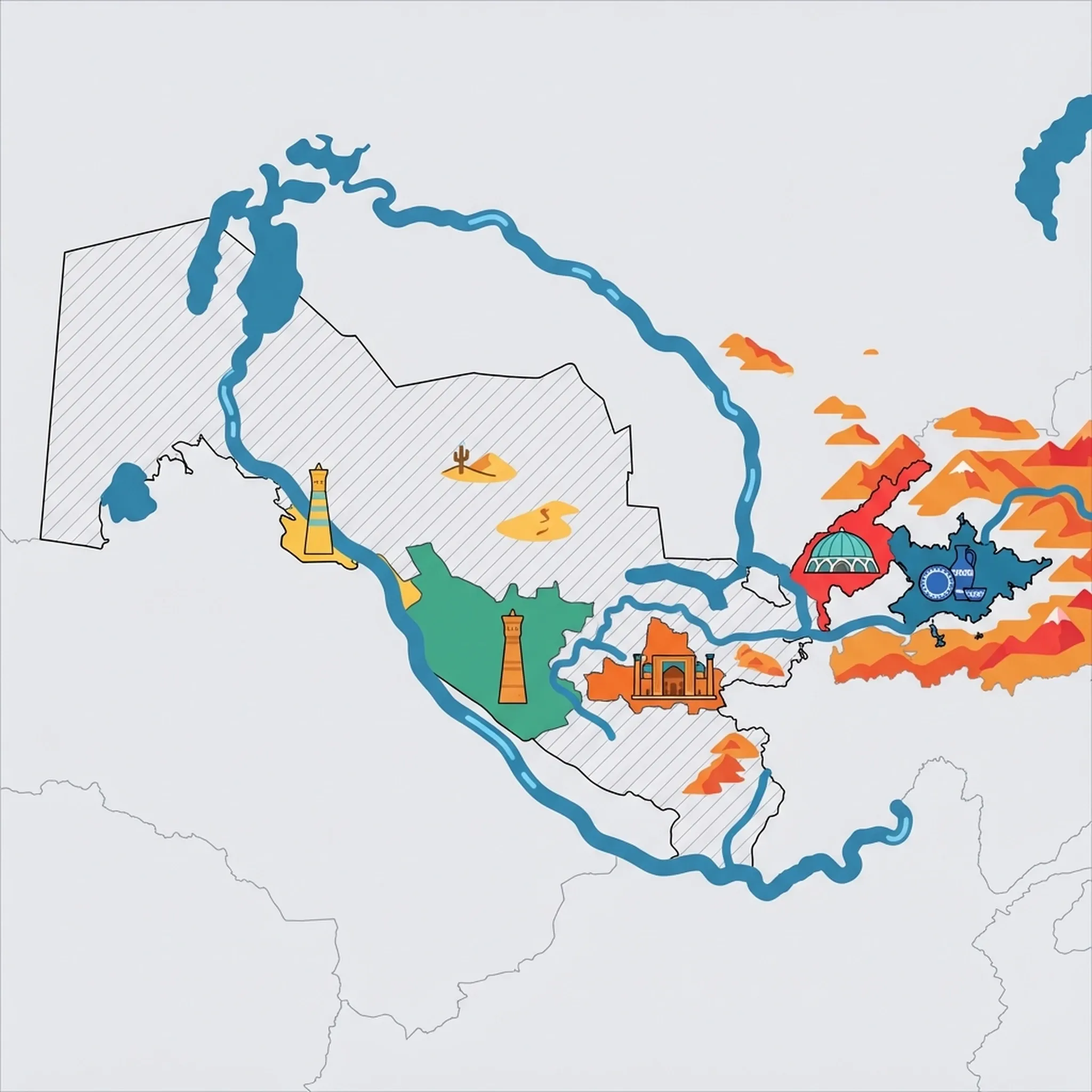
Click a region to explore
Overview
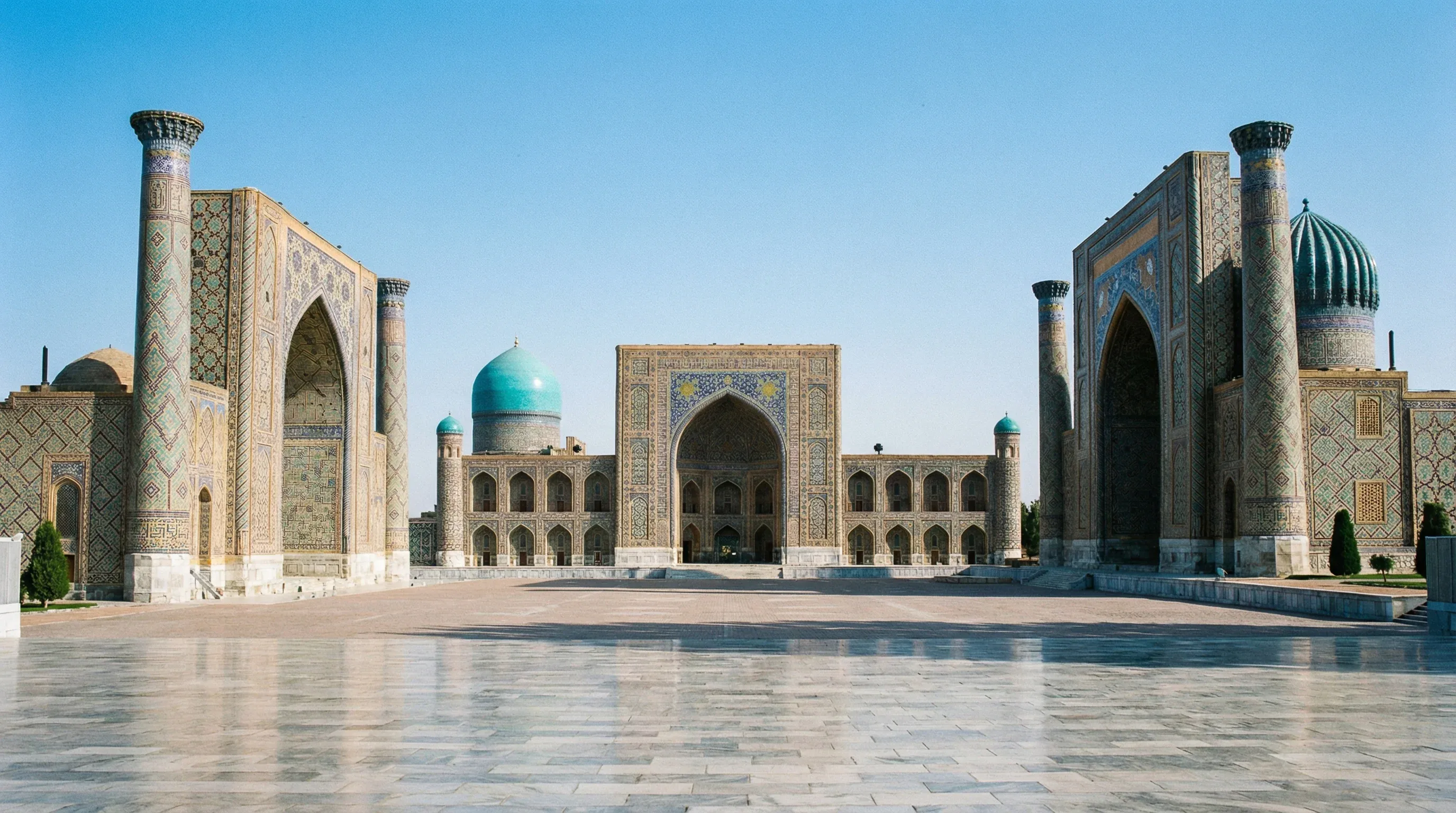
Samarkand is awe-inspiring. If Bukhara is intimate and Khiva is a museum, Samarkand is monumental. The sheer size of the madrasas and mosques here leaves children wide-eyed. It serves as the perfect introduction to the Silk Road because it mixes these ancient wonders with a modern, functioning city infrastructure. You have access to supermarkets, pharmacies, and parks, which makes the logistics of family travel much easier than in more remote regions. The city is green, with wide boulevards and plenty of ice cream stands, balancing the intense history with leisure.
The culture here is deeply proud of its Timurid heritage. The extensive use of blue tiles—turquoise, azure, indigo—makes the city vibrant and photogenic. For families, the key is the variety of experiences available: you can visit a solemn mausoleum in the morning, watch paper being made from mulberry bark in the afternoon, and end the day at a sound-and-light show. The terrain is mostly flat, though the sites are spread out, so you will rely on taxis more than in Bukhara. However, the sites themselves are often enclosed pedestrian zones where kids can roam safely.
Key Attractions
Registan Square is the heart of the city, framed by three massive madrasas. It's a vast open space where kids can run (respectfully) and explore the souvenir shops hidden inside the old student cells. The Shah-i-Zinda necropolis is perhaps the most magical site for children; it's a narrow avenue of mausoleums covered in every shade of blue tile imaginable, feeling like a stairway to heaven. It involves stairs, so leave the stroller at the bottom.
For a hands-on experience, the Konigil Meros Paper Mill is fantastic. Located just outside the city, this water-powered mill demonstrates how ancient Samarkand paper was made. Children can watch the water wheel, strip the bark, and even try pressing their own paper. Another hit is the Ulugh Beg Observatory, where you can see the remains of a giant underground sextant used by 15th-century astronomers—a great science lesson brought to life.
Practical Advice
Samarkand is very well connected by the high-speed Afrosiyob train. The best times to visit are spring and autumn. Summers are scorching. Unlike Khiva, this is a living city with traffic, so extra care is needed when crossing roads. Taxis are plentiful and cheap; Yandex Go is the best way to get around without haggling.
Food & Drink
Typical meal times: Lunch is 12:00 pm to 2:00 pm. Dinner is usually 7:00 pm to 9:30 pm. Samarkand Plov is traditionally eaten for lunch and often sells out by 1:00 pm.
Typical meal costs: Mid-range family dining is affordable. Expect 250,000–500,000 UZS (approx. $20–40 USD / €18–37 EUR) for four people.
Dietary requirements: Samarkand bread (non) is famous—heavy, dense, and delicious, but a nightmare for gluten-free travelers. Vegetarian salads (achichuk) and grilled vegetables are available at most kebab spots.
Signature dishes:
- Samarkand Plov – The most famous version in the country. It is lighter in color than Tashkent plov, stacked in layers on the plate, and typically includes yellow carrots, beef, and chickpeas.
- Samarkand Non – Large, heavy, glazed round bread with a dense texture. It is said to last for years without spoiling and is a common souvenir to take home.
- Shashlik – Skewered meat grilled over charcoal. The ground beef (lula) kebabs are soft and usually very popular with children.
Why this score?
The city is highly developed for tourism with modern transport links, luxury hotels, and paved pedestrian zones. It offers a low-friction experience for families focusing on history and architecture rather than physical exertion or wilderness exploration.
Why this score?
It possesses the best medical facilities in the country outside of Tashkent, including several private clinics that can handle minor emergencies and basic diagnostics. However, language barriers remain a significant hurdle for English-speaking families seeking complex medical assistance.
Why this score?
Samarkand is the most famous destination in Central Asia, drawing significant numbers of international visitors to its monumental Registan Square. It is the primary anchor of Uzbekistan's tourism industry and is well-served by international flights and a modern high-speed rail link.

Samarkand has options for all budgets. A good 3-star hotel with a pool (great for summer) costs around 750,000–1,200,000 UZS (approx. $60–95 USD / €55–90 EUR). Transport is cheap; a taxi across town is rarely more than 20,000 UZS (approx. $1.60 USD / €1.50 EUR). Entry fees to monuments add up, usually 40,000–50,000 UZS per adult.
Family Travel Notice
Minors, including dual citizens, must have notarized written permission from their parent or guardian to travel into or out of the country alone or with a third party.

Getting Here & Around
Getting Here
- Train – The high-speed Afrosiyob train connects Samarkand to Tashkent (2 hours) and Bukhara (1.5 hours). Book tickets weeks in advance.
- Airports – Samarkand International Airport (SKD) has an increasing number of direct international flights (Dubai, Istanbul) and daily domestic connections.
- Driving – It is a 4-hour drive from Tashkent on generally good roads, or 4-5 hours from Bukhara.
Getting Around
- Taxi – The city is too spread out to walk between all major sites. Yandex Go is reliable, safe, and very cheap.
- Tram – A modern tram line runs through the city and can be a fun, cheap novelty ride for kids to see the streets.
- Walking – Once at a site (like the Registan or Shah-i-Zinda), you will explore on foot. The distances inside the complexes can be significant.
Nearby Airports (1 airport)
Samarkand
SKDSamarkand
View full flight map for Uzbekistan →

Packing List
You will walk kilometers on pavement but need to remove shoes frequently for mausoleums.
Dust is everywhere, and public bathroom facilities can sometimes lack toilet paper/soap.
Summer heat is intense; keeping water cold is essential for keeping kids hydrated.
Fun for kids to spot details in the high tilework of the minarets and domes.
Many hotel and guesthouse sinks in Central Asia lack plugs; essential for washing fruit or baby clothes.
You will take shoes off constantly at mosques, mausoleums, and traditional restaurants with tapchan seating.
The dry desert heat and unfamiliar bacteria can cause dehydration quickly; local options are limited.
Essential for sticky hands after eating plov (often with fingers) and using public squat toilets.
Long train journeys and days out exploring vast architectural complexes drain batteries fast.

Activities & Best Times

Urban tourism, museums, historical sites, architecture
The region features four major Silk Road heritage sites including the Registan and Gur-e-Amir, providing a high-quality historical experience for families. Peak visitation coincides with the temperate spring and autumn months, while extreme summer heat and cold winters are less suitable for urban exploration.

Public Holidays & Calendar Next 12 months
Public holidays, festivals, cultural celebrations, and seasonal natural phenomena coming up in Samarkand over the next 12 months.
Loading holidays and events...

Travel Advisory
While the country is broadly stable and safe, a significant number of major agencies advise increased vigilance due to the persistent threat of terrorism, petty crime, and regional volatility near international borders.
Safety Topics
Traveller Advice (3 groups)

Minors, including dual citizens, must have notarized written permission from their parent or guardian to travel into or out of the country alone or with a third party.

Homosexual acts are illegal under local law and can lead to prosecution. Travellers should exercise discretion and be aware that same-sex relationships are not widely accepted.

Women should follow local customs regarding conservative dress and avoid walking alone or using public transport late at night.
Agency Summaries
Most visits are trouble-free, though there is an ongoing threat of terrorism and regional instability near the Afghan border. British citizens can enter for 30 days visa-free but must register their presence within three days.
The country is generally safe for tourism. Starting in 2026, U.S. citizens can visit for up to 30 days without a visa. Specific documentation is required for minor children travelling without both parents.
Increased vigilance is recommended nationwide due to threats of terrorism and the risk of civil unrest. A strict 'do not travel' warning applies to the border region with Afghanistan.
Uzbekistan is considered safe for visitors overall, but travellers should maintain standard safety awareness. A regional warning is in place advising against all travel to the border area with Afghanistan due to volatility and terrorism risks.
Irish citizens are advised to be cautious due to potential security risks, particularly in border areas with Afghanistan, Tajikistan, and Kyrgyzstan. Entry for up to 30 days is visa-free.
New Zealanders should be vigilant due to the risk of terrorism and violent crime. Higher risk levels apply to regions bordering Afghanistan, Tajikistan, and Kyrgyzstan, where non-essential travel should be avoided.
Information is provided for general guidance only and does not constitute travel, safety, medical, or legal advice. Conditions may change. Users are responsible for independently verifying information before travel.