
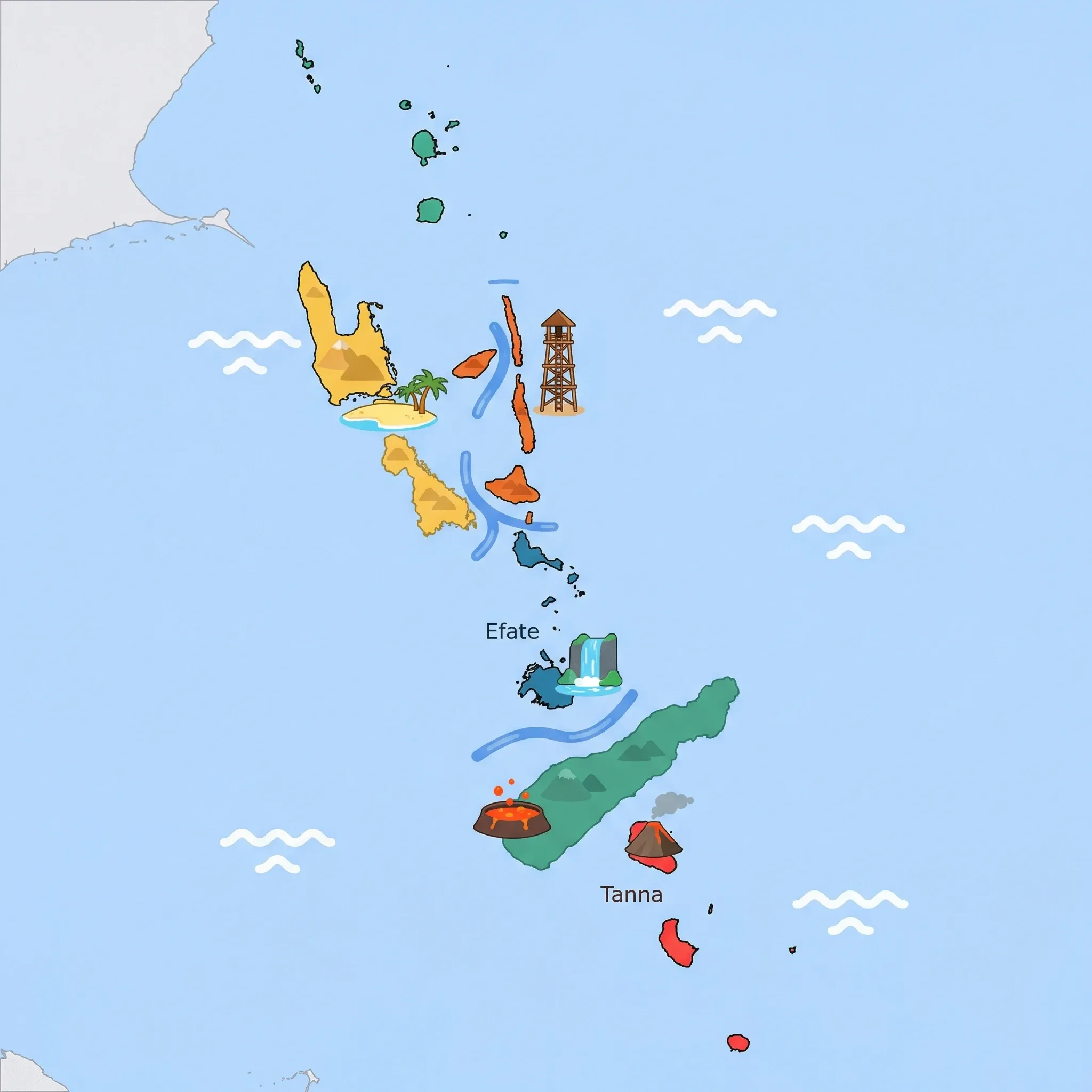
Click a region to explore
Overview
Efate is the gateway to Vanuatu and the most accessible island for families, striking a balance between modern convenience and tropical wildness. Located in the Shefa Province, it is home to the capital, Port Vila, a bustling harbor town where French and British colonial history blends with traditional Ni-Vanuatu culture. For parents traveling with children, Efate is the safest and most logistical stress-free starting point. The coastline is dotted with calm lagoons protected by reefs, making swimming safe for toddlers, while the interior rises into lush, green rainforests perfect for gentle hiking. The climate is generally warm and humid, but the trade winds often provide a cooling breeze, especially around Havannah Harbour in the north.
What makes Efate special for families is the variety of experiences available within a short drive. You can spend the morning zip-lining through the jungle canopy, the afternoon hand-feeding fish in a marine sanctuary, and the evening enjoying a high-quality meal in Port Vila while watching the sunset over the harbor. The local culture is incredibly welcoming to children; do not be surprised if restaurant staff or tour guides treat your kids like their own family. Unlike the more remote islands where amenities are scarce, Efate offers supermarkets, pharmacies, and a wide range of accommodation, from luxury resorts with kids' clubs to self-catering bungalows, ensuring that even families with very young children can travel with peace of mind.
Key Attractions
While the island is full of natural beauty, the cultural significance of Chief Roi Mata’s Domain is a standout educational experience for older children. As Vanuatu's first UNESCO World Heritage site, it offers a fascinating glimpse into the life of a paramount chief from the 1600s. Tours often include visits to the caves where the chief lived and the island where he is buried, providing a tangible history lesson about peace-making and local 'kastom' (custom) that is far more engaging than a textbook.
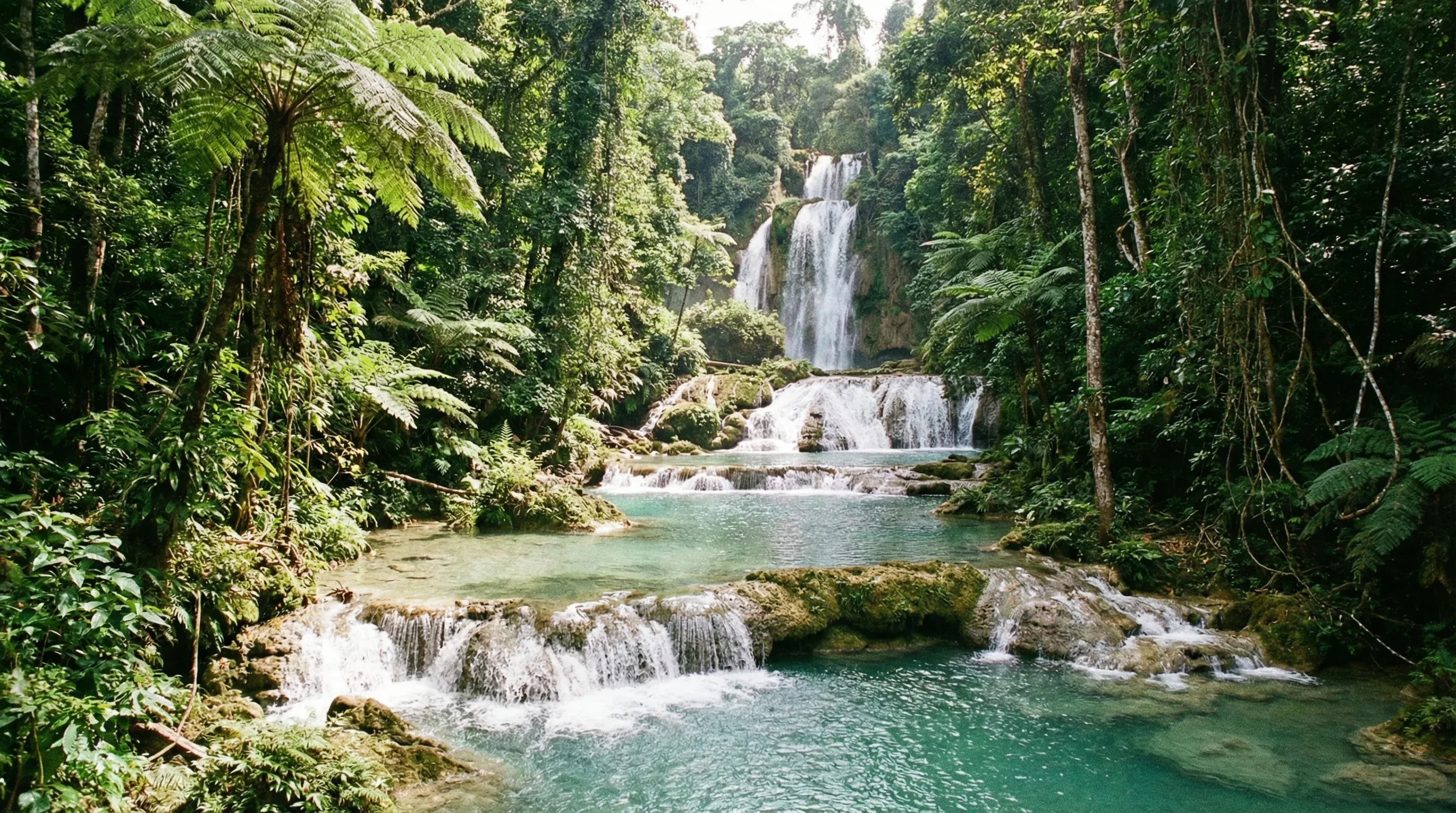
Beyond the heritage sites, families often head to the blue lagoons and the Mele Cascades (a series of tiered waterfalls perfect for swimming). The underwater post office at Hideaway Island is another quirky highlight that delights children, allowing them to snorkel down and post a waterproof postcard. The island's ring road makes it easy to hire a driver and circle the entire island in a day, stopping at various beaches and roadside markets along the way.
Practical Advice
The best time to visit is during the dry season, from May to October, when humidity is lower and temperatures are comfortable (around 20–26°C / 68–79°F). November to April is the wet season, bringing higher heat and the possibility of cyclones. For families, hiring a private driver for a day is often more economical and flexible than booking per-person coach tours. Tap water in Port Vila is generally safe, but bottled or filtered water is recommended for short-term visitors to avoid tummy upsets.
Food & Drink
Typical meal times: Lunch is typically served from 11:30 am to 2:00 pm. Dinner service usually begins at 6:00 pm and runs until 9:00 pm. Markets open very early, often by 6:00 am, for fresh fruit and pastries.
Typical meal costs: A mid-range meal in Port Vila costs around 1,800–2,800 VUV (approx. $15–23 USD / €14–21 EUR). Cheap market meals (Laplap or rice dishes) cost 400–800 VUV (approx. $3.30–6.70 USD / €3–6 EUR). High-end resort dining can exceed 4,000 VUV (approx. $33 USD / €30 EUR).
Dietary requirements: Port Vila is cosmopolitan with many French and Australian-influenced restaurants offering vegetarian, gluten-free, and dairy-free options. However, in rural village eateries, options may be limited to root vegetables and fruit.
Signature dishes:
- Laplap – The national dish made by grating root crops (yam, taro, or manioc), mixing with coconut cream, and baking in hot stones underground; often topped with island cabbage or chicken.
- Poulet Fish – A local variety of snapper known for its white, chicken-like texture and mild flavor, usually grilled or served with a vanilla sauce.
- Tuluk – Similar to a tamale, this is a parcel of grated manioc filled with minced pork and steamed in banana leaves, commonly found at markets.
Why this score?
Efate offers accessible outdoor activities such as zip-lining, river kayaking, and snorkeling at Hideaway Island. While the terrain is lush, most attractions are well-signed and managed with family-friendly amenities, making it the least rugged region in the country. It serves as a comfortable base for moderate outdoor recreation rather than extreme wilderness exploration.
Why this score?
Port Vila hosts the Vila Central Hospital, which provides the country's most comprehensive care, though it is still basic by international standards. Private clinics and pharmacies are available for tourists, and most staff speak English or French. For serious emergencies, medical evacuation to Australia or New Zealand is frequently required and expected by travel insurers.
Why this score?
As the main international gateway and home to the capital, Efate receives the vast majority of Vanuatu's 30,000 annual visitors. While popular within the South Pacific, its global footprint remains niche with a small collection of resorts and cruise ship day-trippers. Infrastructure like the Ring Road and Mele Cascades supports a steady but modest flow of international families.

Efate is the most expensive island in Vanuatu due to its developed tourism infrastructure. A family resort room typically costs 18,000–35,000 VUV (approx. $150–290 USD / €140–270 EUR) per night. Supermarket prices for imported goods are high (similar to Australia/NZ). However, local transport and market food remain very affordable, with bus fares around 150–200 VUV (approx. $1.25–1.65 USD / €1.15–1.50 EUR) per person.

Getting Here & Around
Getting Here
- Airports – Bauerfield International Airport (VLI) in Port Vila is the main entry point, with direct flights from Australia, New Zealand, Fiji, and New Caledonia.
- Ferry – Inter-island ferries connect Efate to other islands, but these are often cargo vessels and not recommended for most families due to safety and comfort standards.
- Cruise – Port Vila is a major port of call for cruise ships, with taxis and buses readily available at the wharf to take visitors to Chief Roi Mata’s Domain or town.
Getting Around
- Public Transport – Minibuses (look for a 'B' on the number plate) are ubiquitous, cheap, and safe. You simply flag one down and tell the driver your destination.
- Car – Car hire is available and driving is on the right. The ring road is sealed and in fair condition, making self-driving a viable option for families wanting to explore at their own pace.
- Taxi – Taxis (marked with a 'T') are plentiful but unmetered; agree on a price before getting in. They are better for direct point-to-point travel than the stop-start minibuses.
Nearby Airports (1 airport)
Port Vila Bauerfield
VLIPort Vila
View full flight map for Vanuatu →

Packing List
Coral beaches and rocky waterfalls make bare feet painful and dangerous for kids.
Essential for the underwater post office and boat trips.
Vanuatu has banned single-use plastic bags; you will need one for markets.
Roads can be winding and boat transfers to islets can be choppy.
Village paths and eco-lodges often lack street lighting, and it is necessary for the Mt Yasur sunset tour.
Vital for keeping cameras and phones dry during choppy speed boat transfers between islands.
If visiting villages, small gifts for the local school are a culturally appreciated gesture (check 'Pack for a Purpose').
Roads in Tanna and Santo are rough 4WD tracks, and inter-island boat crossings can be very choppy.

Activities & Best Times

Hiking, wildlife, outdoor exploration, ecotourism
Exceptional variety including the Mele Cascades, river experiences at Eden, and volcano hiking on Nguna Island. The drier months from May to October ensure trails are accessible and safe, whereas the monsoon months bring heavy rain and potential trail washouts.

Urban tourism, museums, historical sites, architecture
Home to the UNESCO-listed Chief Roi Mata’s Domain and immersive living history at Ekasup Village, offering deep insight into Melanesian heritage. Best visited during the cooler, drier months to comfortably explore open-air cultural villages and botanical gardens.

Beach resorts, marine activities: diving, snorkelling, kite surfing, wind surfing, sailing
Features iconic spots like Hideaway Island and the Blue Lagoon, offering accessible snorkeling and turquoise waters. Peak season provides the best underwater visibility and lower humidity, while the wet season (Jan-Mar) poses cyclone risks and high turbidity.

Sport tourism, fitness activities, active recreation
Strong offerings for active families including world-class jungle ziplining and organized adventure parks. Activities are most reliable during the dry season when high-ropes and hiking infrastructure are not compromised by tropical storms.

Learning experiences, scientific sites, historical education
Offers specific conservation-focused learning at the Vanuatu Turtle Sanctuary and local reef zoos. These facilities are generally open year-round but are best enjoyed when weather permits easier transport to their semi-remote coastal locations.

Spa retreats, wellness centers, peaceful getaways
The Takara Hot Springs offer a natural thermal experience, though the region lacks the high-end destination spa infrastructure found in global wellness hubs. The cooler months of the southern winter make thermal bathing more restorative and pleasant.

Scenic drives, countryside tours, route-based travel
The Efate Ring Road provides a scenic circuit of the island through coastal villages and tropical landscapes. Peak months offer the safest driving conditions and best scenic visibility, avoiding the heavy rains that can affect road quality.



Public Holidays & Calendar Next 12 months
Public holidays, festivals, cultural celebrations, and seasonal natural phenomena coming up in Efate (Port Vila) over the next 12 months.
Loading holidays and events...

Travel Advisory
All major international agencies agree that Vanuatu is a safe destination where standard travel precautions are sufficient. Visitors should primarily focus on natural hazard awareness and standard personal security.
Safety Topics
Traveller Advice (3 groups)

Ensure you have comprehensive travel insurance that includes medical evacuation by air, as local medical facilities are basic. Stay updated on weather forecasts during the cyclone season from November to April.

While same-sex relationships are legal, they are not widely accepted by the local population. Discretion is advised, and public displays of affection should be avoided to prevent giving offense in this conservative society.

Maintain a high level of vigilance and avoid walking alone in isolated areas or after dark. Reports of harassment and sexual assault have occurred, particularly in urban centres like Port Vila.
Agency Summaries
Travellers should practice standard safety measures. While general safety is good, visitors should be aware of petty crime, seasonal cyclone risks, and health concerns like malaria.
No specific warnings against travel are in place. Guidance focuses on standard security, entry requirements, and natural hazard awareness including cyclones and volcanic activity.
New Zealand advises standard precautions. It highlights that the High Commission in Port Vila is in a temporary location following earthquake damage and notes seasonal cyclone risks.
The advisory was lowered to Level 1 following recovery from a late 2024 earthquake. Visitors are advised to monitor local updates as infrastructure repairs continue in Port Vila.
Vanuatu is generally safe, but travellers should stay alert to weather warnings during cyclone season. Some earthquake-related infrastructure disruptions persist in the capital.
The security status is stable. Travellers are advised to maintain basic security awareness, particularly at night, and ensure they have adequate insurance for a volcanic/seismic region.
Information is provided for general guidance only and does not constitute travel, safety, medical, or legal advice. Conditions may change. Users are responsible for independently verifying information before travel.