
Click a region to explore
Overview
Visiting Malakula and Pentecost is not a typical holiday; it is an expedition into the heart of Melanesian culture. These islands are less developed than Efate or Santo, with few paved roads, limited electricity, and accommodation that is often simple guesthouses or village stays. For families with older children or teenagers who are curious about the world, this region offers transformative experiences. The landscape is rugged and untamed—thick jungles, misty mountains, and remote coastlines where dugongs graze in the seagrass.
Malakula is known as the "Island of Custom." Here, tribal identity is strong, and distinct cultures (the Small Nambas and Big Nambas) coexist. Families can visit villages where life has changed little over centuries, witnessing traditional dances and hearing stories of the island's cannibalistic past (presented in a way that is historical and fascinating rather than frightening). Pentecost is lush and mountainous, famous globally for one specific event: the land diving ceremony. The vibe here is one of deep respect for tradition. Visitors are guests in a living culture, not just spectators.
Key Attractions
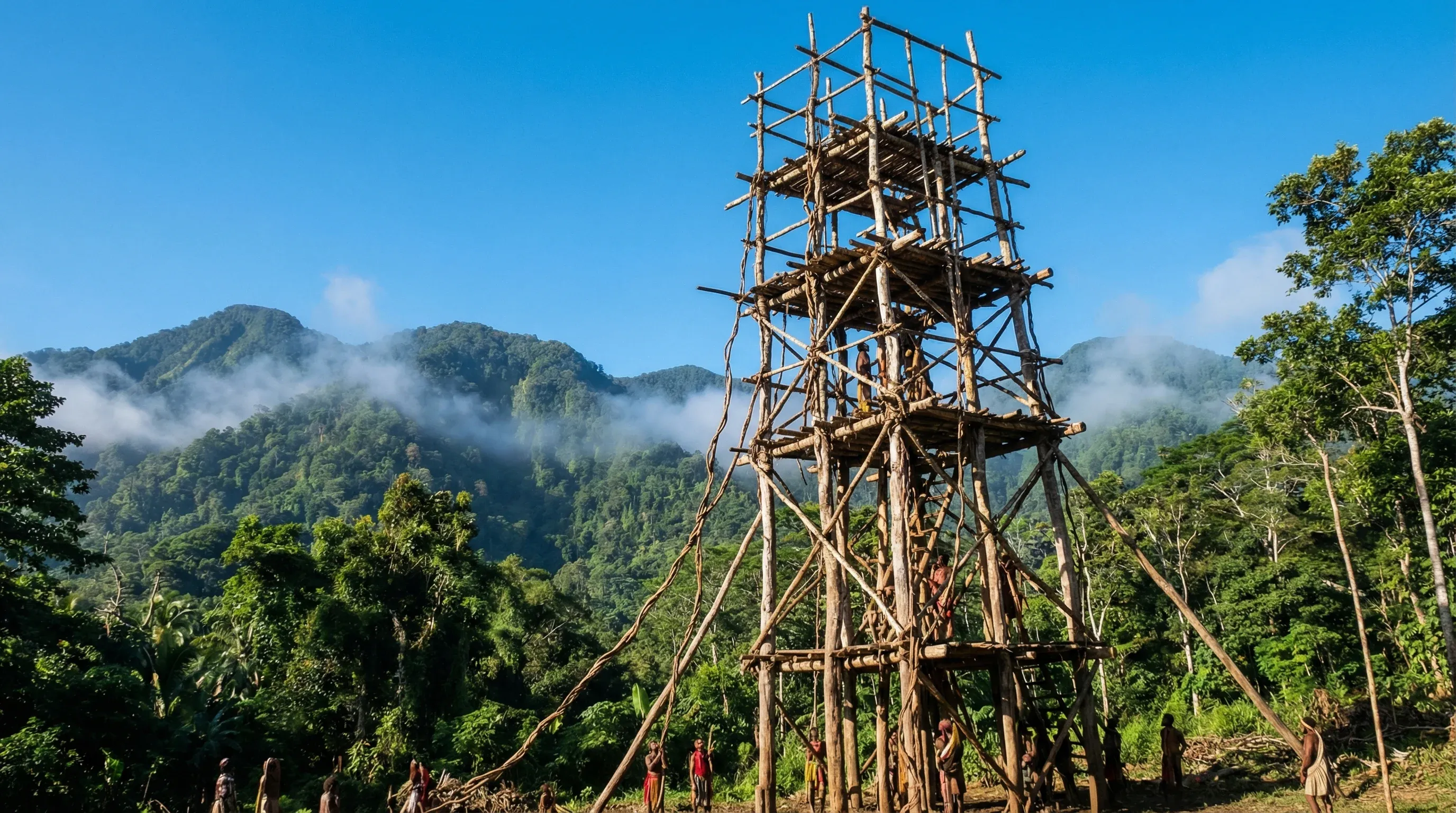
The most iconic attraction is the Nagol (Pentecost Land Diving). Held annually between April and June during the yam harvest, men jump from tall wooden towers with only vines tied to their ankles. It is the precursor to modern bungee jumping and is a breathtaking spectacle of bravery and faith. Viewing this is safe for families, though it requires travel into the jungle. It is a powerful cultural lesson in community and rite of passage.
In Malakula, cultural tours to villages like the Bunlap Traditional Village (or similar custom villages in the area) allow families to see traditional thatch architecture, learn about fire-making, and watch "sand drawing"—a UNESCO-recognized communication system. For nature lovers, the Maskelyne Islands off the coast of Malakula offer pristine coral reefs and high chances of spotting dugongs and turtles, providing a gentle nature break after the intense cultural experiences of the mainland.
Practical Advice
Travel here requires patience. Flights can be delayed, and road transfers are often in the back of 4WD trucks. The Nagol festival is seasonal (April–June only), and accommodation books out months in advance during this time. Malaria prophylaxis is strongly recommended for these outer islands. Electricity is often solar-only, so charging devices can be tricky.
Food & Drink
Typical meal times: Variable. Meals are often prepared upon request in guesthouses. Lunch is usually 12:00 pm to 1:00 pm, Dinner 6:30 pm to 7:30 pm.
Typical meal costs: Meals are almost always included in accommodation prices (approx. 1,000–1,500 VUV per meal, approx. $8.40–12.50 USD / €7.50–11 EUR) because there are few standalone restaurants. Village markets sell cheap fruits and nuts.
Dietary requirements: Options are limited. You will eat what is grown locally—yam, taro, island cabbage, chicken, and fish. Vegans will do well with root crops, but gluten-free bread is non-existent (bring your own supplies).
Signature dishes:
- Nalot – A ceremonial dish made from roasted breadfruit, banana, or taro, mashed and mixed with coconut cream, often served at weddings or chiefly ceremonies.
- Island Cabbage (Simboro) – A nutritious leafy green often steamed in coconut milk, a staple side dish for almost every meal.
Why this score?
This region offers serious adventure, characterized by dense jungle treks, traditional tribal villages, and the absence of modern amenities. Navigating Malakula’s 'Dog’s Head' or witnessing the Naghol ceremonies involves rugged travel over difficult terrain and deep cultural immersion. It is a destination for those seeking a highly authentic and physically demanding experience.
Why this score?
Healthcare is restricted to extremely basic rural aid posts and small clinics with minimal supplies and no permanent doctor. In the event of an accident or illness, medical evacuation is the only viable option, which can be delayed by weather or limited flight schedules. Communication for medical assistance in remote villages can be challenging.
Why this score?
These islands are primarily visited by intrepid travelers seeking specific cultural events like the Naghol land diving on Pentecost. Visitor numbers are extremely low due to infrequent domestic flights and very limited commercial accommodation. Most travelers arrive as part of specialized small-group tours or via private yacht.

While accommodation is simple and inexpensive—guesthouses cost 3,000–6,000 VUV (approx. $25–50 USD / €22–45 EUR) per person including meals—transport is the major cost. Chartering a truck for a specific trip can cost 5,000–10,000 VUV (approx. $42–84 USD / €37–75 EUR). Viewing the land diving (Nagol) carries a high entry fee for tourists, often around 10,000–12,000 VUV (approx. $84–100 USD / €75–90 EUR) per person.

Getting Here & Around
Getting Here
- Airports – Norsup (NUS) on Malakula and Lonorore (LNE) on Pentecost are the main airstrips. Small planes fly from Port Vila and Santo. Baggage limits are strict (often 10kg).
- Boat – Small speedboats connect Malakula to the Maskelyne Islands. Inter-island cargo ships exist but are irregular and uncomfortable.
Getting Around
- 4WD Truck – The only way to move on the main islands. You hire a 'truck' (a ute with benches in the back). Roads are unsealed and bumpy—hold on tight!
- Walking – Trekking is common for moving between villages, especially in South Pentecost to reach land diving sites like Nagol.
- Boat – Essential for accessing coastal villages and offshore islands lacking road access.
No airports in this region. See the country flight map for nearby connections.
Official Links

Packing List
Electricity is rare or solar-only; villages are pitch black at night.
Kava roots or school supplies are respectful gestures when visiting tribes.
Shoulders and knees should be covered in villages out of cultural respect.
There are no ATMs; you must bring all the cash you need for the trip.
Essential for coral beaches, rocky cascades, and getting in and out of boats on jagged shorelines.
Vital for keeping cameras and phones dry during choppy speed boat transfers between islands.
If visiting villages, small gifts for the local school are a culturally appreciated gesture (check 'Pack for a Purpose').
Roads in Tanna and Santo are rough 4WD tracks, and inter-island boat crossings can be very choppy.

Activities & Best Times

Hiking, wildlife, outdoor exploration, ecotourism
Features authentic jungle trekking and unique cultural landscapes like the Big Nambas trails. Peak season (May-September) provides manageable humidity and clear trails, whereas the wet season (Dec-March) makes jungle paths dangerously slippery and river crossings difficult.

Urban tourism, museums, historical sites, architecture
A world-class destination for experiencing living tribal traditions and the unique 'kastom' of the Nambas. Drier months (May-September) are essential for reaching remote traditional villages by road; the peak wet season (Jan-March) often disrupts travel and village access.

Beach resorts, marine activities: diving, snorkelling, kite surfing, wind surfing, sailing
Offers pristine, uncrowded island settings like Wala and Uripiv with authentic reef access and snorkeling, though accommodation remains rustic. Peak months align with the dry season when trade winds are consistent and visibility is highest; Jan-March is off-season due to peak cyclone risk.

Sport tourism, fitness activities, active recreation
Provides high-engagement cross-island trekking and waterfall expeditions for active families. The cooler, drier window from June to September is optimal for physical exertion in a tropical environment; high heat and rainfall in Jan-March make such activities punishing.

Learning experiences, scientific sites, historical education
The Malakula Cultural Centre offers significant insights into the region's diverse linguistics and history. Accessibility for visiting families is best during the dry season to avoid flight and boat cancellations common during the cyclone months.

Events, celebrations, seasonal attractions
Home to the Nagol land diving on Pentecost, a globally unique cultural ritual. This is strictly seasonal, occurring only between April and June, which defines the peak window for festival-focused travel.




Public Holidays & Calendar Next 12 months
Public holidays, festivals, cultural celebrations, and seasonal natural phenomena coming up in Malakula & Pentecost (culture) over the next 12 months.
Loading holidays and events...

Travel Advisory
All major international agencies agree that Vanuatu is a safe destination where standard travel precautions are sufficient. Visitors should primarily focus on natural hazard awareness and standard personal security.
Safety Topics
Traveller Advice (3 groups)

Ensure you have comprehensive travel insurance that includes medical evacuation by air, as local medical facilities are basic. Stay updated on weather forecasts during the cyclone season from November to April.

While same-sex relationships are legal, they are not widely accepted by the local population. Discretion is advised, and public displays of affection should be avoided to prevent giving offense in this conservative society.

Maintain a high level of vigilance and avoid walking alone in isolated areas or after dark. Reports of harassment and sexual assault have occurred, particularly in urban centres like Port Vila.
Agency Summaries
Travellers should practice standard safety measures. While general safety is good, visitors should be aware of petty crime, seasonal cyclone risks, and health concerns like malaria.
No specific warnings against travel are in place. Guidance focuses on standard security, entry requirements, and natural hazard awareness including cyclones and volcanic activity.
New Zealand advises standard precautions. It highlights that the High Commission in Port Vila is in a temporary location following earthquake damage and notes seasonal cyclone risks.
The advisory was lowered to Level 1 following recovery from a late 2024 earthquake. Visitors are advised to monitor local updates as infrastructure repairs continue in Port Vila.
Vanuatu is generally safe, but travellers should stay alert to weather warnings during cyclone season. Some earthquake-related infrastructure disruptions persist in the capital.
The security status is stable. Travellers are advised to maintain basic security awareness, particularly at night, and ensure they have adequate insurance for a volcanic/seismic region.
Information is provided for general guidance only and does not constitute travel, safety, medical, or legal advice. Conditions may change. Users are responsible for independently verifying information before travel.