
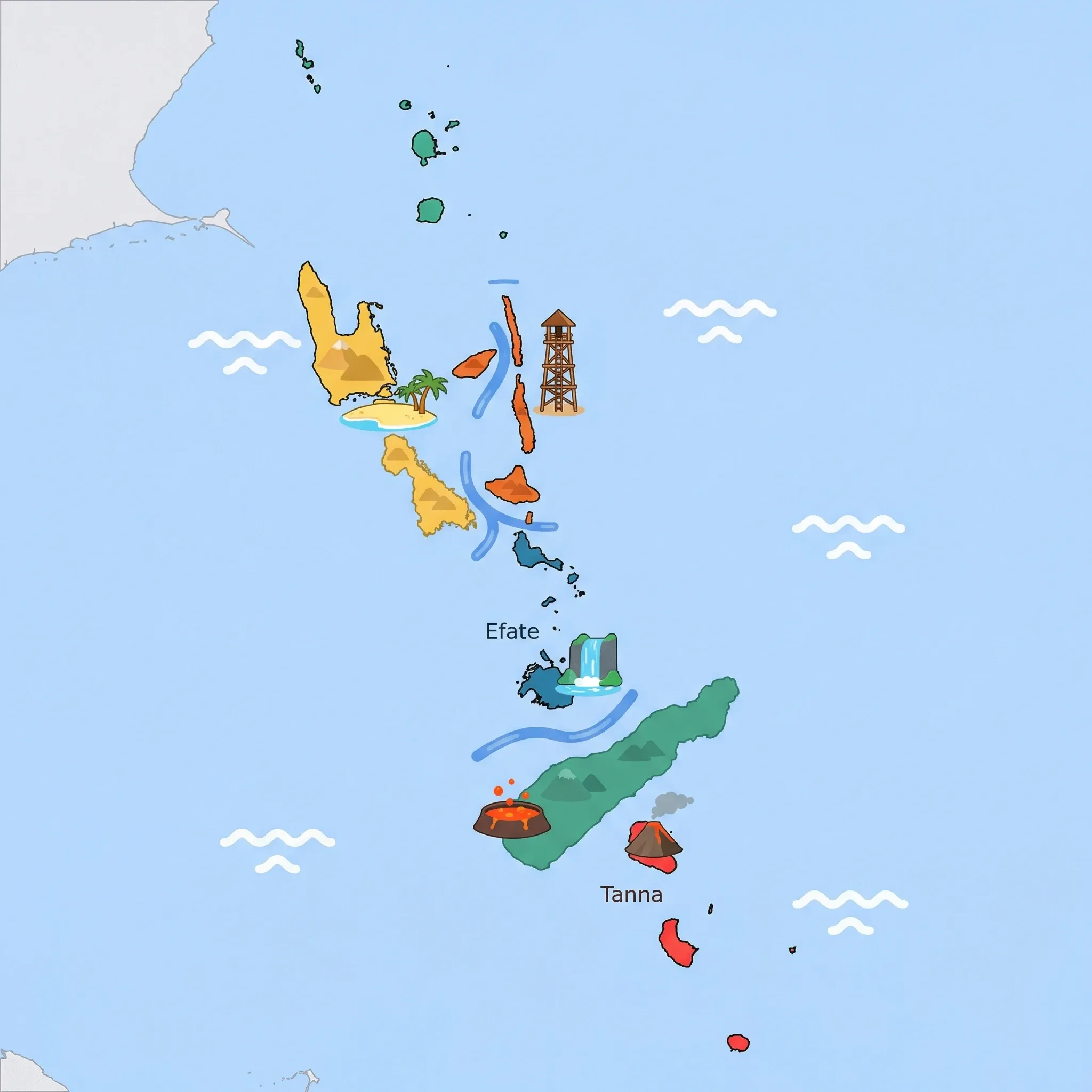
Click a region to explore
Overview
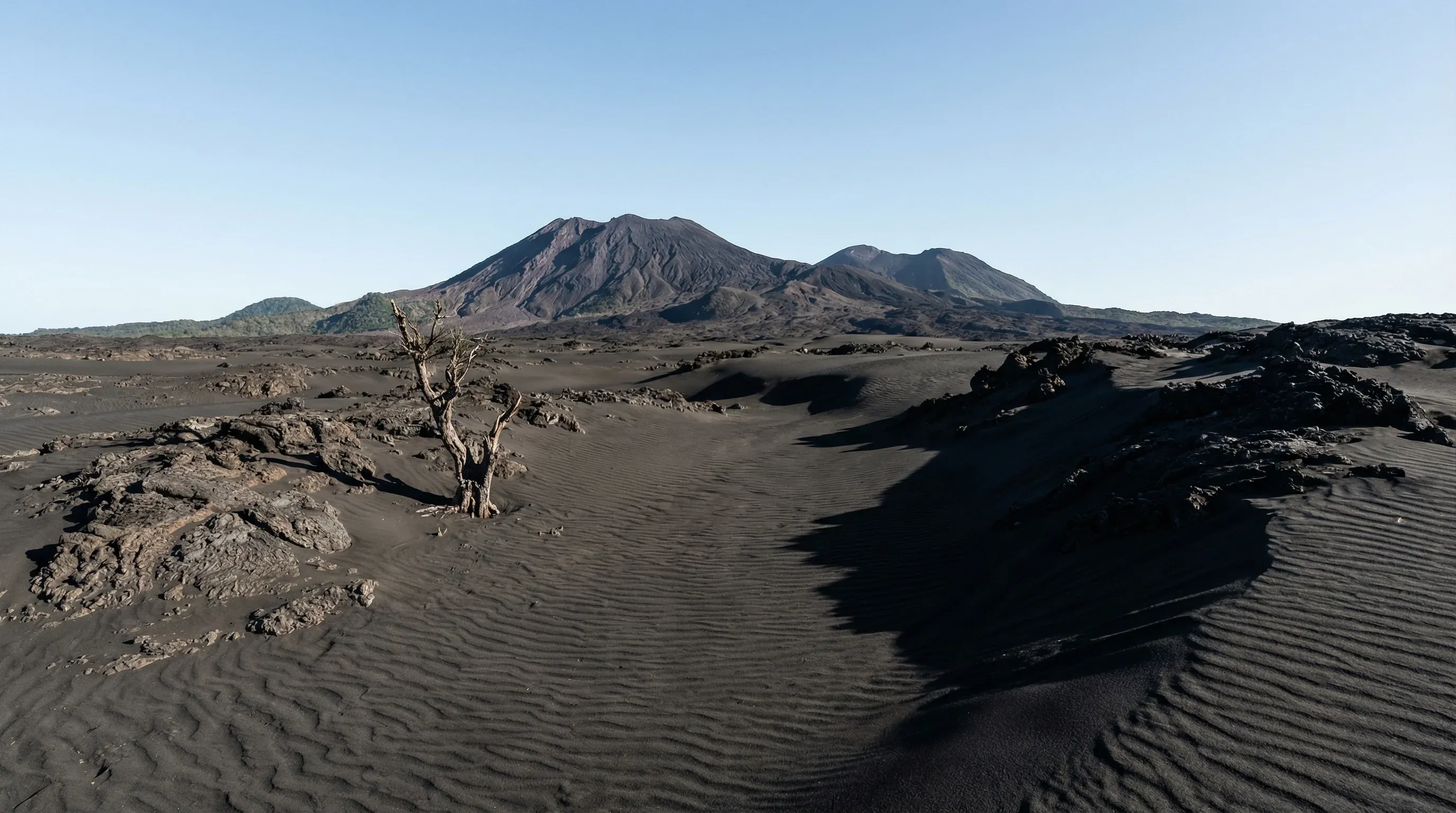
The Outer Islands of Vanuatu—comprising groups like the Banks, Torres, and Shepherds, plus unique islands like Ambrym and Epi—represent the Pacific as it was fifty years ago. This region is not for the faint-hearted or the luxury-seeking family. It is for the true adventurers. The geography varies wildly: Ambrym is a "black island" of ash and active lava lakes; Epi is lush and coastal, known for friendly marine life; the Banks islands in the north offer waterfalls crashing directly into the sea and freshwater lakes atop dormant volcanoes.
Tourism infrastructure here is almost non-existent. There are no resorts, only basic village bungalows or homestays. Electricity is rare, internet is spotty, and shops are few. But for a family willing to trade comfort for experience, the rewards are immense. Children can swim with dugongs in the wild off Epi, watch the "Rom" spiritual dance in Ambrym, or trek to see the "water music" women of the Banks islands, who create rhythms by slapping the surface of the river. It is a place to learn resilience, simplicity, and the true meaning of community.
Key Attractions
In the Banks group, Rah Island (near Mota Lava) is famous for the "Snake Dance" and the ability to walk across the lagoon to the main island at low tide. In Gaua, adventurous families can trek to Lake Letas, a massive freshwater crater lake with a waterfall. Ambrym is renowned for its magic and sorcery traditions, as well as the twin volcanoes Marum and Benbow—though the trek to these craters is grueling and best for families with fit teenagers only.
Epi Island is the most accessible of the outer group, famous for Lamen Bay. Here, resident dugongs and sea turtles are so accustomed to people that they often swim right alongside snorkelers in shallow water. It is one of the best places in the world for children to interact with these gentle marine mammals in the wild.
Practical Advice
These islands are remote. Flights are on small planes and are frequently cancelled due to weather or grass airstrip conditions. Always have a buffer of a few days in your itinerary. Bring absolutely everything you need, including medications, snacks, and batteries. Cash is essential as there are no banks.
Food & Drink
Typical meal times: determined by the host family. Usually early, with dinner around 6:00 pm before the generator (if any) is turned off.
Typical meal costs: Usually included in the nightly accommodation rate (approx. 3,000–5,000 VUV per person per day including all meals). If paying separately, a meal is about 500–800 VUV (approx. $4.20–6.70 USD / €3.75–6 EUR).
Dietary requirements: extremely limited. You will eat local garden produce (organic and delicious but repetitive). If you need special foods, you must fly them in with you.
Signature dishes:
- Water Taro – A specialty of the Banks islands, grown in flooded terraces similar to rice paddies, often roasted on fire.
- Nangae Nuts – Indigenous almonds found in the north, often eaten fresh or roasted as a snack.
Why this score?
Visiting these islands is an expedition-style undertaking requiring significant planning and flexibility with irregular transport. The terrain includes active volcanoes on Ambrym and remote coral reefs, offering a true 'off-the-grid' experience. Travelers must be entirely self-sufficient as there are no established tourist facilities or emergency services.
Why this score?
Medical services are virtually non-existent, with many islands relying on basic community health workers with very limited training. Any serious medical issue would require a complex and expensive private air or sea charter for evacuation to Port Vila. This region is unsuitable for travelers with pre-existing health conditions or those without robust emergency plans.
Why this score?
The Banks, Torres, and Shepherd groups receive almost no international tourism outside of occasional expedition cruise ships. These islands lack traditional tourist infrastructure, with very few guesthouses or commercial services available. They represent some of the least visited inhabited places in the Pacific.

Once you arrive, daily costs are very low. Accommodation with meals is often 3,000–5,000 VUV (approx. $25–42 USD / €22–37 EUR) per person. Activities are cheap or donation-based (e.g., 500 VUV to a village guide). However, the flights to reach these islands are expensive, often costing 20,000–30,000 VUV (approx. $165–250 USD / €150–225 EUR) per person return from Port Vila.

Getting Here & Around
Getting Here
- Airports – Air Vanuatu services small grass strips on islands like Epi (Lamen Bay), Ambrym (Craig Cove), and Vanua Lava (Sola). Flights are often milk runs, hopping between several islands.
- Boat – Inter-island cargo ships are the lifeline for locals but are rough, crowded, and safety standards vary. Not recommended for tourists unless chartering a reputable boat.
Getting Around
- Walking – The primary mode of transport. Many villages are only connected by footpaths.
- Shared Truck – On islands with roads (like parts of Epi or Vanua Lava), a shared truck is the "bus." You pay a small fee to ride in the back.
- Small Boat – Essential for moving between small islets in the Banks group (e.g. from Mota Lava to Rah).
No airports in this region. See the country flight map for nearby connections.

Packing List
Tap water is rarely treated; bottled water is heavy to fly in and plastic waste is an issue.
There are no pharmacies and clinics are basic. Bring antibiotics, antiseptics, and painkillers.
Electricity is extremely scarce; charge your camera and phone via the sun.
There are no corner stores. If your kids get hungry between meals, you need your own supply.
Essential for coral beaches, rocky cascades, and getting in and out of boats on jagged shorelines.
Village paths and eco-lodges often lack street lighting, and it is necessary for the Mt Yasur sunset tour.
Vital for keeping cameras and phones dry during choppy speed boat transfers between islands.
If visiting villages, small gifts for the local school are a culturally appreciated gesture (check 'Pack for a Purpose').
Roads in Tanna and Santo are rough 4WD tracks, and inter-island boat crossings can be very choppy.

Activities & Best Times

Hiking, wildlife, outdoor exploration, ecotourism
Home to spectacular volcanic landscapes on Ambrym and the major Lake Letas and Siri Waterfall on Gaua, offering raw and authentic wilderness immersion. Peak visitation aligns with the drier winter months to ensure safe trekking conditions and visibility of volcanic activity.

Urban tourism, museums, historical sites, architecture
Offers deep immersion into traditional Melanesian 'Kastom' culture at Fanla Village and Rah Island, providing an authenticity rare in modern tourism. Travel is best during the dry season when cultural ceremonies are more frequent and accessibility via small aircraft is more reliable.

Sport tourism, fitness activities, active recreation
Features world-class, demanding trekking routes across volcanic calderas and up Mount Marum and Benbow. The rating is limited to 'good' due to the rugged, basic infrastructure that requires high physical fitness and specialized local guiding.

Beach resorts, marine activities: diving, snorkelling, kite surfing, wind surfing, sailing
Remote coastal areas like Linua Island offer pristine, untouched beauty but lack the international-standard resort facilities and marine infrastructure expected by discerning families. Visibility for snorkeling is best during the calmer, drier months of the austral winter.

Spa retreats, wellness centers, peaceful getaways
Features unique natural sulphur and geothermal springs on Vanua Lava and Gaua for a primitive, restorative experience. These lack established spa facilities, serving as incidental natural highlights rather than primary wellness destinations.




Public Holidays & Calendar Next 12 months
Public holidays, festivals, cultural celebrations, and seasonal natural phenomena coming up in Outer Islands over the next 12 months.
Loading holidays and events...

Travel Advisory
All major international agencies agree that Vanuatu is a safe destination where standard travel precautions are sufficient. Visitors should primarily focus on natural hazard awareness and standard personal security.
Safety Topics
Traveller Advice (3 groups)

Ensure you have comprehensive travel insurance that includes medical evacuation by air, as local medical facilities are basic. Stay updated on weather forecasts during the cyclone season from November to April.

While same-sex relationships are legal, they are not widely accepted by the local population. Discretion is advised, and public displays of affection should be avoided to prevent giving offense in this conservative society.

Maintain a high level of vigilance and avoid walking alone in isolated areas or after dark. Reports of harassment and sexual assault have occurred, particularly in urban centres like Port Vila.
Agency Summaries
Travellers should practice standard safety measures. While general safety is good, visitors should be aware of petty crime, seasonal cyclone risks, and health concerns like malaria.
No specific warnings against travel are in place. Guidance focuses on standard security, entry requirements, and natural hazard awareness including cyclones and volcanic activity.
New Zealand advises standard precautions. It highlights that the High Commission in Port Vila is in a temporary location following earthquake damage and notes seasonal cyclone risks.
The advisory was lowered to Level 1 following recovery from a late 2024 earthquake. Visitors are advised to monitor local updates as infrastructure repairs continue in Port Vila.
Vanuatu is generally safe, but travellers should stay alert to weather warnings during cyclone season. Some earthquake-related infrastructure disruptions persist in the capital.
The security status is stable. Travellers are advised to maintain basic security awareness, particularly at night, and ensure they have adequate insurance for a volcanic/seismic region.
Information is provided for general guidance only and does not constitute travel, safety, medical, or legal advice. Conditions may change. Users are responsible for independently verifying information before travel.