
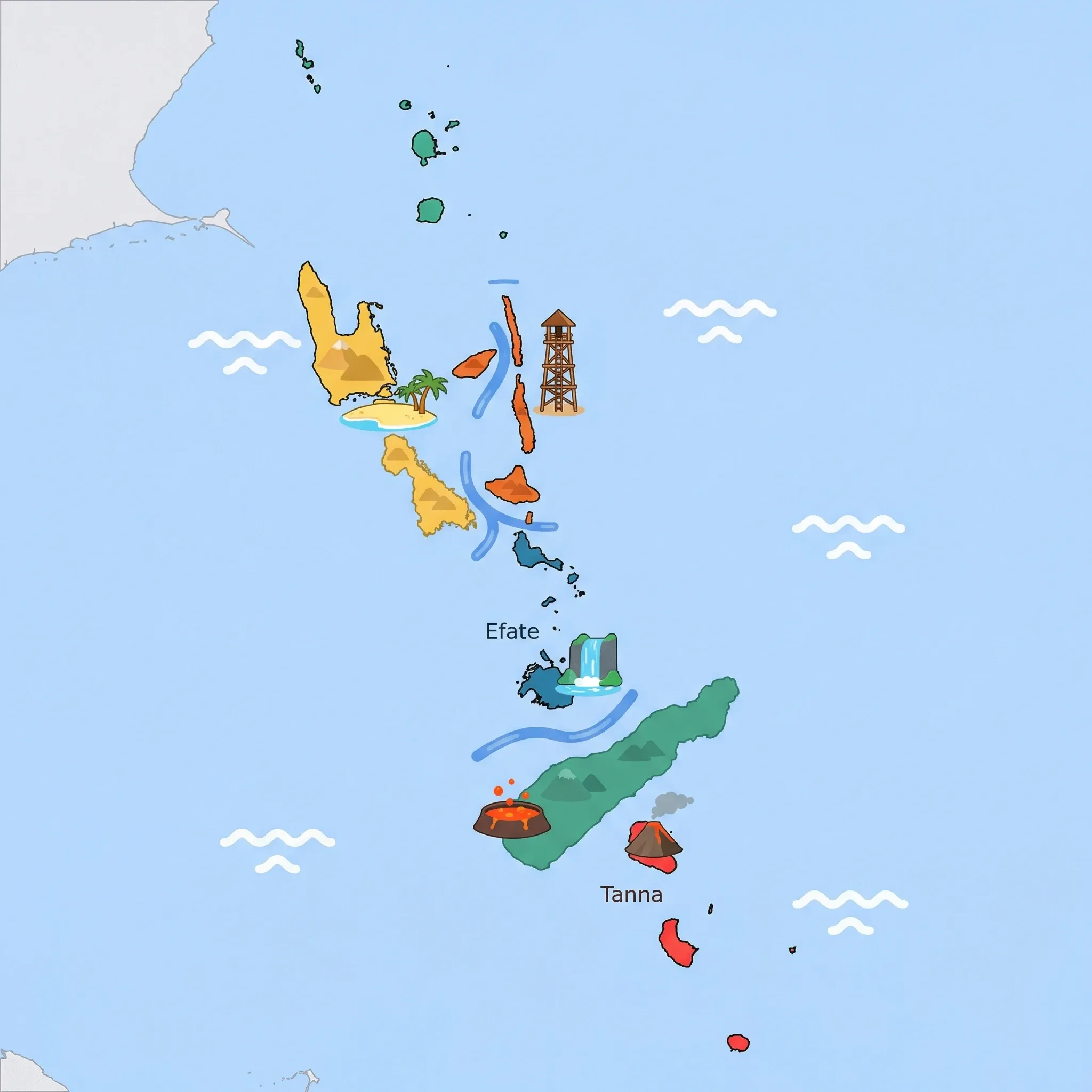
Click a region to explore
Overview
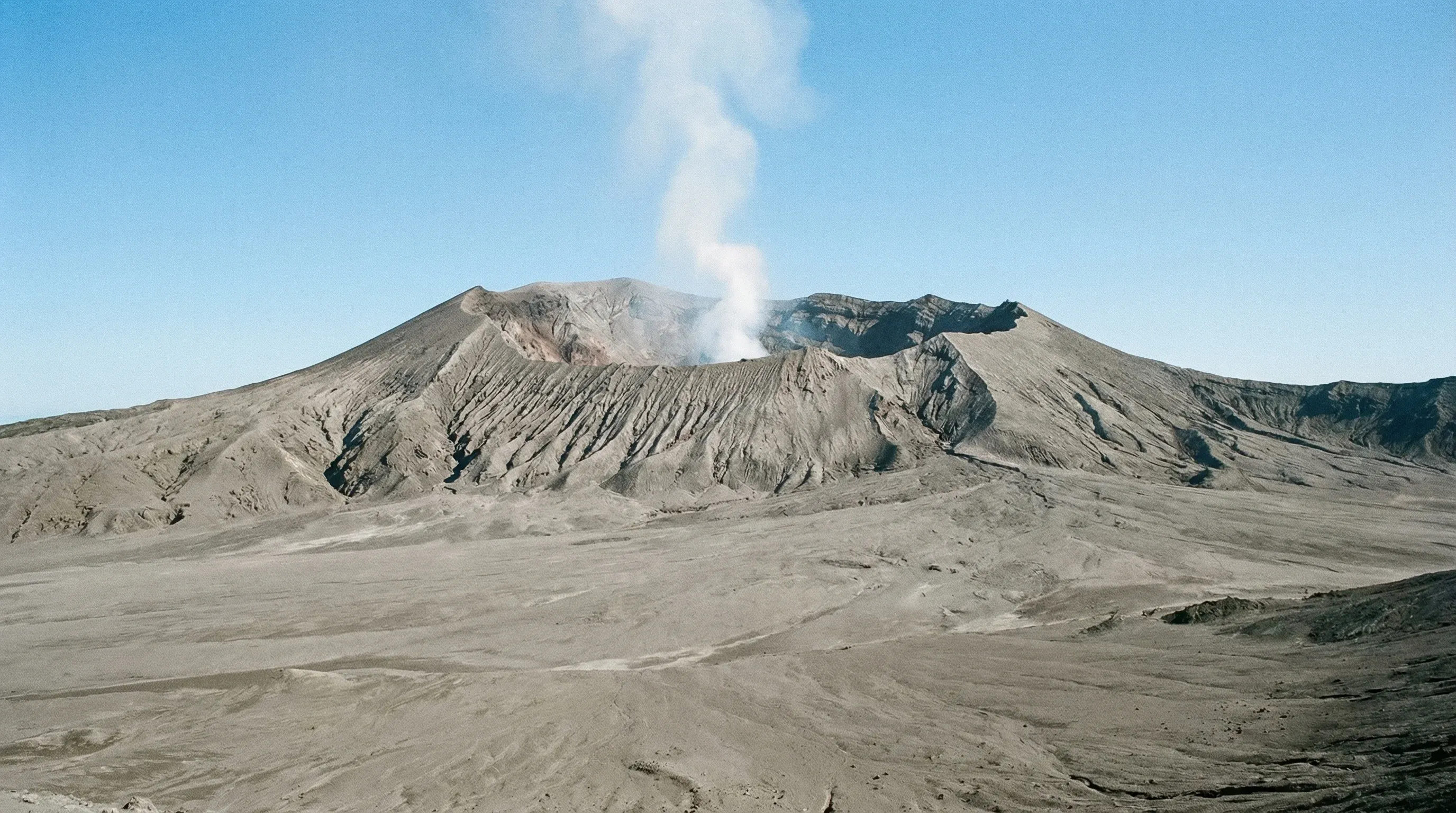
Tanna is an island of raw, primal energy. It is dominated by Mount Yasur, one of the world's most accessible active volcanoes. For families, Tanna offers an adventure that sounds like it belongs in a Jules Verne novel but is surprisingly achievable. The geography is stark and dramatic: one side of the island is lush, green jungle, while the area surrounding the volcano is a moonscape of grey ash plains and black sand rivers. It is a place where nature feels powerful and alive.
The culture on Tanna is equally potent. This is the home of the John Frum cargo cults and heavy "kastom" beliefs. The locals are incredibly friendly and eager to share their way of life. While the volcano is the main draw, the island's coastline features dramatic cliffs and hidden sea caves. The "Blue Cave" is a highlight—a large grotto accessible by swimming underwater for a meter, opening up into a cathedral-like space illuminated by a shaft of sunlight. It's magical for confident swimmers. Tanna is best suited for families who don't mind getting a little dirty (volcanic dust is everywhere) in exchange for world-class experiences.
Key Attractions
The undisputed highlight is Mount Yasur. 4WD vehicles drive visitors almost to the summit, leaving just a 15-minute walk up a staircase to the crater rim. Standing there at twilight, feeling the ground rumble and watching lava bombs fly into the air (safely monitored by guides), is an experience that leaves children and adults awestruck. It is generally considered safe, with strict alert levels managed by local authorities.
Apart from the volcano, the "Giant Banyan Tree" is a living architectural wonder, so vast that it covers the area of a soccer field. Local guides, often children from the village, love leading visitors through the maze of roots. Port Resolution offers a calmer experience with hot springs bubbling into the ocean at low tide, allowing for a warm natural bath.
Practical Advice
The best time to visit Mount Yasur is at sunset. It can be cold and windy at the crater rim, so bring warm layers. Ash is a constant presence near the volcano; contact lens wearers should switch to glasses, and cameras should be protected. Roads are rough unsealed tracks—prepare for bumpy rides.
Food & Drink
Typical meal times: Breakfast 7:00 am to 9:00 am; Dinner 6:30 pm to 8:00 pm. Options are limited to your accommodation.
Typical meal costs: Resort meals cost 1,800–2,500 VUV (approx. $15–21 USD / €13.50–19 EUR). Simple bungalow meals are around 1,000 VUV (approx. $8.40 USD / €7.50 EUR).
Dietary requirements: Tanna produces excellent vegetables due to the volcanic soil. Vegetarians will eat well (taro, sweet potato, papaya). Gluten-free and dairy-free travellers should communicate needs in advance as supplies are imported.
Signature dishes:
- Tanna Coffee – Grown in the rich volcanic soil, this is the island's most famous export. Robust and organic, it's a must-try for parents.
- Root Crop Simboro – Grated yam or taro wrapped in island cabbage leaves and boiled in coconut milk—a comforting, dense side dish.
Why this score?
The primary draw is standing on the rim of an active, erupting volcano, which is inherently adventurous despite the established tour routes. The island’s interior is rugged with unpaved roads and traditional 'kastom' villages that maintain ancient ways of life. Travel across the island is slow, bumpy, and requires 4WD vehicles through ash plains and jungles.
Why this score?
Tanna has a small hospital in Lenakel, but it is poorly equipped for anything beyond minor ailments or stabilization. The remote location and rugged roads mean that reaching the hospital from the volcano area can take considerable time. Any moderate to severe injury would necessitate an immediate flight to the capital or abroad.
Why this score?
Tanna is a bucket-list destination for its accessible active volcano, Mount Yasur, yet it remains an emerging niche destination. While it is the third most visited region in Vanuatu, total annual visitor counts are still very low in a global context. Most tourists visit on short 1-2 night trips specifically to see the volcano before returning to Efate.

Accommodation ranges from budget treehouses near the volcano (3,000 VUV / $25 USD / €22 EUR) to comfortable resorts near the airport (20,000 VUV / $165 USD / €150 EUR). The main expense is transport and activities. The entrance fee to Mount Yasur is high—approx. 9,750 VUV (approx. $82 USD / €73 EUR) per adult, with discounts for children. Airport transfers can cost 5,000 VUV (approx. $42 USD / €37 EUR) each way.

Getting Here & Around
Getting Here
- Airports – White Grass Airport (TAH) receives daily flights from Port Vila (40 mins). The flight path often offers views of Mount Yasur smoking in the distance.
- Ferry – Cargo ships service Tanna but are not recommended for tourists due to safety and lack of schedules.
Getting Around
- 4WD Transfer – Essential. The cross-island road from the airport to the volcano takes about 1.5 to 2 hours across the ash plains. Transfers are usually arranged by your accommodation.
- Walking – Only possible within your immediate resort or village area. Distances between attractions are too great to walk.
No airports in this region. See the country flight map for nearby connections.

Packing List
The volcano rim is exposed, windy, and surprisingly cold, especially after sunset.
Volcanic rock is sharp and ash is hot; sandals are not suitable for the crater.
Fine volcanic ash and dust can irritate eyes quickly.
The walk down from the volcano after the sunset tour is in total darkness.
Essential for coral beaches, rocky cascades, and getting in and out of boats on jagged shorelines.
Village paths and eco-lodges often lack street lighting, and it is necessary for the Mt Yasur sunset tour.
Vital for keeping cameras and phones dry during choppy speed boat transfers between islands.
If visiting villages, small gifts for the local school are a culturally appreciated gesture (check 'Pack for a Purpose').
Roads in Tanna and Santo are rough 4WD tracks, and inter-island boat crossings can be very choppy.

Activities & Best Times

Hiking, wildlife, outdoor exploration, ecotourism
Features Mount Yasur, one of the world's most accessible active volcanoes, and the spectacular Giant Banyan Tree. Dry season months are essential for safe trekking and clear views of the crater, as monsoon rains frequently make the volcanic ash plains impassable.

Urban tourism, museums, historical sites, architecture
Highly authentic experiences in 'Kastom' villages like Yakel offer rare insights into traditional Melanesian culture for sophisticated travelers. The peak season aligns with drier weather for easier access to remote inland villages and traditional festivals.

Sport tourism, fitness activities, active recreation
Offers world-class volcano ash boarding and challenging summit trails on Mount Yasur. These high-energy activities require stable footing and dry conditions, making the winter months the only reliable time for active adventure.

Beach resorts, marine activities: diving, snorkelling, kite surfing, wind surfing, sailing
Home to the unique Blue Cave and striking black sand beaches, offering excellent snorkeling and coastal scenery. Peak months provide the calmest seas and best underwater visibility, while the wet season (December–April) poses cyclone risks and heavy rain.

Spa retreats, wellness centers, peaceful getaways
Natural thermal hot springs at Port Resolution offer a rustic, restorative experience but lack international-standard spa facilities. The cooler dry season is the most comfortable time for utilizing these natural springs.

Scenic drives, countryside tours, route-based travel
A single rugged 4WD track (Cross-Island Volcano Road) doesn't constitute 'good' road trip infrastructure when compared internationally to regions with established scenic route networks. Marginal better reflects that the route exists but is challenging and limited in scope.




Public Holidays & Calendar Next 12 months
Public holidays, festivals, cultural celebrations, and seasonal natural phenomena coming up in Tanna (volcano) over the next 12 months.
Loading holidays and events...

Travel Advisory
All major international agencies agree that Vanuatu is a safe destination where standard travel precautions are sufficient. Visitors should primarily focus on natural hazard awareness and standard personal security.
Safety Topics
Traveller Advice (3 groups)

Ensure you have comprehensive travel insurance that includes medical evacuation by air, as local medical facilities are basic. Stay updated on weather forecasts during the cyclone season from November to April.

While same-sex relationships are legal, they are not widely accepted by the local population. Discretion is advised, and public displays of affection should be avoided to prevent giving offense in this conservative society.

Maintain a high level of vigilance and avoid walking alone in isolated areas or after dark. Reports of harassment and sexual assault have occurred, particularly in urban centres like Port Vila.
Agency Summaries
Travellers should practice standard safety measures. While general safety is good, visitors should be aware of petty crime, seasonal cyclone risks, and health concerns like malaria.
No specific warnings against travel are in place. Guidance focuses on standard security, entry requirements, and natural hazard awareness including cyclones and volcanic activity.
New Zealand advises standard precautions. It highlights that the High Commission in Port Vila is in a temporary location following earthquake damage and notes seasonal cyclone risks.
The advisory was lowered to Level 1 following recovery from a late 2024 earthquake. Visitors are advised to monitor local updates as infrastructure repairs continue in Port Vila.
Vanuatu is generally safe, but travellers should stay alert to weather warnings during cyclone season. Some earthquake-related infrastructure disruptions persist in the capital.
The security status is stable. Travellers are advised to maintain basic security awareness, particularly at night, and ensure they have adequate insurance for a volcanic/seismic region.
Information is provided for general guidance only and does not constitute travel, safety, medical, or legal advice. Conditions may change. Users are responsible for independently verifying information before travel.