
Angel Falls & Canaima
Journey to the Lost World of ancient mountains and thundering waterfalls 🌿💦
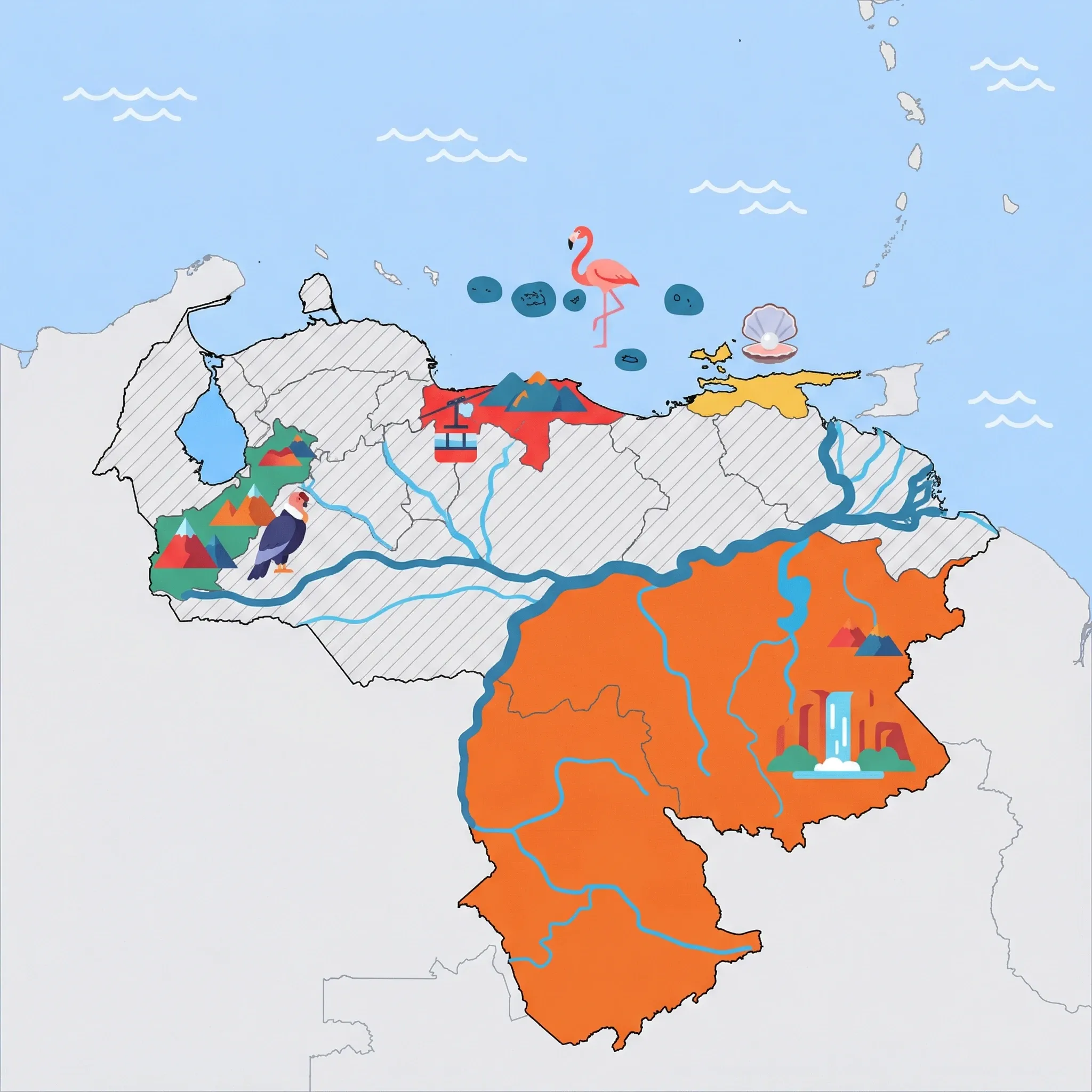
Click a region to explore
⚠️ SAFETY WARNING: Due to the presence of illegal armed groups, cross-border criminal activity, and limited medical infrastructure in Bolívar State, government agencies (including the USA, UK, Canada, and Australia) advise travelers to avoid all travel to this region. Access is strictly controlled, and the security situation in remote areas can be unpredictable. Families are strongly urged to consult their own government's official travel advisory before considering a trip, as circumstances and risk assessments vary.
Overview
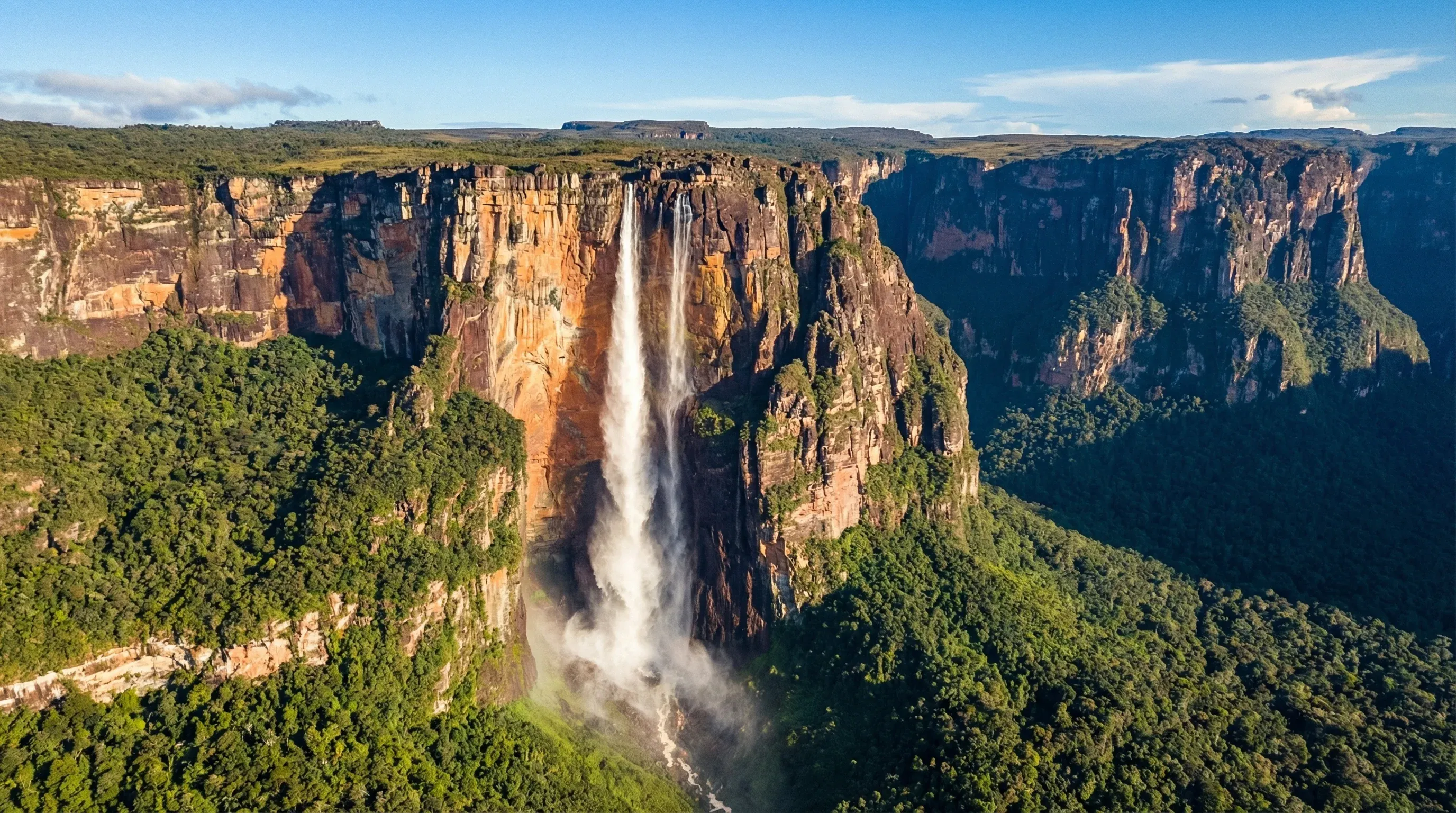
Canaima National Park is a land of superlatives, a UNESCO World Heritage site the size of Belgium that feels utterly prehistoric. For families who do visit, usually via organized fly-in charters to safe lodges, the experience is akin to stepping into the movie Up or Arthur Conan Doyle's The Lost World. The landscape is dominated by tepuis—massive flat-topped mountains with sheer vertical walls that rise abruptly from the jungle floor. The star attraction is undoubtedly Angel Falls, but the surrounding park offers a magical playground of waterfalls, reddish-black lagoons, and pink sandy beaches that children find fascinating. The isolation here is profound; there is no road access to the main lagoon, creating a bubble of tranquility where the only sounds are roaring water and jungle wildlife.
Culturally, this region is the ancestral home of the Pemon people, and interacting with local guides offers families a chance to learn about indigenous mythology and their deep spiritual connection to the tepuis. The climate is tropical and humid, with frequent rain showers that feed the falls, keeping the jungle lush and green. While the logistics of visiting are complex and require careful planning with reputable operators, the sheer scale of the natural architecture provides a humbling perspective on nature that leaves a lasting impression on young minds. It is not a destination for a casual holiday, but rather an expedition for families seeking to witness one of the planet's great natural wonders.
Key Attractions
The primary draw is the journey to the base of Angel Falls. This usually involves a four-hour dugout canoe trip upriver, an adventure in itself where kids can spot toucans and macaws, followed by a hike through the rainforest. Seeing the water cascade nearly a kilometer down Auyán-tepui is a moment of pure awe. Closer to the accommodation camps, the Canaima Lagoon is a calm, reddish water body fed by several thundering waterfalls. Families can take safe boat rides here to feel the spray of Hacha, Golondrina, and Ucaima falls.
Another thrilling experience for older children is the walk behind Sapo Falls (Salto El Sapo). During the rainy season, a curtain of water roars just inches from the walkway, creating a safe but adrenaline-pumping sensory experience. For a panoramic view, many families opt for a scenic overflight, which reveals the vastness of the Devil's Canyon and the endless carpet of rainforest below.
Practical Advice
The best time to visit is during the rainy season (June to November) when the falls are at full volume and river navigation is easier. In the dry season, the falls can diminish to a trickle. This is a remote wilderness trip; families must book all-inclusive packages that include flights, lodging, and meals, as there are no supermarkets or ATMs. Electricity is often generator-based and limited to certain hours.
Food & Drink
Typical meal times: Meals are strictly scheduled by the lodges. Breakfast is served 7:00 am to 8:30 am, lunch around 12:30 pm to 2:00 pm, and dinner from 7:00 pm to 8:30 pm.
Typical meal costs: Most tourism here is all-inclusive. If purchasing independently, a simple lunch costs VES 550–900 (approx. $15–25 USD / €14–23 EUR). Prices are high due to air-transport logistics.
Dietary requirements: Lodges generally serve set menus. Vegetarian options can be arranged with advance notice, but variety is limited due to the remote location. Gluten-free staples like cassava bread are common.
Signature dishes:
- Tumá – A traditional Pemon soup made with river fish, spicy peppers, and tapioca, often served at community gatherings.
- Pollo en Vara – Chicken roasted on sticks over open wood fires, a common comfort food served at camps.
- Casabe – A large, crisp flatbread made from cassava root, used as a utensil to scoop up food and naturally gluten-free.
Why this score?
This is a premier adventure destination featuring dense jungle treks, multi-day river expeditions in motorized canoes, and the dramatic tepui landscapes. The lack of road access and the rugged terrain of the Guiana Highlands cater to experienced travelers seeking an expedition-style experience.
Why this score?
Medical facilities in the Canaima area are extremely rudimentary, consisting only of basic first-aid stations at lodges. Any serious medical emergency requires a complex and costly aerial evacuation to Caracas, as there are no specialized hospitals in the immediate vicinity.
Why this score?
While Angel Falls is a world-famous natural icon, the region remains a niche destination due to its remote location and the requirement of expensive bush flights. International visitor numbers are constrained by logistics and the country's broader economic challenges, placing it below mainstream Caribbean hubs.

Due to its extreme isolation, Canaima is one of Venezuela's most expensive destinations. All supplies must be flown in. A 3-day all-inclusive package per person typically ranges from VES 36,000–72,000 (approx. $1,000–2,000 USD / €920–1,850 EUR). There are no budget options; safety and logistics require paying for established lodges.

Getting Here & Around
Getting Here
- Airports – Access is almost exclusively via light aircraft landing at Canaima Airport (CAJ). Flights typically depart from Caracas (CCS) or Puerto Ordaz (PZO).
- Organized Tours – Most families arrive as part of a package booked through operators in Caracas, which includes the domestic charter flight.
Getting Around
- Boat – The primary mode of transport is the curiara (indigenous dugout canoe) fitted with outboard motors, essential for reaching the falls.
- Walking – Movement within the lodge area and to viewpoints is on foot. Trails can be slippery and rooted, so sturdy footwear is required.
Nearby Airports (3 airports)
Canaima Airport
CAJCanaima
Casique Aramare
PYHPuerto Ayacucho
Puerto Ordaz
PZOPuerto Ordaz
View full flight map for Venezuela →

Packing List
Essential for keeping cameras and clothes dry during canoe trips and waterfall spray.
Protect the fragile river ecosystem as water treatment is limited in camps.
Electricity in lodges is often cut at night; red light prevents blinding others.
You will get wet from both sudden tropical downpours and waterfall mist.

Activities & Best Times

Hiking, wildlife, outdoor exploration, ecotourism
The region offers world-class wilderness immersion in Canaima National Park, featuring Angel Falls and tepui trekking. Peak river accessibility and flow occur during the high-water months of June to November, while the dry season significantly restricts boat travel to the falls base.

Public Holidays & Calendar Next 12 months
Public holidays, festivals, cultural celebrations, and seasonal natural phenomena coming up in Angel Falls & Canaima over the next 12 months.
Loading holidays and events...

Travel Advisory
All major agencies maintain their highest possible warning level for Venezuela, advising against all travel due to extreme risks including violent crime, political instability, and arbitrary detention. The situation is considered highly dangerous and consular support is generally unavailable.
Safety Topics
Traveller Advice (4 groups)

While some general advice is provided, travellers should be aware of a conservative social environment and a lack of specific legal protections for sexual and gender minorities.

Women are advised to take extreme care and refer to standard safety protocols for high-risk environments, specifically regarding personal safety and transportation.
Media professionals face a significant risk of arbitrary arrest, interrogation, and detention by local authorities. Press activities are closely monitored and often restricted.
Aid and development workers are at high risk of being accused of terrorism or other crimes, leading to potential indefinite detention without due process.
Agency Summaries
The Canadian government recommends against any travel to Venezuela due to extreme security risks, including violent crime, political volatility, and the possibility of arbitrary detention. Basic necessities like fuel and water are in short supply, and military activity in early 2026 has led to a state of emergency.
The UK advises against all travel to Venezuela following recent military strikes and the declaration of a state of external commotion. Tensions are high, borders and airspace may close without warning, and the ability of the embassy to provide support is extremely restricted.
New Zealand advises against all travel because of political instability, violent crime, and shortages of food and medicine. Recent military strikes in Caracas and other states have significantly increased the risk to foreign nationals.
Ireland warns against all travel to the country due to the deterioration of the security situation and the risk of violence. Citizens already in the country are advised to stay indoors and prepare for potential border or airspace closures.
Australia has issued its highest warning level for Venezuela, citing an unpredictable security environment, high levels of violent crime, and risk of detention. Residents are urged to leave if possible, as the government has no diplomatic presence to provide assistance.
U.S. authorities advise that no travel to the country is safe and all Americans should leave immediately. There is a severe risk of wrongful detention, kidnapping, and violent crime. Consular services have been suspended since 2019, meaning the government cannot assist citizens in emergencies.
Information is provided for general guidance only and does not constitute travel, safety, medical, or legal advice. Conditions may change. Users are responsible for independently verifying information before travel.