
Los Roques & Islands
A crystal-clear Caribbean sanctuary of coral reefs and sand streets 🏝️🐠
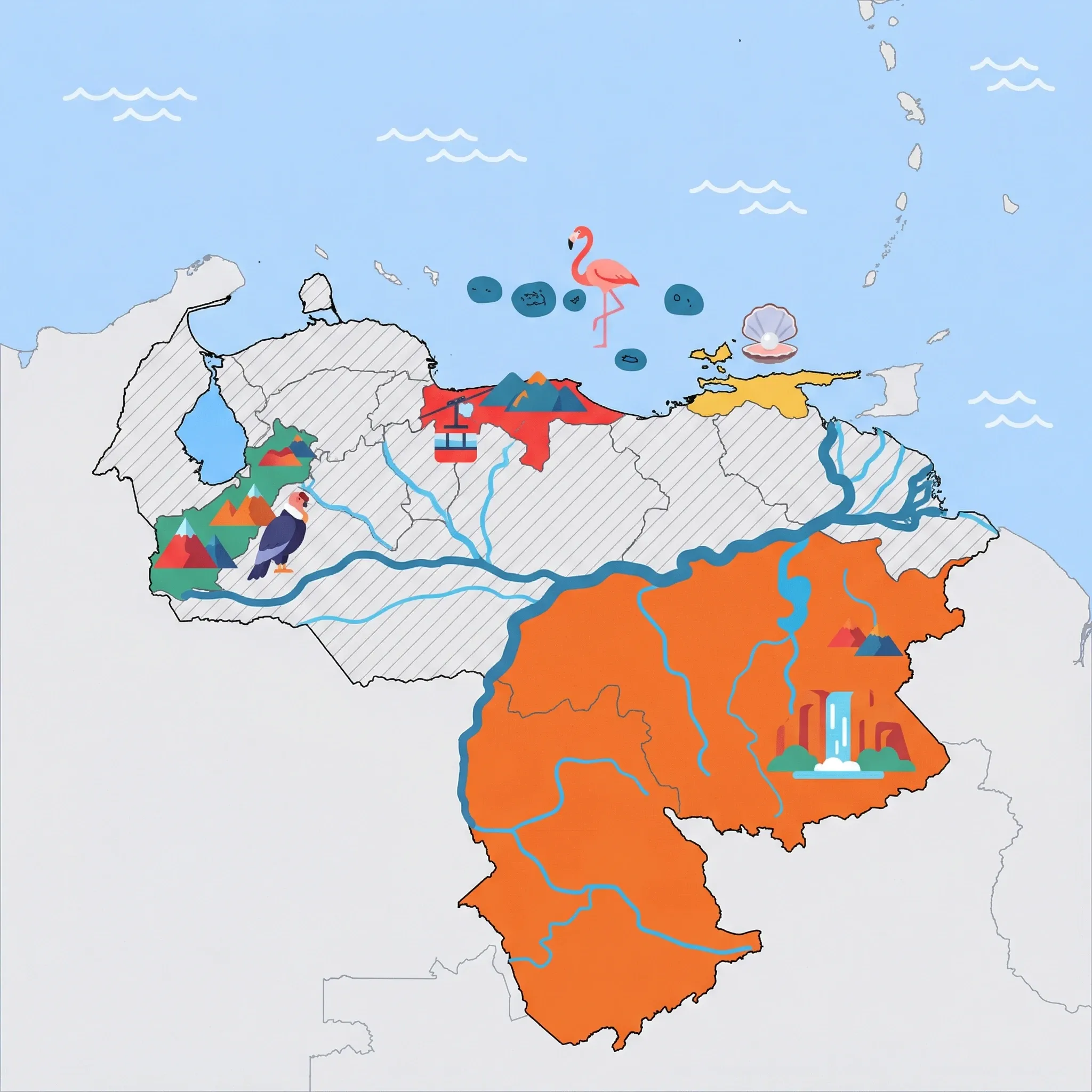
Click a region to explore
⚠️ SAFETY WARNING: While crime rates are lower here than on the mainland, government agencies (including the USA, UK, and Canada) advise against all travel to Venezuela, including its offshore islands. Emergency medical infrastructure in Los Roques is extremely limited, and evacuation to the mainland is difficult. Families are strongly urged to consult their own government's official travel advisory before considering a trip, as circumstances and risk assessments vary.
Overview
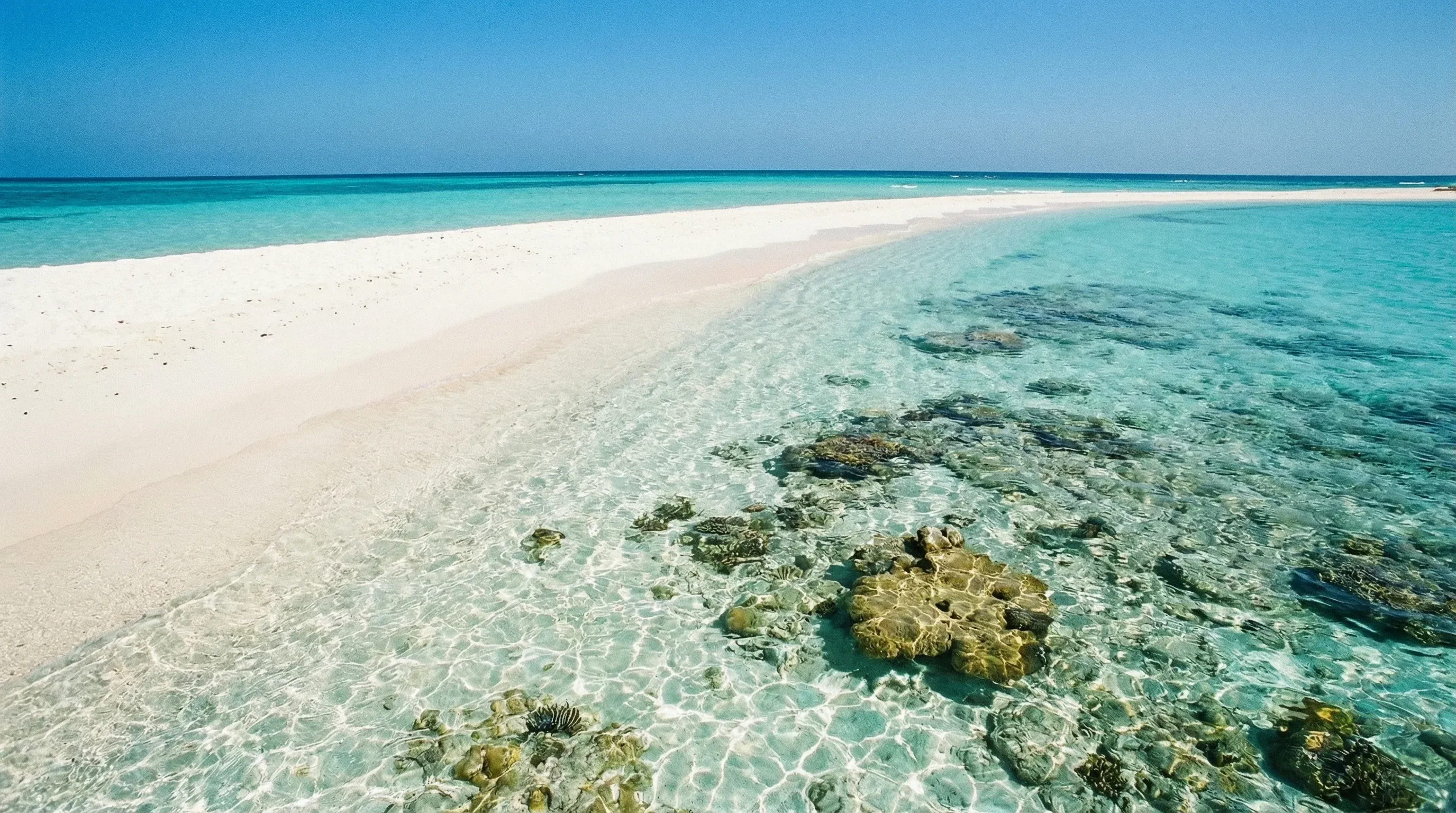
Los Roques is often described as the most beautiful place in Venezuela, and for good reason. This archipelago is a protected national park, meaning there are no high-rise hotels, no cruise ships, and no cars. For families, this creates a unique 'barefoot luxury' environment where children can run safely through the sandy streets of the main village. The pace of life is dictated by the sun and the tides. The visual impact of the water—shifting from deep navy to turquoise to transparent—is stunning. Because the islands are protected by coral reefs, the water is exceptionally calm and shallow, effectively creating a giant natural swimming pool perfect for toddlers and young swimmers.
The cultural experience centers around the 'Posada' system. Families stay in converted fishermen's houses turned into boutique guesthouses, where hosts often cook personal meals. It feels intimate and communal. Days are spent on boats, island-hopping to uninhabited cays where you might be the only people on the beach. It is a place to disconnect completely; Wi-Fi is spotty, and nature is the entertainment. The lack of commercial distraction allows families to bond over snorkeling, building sandcastles, and watching the spectacular sunsets.
Key Attractions
The most iconic excursion is to Cayo de Agua, famous for its unique sandbar that forms a bridge between two islands. Kids can walk on a strip of white sand with the ocean lapping at their ankles on both sides. It is a surreal and photogenic spot that feels like the edge of the world. Back on the main island, a hike up to the Gran Roque Lighthouse Trail (Faro Holandés) is a must for active families. The walk is short but steep, rewarding you with a 360-degree view of the entire archipelago—best done at sunset.
The hub of life is Gran Roque Village. With its brightly painted facades and sandy plaza, it's a safe place for children to play soccer with locals while parents enjoy a coffee. The absence of traffic makes it incredibly relaxing for parents of small children.
Practical Advice
The best time to visit is year-round, as Los Roques sits outside the hurricane belt and sees little rain. However, August and holidays (Carnival/Easter) are crowded. Logistics involve a small propeller plane flight from Caracas. Pack light, as luggage weight limits are strict (usually 10kg). Bring all necessary medication and baby supplies (diapers/formula) from the mainland, as island shops have limited stock.
Food & Drink
Typical meal times: Breakfast is served 7:30 am to 9:00 am. Lunch is usually a cooler-box picnic on the beach between 12:30 pm and 2:00 pm. Dinner is served in posadas from 7:30 pm to 9:00 pm.
Typical meal costs: Most accommodation is full-board. Independent meals are pricey: dinner costs VES 1,100–2,200 (approx. $30–60 USD / €28–55 EUR) per person due to ingredient transport costs.
Dietary requirements: Seafood is the staple. Vegetarians can be accommodated with pasta and vegetables, but fresh produce is imported and precious. Vegan options require advance notice to the posada.
Signature dishes:
- Fresh Lobster – Seasonal (Nov-April), caught daily by local fishermen and grilled simply with butter and garlic.
- Fish Ceviche – Fresh catch cured in lime juice with onions and peppers, a refreshing beach lunch staple.
- Empanadas de Cazón – Fried corn pastries filled with stewed dogfish (small shark), a classic Venezuelan coastal breakfast.
Why this score?
Adventure here is centered on marine activities such as scuba diving, deep-sea fishing, and wind sports in a remote marine park setting. While the environment is pristine and isolated, the presence of comfortable posadas and the lack of challenging terrain keep it in the moderate range.
Why this score?
Medical infrastructure on the islands is limited to basic clinics on Gran Roque that can handle minor injuries or illnesses. For any condition requiring diagnostic imaging or surgery, patients must be flown to the mainland, making it a high-risk area for those with chronic health issues.
Why this score?
This archipelago is an exclusive, high-end destination for kite-surfers, divers, and luxury travelers, but its limited bed capacity and fragile ecosystem keep total visitor numbers low. It is well-known in the sailing community but lacks the mass-market volume of neighboring Caribbean islands.

Los Roques is Venezuela's premier luxury destination. Prices are dollarized and comparable to other exclusive Caribbean islands. A night in a mid-range posada (with meals) costs VES 5,500–9,000 (approx. $150–250 USD / €140–230 EUR) per person. Flights add another $250–300 USD per person. It is not a budget destination.

Getting Here & Around
Getting Here
- Airports – Los Roques Airport (LRV) is a small airstrip on Gran Roque. Flights connect from Caracas (CCS) and occasionally Higuerote. The flight takes about 40 minutes.
- Ferry – There are occasional ferry services from La Guaira, but they are long, rough, and less reliable than flying.
Getting Around
- Walking – On Gran Roque Village, you walk everywhere. There are no cars, only a garbage truck and water truck.
- Boat – To reach the other islands like Cayo de Agua, you must use peñeros (small motorboats) arranged by your posada or the boat cooperative at the pier.
No airports in this region. See the country flight map for nearby connections.

Packing List
The sun is incredibly strong, and supplies on the island are expensive or unavailable.
Card machines often fail due to internet issues; small bills are needed for tips/extras.
You will spend all day in the water; sunscreen alone is often not enough protection.
For walking on rocky parts of cays or the hike to the lighthouse.

Activities & Best Times

Hiking, wildlife, outdoor exploration, ecotourism
The archipelago offers an immersive marine ecosystem within a protected national park, featuring diverse birdlife and extensive coral reefs. Exploration is best during the drier first half of the year when marine visibility is highest and the island trails remain easily navigable.
Beach resorts, marine activities: diving, snorkelling, kite surfing, wind surfing, sailing
Los Roques features pristine white sands and crystal-clear turquoise waters at iconic locations like Cayo de Agua. Peak season aligns with the dry trade-wind months from December to May, which provide the best visibility for snorkeling and consistent conditions for water sports.

Urban tourism, museums, historical sites, architecture
While Gran Roque offers authentic Caribbean architecture, a 'very_good' city_cultural rating should be reserved for destinations with major museums, UNESCO heritage, or internationally significant cultural institutions. The village experience, while charming, does not meet international standards for 'very_good' cultural tourism.

Learning experiences, scientific sites, historical education
The Dos Mosquises research station offers focused scientific insight into sea turtle conservation and archaeological history. These facilities are typically visited as part of organized day trips during the primary sailing season when marine transport is most reliable.

Sport tourism, fitness activities, active recreation
The islands offer established coastal trekking routes, including the prominent Faro Holandés lighthouse trail. The first four months of the year offer the most comfortable trekking conditions with lower humidity and firm terrain.




Public Holidays & Calendar Next 12 months
Public holidays, festivals, cultural celebrations, and seasonal natural phenomena coming up in Los Roques & Islands over the next 12 months.
Loading holidays and events...

Travel Advisory
All major agencies maintain their highest possible warning level for Venezuela, advising against all travel due to extreme risks including violent crime, political instability, and arbitrary detention. The situation is considered highly dangerous and consular support is generally unavailable.
Safety Topics
Traveller Advice (4 groups)

While some general advice is provided, travellers should be aware of a conservative social environment and a lack of specific legal protections for sexual and gender minorities.

Women are advised to take extreme care and refer to standard safety protocols for high-risk environments, specifically regarding personal safety and transportation.

Media professionals face a significant risk of arbitrary arrest, interrogation, and detention by local authorities. Press activities are closely monitored and often restricted.

Aid and development workers are at high risk of being accused of terrorism or other crimes, leading to potential indefinite detention without due process.
Agency Summaries
The Canadian government recommends against any travel to Venezuela due to extreme security risks, including violent crime, political volatility, and the possibility of arbitrary detention. Basic necessities like fuel and water are in short supply, and military activity in early 2026 has led to a state of emergency.
The UK advises against all travel to Venezuela following recent military strikes and the declaration of a state of external commotion. Tensions are high, borders and airspace may close without warning, and the ability of the embassy to provide support is extremely restricted.
New Zealand advises against all travel because of political instability, violent crime, and shortages of food and medicine. Recent military strikes in Caracas and other states have significantly increased the risk to foreign nationals.
Ireland warns against all travel to the country due to the deterioration of the security situation and the risk of violence. Citizens already in the country are advised to stay indoors and prepare for potential border or airspace closures.
Australia has issued its highest warning level for Venezuela, citing an unpredictable security environment, high levels of violent crime, and risk of detention. Residents are urged to leave if possible, as the government has no diplomatic presence to provide assistance.
U.S. authorities advise that no travel to the country is safe and all Americans should leave immediately. There is a severe risk of wrongful detention, kidnapping, and violent crime. Consular services have been suspended since 2019, meaning the government cannot assist citizens in emergencies.
Information is provided for general guidance only and does not constitute travel, safety, medical, or legal advice. Conditions may change. Users are responsible for independently verifying information before travel.