

Vietnam is a vibrant, S-shaped country that stretches from the Chinese border in the north to the tropical Mekong Delta in the south. For families, it offers an exhilarating blend of chaotic energy and serene beauty. The geography is incredibly diverse, featuring mist-shrouded mountains, emerald rice terraces, thousands of kilometres of coastline, and bustling metropolises like Ho Chi Minh City (Saigon) & South and Hanoi & North. The climate varies significantly by region, but generally, it is tropical and humid, making it a lush year-round destination.
Culturally, Vietnam is deeply family-oriented. Children are adored here, and you will find locals going out of their way to interact with your little ones. The vibe is energetic-scooters buzz through the streets like schools of fish, markets overflow with colourful fruits, and street corners smell of simmering broth. While the traffic can be daunting, the organized chaos quickly becomes part of the charm. Whether you are trekking in the Sapa & Northwest Mountains or relaxing on the beaches of Phu Quoc Island, Vietnam provides a safe, affordable, and deeply memorable education in resilience and hospitality.
Key Attractions
Most family itineraries start with the iconic limestone pillars of Ha Long Bay, where overnight cruises offer kayaking and cave exploration. In Central Vietnam (Hue, Hoi An, Da Nang), the ancient town of Hoi An is a highlight, with its pedestrian-friendly streets, lantern-making workshops, and nearby beaches. Further south, the Mekong Delta offers fascinating boat trips through floating markets and fruit orchards, providing a glimpse into river life that fascinates children.
For a break from the tropical heat, families should head to the Central Highlands. The hill station of Da Lat is packed with unique family attractions. Kids will be mesmerized by the Crazy House (Hang Nga Guesthouse), an architectural marvel that looks like a melting fairy tale treehouse. For active families, the Datanla Waterfalls and Alpine Coaster allows you to zoom through the pine forests on a self-controlled coaster. You can also explore the whimsical flower gardens at TTC World - Valley of Love or take a jeep ride up Lang Biang Mountain for panoramic views. A boat ride on the serene Tuyen Lam Lake offers a peaceful escape near the majestic Bidoup Nui Ba National Park.
Practical Advice
The best time to visit depends on your destination, but generally, November to April offers the driest weather across the most regions. Visas are required for most travellers, but an easy E-visa system (valid for up to 90 days) is available for all nationalities. Healthcare in major cities like Hanoi and Ho Chi Minh City is good, but comprehensive travel insurance is essential. Tap water is not safe to drink; stick to bottled or filtered water. Be prepared for the "squat toilet" in rural areas, though Western toilets are standard in hotels.
Food & Drink
Typical meal times: Lunch is typically served from 11:30 am to 1:30 pm, and dinner from 6:00 pm to 8:00 pm. Restaurants in big cities stay open later, but local spots close early.
Typical meal costs: Street food meals cost 30,000–60,000 VND (approx. $1.20–2.40 USD / €1.10–2.20 EUR). Sit-down restaurant meals cost 100,000–250,000 VND (approx. $4–10 USD / €3.50–9 EUR).
Dietary requirements: Vegetarian food (look for "Chay") is widely available and delicious, thanks to Buddhist traditions. Nut allergies can be tricky as peanuts are a common garnish; carry a translation card. Gluten-free is possible with rice-based dishes, but watch out for soy sauce.
Family-friendly dining: Dining is a communal affair. Highchairs are becoming common in tourist restaurants but are rare in street stalls. Kids love the interactive nature of rolling their own spring rolls.
Signature dishes:
- Pho – A fragrant rice noodle soup with beef or chicken and fresh herbs, perfect for breakfast or any time.
- Banh Mi – A crispy baguette filled with pâté, cold cuts, pickled vegetables, and chilli (ask for "no chilli" for kids).
- Bun Cha – Grilled pork patties served with cold rice vermicelli and a sweet-savoury dipping sauce.
- Banh Xeo – A giant, crispy savoury crepe filled with pork, shrimp, and bean sprouts, eaten wrapped in lettuce leaves.
- Cao Lau – A noodle dish unique to Hoi An with thick rice noodles, barbecue pork, greens, and crunchy croutons.

A family of four can expect to spend around 2,500,000–4,000,000 VND (approx. $100–160 USD / €90–145 EUR) per day for a comfortable mid-range experience, including accommodation, meals, and activities. Street food significantly lowers costs, while Western dining and organized tours will increase the budget.
Age Suitability





Did you know? Vietnam welcomes approximately 7.6 million international visitors per year. Most visitors come from East Asia and the Pacific.
Explore Regions
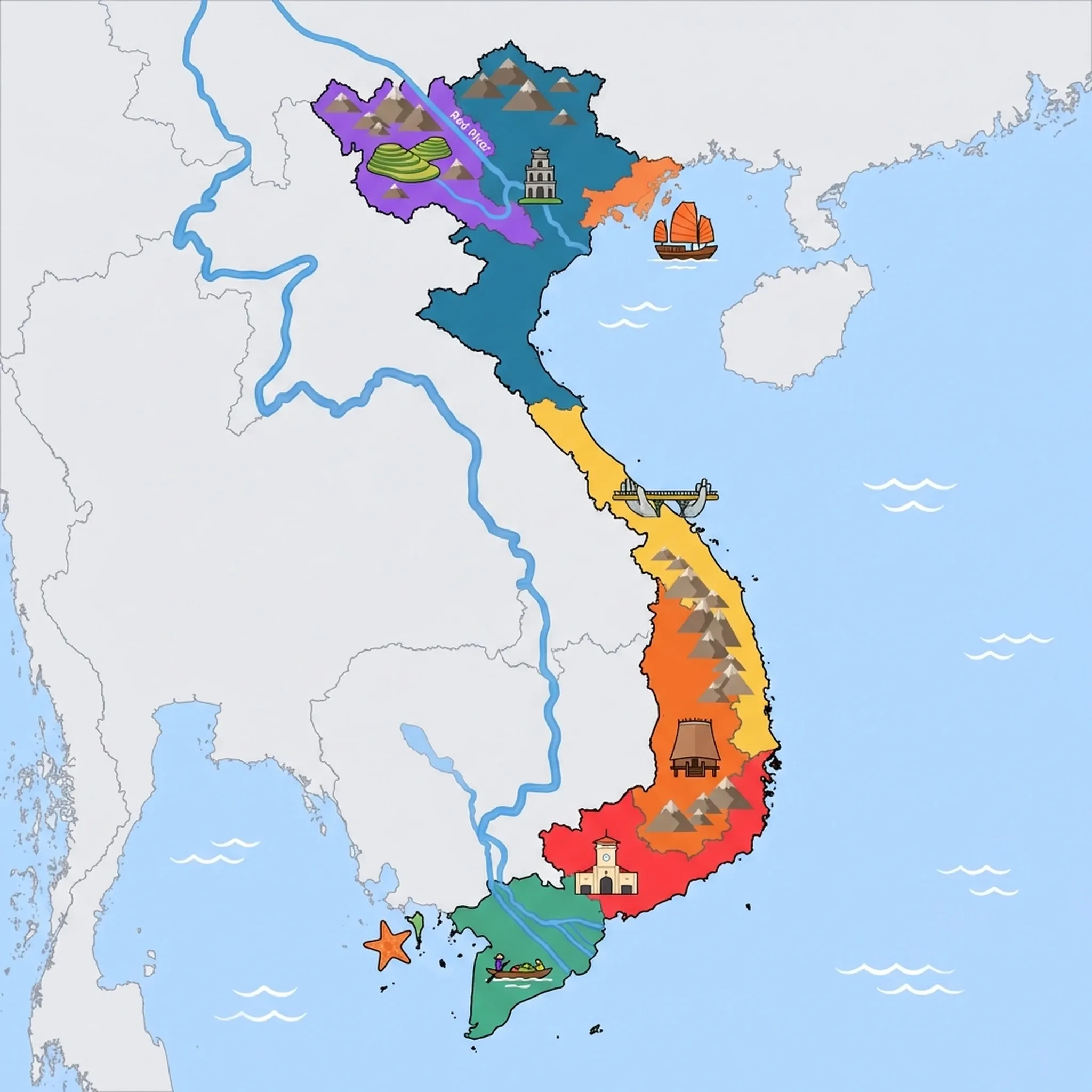
8 Regions
Central Highlands
Cool breezes, pine forests, and adventure in Vietnam's alpine playground 🌲
Central Vietnam (Hue, Hoi An, Da Nang)
Lantern-lit streets, golden bridges, and endless sandy beaches 🏮
Ha Long Bay
Sailing through a world of dragons and emerald waters 🐉
Hanoi & North
Ancient legends, bustling streets, and limestone peaks on land 🐢
Ho Chi Minh City (Saigon) & South
A high-energy metropolis of history, food, and fun 🛵
Mekong Delta
Floating markets, tropical fruit, and life on the water 🛶
Phu Quoc Island
White sands, safari parks, and island sunsets 🌅
Sapa & Northwest Mountains
Misty peaks, vibrant tribes, and emerald rice terraces ⛰️
Click on a region marker to explore details. Use the dropdown to color regions by activity suitability.

Getting There & Around
Getting There
- By Air – The two main gateways are Noi Bai International Airport (HAN) in Hanoi and Tan Son Nhat International Airport (SGN) in Ho Chi Minh City. Da Nang (DAD) also serves international flights for Central Vietnam (Hue, Hoi An, Da Nang).
- By Land – Adventure-seeking families can enter via bus or train from China (Nanning/Kunming) or by bus from Cambodia and Laos, though these journeys can be long.
- Entry Requirements – Most travellers require a visa. Vietnam now offers a 90-day E-visa for citizens of all countries. Check your government website for the latest visa requirements, or use the IATA Travel Centre entry-requirements checker.
Getting Around
- Trains – The Reunification Express runs the length of the country from Hanoi & North to Ho Chi Minh City (Saigon) & South. It is a scenic, slow, and memorable way to travel. Soft sleeper cabins are recommended for families.
- City Transport – In cities, the Grab app (Southeast Asia's Uber) is the safest and most convenient way to book cars or motorbike taxis. The price is fixed upfront.
- Domestic Flights – Low-cost carriers like VietJet and Bamboo Airways connect major hubs quickly, which is often necessary given the country's length.
- Car Hire – Self-driving cars are generally not recommended due to chaotic traffic. Hiring a car with a driver is an affordable and stress-free alternative for families.
Official Links

Packing List
You will frequently remove shoes at temples, pagodas, and even some restaurants and shops.
Toilet paper is rarely provided in public restrooms or street-side eateries.
Sudden tropical downpours are common; ponchos cover you and your daypack better than umbrellas.
Hotel sinks often lack plugs; useful for washing kids' clothes or swimwear in the room.
Dengue fever is a risk; strong repellent is essential for evenings and jungle areas.
Essential for keeping electronics and documents dry during humidity and sudden rainstorms.

Activities & Best Times

City & Cultural
Very GoodUrban tourism, museums, historical sites, architecture
A unique blend of French colonial architecture in Dalat and indigenous Ede and M'nong heritage in Buon Ma Thuot. The dry season provides optimal walking weather for exploring historic palaces and the surreal art of the Crazy House, while heavy summer rains degrade the urban exploration experience.
Authentic cultural experiences like the Ham Ninh fishing village and the historic Phu Quoc Prison offer meaningful heritage insights beyond typical resort life. The island's cultural sites are most pleasant to explore during the cooler, drier months.
Hanoi and the heritage sites of Ninh Binh provide deep immersion into authentic Vietnamese culture and history. Peak conditions occur in the dry months from October to April, whereas the humid summer season often sees intense rainfall that hinders urban exploration.

Adventure & Nature
Very GoodHiking, wildlife, outdoor exploration, ecotourism
With a major Safari park and extensive national park trails, the island provides high-quality nature immersion for families. Visit during the dry season to ensure jungle trails are accessible and wildlife sightings are optimal.
Features diverse montane ecosystems, high-altitude plateaus, and spectacular waterfalls like Dray Nur, though some sites lean towards domestic-style petting zoos. Peak months offer dry trails and clear conditions for exploring Lang Biang, while the monsoon (May-Oct) brings hazardous mud and excessive rain.
Features Fansipan mountain and the Muong Hoa Valley, offering significant trekking and wilderness exploration in a mountainous setting. Peak periods provide the best trail conditions and visibility, while summer months are restricted by heavy monsoon rains.

Sports & Active
Very GoodSport tourism, fitness activities, active recreation
A hub for niche sport tourism including canyoning at Datanla and multi-day trekking on the Ta Nang-Phan Dung route. Activity is strictly seasonal, as flash floods and slick terrain during the monsoon (May-Oct) make many of the region's best sports infrastructure and routes inaccessible.
Established trails for hiking and cycling, alongside adventure-focused centers, offer solid active options for energetic families. The peak dry season is essential for these activities to ensure safe trail conditions and manageable humidity levels.
Cat Ba Island is a significant hub for rock climbing and deep-water soloing on limestone crags. Activity is restricted to the dry season, as summer precipitation makes climbing surfaces dangerous and accessibility unpredictable.

Beach & Sea
GoodBeach resorts, marine activities: diving, snorkelling, kite surfing, wind surfing, sailing
Iconic beaches like Sao and Long Beach offer white sands and calm waters, though quality is highly seasonal. The monsoon from May to October brings rough seas and debris, making the dry winter months the only reliable time for international travelers.
Cruising and island-hopping across Ha Long and Lan Ha Bays offer a sophisticated maritime experience. The season from October to April is preferred for stable weather, as the summer brings high typhoon risks that can lead to vessel cancellations.
Da Nang's My Khe Beach and Hoi An's An Bang Beach are internationally recognized. My Khe was rated one of the world's most beautiful beaches by Forbes. The region deserves 'good' rating but needs more beach attractions in database (currently only An Bang listed).

Educational & Exploratory
GoodLearning experiences, scientific sites, historical education
Anchored by the world-class World Coffee Museum in Buon Ma Thuot, which offers high-quality architecture and insight into the region's primary industry. While museums are indoor facilities, the difficult travel between highland towns is best managed during the drier, more stable peak months.
The Sea Shell Aquarium serves as a notable educational facility for marine life, though it remains a secondary activity rather than a standalone travel motivator. It provides an indoor alternative during transitional weather but follows general island tourism patterns.

Road Trips & Scenic
GoodScenic drives, countryside tours, route-based travel
Scenic coastal roads and forest loops through the national park provide beautiful driving routes for families exploring the island. Road conditions and visibility are best in the dry season, as monsoon rains can make interior forest roads difficult to navigate.
Offers iconic drives such as the Khanh Le Pass and the Ho Chi Minh Highway, featuring dramatic mountain scenery and coffee plantation landscapes. Peak travel is essential for road safety and visibility, as the wet season causes frequent landslides and dangerous driving conditions on mountain routes.
The Northwest Mountains offer spectacular landscapes and high-altitude passes suitable for scenic drives. Peak months provide optimal driving visibility, whereas the summer monsoon makes these steep mountain roads dangerous due to landslide risks.

Theme Park & Entertainment
GoodAmusement parks, family entertainment venues
Large-scale venues like VinWonders and Sun World Hon Thom offer world-class entertainment infrastructure that appeals specifically to traveling families. The outdoor nature of these parks means heavy monsoon rains and high winds significantly degrade the experience from May to October.
Large-scale parks like the Valley of Love exist but primarily cater to domestic tastes and may lack the sophistication sought by international travelers. Timing is restricted by the heavy rainy season, which makes outdoor entertainment parks uncomfortable and difficult to navigate.

Public Holidays & Calendar Next 12 months
Public holidays, festivals, cultural celebrations, and seasonal natural phenomena coming up in Vietnam over the next 12 months.
Loading holidays and events...
Climate & Weather
Central Highlands
Show Details
| Month | Temp °C | Rain | Humidity |
|---|
Central Vietnam (Hue, Hoi An, Da Nang)
Show Details
| Month | Temp °C | Rain | Humidity |
|---|
Ha Long Bay
Show Details
| Month | Temp °C | Rain | Humidity |
|---|
Hanoi & North
Show Details
| Month | Temp °C | Rain | Humidity |
|---|
Ho Chi Minh City (Saigon) & South
Show Details
| Month | Temp °C | Rain | Humidity |
|---|
Mekong Delta
Show Details
| Month | Temp °C | Rain | Humidity |
|---|

Travel Advisory
Five out of six major agencies assess Vietnam as requiring only standard safety awareness, representing a strong international consensus. While one agency maintains a slightly higher caution level due to petty crime and weather risks, the majority view the overall environment as stable for tourists.
Safety Topics
Traveller Advice (3 groups)

Female travellers should exercise standard safety measures, particularly when moving alone at night in major cities. Conservative dress is recommended when visiting religious or rural sites.

While there are no laws criminalizing same-sex relationships, public displays of affection may attract unwanted attention in more traditional or conservative areas.

Accessibility infrastructure in public transport and older buildings can be limited. Advanced planning is necessary for those with mobility requirements.
Agency Summaries
Most trips proceed without incident. Guidance focuses on respecting local political sensitivities, ensuring correct entry stamps, and preparing for the monsoon season.
Standard precautions are advised. Notable warnings include extremely strict narcotics laws and the requirement for local licensing for motorcycle operation.
No specific security threats are currently highlighted. Visitors should focus on administrative compliance, such as visa requirements and passport validity.
Travellers are advised to be highly vigilant due to a significant frequency of petty crimes like bag snatching. Environmental risks including severe seasonal flooding and typhoons are also prominent concerns.
The country is generally safe for visitors. Standard safety awareness is recommended, particularly regarding urban street crime and navigating chaotic traffic conditions.
Travellers should maintain standard awareness. Key practical advice involves avoiding common airport transport scams and being careful with road safety.
Information is provided for general guidance only and does not constitute travel, safety, medical, or legal advice. Conditions may change. Users are responsible for independently verifying information before travel.