
Ha Long Bay
Sailing through a world of dragons and emerald waters 🐉
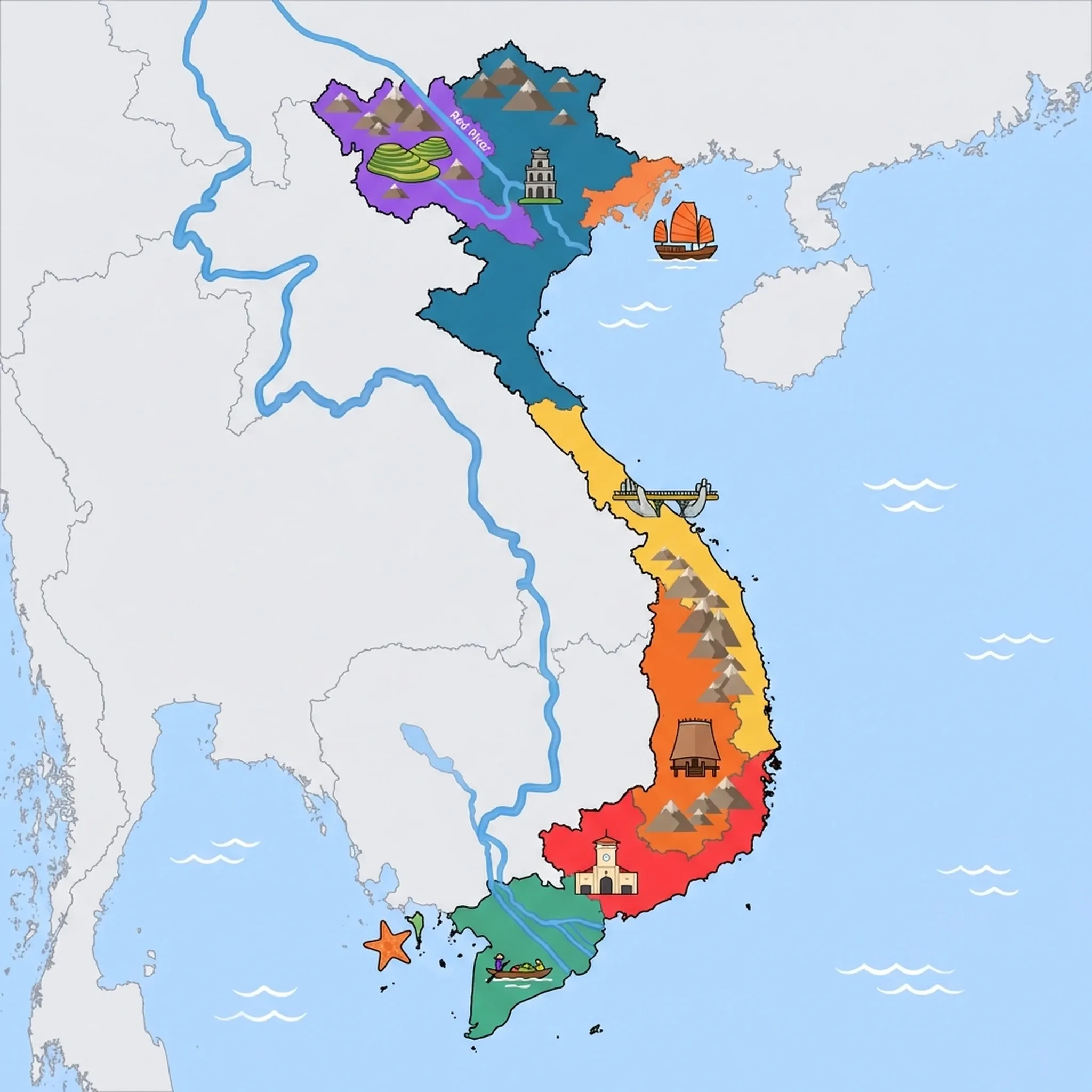
Click a region to explore
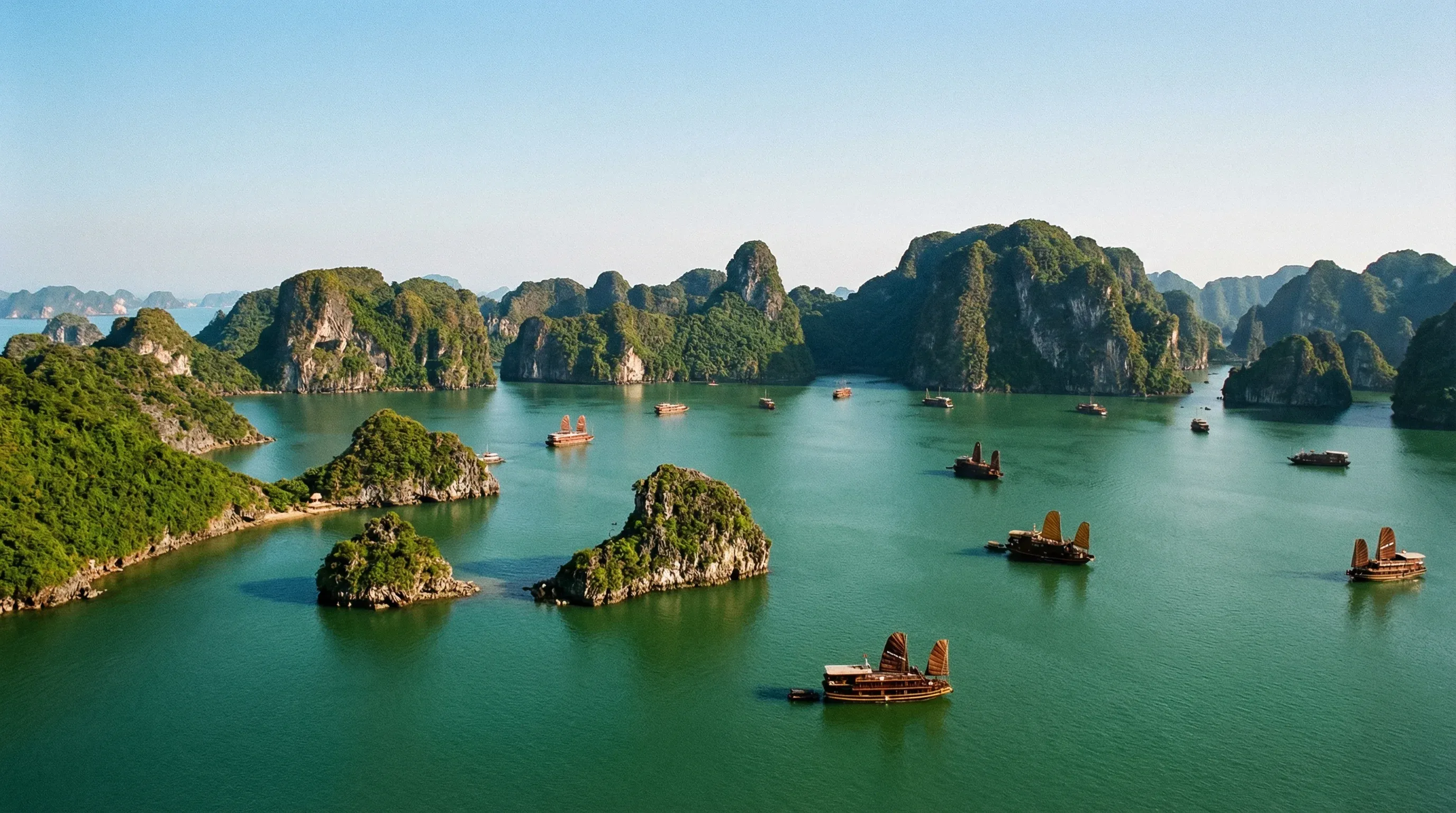
Ha Long Bay is one of the most iconic landscapes on Earth, and seeing it through the eyes of a child is magical. The name translates to "Descending Dragon," and the thousands of limestone pillars jutting out of the calm, green water truly look like the spine of a mythical creature. For families, this is not just a sightseeing trip; it is an adventure on the high seas. The primary way to experience the bay is via a cruise boat, which acts as a floating hotel. This logistics-free travel style is perfect for parents—you unpack once, and the scenery changes outside your window every minute.
The geology here provides a natural playground. The water is generally calm and protected, making it safe for swimming and kayaking, even for beginners. Exploring the massive internal caves, filled with stalactites and stalagmites, feels like journeying to the center of the earth. Beyond the main bay, areas like Lan Ha Bay and Cat Ba Island offer a slightly quieter experience with more opportunities for cycling and hiking. While it is a major tourist hub, the sheer scale of the seascape allows for moments of profound peace. Waking up to a misty sunrise over the karst formations is a memory families will hold forever.
Key Attractions
The bay's activities are centered around nature and exploration. Sung Sot Cave (Surprise Cave) is the largest and most famous cavern, featuring well-lit paths that are generally easy for kids to navigate, revealing massive chambers that spark the imagination. For active families, a stop at Ti Top Island is rewarding; a short but steep hike leads to a viewing platform with the classic postcard view of the bay, and there is a sandy beach at the bottom for cooling off. If you venture towards Cat Ba Island, Cat Ba National Park offers jungle treks where you might spot the rare golden-headed langur. Many cruises also sail through Bai Tu Long Bay, a less crowded alternative to the main route that still features the stunning limestone geography.
Practical Advice
The best time to visit is Spring (March-May) or Autumn (September-November) for pleasant temperatures. Winter (December-February) can be misty and cold, which is atmospheric but too chilly for swimming. Summer brings heat and a risk of typhoons. When booking a cruise, verify safety standards and look for family cabins; mid-range to luxury boats are strongly recommended for safety and comfort with kids.
Food & Drink
Typical meal times: Cruise schedules dictate meals. Lunch is roughly 12:30 pm to 1:30 pm, and dinner is 7:00 pm to 8:30 pm. On land, times are standard.
Typical meal costs: On cruises, all meals are usually included in the package price. On land in Ha Long City, a seafood dinner for four costs 800,000–1,500,000 VND (approx. $32–60 USD / €30–55 EUR).
Dietary requirements: Cruise ships are very accustomed to western tourists and can cater to allergies, vegetarian, and gluten-free needs if notified in advance. Seafood is the dominant staple.
Signature dishes:
- Cha Muc (Squid Cakes) – The region's specialty; hand-pounded squid fried into golden patties, chewy and flavorful.
- Sam (Horseshoe Crab) – A local delicacy often grilled or made into a sweet and sour salad, though it's an adventurous pick for kids.
- Fresh Oysters – Grilled with scallion oil and peanuts, these are abundant and cheap here.
- Bun Be Be – Noodle soup topped with mantis shrimp, a crustacean that looks like a mix between a shrimp and a praying mantis.
Why this score?
Adventure is found in kayaking through hidden lagoons and climbing island peaks for panoramic views. However, the experience is largely managed via luxury cruise itineraries, keeping the overall ruggedness moderate for most visitors.
Why this score?
Medical care on the water is limited to basic first aid on cruise vessels, and the nearest major hospitals are in Haiphong or Hanoi. Emergency medical evacuations from the bay can be logistically complex and time-consuming.
Why this score?
As a world-renowned UNESCO site and global icon, Ha Long Bay is a 'bucket list' destination for the vast majority of international visitors to Vietnam. The sheer volume of overnight cruise ships and day-trippers makes it a major international hotspot.

Ha Long Bay is pricier than the mainland due to the cruise model. A reputable 2-day/1-night cruise for a family of four ranges from 10,000,000–20,000,000 VND (approx. $400–800 USD / €370–740 EUR). Budget cruises exist but are often unsafe or poor quality—avoid them. Onshore costs are standard.

Getting Here & Around
Getting Here
- Car/Bus – The expressway from Hanoi has cut travel time significantly. A limousine van or shuttle bus takes about 2.5–3 hours from Hanoi's Old Quarter to the marina at Ti Top Island departure points or Tuan Chau.
- Airports – Van Don International Airport (VDO) is about 50km away, but most travelers fly into Hanoi (HAN) or Hai Phong (HPH) and drive.
- Ferry – A ferry connects Hai Phong to Cat Ba Island for those taking the alternative route.
Getting Around
- Boat – This is the primary mode of transport. You will be on a larger "junk" boat and use smaller tender boats to reach caves like Sung Sot Cave (Surprise Cave).
- Kayak – Included in most cruise itineraries; essential for entering low-ceiling lagoons.
- Electric Cart – On Tuan Chau Island and in Ha Long City, electric buggies are common for short trips.
Nearby Airports (2 airports)
Cat Bi International Airport
HPHHaiphong
Van Don International Airport
VDOQuang Ninh
View full flight map for Vietnam →

Packing List
Essential for keeping phones and cameras safe during kayaking trips and tender transfers.
Cave floors can be wet and slippery; flip-flops are dangerous on the steep steps.
The bay is calm, but sleeping on a boat can still affect sensitive children.
Great for spotting sea eagles and monkeys on the karst cliffs from the boat deck.
You will frequently remove shoes at temples, pagodas, and even some restaurants and shops.
Toilet paper is rarely provided in public restrooms or street-side eateries.
Sudden tropical downpours are common; ponchos cover you and your daypack better than umbrellas.
Hotel sinks often lack plugs; useful for washing kids' clothes or swimwear in the room.
Dengue fever is a risk; strong repellent is essential for evenings and jungle areas.
Essential for keeping electronics and documents dry during humidity and sudden rainstorms.

Activities & Best Times

Hiking, wildlife, outdoor exploration, ecotourism
The region features world-renowned limestone karst landscapes and biodiversity across several bays and Cat Ba National Park. Peak conditions for exploration occur during the dry season, while summer months are characterized by extreme humidity and monsoon rains.

Beach resorts, marine activities: diving, snorkelling, kite surfing, wind surfing, sailing
Cruising and island-hopping across Ha Long and Lan Ha Bays offer a sophisticated maritime experience. The season from October to April is preferred for stable weather, as the summer brings high typhoon risks that can lead to vessel cancellations.

Urban tourism, museums, historical sites, architecture
Floating fishing villages and local maritime markets provide authentic insights into the traditional culture of the northeast coast. These cultural experiences are most accessible during the dry, cooler months of the winter and spring.

Sport tourism, fitness activities, active recreation
Cat Ba Island is a significant hub for rock climbing and deep-water soloing on limestone crags. Activity is restricted to the dry season, as summer precipitation makes climbing surfaces dangerous and accessibility unpredictable.

Public Holidays & Calendar Next 12 months
Public holidays, festivals, cultural celebrations, and seasonal natural phenomena coming up in Ha Long Bay over the next 12 months.
Loading holidays and events...

Travel Advisory
Five out of six major agencies assess Vietnam as requiring only standard safety awareness, representing a strong international consensus. While one agency maintains a slightly higher caution level due to petty crime and weather risks, the majority view the overall environment as stable for tourists.
Safety Topics
Traveller Advice (3 groups)

Female travellers should exercise standard safety measures, particularly when moving alone at night in major cities. Conservative dress is recommended when visiting religious or rural sites.

While there are no laws criminalizing same-sex relationships, public displays of affection may attract unwanted attention in more traditional or conservative areas.

Accessibility infrastructure in public transport and older buildings can be limited. Advanced planning is necessary for those with mobility requirements.
Agency Summaries
Most trips proceed without incident. Guidance focuses on respecting local political sensitivities, ensuring correct entry stamps, and preparing for the monsoon season.
Standard precautions are advised. Notable warnings include extremely strict narcotics laws and the requirement for local licensing for motorcycle operation.
No specific security threats are currently highlighted. Visitors should focus on administrative compliance, such as visa requirements and passport validity.
Travellers are advised to be highly vigilant due to a significant frequency of petty crimes like bag snatching. Environmental risks including severe seasonal flooding and typhoons are also prominent concerns.
The country is generally safe for visitors. Standard safety awareness is recommended, particularly regarding urban street crime and navigating chaotic traffic conditions.
Travellers should maintain standard awareness. Key practical advice involves avoiding common airport transport scams and being careful with road safety.
Information is provided for general guidance only and does not constitute travel, safety, medical, or legal advice. Conditions may change. Users are responsible for independently verifying information before travel.