
Hanoi & North
Ancient legends, bustling streets, and limestone peaks on land 🐢
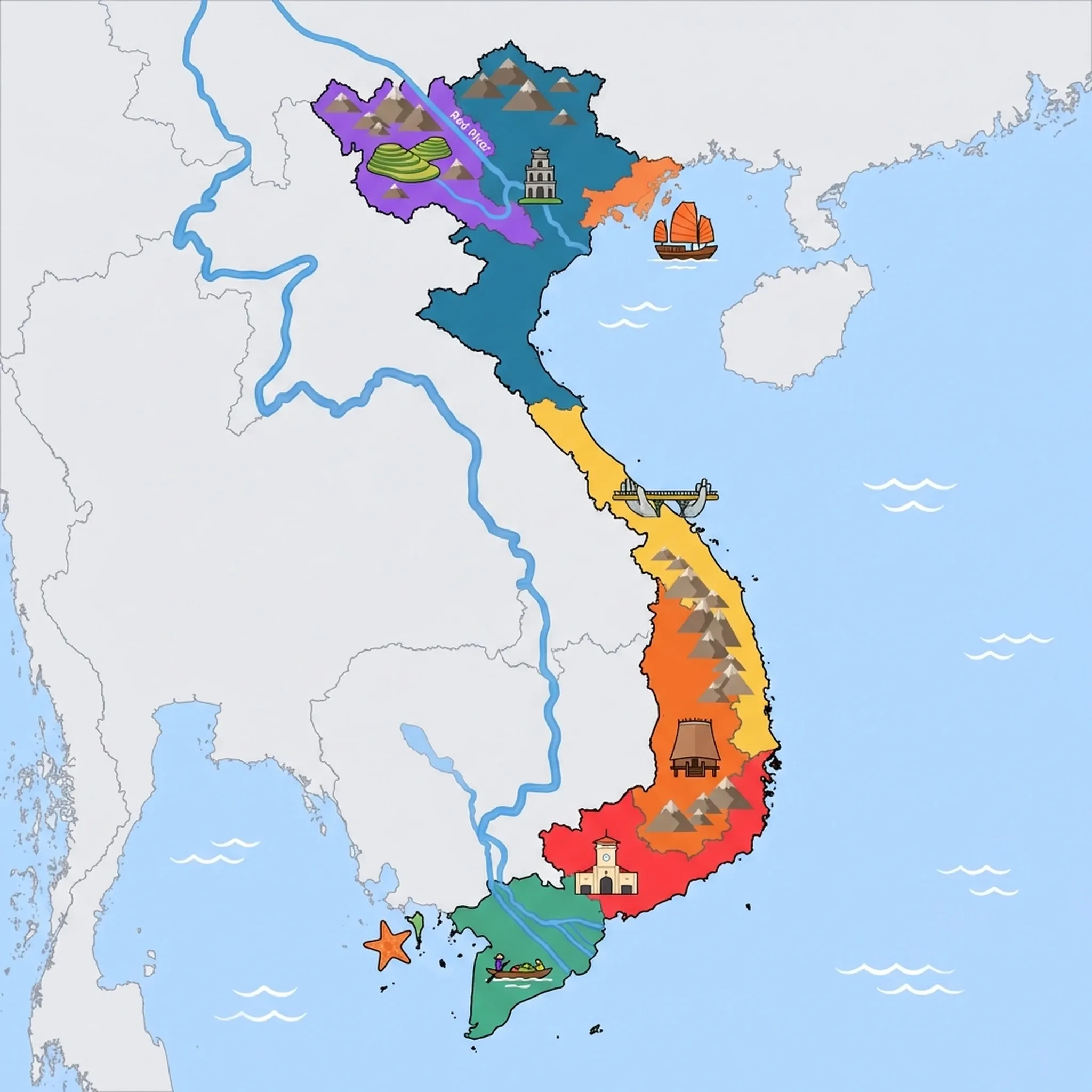
Click a region to explore
Hanoi is a city that dives straight into the deep end of culture. It is chaotic, noisy, and utterly captivating. For families, the Old Quarter is a living museum where life spills out onto the sidewalks. While the traffic (a river of motorbikes) can be intimidating initially, the city's charm lies in its pockets of peace—the lakes, the temples, and the pedestrian zones on weekends. It is a place to show children a completely different way of life, from street barbers to vendors carrying fruit on bamboo yokes. The history here spans a thousand years, visible in the French colonial villas sitting alongside 11th-century universities.
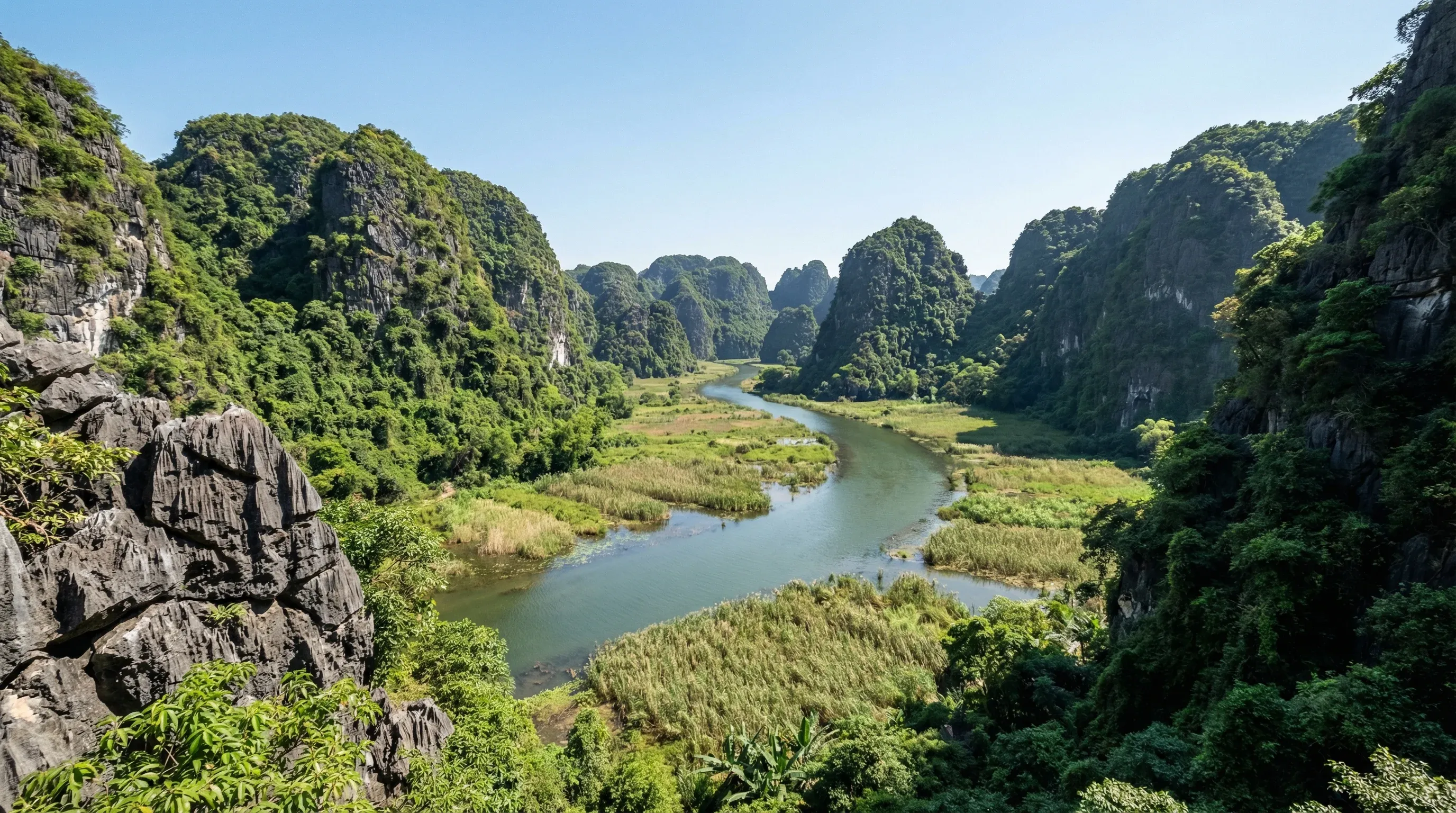
Beyond the capital, the region offers spectacular nature that rivals Ha Long Bay but on land. Ninh Binh (often called "Ha Long Bay on Land") features towering limestone karsts rising from green rice paddies. Here, families can take sampan boats rowed by locals through caves and along quiet rivers, a peaceful contrast to the energy of Hanoi. The region is rich in folklore—stories of giant turtles, dragons, and emperors are woven into the landscape, making sightseeing feel like a storybook coming to life for younger travelers.
Key Attractions
In the city center, Hoan Kiem Lake is the heart of Hanoi. On weekends, the surrounding roads are closed to traffic, becoming a massive playground with traditional games and music. Nearby, the Thang Long Water Puppet Theatre offers a unique art form where wooden puppets dance on water—a must-see that transcends language barriers for kids. Educational stops include the Temple of Literature, Vietnam's first university, and the Ho Chi Minh Mausoleum (viewed from outside or visited with strict respect). A day trip to Ninh Binh to visit Trang An Landscape Complex is essential; the boat ride through caves is an adventure, and the scenery was used in the movie "Kong: Skull Island," a fun fact for movie-loving kids. Creative families should visit Bat Trang Ceramic Village to try their hand at pottery wheels.
Practical Advice
Winters (Dec-Feb) can be surprisingly cold (down to 10°C) and gray, while summers (Jun-Aug) are fiercely hot and humid with heavy rain. The best time is Autumn (Oct-Nov) or Spring (Mar-Apr). Crossing the street in Hanoi requires confidence—walk slowly and steadily; do not run or step back, and motorbikes will flow around you. Strollers are difficult to use in the Old Quarter due to uneven pavements; a carrier is better for small children.
Food & Drink
Typical meal times: Lunch is strictly 11:30 am to 1:30 pm. Dinner is 6:00 pm to 8:30 pm. Pho stalls open as early as 6:00 am.
Typical meal costs: Street food is king here; a bowl of Pho costs 40,000–60,000 VND (approx. $1.60–2.40 USD / €1.50–2.20 EUR). A nice sit-down dinner for four is 600,000–1,000,000 VND (approx. $24–40 USD / €22–37 EUR).
Dietary requirements: Vegetarian options (mon chay) are common. However, clear communication is needed as fish sauce is in almost everything. Western food is widely available in the West Lake (Tay Ho) area.
Signature dishes:
- Pho Bo – The world-famous beef noodle soup, originating here. The Northern style is simple, savory, and focuses on the pure bone broth.
- Bun Cha – Grilled pork patties and pork belly served in a sweet-savory dipping sauce with rice vermicelli and herbs. (Famously eaten by Obama and Bourdain).
- Egg Coffee (Ca Phe Trung) – A dessert-like drink made with robust coffee topped with a whisked egg yolk and condensed milk meringue—tastes like liquid tiramisu.
- Banh Cuon – Steamed rice rolls filled with minced pork and wood ear mushrooms, soft and easy for toddlers to eat.
Why this score?
The region offers gentle outdoor activities like boat rides through limestone caves in Trang An or cycling through the Old Quarter. While the landscapes are dramatic, the tourism infrastructure is highly accessible and non-strenuous for families.
Why this score?
Hanoi offers some of the best medical care in Vietnam, featuring several international hospitals like the Hanoi French Hospital and Vinmec Times City. These facilities provide Western-standard care with a wide range of English-speaking specialists and direct insurance billing.
Why this score?
Hanoi is the nation's cultural capital and a primary international gateway, consistently ranking high on global travel lists. Combined with the scenic appeal of Ninh Binh, the region maintains a very strong and steady flow of foreign tourists.

Hanoi is very affordable. You can eat incredibly well on a budget. A family room in a boutique Old Quarter hotel costs 900,000–1,600,000 VND (approx. $36–64 USD / €33–59 EUR). Tickets to the <a data-attraction-id="33978">Thang Long Water Puppet Theatre</a> are around 100,000–200,000 VND (approx. $4–8 USD / €3.70–7.40 EUR).

Getting Here & Around
Getting Here
- Airports – Noi Bai International Airport (HAN) is the second largest in Vietnam, about 45 minutes from the city center.
- Train – Hanoi is the northern terminus of the Reunification Express. Overnight trains run to Sapa (Lao Cai) and south to Hue/Da Nang.
- Bus – Limousine vans connect Hanoi to Trang An Landscape Complex in Ninh Binh (2 hours) and Halong Bay.
Getting Around
- Walking – The best way to see the Old Quarter and Hoan Kiem Lake, though sidewalks are often blocked by parked bikes.
- Grab/Taxi – Cheap and plentiful. Use the app to avoid scams.
- Cyclo – A traditional three-wheeled bike taxi. Negotiate the price firmly before getting in for a slow tour of the Temple of Literature area.
Nearby Airports (3 airports)
Noibai International
HANHanoi
Bai Thuong Airport
THDThanh Hoa
Vinh Airport
VIIVinh City
View full flight map for Vietnam →

Packing List
Air quality can be poor, and they are useful for open-air tuk-tuk or motorbike rides.
Sidewalks in the Old Quarter are cluttered with motorbikes; strollers are often unusable.
From Dec-Feb, homes and hotels often lack heating, and it gets damp and chilly.
Essential for street food adventures where washing facilities might be basic.
You will frequently remove shoes at temples, pagodas, and even some restaurants and shops.
Toilet paper is rarely provided in public restrooms or street-side eateries.
Sudden tropical downpours are common; ponchos cover you and your daypack better than umbrellas.
Hotel sinks often lack plugs; useful for washing kids' clothes or swimwear in the room.
Dengue fever is a risk; strong repellent is essential for evenings and jungle areas.
Essential for keeping electronics and documents dry during humidity and sudden rainstorms.

Activities & Best Times

Hiking, wildlife, outdoor exploration, ecotourism
The region offers iconic karst landscapes and authentic valley trekking in Ninh Binh and Mai Chau. These areas are best experienced during the dry season from October to April, while the summer monsoon (June-August) brings heavy rain that can impede outdoor exploration.

Urban tourism, museums, historical sites, architecture
Hanoi and the heritage sites of Ninh Binh provide deep immersion into authentic Vietnamese culture and history. Peak conditions occur in the dry months from October to April, whereas the humid summer season often sees intense rainfall that hinders urban exploration.

Public Holidays & Calendar Next 12 months
Public holidays, festivals, cultural celebrations, and seasonal natural phenomena coming up in Hanoi & North over the next 12 months.
Loading holidays and events...

Travel Advisory
Five out of six major agencies assess Vietnam as requiring only standard safety awareness, representing a strong international consensus. While one agency maintains a slightly higher caution level due to petty crime and weather risks, the majority view the overall environment as stable for tourists.
Safety Topics
Traveller Advice (3 groups)

Female travellers should exercise standard safety measures, particularly when moving alone at night in major cities. Conservative dress is recommended when visiting religious or rural sites.

While there are no laws criminalizing same-sex relationships, public displays of affection may attract unwanted attention in more traditional or conservative areas.

Accessibility infrastructure in public transport and older buildings can be limited. Advanced planning is necessary for those with mobility requirements.
Agency Summaries
Most trips proceed without incident. Guidance focuses on respecting local political sensitivities, ensuring correct entry stamps, and preparing for the monsoon season.
Standard precautions are advised. Notable warnings include extremely strict narcotics laws and the requirement for local licensing for motorcycle operation.
No specific security threats are currently highlighted. Visitors should focus on administrative compliance, such as visa requirements and passport validity.
Travellers are advised to be highly vigilant due to a significant frequency of petty crimes like bag snatching. Environmental risks including severe seasonal flooding and typhoons are also prominent concerns.
The country is generally safe for visitors. Standard safety awareness is recommended, particularly regarding urban street crime and navigating chaotic traffic conditions.
Travellers should maintain standard awareness. Key practical advice involves avoiding common airport transport scams and being careful with road safety.
Information is provided for general guidance only and does not constitute travel, safety, medical, or legal advice. Conditions may change. Users are responsible for independently verifying information before travel.