
Mekong Delta
Floating markets, tropical fruit, and life on the water 🛶
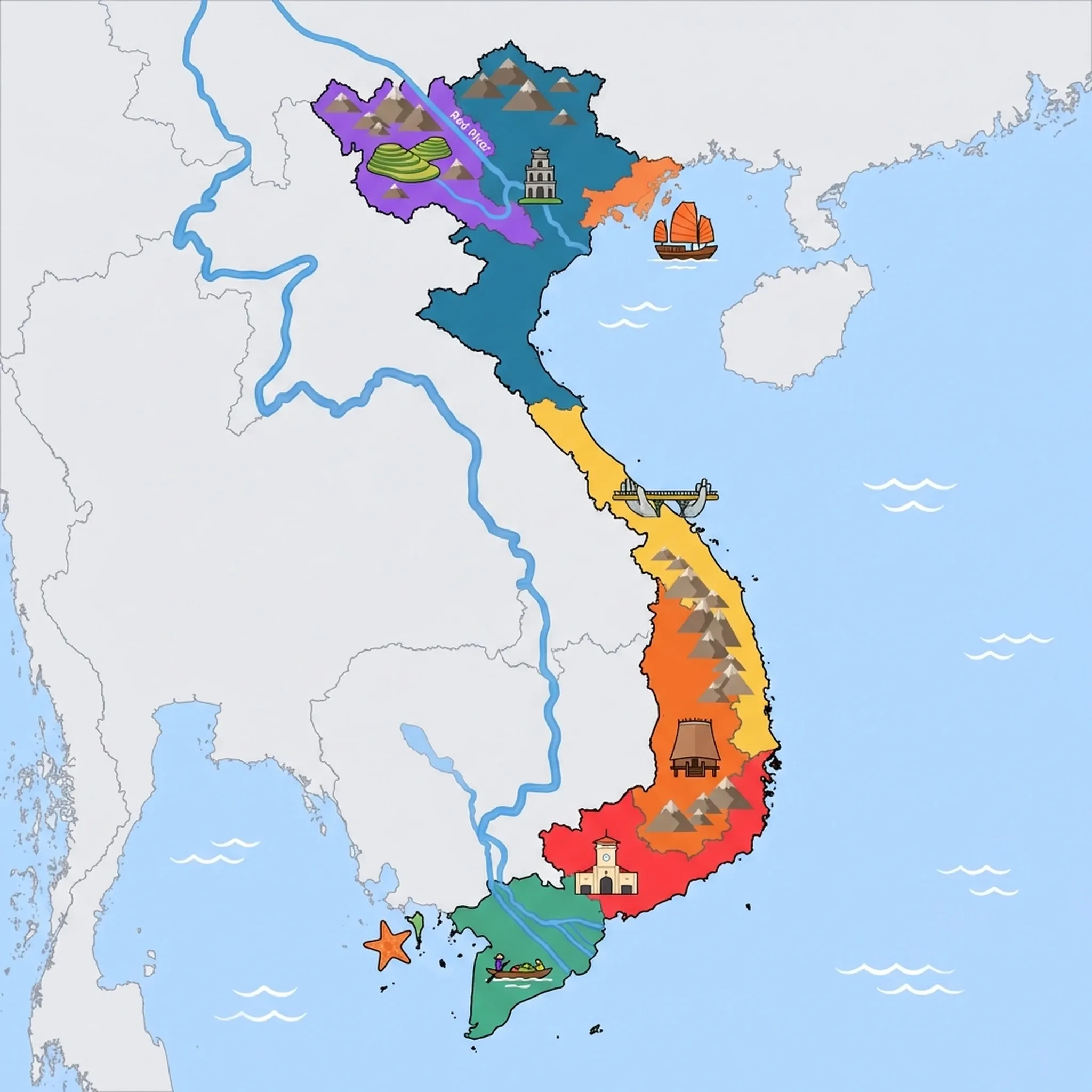
Click a region to explore
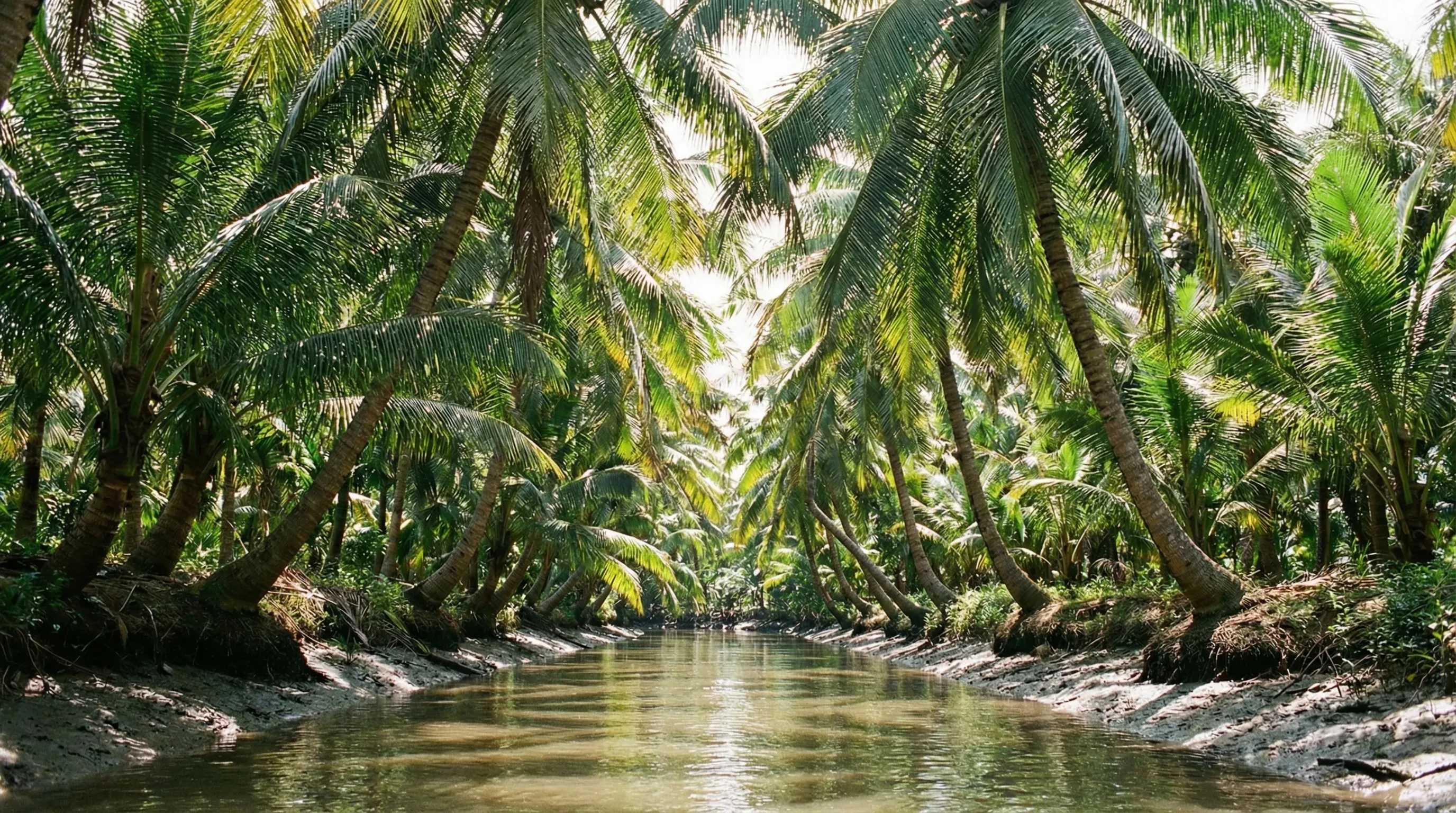
The Mekong Delta is a water-world where roads are replaced by canals and markets float on the river. For families, it offers a fascinating glimpse into a lifestyle completely dependent on the water. It is a place of slow travel, lush greenery, and incredible fruit. Kids love the novelty of hopping between boats—from large river ferries to tiny wooden sampans that are rowed through narrow palm-lined creeks. The pace here is much more relaxed than Ho Chi Minh City, making it a great decompression zone.
This region is the agricultural heart of Vietnam. Families can visit fruit orchards where children can pick dragon fruit, rambutan, and mangoes straight from the tree. You can watch coconut candy being made by hand (and taste the warm, sweet results) or visit bee farms. The wildlife is also a draw; expansive mangrove forests are home to thousands of birds. It is an immersive destination where the attraction isn't a museum, but the daily rhythm of life itself. While day trips from Saigon are possible, spending a night or two in a riverside homestay or lodge allows you to see the fireflies at night and the markets at their busiest in the early morning.
Key Attractions
The Cai Rang Floating Market in Can Tho is the largest of its kind; visiting at dawn to see boats tossing watermelons and pineapples to each other is a highlight. Nature-loving families should head to Tra Su Cajuput Forest near the Cambodian border, a stunning flooded forest where a boat glides you through a carpet of green duckweed under the shade of paperbark trees—it feels like a fairy tale swamp. Nearer to HCMC, the Vinh Trang Pagoda in My Tho is a colorful mix of European and Asian architecture with giant Buddha statues that impress with their scale. Boat trips in Ben Tre (the coconut kingdom) are excellent for seeing local cottage industries.
Practical Advice
The Delta is hot and humid year-round. The floating markets are active very early (5:00 am – 8:00 am), so you must stay overnight in Can Tho to see them properly; day trippers from Saigon usually miss the action. Mosquitoes are plentiful near the water, so repellent is mandatory. Life jackets are generally provided on tourist boats—ensure your children wear them.
Food & Drink
Typical meal times: Early risers. Breakfast 6:00 am to 8:00 am. Lunch 11:30 am to 1:00 pm. Dinner 6:00 pm to 8:00 pm.
Typical meal costs: Very cheap. A local meal is 40,000–80,000 VND (approx. $1.60–3.20 USD / €1.50–3.00 EUR). Riverside tourist restaurants are pricier, around 150,000–250,000 VND (approx. $6–10 USD / €5.50–9.25 EUR) per person.
Dietary requirements: Fresh fruit is abundant. Freshwater fish and shrimp are staples. Vegetarians can find options, but fish sauce is ubiquitous.
Signature dishes:
- Elephant Ear Fish (Ca Tai Tuong) – A whole fish fried upright (scales and all) until crispy, served with rice paper and herbs for rolling. A fun, dramatic dish for groups.
- Hu Tieu Sa Dec – A clear noodle soup with pork, shrimp, and liver, famous in the region.
- Coconut Candy (Keo Dua) – Soft, chewy candy made from coconut milk and malt; you will likely see it being made.
- Banh Xeo (Delta Style) – Giant, crispy yellow pancakes often filled with duck meat or pork and bean sprouts.
Why this score?
Adventure here is characterized by boat travel through narrow canals and visiting floating markets. The flat, tropical landscape is culturally immersive but does not offer the physical rigors or wilderness aspects of mountain trekking.
Why this score?
Basic medical services are available in cities like Can Tho, but they generally fall short of international standards. For anything serious, tourists and expats are almost always referred back to the major hospitals in Ho Chi Minh City.
Why this score?
The Mekong Delta is a well-known cultural destination, but many visitors experience it only as a brief excursion from Ho Chi Minh City. While it has steady international flow, it lacks the multi-day 'destination' status of the central coast or the north.

The Delta is one of the cheapest regions. Accommodation is great value; a riverside bungalow can cost 600,000–1,200,000 VND (approx. $24–48 USD / €22–44 EUR). Private boat tours are affordable, often 300,000–500,000 VND (approx. $12–20 USD / €11–18 EUR) for a group.

Getting Here & Around
Getting Here
- Bus – Frequent buses run from Ho Chi Minh City (Mien Tay Bus Station) to Can Tho (3–4 hours) and Ben Tre (2 hours).
- Car – Private car hire is the most comfortable option for families to reach Cai Rang Floating Market without the hassle of bus transfers.
- Boat – Luxury river cruises run from HCMC to the Delta and onwards to Cambodia.
Getting Around
- Boat – The only way to see the small canals and Tra Su Cajuput Forest.
- Motorbike Taxi (Xe Om) – Common for short hops on land, but less suitable for whole families.
- Taxi – Available in major towns like Can Tho and My Tho.
Nearby Airports (2 airports)
Ca Mau
CAHCa Mau
Trà Nóc Airport
VCACan Tho
View full flight map for Vietnam →
Official Links

Packing List
Mosquitoes are very aggressive near the canals and stagnant water, especially at dusk.
Boats often have no roof or partial shade, and the reflection off the water intensifies the sun.
You will be eating fruit with your hands and interacting with animals; sinks aren't always available.
Protects against both sun and insects while on boat rides through the forest.
You will frequently remove shoes at temples, pagodas, and even some restaurants and shops.
Toilet paper is rarely provided in public restrooms or street-side eateries.
Sudden tropical downpours are common; ponchos cover you and your daypack better than umbrellas.
Hotel sinks often lack plugs; useful for washing kids' clothes or swimwear in the room.
Dengue fever is a risk; strong repellent is essential for evenings and jungle areas.
Essential for keeping electronics and documents dry during humidity and sudden rainstorms.
No activity data available for this region yet.

Public Holidays & Calendar Next 12 months
Public holidays, festivals, cultural celebrations, and seasonal natural phenomena coming up in Mekong Delta over the next 12 months.
Loading holidays and events...

Travel Advisory
Five out of six major agencies assess Vietnam as requiring only standard safety awareness, representing a strong international consensus. While one agency maintains a slightly higher caution level due to petty crime and weather risks, the majority view the overall environment as stable for tourists.
Safety Topics
Traveller Advice (3 groups)

Female travellers should exercise standard safety measures, particularly when moving alone at night in major cities. Conservative dress is recommended when visiting religious or rural sites.

While there are no laws criminalizing same-sex relationships, public displays of affection may attract unwanted attention in more traditional or conservative areas.
Accessibility infrastructure in public transport and older buildings can be limited. Advanced planning is necessary for those with mobility requirements.
Agency Summaries
Most trips proceed without incident. Guidance focuses on respecting local political sensitivities, ensuring correct entry stamps, and preparing for the monsoon season.
Standard precautions are advised. Notable warnings include extremely strict narcotics laws and the requirement for local licensing for motorcycle operation.
No specific security threats are currently highlighted. Visitors should focus on administrative compliance, such as visa requirements and passport validity.
Travellers are advised to be highly vigilant due to a significant frequency of petty crimes like bag snatching. Environmental risks including severe seasonal flooding and typhoons are also prominent concerns.
The country is generally safe for visitors. Standard safety awareness is recommended, particularly regarding urban street crime and navigating chaotic traffic conditions.
Travellers should maintain standard awareness. Key practical advice involves avoiding common airport transport scams and being careful with road safety.
Information is provided for general guidance only and does not constitute travel, safety, medical, or legal advice. Conditions may change. Users are responsible for independently verifying information before travel.