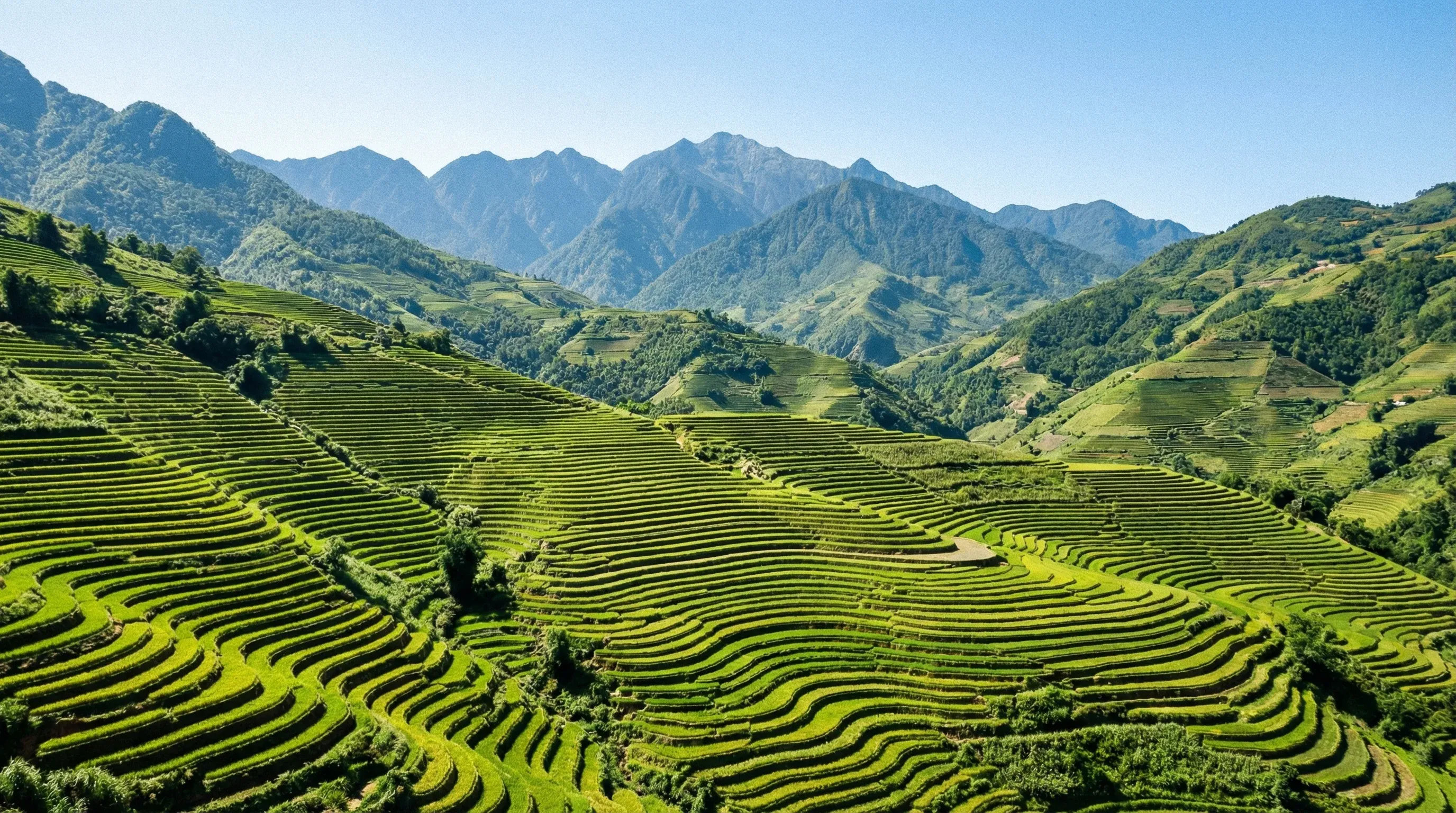

Sapa & Northwest Mountains
Misty peaks, vibrant tribes, and emerald rice terraces ⛰️
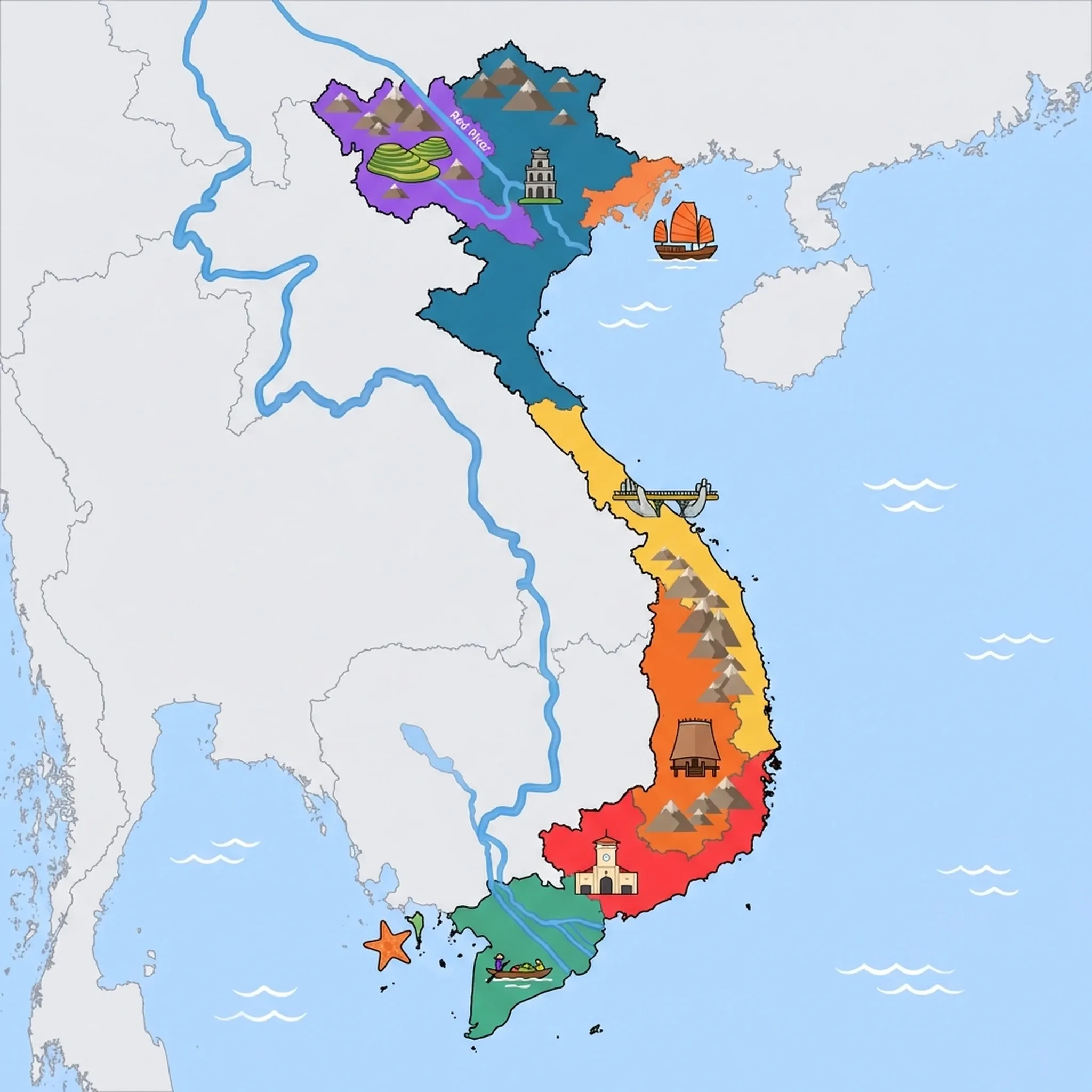
Click a region to explore
Sapa and the Northwest mountains offer some of the most dramatic scenery in Southeast Asia. It is a land of vertical landscapes, where rice terraces carved by hand over centuries cascade down steep valley walls. For active families, this is a trekking paradise. The cool, often misty weather creates a mysterious atmosphere that feels worlds away from the cities. Children are fascinated by the colorful traditional clothing of the local hill tribes—primarily the Hmong and Red Dao people—who live in the villages scattered across the valleys. Interaction with these communities (when done respectfully) provides a profound cultural lesson for kids.
While trekking is the main draw, modern infrastructure has made the highest peaks accessible to everyone. The town of Sapa is the tourist hub, offering comfortable hotels and varied food. From here, you can explore valleys, waterfalls, and mountains. The weather is unpredictable—you might experience four seasons in a single day—which adds to the adventure. Walking through a bamboo forest or spotting water buffalo plowing the mud terraces allows families to disconnect from screens and connect with nature and a resilient, vibrant culture.
Key Attractions
The crown jewel is Fansipan Legend. Once a multi-day hike, the "Roof of Indochina" is now accessible via a spectacular cable car and funicular train ride that kids love; the views from the top (above the clouds) are unforgettable. Cat Cat Village is the most accessible village from town; while touristy, it offers an easy walking route past water wheels and waterfalls that is manageable for older children. For a more authentic look at the terraces, the Muong Hoa Valley offers stunning hiking routes. You can take the mountain train from Sapa town down to the valley. Silver Waterfall (Thac Bac) and Love Waterfall are located near the stunning O Quy Ho Pass and are great stops for a short nature walk.
Practical Advice
The weather is the biggest factor here. Winters (Dec-Feb) are freezing, foggy, and muddy—sometimes even seeing snow. The best time for families is September-October (golden rice harvest) or April-May (spring planting). Paths can be steep and slippery; carriers are better than strollers. Be prepared for "selling sisters"—local women who follow tourists to sell handicrafts; a polite "no, thank you" is sufficient.
Food & Drink
Typical meal times: Breakfast 7:00 am to 9:00 am. Lunch 12:00 pm to 2:00 pm. Dinner 6:30 pm to 9:00 pm.
Typical meal costs: Sapa is a tourist town. A meal for four in a nice restaurant is 600,000–1,000,000 VND (approx. $24–40 USD / €22–37 EUR). Local rice/noodle shops are cheaper.
Dietary requirements: Plenty of vegetables available (chayote is famous here). Western comfort food (pizza, burgers) is easy to find in Sapa town.
Signature dishes:
- Salmon/Sturgeon Hotpot – Sapa farms cold-water fish. The hotpot is a sour, spicy broth filled with fresh fish and piles of local mountain greens.
- Thang Co – A traditional horse meat stew. It is intense and smelly—mostly for adventurous eaters, not typical kid fare!
- Com Lam – Sticky rice cooked in bamboo tubes, often served with grilled pork skewers (Thit Lon Cap Nach - "carried-under-armpit pig," referring to the small size of the local pigs).
- Su Su Xao Toi – Sautéed chayote tops with garlic; a crunchy, sweet green vegetable grown all over the mountains.
Why this score?
This is Vietnam's most significant adventure region, featuring the highest peaks in Indochina and steep, terraced valleys. Trekking through ethnic minority villages and summiting Mount Fansipan provides a rugged and physically demanding experience.
Why this score?
Medical facilities in the mountains are extremely basic and often lack English-speaking staff or advanced equipment. Major emergencies require a long road or rail transfer back to Hanoi, making it one of the more medically vulnerable regions for tourists.
Why this score?
Sapa is an iconic trekking destination that is well-known internationally, though its distance from major cities keeps it from the mega-popularity of the coastal hubs. It attracts a mix of adventurous backpackers and families seeking mountain scenery.

Sapa can be done on a budget, but comfort costs extra here due to the remote location. A nice hotel with heating (essential in winter) costs 1,000,000–2,000,000 VND (approx. $40–80 USD / €37–74 EUR). The <a data-attraction-id="33996">Fansipan Legend</a> cable car is pricey at approx. 800,000 VND (approx. $32 USD / €30 EUR) per adult.

Getting Here & Around
Getting Here
- Train – The Chapa Express or other overnight sleepers from Hanoi to Lao Cai station are a classic experience. From Lao Cai, it is a 45-minute bus/van ride up to Sapa.
- Bus – 'Limousine' luxury vans take about 5.5–6 hours from Hanoi via the highway. They are faster than the train and drop you directly in Sapa town.
- Car – Private hire gives flexibility to stop for photos on the way to Fansipan Legend.
Getting Around
- Walking/Trekking – The main way to see Muong Hoa Valley and villages.
- Electric Cart – Available in Sapa town center for short trips.
- Taxi – Available to reach further spots like Silver Waterfall (Thac Bac).
- Mountain Train – Connects Sapa town to the Fansipan cable car station.
Nearby Airports (1 airport)
Dien Bien Phu
DINDien Bien Phu
View full flight map for Vietnam →
Official Links

Packing List
Rice terrace paths are often clay and become incredibly slippery with even a little rain.
Sapa can be 15°C colder than Hanoi; nights are cold even in summer.
The mountains are prone to sudden mist and drizzle; keeping dry is key to warmth.
The drive from Lao Cai to Sapa and trips to waterfalls involve winding mountain roads.
You will frequently remove shoes at temples, pagodas, and even some restaurants and shops.
Toilet paper is rarely provided in public restrooms or street-side eateries.
Sudden tropical downpours are common; ponchos cover you and your daypack better than umbrellas.
Hotel sinks often lack plugs; useful for washing kids' clothes or swimwear in the room.
Dengue fever is a risk; strong repellent is essential for evenings and jungle areas.
Essential for keeping electronics and documents dry during humidity and sudden rainstorms.

Activities & Best Times

Hiking, wildlife, outdoor exploration, ecotourism
Features Fansipan mountain and the Muong Hoa Valley, offering significant trekking and wilderness exploration in a mountainous setting. Peak periods provide the best trail conditions and visibility, while summer months are restricted by heavy monsoon rains.

Urban tourism, museums, historical sites, architecture
Includes Sapa town and Lao Cai, providing a base to experience ethnic minority heritage, though the main town is now heavily commercialized. Discerning families should visit during the dry season when mountain markets are most vibrant and accessible.

Scenic drives, countryside tours, route-based travel
The Northwest Mountains offer spectacular landscapes and high-altitude passes suitable for scenic drives. Peak months provide optimal driving visibility, whereas the summer monsoon makes these steep mountain roads dangerous due to landslide risks.

Public Holidays & Calendar Next 12 months
Public holidays, festivals, cultural celebrations, and seasonal natural phenomena coming up in Sapa & Northwest Mountains over the next 12 months.
Loading holidays and events...

Travel Advisory
Five out of six major agencies assess Vietnam as requiring only standard safety awareness, representing a strong international consensus. While one agency maintains a slightly higher caution level due to petty crime and weather risks, the majority view the overall environment as stable for tourists.
Safety Topics
Traveller Advice (3 groups)

Female travellers should exercise standard safety measures, particularly when moving alone at night in major cities. Conservative dress is recommended when visiting religious or rural sites.

While there are no laws criminalizing same-sex relationships, public displays of affection may attract unwanted attention in more traditional or conservative areas.

Accessibility infrastructure in public transport and older buildings can be limited. Advanced planning is necessary for those with mobility requirements.
Agency Summaries
Most trips proceed without incident. Guidance focuses on respecting local political sensitivities, ensuring correct entry stamps, and preparing for the monsoon season.
Standard precautions are advised. Notable warnings include extremely strict narcotics laws and the requirement for local licensing for motorcycle operation.
No specific security threats are currently highlighted. Visitors should focus on administrative compliance, such as visa requirements and passport validity.
Travellers are advised to be highly vigilant due to a significant frequency of petty crimes like bag snatching. Environmental risks including severe seasonal flooding and typhoons are also prominent concerns.
The country is generally safe for visitors. Standard safety awareness is recommended, particularly regarding urban street crime and navigating chaotic traffic conditions.
Travellers should maintain standard awareness. Key practical advice involves avoiding common airport transport scams and being careful with road safety.
Information is provided for general guidance only and does not constitute travel, safety, medical, or legal advice. Conditions may change. Users are responsible for independently verifying information before travel.