

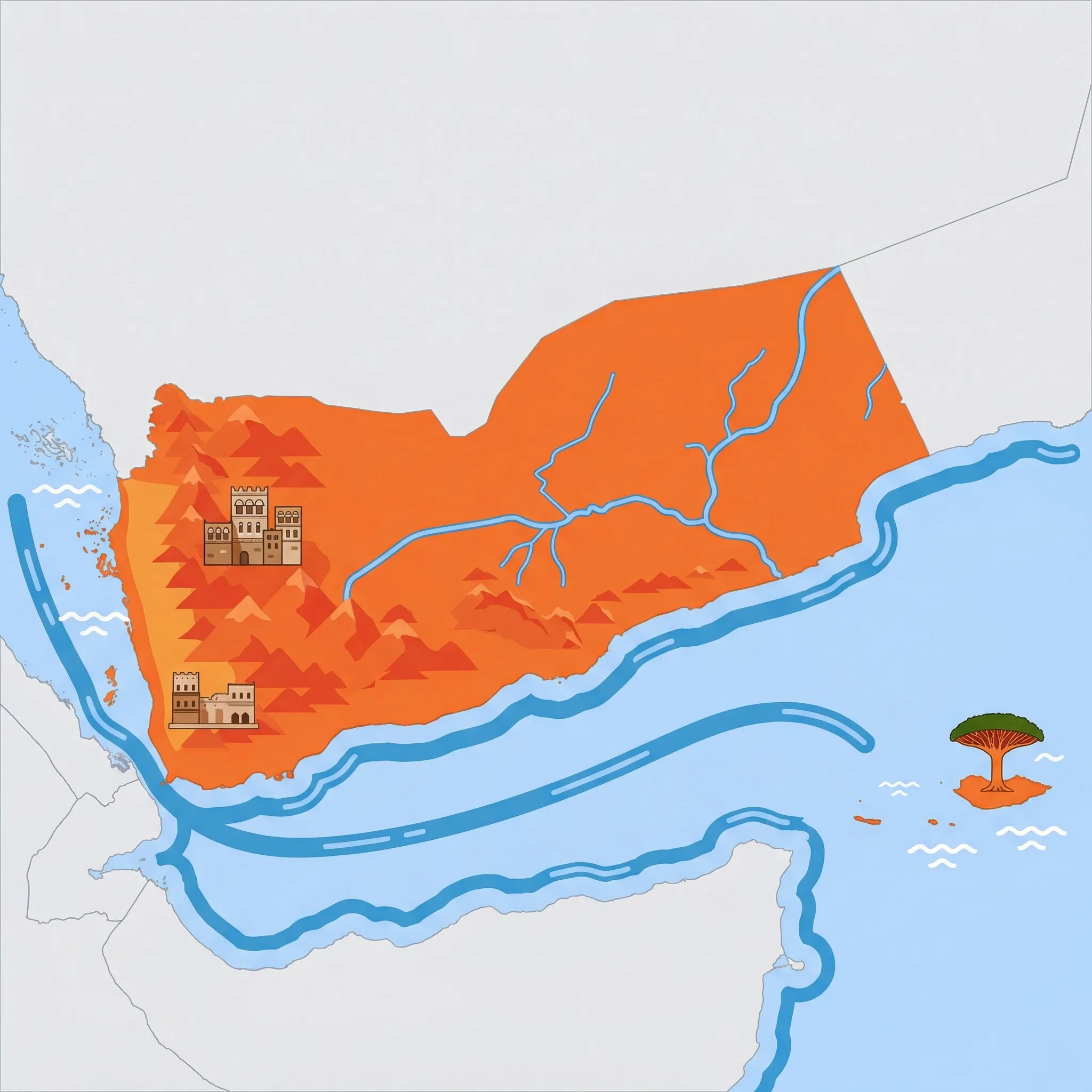
⚠️ SAFETY WARNING: Due to active armed conflict, terrorism, and high risks of kidnapping, government agencies (including CA, USA, UK, AU, IE, and NZ) advise travelers to avoid all travel to Yemen, including the island of Socotra. Consular assistance is severely limited or non-existent. The security situation is volatile and can change without notice. Families are strongly urged to consult their own government's official travel advisory before considering a trip, as circumstances and risk assessments vary.
Overview
For the vast majority of families, Yemen remains a destination to admire from afar or through history books. Yet, for the most experienced and adventurous globetrotters, it holds a magnetic allure. The mainland is a treasure trove of Arabian heritage, home to the mud-brick skyscrapers of Shibam and the gingerbread-like houses of Old Sana'a. It is a land of dramatic mountains, ancient coffee culture, and deep-rooted hospitality that persists despite years of hardship. However, the current geopolitical climate makes mainland travel extremely dangerous and unsuitable for leisure tourism.
The exception-and the primary draw for intrepid families today-is the Socotra Archipelago. Often called the "Galápagos of the Indian Ocean," this remote island feels like a different planet. Here, children can wander forests of alien-looking Dragon Blood Trees, slide down massive white sand dunes, and snorkel in crystal-clear waters teeming with marine life. Travel here is rugged: think camping on beaches, simple meals, and limited electricity. It offers a profound lesson in nature, resilience, and living simply, but it requires careful planning and a high tolerance for discomfort and risk.
Key Attractions
Socotra Island is the crown jewel of Yemeni tourism today. Its isolation has preserved a unique ecosystem found nowhere else on Earth. Families can explore the Diksam Plateau to see the iconic mushroom-shaped Dragon Blood Trees or swim in the freshwater infinity pool at Wadi Dirhur, nestled deep within a limestone canyon. The Detwah Lagoon offers pristine white sands and shallow turquoise waters perfect for wading and spotting stingrays and pufferfish (from a safe distance).
On the mainland, though currently largely inaccessible for safety reasons, lie some of the world's most impressive historical sites. Old Sana'a is a UNESCO World Heritage site inhabited for over 2,500 years, famous for its rammed-earth tower houses decorated with geometric patterns. Shibam, known as the "Manhattan of the Desert," features 16th-century mud-brick high-rises that soar up to seven stories, a testament to ancient urban planning. Dar al-Hajar, the Rock Palace, perches dramatically atop a rock spire just outside the capital, looking like a fortress from a fantasy novel.
Practical Advice
Travel to Yemen, particularly Socotra, is logistically complex. The best time to visit is from October to April, avoiding the windy monsoon season. Visas are mandatory and must be arranged via a local tour operator well in advance; there is no visa on arrival. Medical facilities are extremely limited, so comprehensive travel insurance that explicitly covers "Do Not Travel" zones is essential. Families must book an organized tour, as independent travel is not permitted. Be prepared for a digital detox-internet is rare and slow.
Food & Drink
Typical meal times: Lunch is the main meal, typically eaten between 1:00 pm and 2:00 pm. Dinner is lighter and served late, often from 8:00 pm to 10:00 pm.
Typical meal costs: Meal prices vary wildly between local stalls and tourist camps. A basic local meal might cost 1,500–2,500 YER (approx. $6–10 USD / €5.50–9 EUR). On Socotra tours, all meals are usually included in the package price. Independent dining in decent restaurants on the mainland would cost around 4,000–7,000 YER (approx. $16–28 USD / €15–26 EUR) per person.
Dietary requirements: Yemeni cuisine relies heavily on meat (chicken, lamb, goat) and bread. Vegetarians can rely on foul (fava bean stew) and fresh breads, but options are limited. Vegan and gluten-free concepts are virtually unknown; travelers with strict allergies should bring their own staple snacks.
Family-friendly dining: Dining is communal and often on the floor. Children are welcomed warmly, but highchairs and kids' menus do not exist. The tactile nature of eating with hands (using bread as a scoop) is often fun for kids.
Signature dishes:
- Saltah – The national dish, a bubbling fenugreek-based stew served in a hot stone pot, often containing meat and vegetables.
- Mandi – Tender meat (usually lamb or chicken) slow-cooked in a tandoor oven, served over spiced rice.
- Masoub – A sweet, hearty pudding made from mashed bananas, flatbread, cream, honey, and nuts-a hit with children.
- Bint Al-Sahn – A rich, flaky honey cake served as a starter or dessert, famously delicious and very kid-friendly.
Safety
Travelers must exercise extreme caution. On the mainland, the risk of kidnapping, terrorism, and arbitrary detention is critical. If visiting Socotra, stay with your guide at all times and do not wander off. The island is generally considered safe from the conflict, but medical infrastructure is basic; a serious injury would require an emergency evacuation flight. Always carry paper copies of passports and visas. Avoid all political gatherings and be respectful of conservative Islamic dress codes to avoid unwanted attention.

While local prices are low, the cost of safe access is high. Families must book all-inclusive tours (essential for visas and logistics), costing $1,500–2,500 (approx. €1,380–2,300 EUR / £1,180–1,970 GBP) per person per week, plus flights (~$900 USD). Cash is king; bring USD printed after 2009.
Age Suitability





Did you know? Yemen welcomes approximately 367,000 international visitors per year. Most visitors come from Middle East.
Why this score?
Yemen offers a high-intensity adventure experience characterized by the rugged Haraz Mountains, the vast Rub' al Khali desert, and the remote landscapes of Socotra. The logistical challenges of navigating a conflict-impacted nation and the absence of traditional tourist amenities make it one of the most demanding destinations globally. Travelers must contend with difficult terrain and a requirement for specialized, self-reliant travel planning.
Why this score?
The healthcare infrastructure in Yemen is extremely limited and has been severely degraded by years of conflict, resulting in a critical shortage of medical supplies and specialists. Facilities that can cater to foreign nationals are virtually non-existent, and English-speaking medical staff are rare outside of minimal humanitarian contexts. Emergency medical evacuation is typically the only viable option for serious health issues or injuries.
Why this score?
Yemen attracts a niche but dedicated segment of international travelers drawn to the architectural wonders of Shibam and the UNESCO-listed Old City of Sana'a. While the Socotra Archipelago remains a significant bucket-list destination for its unique biodiversity, the overall visitor numbers are constrained by ongoing regional instability. The country maintains a moderate profile in the travel community despite the lack of mass-market infrastructure.
While local street food is cheap, the cost for a traveler is high due to security logistics. A secure tour (essential for safety) averages 62,500–100,000 YER (approx. $250–400 USD / €230–370 EUR) per day per person including driver, permits, and accommodation. Basic hotels cost 12,500–25,000 YER (approx. $50–100 USD / €45–90 EUR). Cash USD (pristine notes) is the effective currency.

Getting There & Around
Getting There
- By Air (Socotra) – The most reliable route for tourists is the Air Arabia charter flight from Abu Dhabi (AUH) to Socotra (SCT), operating usually on Tuesdays and Fridays.
- By Air (Mainland) – Yemenia Airlines operates flights to Aden (ADE) and Seiyun (GXF) from Cairo, Amman, and Jeddah, but these routes are subject to frequent changes.
- Entry Requirements – Visas are strictly required and must be arranged weeks in advance through a licensed local operator. Check your government website for the latest visa requirements, or use the IATA Travel Centre entry-requirements checker.
Getting Around
- 4x4 with Driver – The only viable way to explore Yemen or Socotra. Tourists are required to have a guide and driver. Roads can be rough and unpaved.
- Internal Flights – Yemenia Airlines flies between Aden, Seiyun, and Socotra, but schedules are unreliable and cancellations frequent.
- No Car Hire – Self-drive is not possible for tourists due to security checkpoints and insurance invalidity.

Packing List
ATMs and credit cards do not work. Bring pristine bills (post-2009) for all expenses.
Camping is the norm on Socotra; showers are infrequent and water is precious.
Electricity is scarce or non-existent in campsites; essential for charging cameras/phones.
Respect local conservative customs, even when swimming at beaches with locals nearby.
Campsites are pitch black at night; essential for navigating to toilets or tents.
Protect electronics during boat transfers to remote beaches like Shouab.

Public Holidays & Calendar Next 12 months
Public holidays, festivals, cultural celebrations, and seasonal natural phenomena coming up in Yemen over the next 12 months.
Loading holidays and events...

Travel Advisory
Extreme risk due to active civil war, frequent terrorist attacks, high kidnapping threats, and a collapse of essential services and infrastructure.
Safety Topics
Traveller Advice (5 groups)

Press members are frequently targeted by various militant groups and local authorities, facing a high likelihood of detention or physical violence.

Aid workers are at extreme risk of being abducted for political or financial gain. Conflict zones are often inaccessible due to military blockades.

Homosexual acts are strictly forbidden and carry potential penalties of imprisonment or death. Total discretion is required for safety.

Travellers must adhere to very conservative local dress and social standards. Significant limits on movement and reports of harassment are common.

Entry into the country is strongly discouraged. Those already in the region should shelter in safe locations and seek any available commercial means to depart.
Agency Summaries
A severe threat of terrorism and kidnapping remains. New Zealanders are advised to leave as soon as it is safe, with no diplomatic representation available to assist.
The security environment is highly volatile. British nationals are urged to depart immediately as the government's ability to provide any form of help is severely restricted.
Dangerous security conditions persist throughout the country. There is an ongoing risk of military strikes, extremist violence, and abduction of foreign nationals.
Travel is extremely dangerous due to the risks of terrorism, armed conflict, civil unrest, kidnapping, and the presence of landmines. The embassy has suspended all operations.
Irish citizens are warned against all travel due to life-threatening risks including armed conflict, high crime rates, and terrorism.
Foreigners face extreme threats from the ongoing civil war, widespread terrorist activity, and a high risk of kidnapping. Consular support is essentially non-existent.
Information is provided for general guidance only and does not constitute travel, safety, medical, or legal advice. Conditions may change. Users are responsible for independently verifying information before travel.