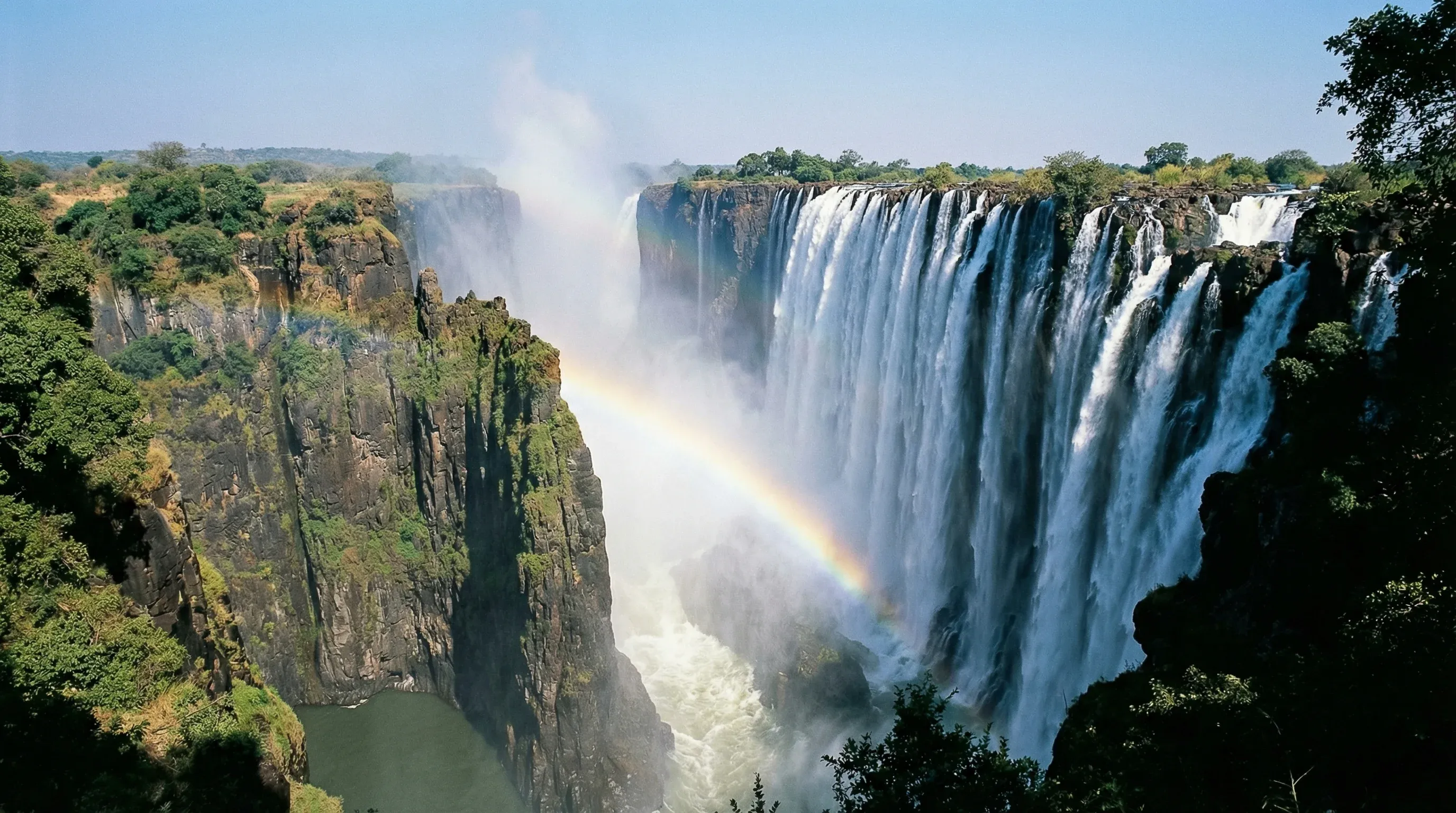

Livingstone & Victoria Falls
The smoke that thunders and the heart of African adventure 🌈🦁
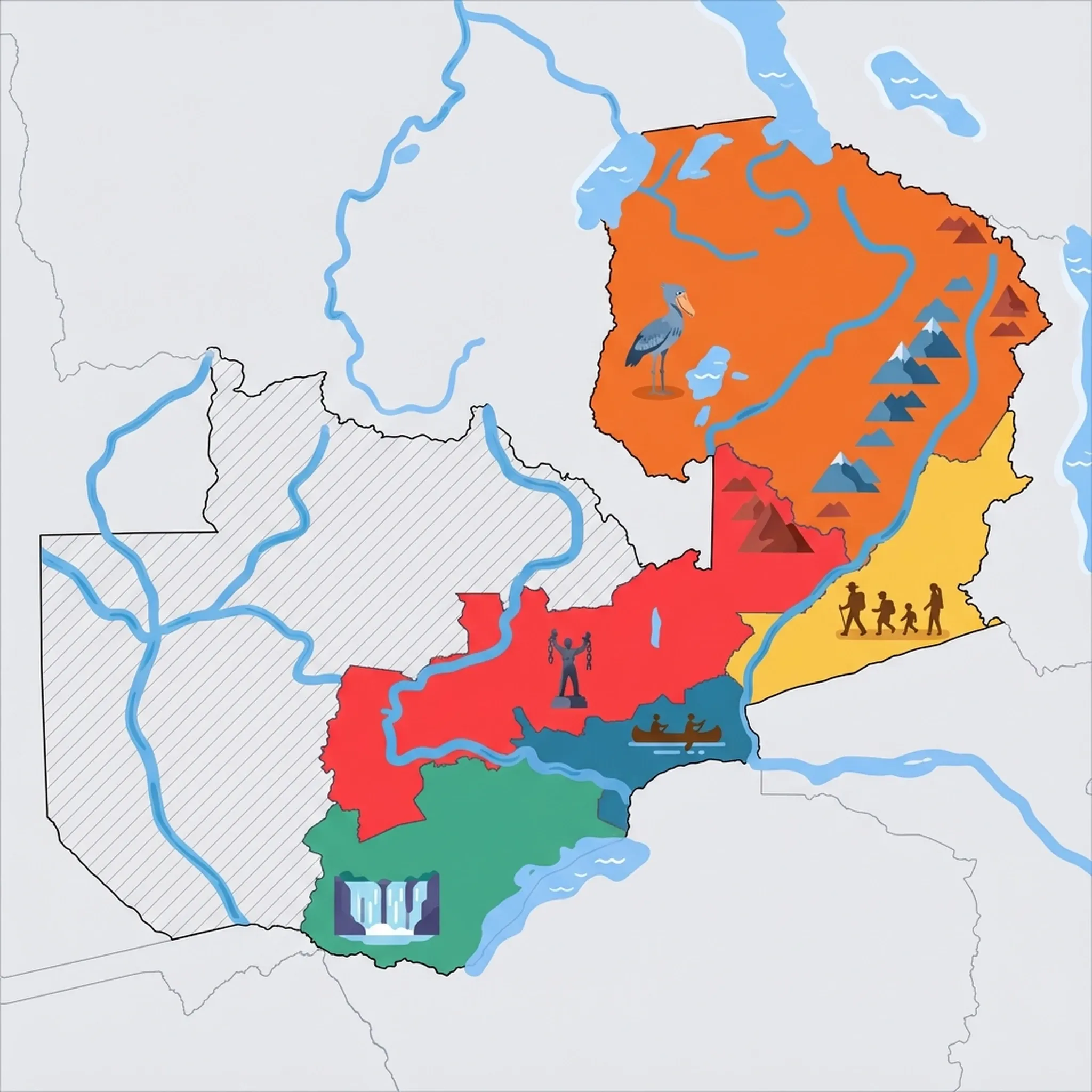
Click a region to explore
Overview
Livingstone and Victoria Falls represent the pinnacle of family adventure in Southern Africa. Dominated by the thunderous presence of Mosi-oa-Tunya (The Smoke That Thunders), this region is far more than just a waterfall; it is a vibrant playground where the raw power of nature meets exceptional hospitality. For families, the area offers a unique blend of safety and thrill. Unlike deeper bush destinations, Livingstone is a well-equipped town with modern amenities, making it an easy 'soft landing' for those travelling with children. The climate is generally hot, with the mist from the falls creating a localized rainforest ecosystem that is fascinating for young explorers to discover.
Beyond the cascade, the region acts as a sanctuary for wildlife without the need for grueling travel. The local national park is compact and home to white rhinos, allowing families to see significant game within minutes of their hotel. The culture here is open and welcoming, with the town's history as a former capital evident in its architecture and museums. Whether you are taking a sunset cruise on the upper Zambezi to spot hippos or riding the historic steam train, the atmosphere is one of timeless wonder. The sheer variety of activities—from helicopter flights to crocodile farm visits—ensures that children of all ages, from toddlers to teenagers, remain engaged throughout the stay.
Key Attractions
The undisputed highlight is the waterfall itself. Families can walk the paved paths along the knife-edge bridge (prepare to get soaked!) and watch rainbows form in the spray. For a wildlife fix, the local Mosi-oa-Tunya National Park allows for shorter game drives which are perfect for younger attention spans, offering the rare chance to track white rhino on foot with professional guides. The Livingstone Museum provides a fascinating educational break, housing memorabilia from explorer David Livingstone and showcasing Zambia's cultural heritage. For active families, a boat cruise on the Zambezi River is essential; these calm excursions often allow children to spot elephants drinking at the water's edge and pods of hippos yawning in the sunset.
Practical Advice
The best time to visit for seeing the falls in full flow is between March and May, though the spray can be so intense it obscures the view. The dry season (August to November) allows for clearer views of the geological formations and better white-water rafting conditions for older teens, but the water levels on the Zambian side can drop significantly. Malaria prophylaxis is highly recommended for all family members. The town is very walkable, but taxis are affordable and readily available.
Food & Drink
Typical meal times: Lunch is typically served from 12:30 pm to 2:00 pm. Dinner usually runs from 6:30 pm to 9:30 pm, with many lodges offering early suppers for children.
Typical meal costs: A mid-range meal costs ZMW 350–600 (approx. $13–23 USD / €12–21 EUR). High tea at luxury hotels can cost ZMW 800–1,200 (approx. $30–45 USD / €28–42 EUR).
Dietary requirements: Livingstone is a tourism hub, so vegetarian, vegan, and gluten-free options are widely available in hotels and major restaurants. Nut allergies are well-understood in the hospitality sector here.
Signature dishes:
- Zambezi Bream – A delicious, mild freshwater fish usually served grilled or fried with chips or nshima.
- Nshima – The staple maize porridge, eaten with hands and served with relishes like rape (greens) or beans.
- Mopane Worms – For the brave adventurous eaters, these protein-rich caterpillars are a local delicacy, often fried as a crunchy snack.
Why this score?
The region is often called the 'adventure capital of Africa' due to activities like Grade 5 white-water rafting on the Zambezi, bungee jumping, and microlight flights. Mosi-oa-Tunya National Park provides accessible wildlife viewing, though the presence of significant tourism infrastructure keeps it from being a truly remote wilderness experience. It offers a structured but high-energy environment suitable for active families.
Why this score?
Livingstone has the most developed medical infrastructure in Zambia outside of the capital, with several private clinics and a general hospital that frequently treat international travelers. Most high-end lodges have arrangements for emergency medical evacuations and basic first aid on-site. However, for specialized care or major trauma, patients are typically transferred to Lusaka or Johannesburg.
Why this score?
As the home of Victoria Falls, one of the Seven Natural Wonders of the World, this is Zambia's most visited region by international tourists. It serves as a major hub for multi-country Southern African itineraries, supported by an international airport and a wide range of accommodation from hostels to luxury resorts. While world-famous, its visitor numbers are moderate compared to global mega-destinations like Bali or Cancun.

Livingstone is the most tourist-centric region in Zambia, and prices reflect this. While local food is cheap, activities are priced in USD for international visitors. Entry to the Falls is approx. ZMW 530 ($20 USD) for internationals. Family accommodation ranges from ZMW 2,600–7,900 (approx. $100–300 USD / €90–275 EUR) per night for mid-range lodges, skyrocketing for luxury riverfront suites.

Getting Here & Around
Getting Here
- Airports – Harry Mwanga Nkumbula International Airport (LVI) is just 15 minutes from town, offering direct flights from Lusaka, Johannesburg, and Cape Town.
- Driving – The drive from Lusaka takes approximately 6–7 hours on the T1 road. The road conditions are generally fair but can have potholes in sections.
- Bus – Luxury coaches (like Shalom or Mazhandu) run daily from Lusaka, taking about 7–8 hours.
Getting Around
- Taxis – The ubiquitous blue taxis are affordable and safe for short hops around town and to the falls entrance. Negotiate the fare before getting in.
- Hotel Transfers – Most lodges offer shuttle buses to the Falls and the town centre included in the room rate.
- Walking – The town centre is compact, but you will need transport to reach the National Park or the riverfront lodges.
Nearby Airports (1 airport)
Livingstone
LVILivingstone
View full flight map for Zambia →
Official Links

Packing List
The spray from the falls is like a heavy shower; unprotected electronics will get water damage.
Paths around the falls are slippery and wet; flip-flops can easily slide off or cause falls.
Plastic rentals at the gate are flimsy; a sturdy poncho keeps kids dry during the 'drenching' season.
Essential for boat cruises or canoe trips to keep spare clothes and cameras dry.
Older dollar bills are frequently rejected by banks and lodges; bring only crisp, new notes with 'big heads'.
Bright white lights attract millions of bugs in the bush; amber/red settings keep the insects away at camp.
Strict luggage restrictions on small internal flights (Proflight) often ban hard-shell suitcases.
Power cuts (load shedding) are common; a solar backup ensures phones and cameras stay charged.
Open game drive vehicles are incredibly dusty in the dry season; protect your nose and mouth.

Activities & Best Times

Hiking, wildlife, outdoor exploration, ecotourism
Home to a UNESCO World Heritage natural wonder and unique white rhino tracking, offering unparalleled proximity to the Zambezi's raw power. Peak dry months (May-Aug) provide optimal wildlife viewing and clear views of the Falls; shoulder months see the dramatic high-water spray or rising heat; the wet season (Nov-Feb) limits trail access and visibility.

Sport tourism, fitness activities, active recreation
A global capital for adrenaline sports, featuring world-class Grade 5 white-water rafting, bungee jumping, and gorge swings. The peak low-water season (Aug-Oct) is the only time the most technical rafting runs are open; high river levels from Jan-Apr often force the closure of these elite-level aquatic activities.

Learning experiences, scientific sites, historical education
Rich in colonial history and geological significance, with the Livingstone Museum providing sophisticated insights into David Livingstone's explorations. Peak months offer comfortable walking temperatures for historical tours; high rainfall in summer (Dec-Feb) makes outdoor archaeological and heritage sites difficult to navigate.
Spa retreats, wellness centers, peaceful getaways
Features ultra-luxury riverside lodges and high-end spas overlooking the Zambezi, providing a serene escape for discerning families. The dry winter (May-Aug) offers low humidity and bug-free relaxation; the wet season (Nov-Mar) brings oppressive humidity and high mosquito activity that detracts from the outdoor wellness experience.

Urban tourism, museums, historical sites, architecture
Livingstone town offers a safe, authentic glimpse into Zambian history with colonial architecture and local markets, though it lacks the infrastructure of a global cultural metropole. Dry peak months are best for navigating the town on foot; shoulder months are viable for cultural immersion, but summer rains make urban exploration difficult.

Public Holidays & Calendar Next 12 months
Public holidays, festivals, cultural celebrations, and seasonal natural phenomena coming up in Livingstone & Victoria Falls over the next 12 months.
Loading holidays and events...

Travel Advisory
The majority of major international agencies classify Zambia as a destination requiring standard safety awareness. While specific risks like crime in cities and landmines near borders exist, they do not currently warrant an elevated nationwide risk rating for most travellers.
Safety Topics
Traveller Advice (4 groups)

Be cautious in social settings like bars and nightclubs where reports of drink spiking have occurred. Avoid travelling solo after dark.
When travelling in rural or border areas, use a 4x4 vehicle and strictly remain on paved or well-marked roads to avoid the risk of landmines and unexploded explosives.

Homosexual activity is illegal and punishable by significant prison time, including life sentences. Travellers should exercise extreme discretion and avoid public displays of affection as social tolerance is low.

Maintain standard security awareness, avoid walking alone at night in urban centers, and stay clear of any political gatherings or demonstrations.
Agency Summaries
Australia advises a baseline of normal safety measures across the country. A higher level of vigilance is necessary near the border with the Democratic Republic of the Congo due to criminal activity and the threat of undetected landmines. Public demonstrations should be avoided as they can escalate quickly.
The United States suggests travellers follow standard safety procedures. While the security environment is generally stable, visitors are encouraged to stay away from political rallies and large crowds, which can occasionally lead to civil unrest or minor violence, particularly during election cycles.
New Zealand recommends a higher level of awareness than one would use at home due to the prevalence of violent crime in major cities and the risk of landmines in frontier zones. Moving through urban areas alone or after dark is discouraged.
Most visits to Zambia are trouble-free. Travellers should remain alert to common street crimes like pickpocketing in busy urban areas. There are specific health warnings regarding contaminated water in mining regions and periodic outbreaks of infectious diseases that require vigilance.
Ireland advises its citizens to maintain typical personal security awareness while visiting Zambia. It is important to confirm entry requirements and ensure travel documents meet the necessary validity standards before departure.
Zambia is considered a safe destination for travel using standard precautions. However, travellers should exercise a high degree of caution in border regions near Angola, Mozambique, and the DRC because of the residual risk of landmines and unexploded ordnance. Compliance with strict laws on mineral exports and the possession of precious stones is essential.
Information is provided for general guidance only and does not constitute travel, safety, medical, or legal advice. Conditions may change. Users are responsible for independently verifying information before travel.